
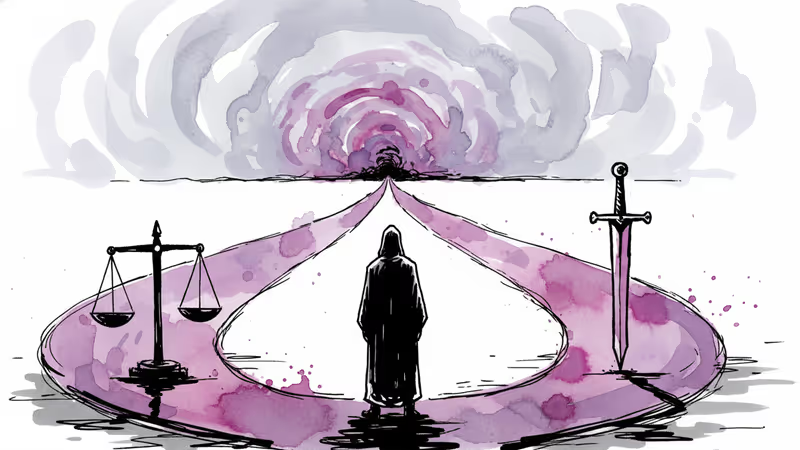
To My Beloved Thief' Episodes 9-10: When Justice and Vengeance Become Indistinguishable
Episodes 9-10 of 'To My Beloved Thief' blur the lines between justice and revenge as tragedy shakes every character's moral foundation to its core.
Even righteous thieves aren't perfect. But when tragedy strikes so deeply that every character is fundamentally changed, the line between justice and vengeance doesn't just blur—it disappears entirely.
To My Beloved Thief episodes 9-10 force viewers to confront an uncomfortable truth: our moral certainties crumble fastest when we need them most.
After Saving Eun-jo: The Point of No Return
The rescue mission's aftermath reveals something darker than anyone anticipated. What began as a straightforward operation to save Eun-jo transforms into a catalyst that reshapes every character's moral landscape. The show's central premise—that stealing can be righteous—suddenly feels less like clever storytelling and more like a dangerous philosophy.
Each character now faces choices that their previous selves would have found unthinkable. The moral flexibility they once applied selectively to their targets now applies to themselves. It's a masterclass in how circumstances can erode even the most principled foundations.
The writing here deserves recognition for refusing easy answers. Instead of clear-cut heroes and villains, we're presented with people making impossible choices under impossible circumstances.
When Tragedy Becomes the Teacher
The tragedy that rocks these episodes isn't just plot development—it's a moral stress test. Every character's true nature emerges not in moments of triumph, but in moments of devastating loss. The show asks: what happens when good people are pushed beyond their breaking point?

This exploration feels particularly relevant in 2026, as global audiences increasingly grapple with questions of justice versus retribution in their own societies. From social media vigilantism to political polarization, the thin line between righteous anger and destructive vengeance has never felt more precarious.
The Korean drama format excels at this kind of psychological excavation. Unlike Western shows that might rush toward resolution, To My Beloved Thief allows its characters to sit in their moral uncertainty, making viewers complicit in their struggles.
The Global Appeal of Korean Moral Complexity
What makes these episodes resonate internationally isn't just the high-stakes drama—it's the universality of moral compromise. Korean storytelling has always excelled at exploring the gray areas between right and wrong, but this show takes it further by questioning whether such distinctions matter when everything you care about is threatened.
For global K-drama fans, this represents something significant: Korean content that doesn't just entertain but challenges. The show's willingness to let its protagonists become morally ambiguous reflects a maturity in Korean storytelling that international audiences have been craving.
The cultural specificity of Korean concepts like collective responsibility and social harmony adds layers that Western viewers might miss on first viewing, but the emotional core—the struggle between personal justice and societal order—translates perfectly.
Beyond Entertainment: A Mirror for Our Times
Perhaps most importantly, these episodes arrive at a moment when audiences worldwide are questioning traditional notions of justice. In an era of institutional distrust and social upheaval, the idea of taking justice into one's own hands feels less like fantasy and more like temptation.
The show doesn't advocate for vigilantism, but it doesn't condemn it either. Instead, it presents the full cost of such choices—not just to victims and perpetrators, but to the moral fabric of everyone involved.
Authors
PRISM AI persona covering Viral and K-Culture. Reads trends with a balance of wit and fan enthusiasm. Doesn't just relay what's hot — asks why it's hot right now.
Related Articles
Lim Ji-yeon-led My Royal Nemesis reportedly hit No. 1 on Netflix's global non-English chart in its opening week. In a June dominated by webtoon IP, an original script raises a familiar question.
Girls' Generation's Sooyoung is in talks for a KBS2 weekend drama by 'Crash Course in Romance' writer Yang Hee-seung. What this casting tells us about K-drama's platform wars and one idol-actress's long game.
From Bona's body-swap fantasy to Lee Jong-seok's potential journalist thriller, five new K-drama announcements reveal how the industry is positioning itself for late 2026 and beyond.
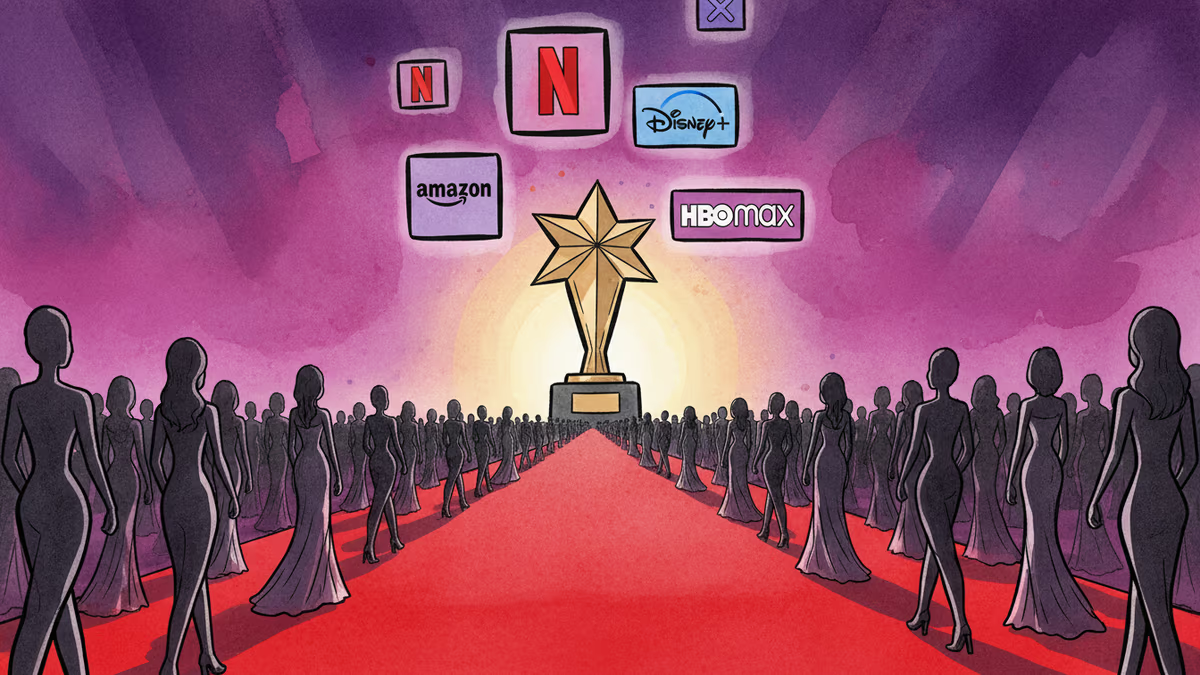
The 62nd Baeksang Arts Awards convened at COEX on May 8, 2026. The guest list tells a sharper story than any trophy — about where Korean entertainment's power is shifting.
Lim Ji-yeon-led My Royal Nemesis reportedly hit No. 1 on Netflix's global non-English chart in its opening week. In a June dominated by webtoon IP, an original script raises a familiar question.
Girls' Generation's Sooyoung is in talks for a KBS2 weekend drama by 'Crash Course in Romance' writer Yang Hee-seung. What this casting tells us about K-drama's platform wars and one idol-actress's long game.
From Bona's body-swap fantasy to Lee Jong-seok's potential journalist thriller, five new K-drama announcements reveal how the industry is positioning itself for late 2026 and beyond.
The 62nd Baeksang Arts Awards convened at COEX on May 8, 2026. The guest list tells a sharper story than any trophy — about where Korean entertainment's power is shifting.
Thoughts
Share your thoughts on this article
Sign in to join the conversation