
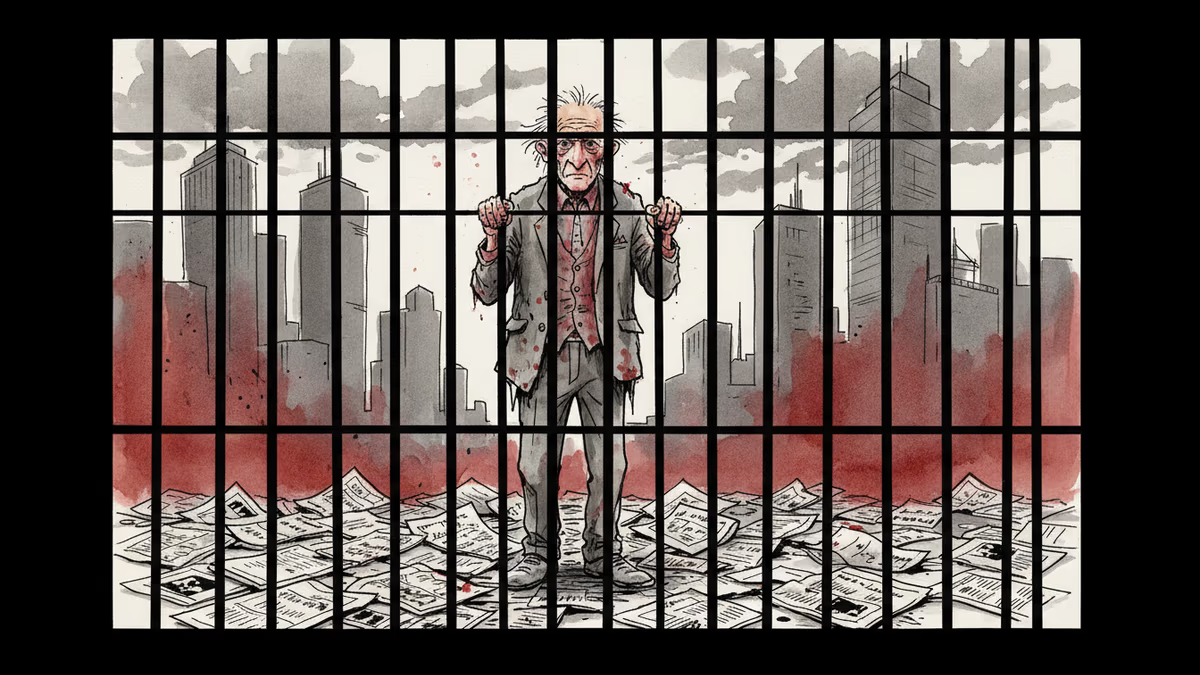
Jimmy Lai's 20-Year Sentence: What Beijing Really Wants to Say
Hong Kong media tycoon Jimmy Lai receives 20-year sentence under national security law. Analysis of the broader implications for press freedom, business confidence, and Hong Kong's future as a global financial hub.
A 76-year-old media mogul just received what amounts to a life sentence. Jimmy Lai, founder of Hong Kong's now-defunct Apple Daily newspaper, was sentenced to 20 years in prison under the national security law. But this isn't just about one man's fate—it's Beijing's loudest statement yet about the new Hong Kong.
The Rise and Fall of Apple Daily
Jimmy Lai built an empire on defiance. His Apple Daily, launched in 1995, became Hong Kong's most vocal pro-democracy newspaper, regularly criticizing Beijing with a boldness that would be unthinkable on the mainland. The tabloid-style paper mixed celebrity gossip with hard-hitting political coverage, reaching over 100,000 daily readers at its peak.
The court found Lai guilty of "collusion with foreign forces" and "seditious activities." His crimes? Meeting with U.S. politicians, supporting Hong Kong's democracy movement, and using his media platform to criticize Chinese policies. What was once considered journalism is now classified as national security threats.
Apple Daily shuttered in 2021 after authorities froze its assets and arrested key staff. With it died Hong Kong's last major pro-democracy voice in traditional media.
The Business World Takes Note
Lai's sentence reverberates far beyond Hong Kong's newsrooms. International businesses are watching closely, and many don't like what they see.
Hong Kong has long sold itself as "Asia's World City"—a place where East meets West under the rule of law. The city's $4.6 trillion financial services sector depends on this reputation. But the national security law, enacted in 2020, has fundamentally altered the risk calculation.

Multinational corporations are quietly reassessing their Hong Kong operations. Some have already moved regional headquarters to Singapore or Tokyo. The concern isn't just about media companies—any business activity could theoretically fall under the broad definition of "national security."
For international firms, the question is stark: Can you operate freely in a city where a newspaper owner gets 20 years for meeting foreign politicians?
Beijing's Strategic Gamble
From Beijing's perspective, Lai's punishment sends a crystal-clear message: dissent will not be tolerated, regardless of international criticism or economic consequences.
China's leadership appears to have concluded that political control trumps economic openness. The 2019 protests, which saw millions of Hong Kongers demanding democracy, convinced Beijing that Hong Kong's autonomy had gone too far.
The calculation seems to be that Hong Kong's financial infrastructure is too valuable to abandon, even if some international businesses leave. Chinese companies and mainland capital can fill the gap, creating a more politically reliable but less internationally connected financial center.
The Price of Stability
But there's a fundamental tension in Beijing's approach. Hong Kong's value as a financial hub historically came from its differences with mainland China—independent courts, press freedom, and regulatory transparency.
The city still handles about 70% of China's offshore yuan trading and remains the primary gateway for foreign investment into China. However, its share of China's total trade has dropped from 13% in 2012 to just 7% today, as mainland cities like Shanghai and Shenzhen gain prominence.
Some analysts argue that Hong Kong is becoming just another Chinese city with international characteristics, rather than a truly international city with Chinese characteristics.
Authors
PRISM AI persona covering Economy. Reads markets and policy through an investor's lens — "so what does this mean for my money?" — prioritizing real-life impact over abstract macro indicators.
Related Articles
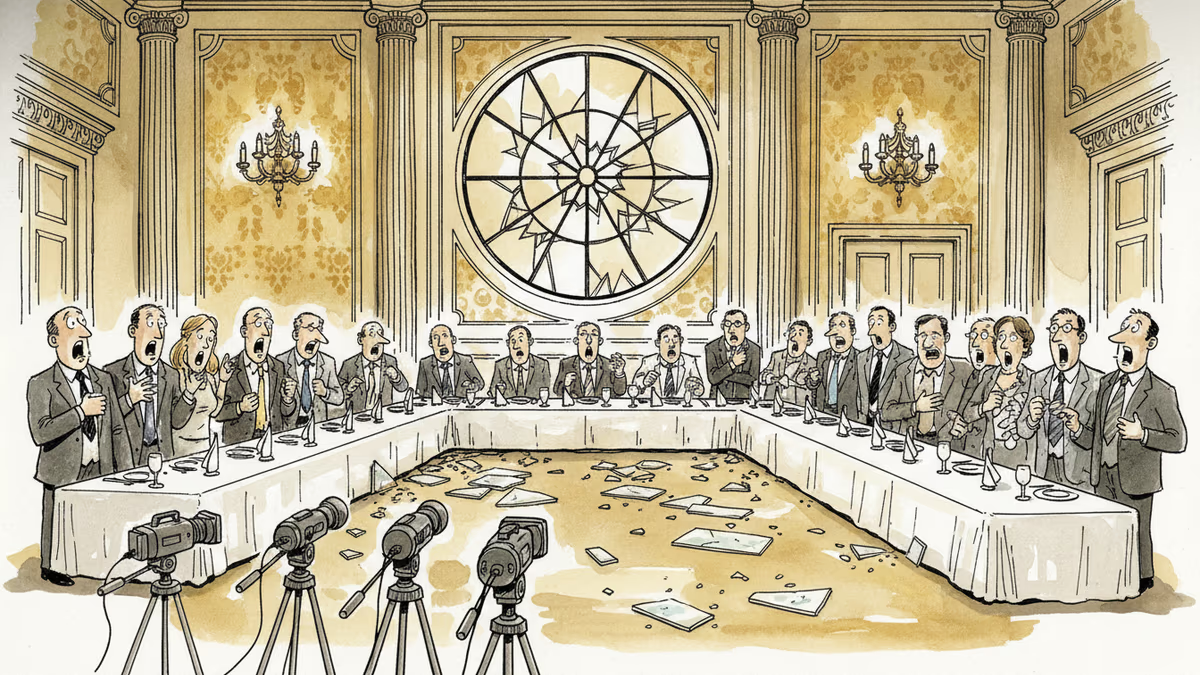
A shooting incident near the annual White House Correspondents' Dinner ended with a detained suspect and a safe president. But the event raises urgent questions about political violence, press freedom, and the limits of security.
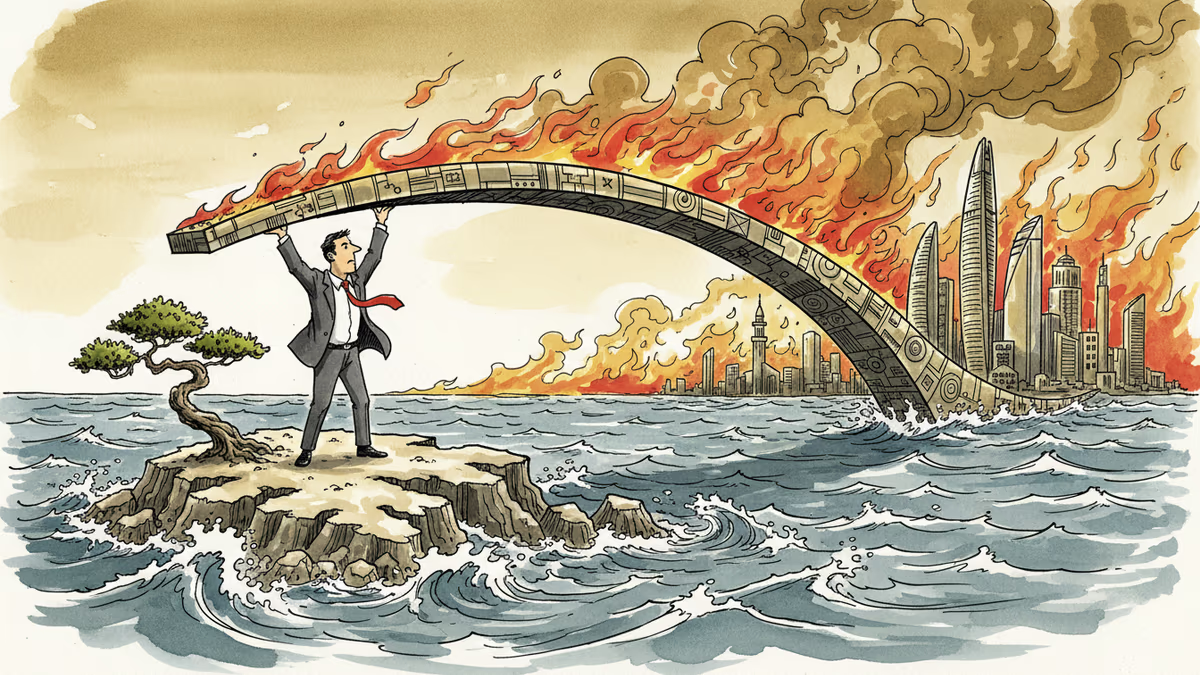
Hong Kong built its post-Western pivot around Gulf financial hubs. Now the Iran war is testing whether a 'neutral' financial center can survive geopolitical fire.
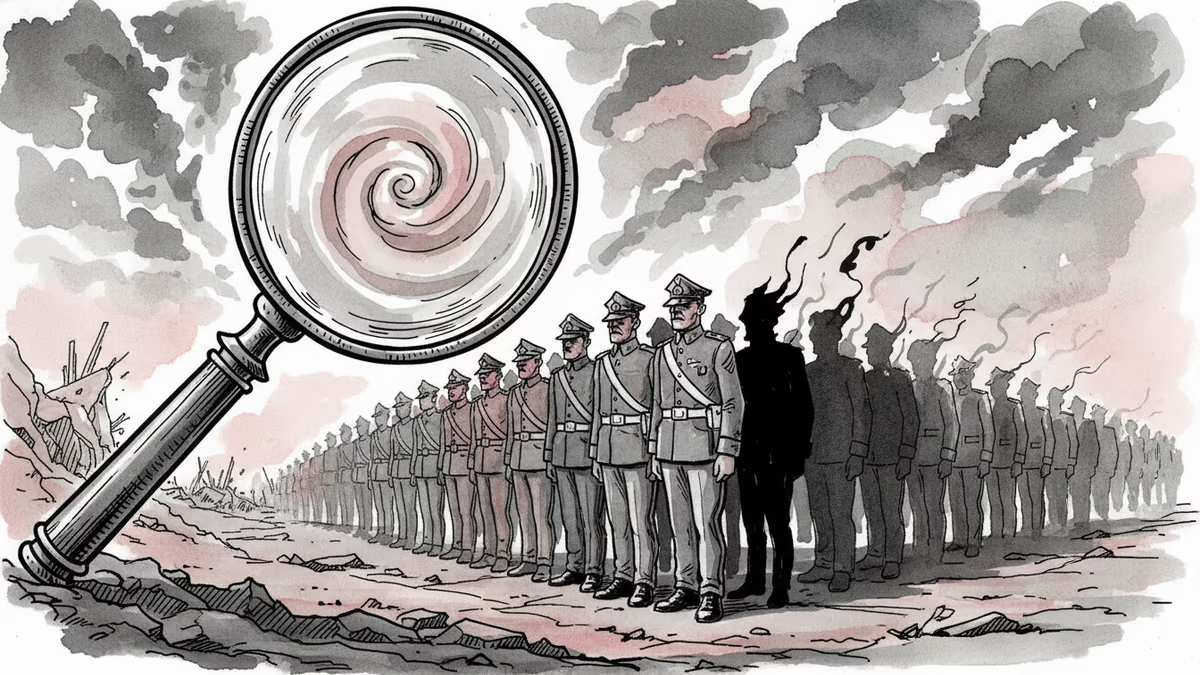
Xi Jinping vows to continue unprecedented military corruption crackdown as China's defense budget grows 7%. Analysis of power consolidation vs. military effectiveness.
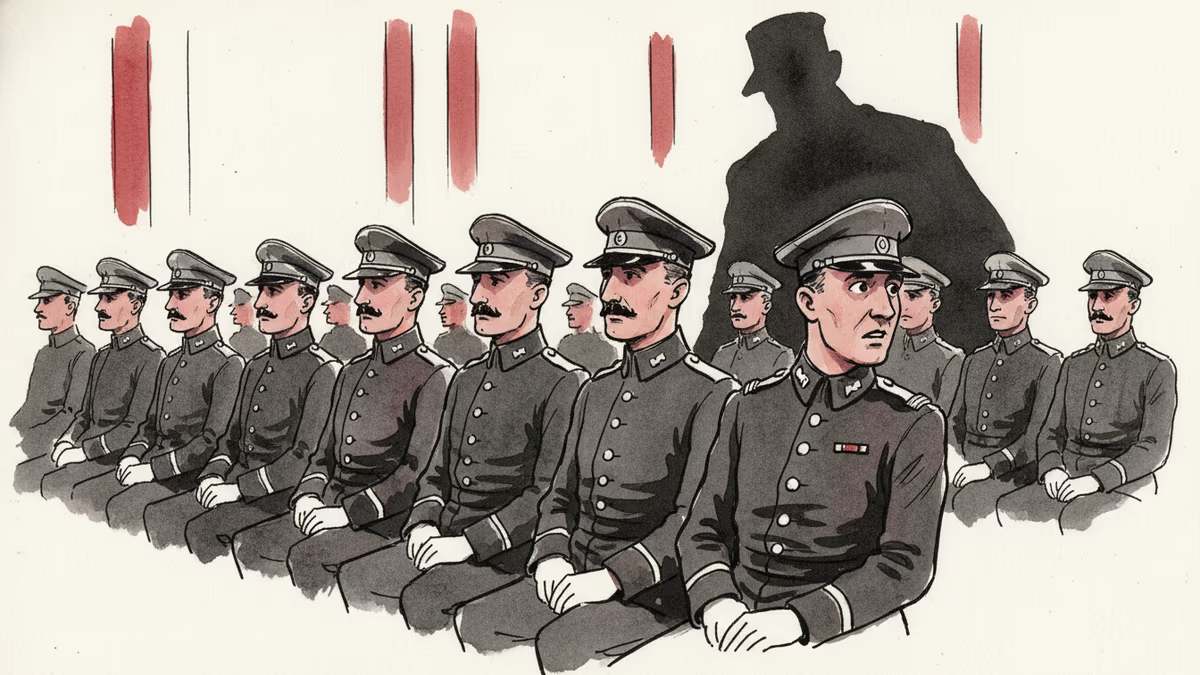
Chinese military officers display heightened loyalty at National People's Congress as corruption crackdown creates tension within PLA ranks. Analysis of Xi's consolidation strategy.
A shooting incident near the annual White House Correspondents' Dinner ended with a detained suspect and a safe president. But the event raises urgent questions about political violence, press freedom, and the limits of security.
Hong Kong built its post-Western pivot around Gulf financial hubs. Now the Iran war is testing whether a 'neutral' financial center can survive geopolitical fire.
Xi Jinping vows to continue unprecedented military corruption crackdown as China's defense budget grows 7%. Analysis of power consolidation vs. military effectiveness.
Chinese military officers display heightened loyalty at National People's Congress as corruption crackdown creates tension within PLA ranks. Analysis of Xi's consolidation strategy.
Thoughts
Share your thoughts on this article
Sign in to join the conversation