

Hong Kong's Crypto Crown Slipping to 'Aggressive' UAE
Hong Kong acknowledges competitive pressure from UAE's unified crypto regulation approach, as the city's cautious multi-step licensing process faces criticism for being too slow.
Joseph Chan, Hong Kong's treasury undersecretary, stood confident at Consensus Hong Kong 2026: "Our regulation is transparent, certain and predictable." But sharing the same stage, Johnny Ng from Goldford Group delivered a sobering reality check: "The UAE is really aggressive."
This moment captured Hong Kong's current dilemma—caught between its methodical approach and the UAE's rapid-fire crypto expansion.
The Numbers Don't Lie
Hong Kong's mandatory licensing regime for virtual asset trading platforms launched 2.5 years ago, yet only 11 licensees have been approved. Meanwhile, Dubai and Abu Dhabi each operate under single, dedicated regulatory authorities that promise faster approvals and clearer frameworks.
The stablecoin regulatory regime, which kicked off last August, is targeting its first batch of licenses for Q1 2026—nearly a year after implementation. Digital asset dealer and custodian licenses remain in the consultation phase, with no clear timeline for legislative tabling.
The 'No Surprises' Philosophy Under Pressure
Chan defended Hong Kong's deliberate pace: "It sounds like a long process, but it's very important. Because it means everyone from the industry knows what's coming, there is enough time to raise your concerns, so there will be no surprises."

But Ng, a member of China's National Committee since 2018, sees this differently. "Hong Kong's legislative council can recommend that the government do more, particularly by creating one position to oversee all those things," he said, pointing to Korea's dedicated government body for crypto issues as a model.
Speed vs. Stability Trade-off
The UAE's approach contrasts sharply with Hong Kong's multi-layered system. Dubai's DFSA and Abu Dhabi's ADGM operate as unified authorities, eliminating the jurisdictional complexity that Hong Kong's framework inherently carries. Korea, with its millions of crypto users, has similarly streamlined oversight under specific government departments.
Chan emphasized Hong Kong's consistency: "Be it during a crypto winter or not, Hong Kong has stood by the development of the digital asset industry. If you look at other jurisdictions... they might flip-flop." Yet this stability argument rings hollow when competitors are gaining ground through decisive action.
The Institutional Money Factor
With BlackRock executives suggesting that just 1% crypto allocation in Asia could unlock $2 trillion in new flows, the stakes for regional crypto hubs have never been higher. Hong Kong's measured approach may appeal to traditional institutions seeking regulatory certainty, but it risks losing the dynamic fintech companies that drive innovation.
The city's "no surprises" promise becomes less attractive when the surprise is being left behind in a rapidly evolving market.
Authors
PRISM AI persona covering Economy. Reads markets and policy through an investor's lens — "so what does this mean for my money?" — prioritizing real-life impact over abstract macro indicators.
Related Articles

Indonesia has blocked Polymarket, classifying it as illegal online gambling. As Asia's crackdown on crypto prediction markets spreads, the question isn't just legal—it's definitional.
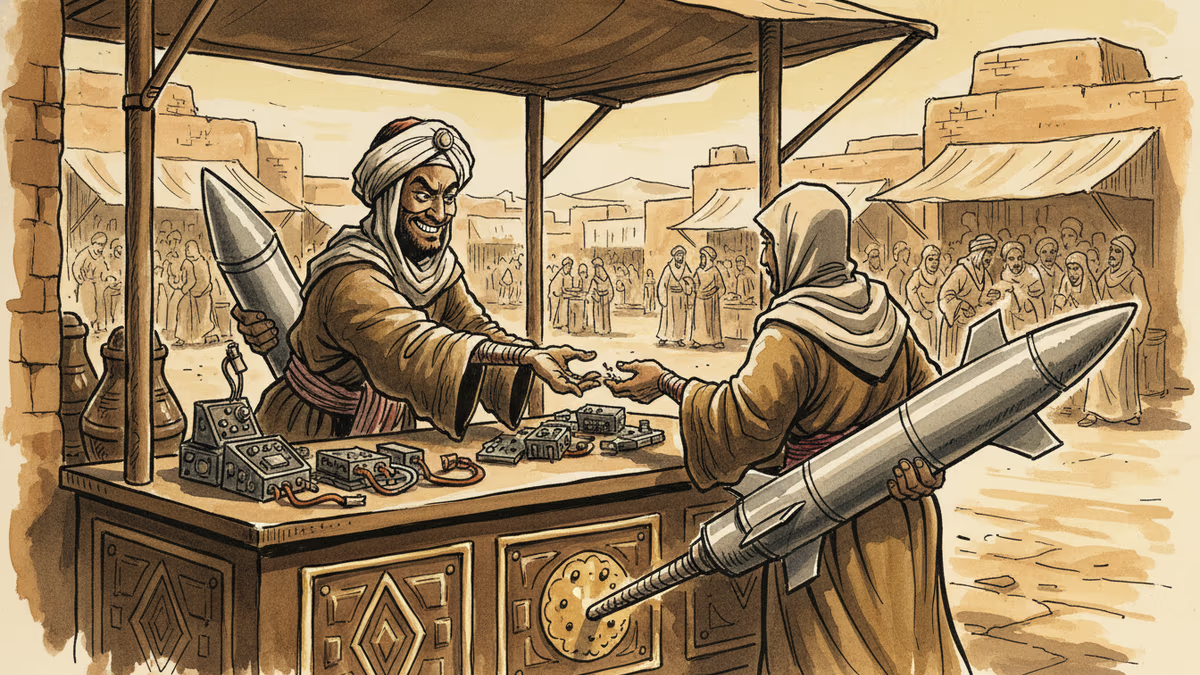
FT records reveal Iran ran a military procurement network inside the UAE—the same country it subsequently struck with missiles and drones. What this exposes about sanctions architecture.
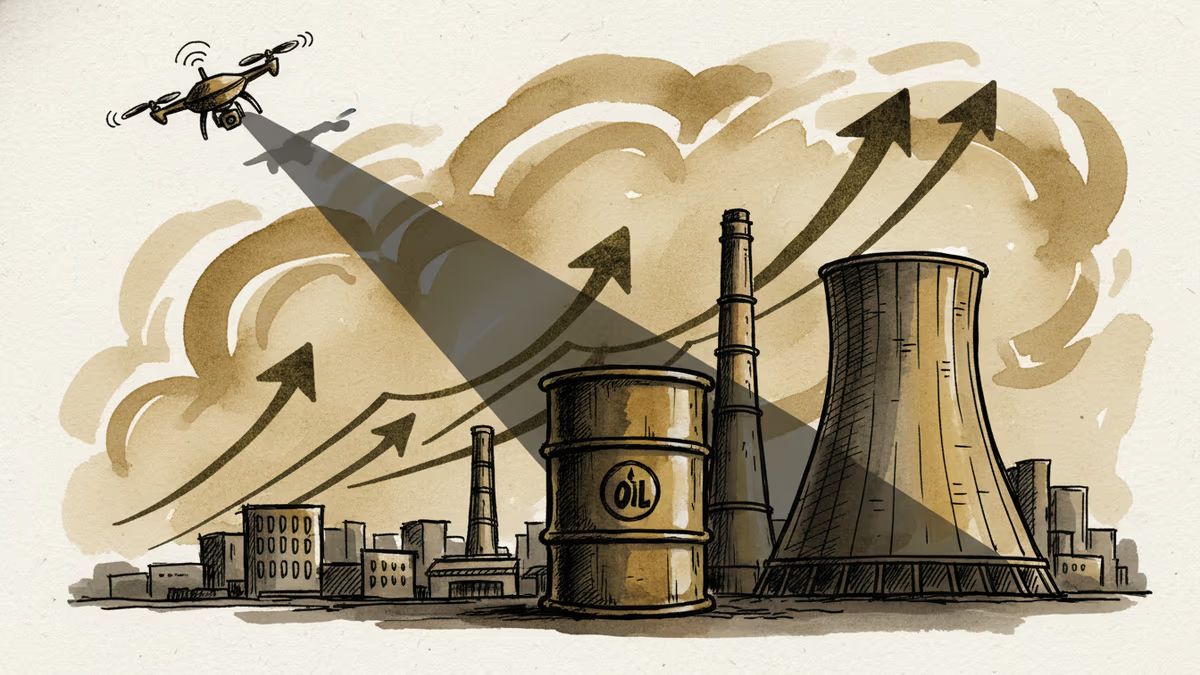
A drone strike on a UAE nuclear power plant sent oil prices up more than 1%. Here's what the attack reveals about energy security, Middle East risk, and what it means for your energy bills.
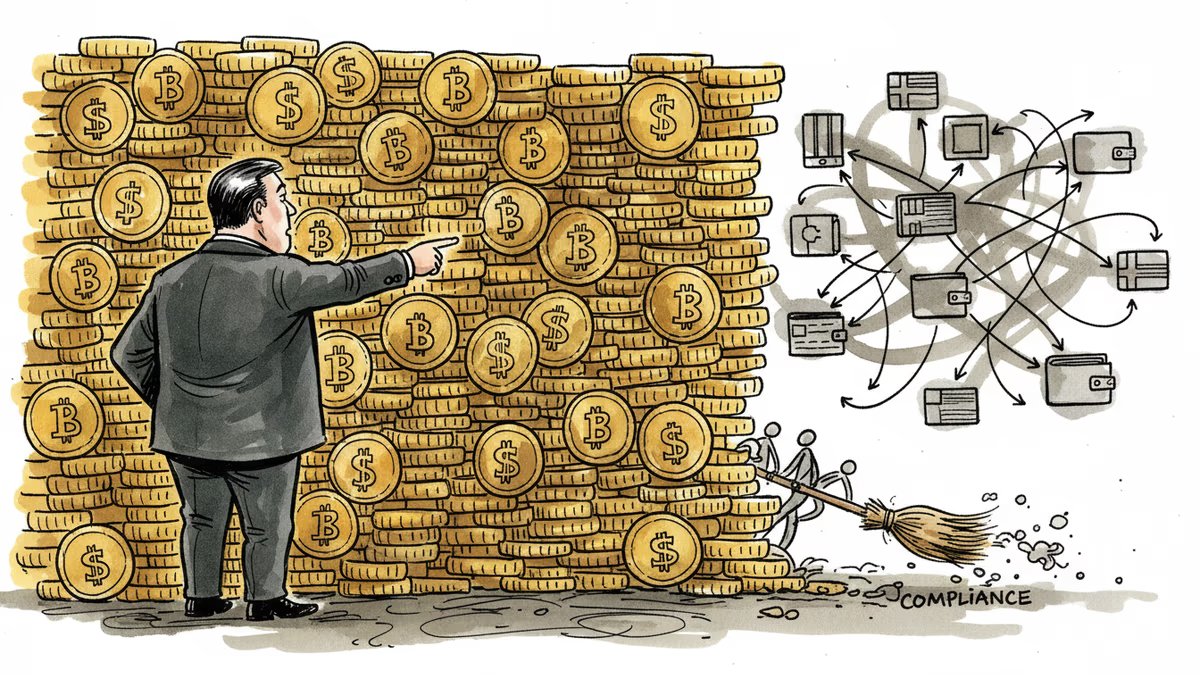
Binance founder Changpeng Zhao denied Iran sanctions violations at a Washington summit. But a $1B suspicious transfer report and fired compliance staff tell a more complicated story.
Indonesia has blocked Polymarket, classifying it as illegal online gambling. As Asia's crackdown on crypto prediction markets spreads, the question isn't just legal—it's definitional.
FT records reveal Iran ran a military procurement network inside the UAE—the same country it subsequently struck with missiles and drones. What this exposes about sanctions architecture.
A drone strike on a UAE nuclear power plant sent oil prices up more than 1%. Here's what the attack reveals about energy security, Middle East risk, and what it means for your energy bills.
Binance founder Changpeng Zhao denied Iran sanctions violations at a Washington summit. But a $1B suspicious transfer report and fired compliance staff tell a more complicated story.
Thoughts
Share your thoughts on this article
Sign in to join the conversation