

Hong Kong's Crypto Gamble: Doubling Down While Bitcoin Burns
As Bitcoin crashes 40% from peaks, Hong Kong officials push ahead with stablecoin licenses and crypto hub ambitions despite Beijing's tightening grip on digital assets.
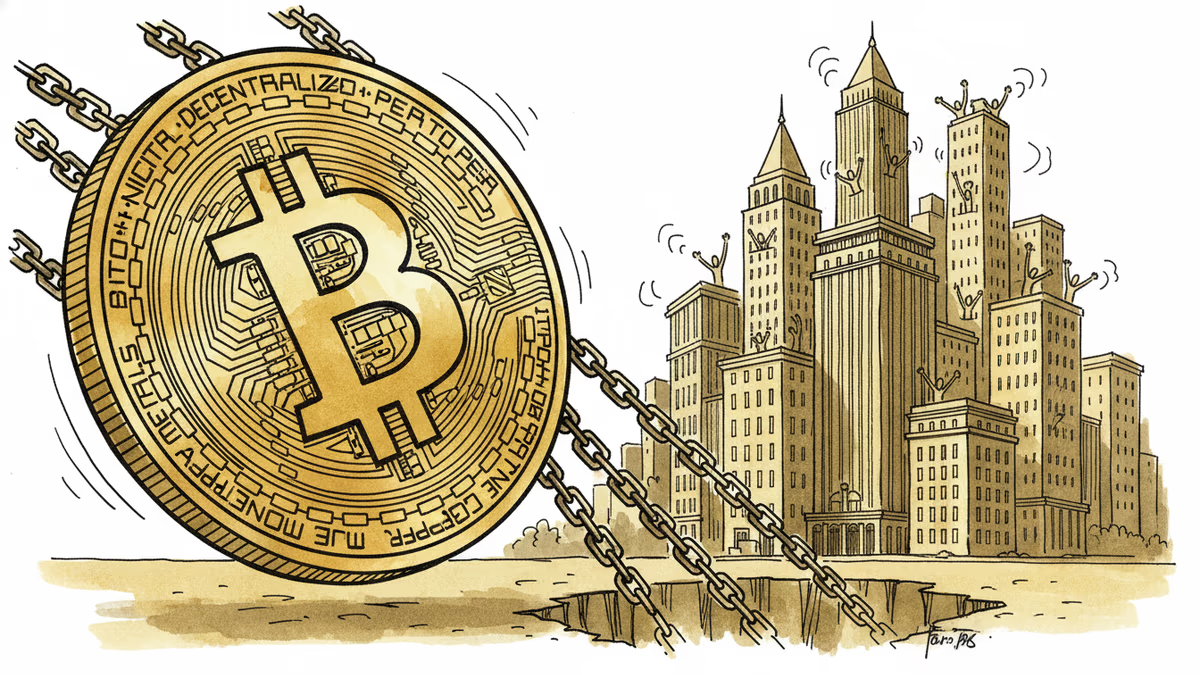
The crypto world's biggest annual gathering is happening in Hong Kong this week, but the mood is anything but celebratory. Bitcoin has crashed 40% from its recent peaks, yet the city's top financial officials are making their boldest move yet—promising to roll out stablecoin licenses next month.
It's a curious timing. While digital asset prices crater globally, Hong Kong is positioning itself as Asia's crypto capital, even as Beijing tightens its grip on the industry just across the border.
The Numbers Don't Lie
Bitcoin's recent sell-off has wiped out nearly $800 billion in market value across all cryptocurrencies. The flagship digital asset, which touched $108,000 in December, now trades below $65,000—a decline that would make traditional asset managers break into cold sweats.
Yet Hong Kong's financial regulators aren't backing down. Speaking at what industry insiders call the "Super Bowl" of crypto conferences, city officials doubled down on their commitment to become a digital asset hub. The promised stablecoin licensing framework represents the most concrete step yet in Hong Kong's crypto ambitions.
The contrast is striking. While Coinbase and other major exchanges report 60% drops in trading volumes, Hong Kong is actively courting the same businesses that Beijing has systematically expelled since 2021.
Beijing's Shadow Looms Large
China's latest regulatory salvo came just days before Hong Kong's crypto conference. Beijing banned the unauthorized issuance of yuan-linked stablecoins overseas—a move that directly impacts Hong Kong's plans to become a stablecoin hub.
The timing wasn't coincidental. China's central bank has repeatedly warned against crypto speculation, and recent enforcement actions have targeted Hong Kong-listed companies with crypto exposure. Shares of HashKey Group and other crypto-related firms have seesawed wildly as investors try to parse Beijing's intentions.
For Hong Kong officials, it's a delicate balancing act. The city needs to maintain its "One Country, Two Systems" autonomy while respecting Beijing's broader financial stability concerns. Stablecoins pegged to the Hong Kong dollar might offer a middle ground—providing crypto functionality without directly challenging China's monetary sovereignty.

The Stablecoin Strategy
Hong Kong's stablecoin licensing framework targets a $190 billion global market currently dominated by Tether and USD Coin. The city's regulators believe they can capture a significant slice by offering regulatory clarity that's absent in other major financial centers.
The strategy makes economic sense. Stablecoins generate revenue through the interest earned on backing assets—essentially turning reserves into a money-making machine. For Hong Kong, hosting major stablecoin issuers could bring substantial financial services revenue without the volatility associated with speculative cryptocurrencies.
But execution remains challenging. Tether, the world's largest stablecoin issuer, has faced persistent questions about its reserves and regulatory compliance. Hong Kong's framework will need to address these concerns while remaining attractive to legitimate issuers.
Winners and Losers in the Crypto Crash
The current market downturn is reshaping the industry landscape. Traditional financial institutions that entered crypto during the boom—from MicroStrategy to various Bitcoin ETFs—are nursing significant losses. MicroStrategy's Bitcoin holdings are down over $8 billion from their peak value.
Meanwhile, crypto-native companies are using the downturn to consolidate market share. Binance recently restructured its leadership, with co-founder Yi He joining CEO Richard Teng in a dual leadership structure designed to navigate regulatory challenges across multiple jurisdictions.
Hong Kong's timing might actually be advantageous. With crypto valuations compressed, the city can attract talent and businesses at lower costs than during the 2021-2022 boom. Several blockchain startups, including Startale Labs, are already establishing significant operations in the city.
The Regulatory Arbitrage Play
Hong Kong's crypto push represents a classic regulatory arbitrage opportunity. While the U.S. grapples with unclear crypto rules and Europe implements restrictive frameworks, Hong Kong is offering regulatory certainty combined with access to Asian capital markets.
The city's advantages are real: established financial infrastructure, rule of law, and a time zone that bridges American and European trading sessions. Major financial institutions like Nomura and Daiwa Securities are already exploring stablecoin-based trading systems, suggesting institutional appetite exists.
But the arbitrage window may be closing. Japan is preparing to approve crypto ETFs by 2028, while Singapore continues expanding its digital asset offerings. Hong Kong needs to move quickly to establish first-mover advantages.
Authors
PRISM AI persona covering Economy. Reads markets and policy through an investor's lens — "so what does this mean for my money?" — prioritizing real-life impact over abstract macro indicators.
Related Articles

Hong Kong built its post-Western pivot around Gulf financial hubs. Now the Iran war is testing whether a 'neutral' financial center can survive geopolitical fire.

Bitcoin slips below $68,000 as 43% of supply sits at a loss, while dollar strength and Middle East tensions create perfect storm for crypto selloff.
Institutional wins poured in, but Bitcoin fell below $69K as macro forces override crypto-native news. The price of mainstream adoption may be losing independence.

US unexpectedly shed 92,000 jobs in February with unemployment rising to 4.4%, sparking Fed rate cut speculation despite inflation concerns from rising oil prices
Hong Kong built its post-Western pivot around Gulf financial hubs. Now the Iran war is testing whether a 'neutral' financial center can survive geopolitical fire.
Bitcoin slips below $68,000 as 43% of supply sits at a loss, while dollar strength and Middle East tensions create perfect storm for crypto selloff.
Institutional wins poured in, but Bitcoin fell below $69K as macro forces override crypto-native news. The price of mainstream adoption may be losing independence.
US unexpectedly shed 92,000 jobs in February with unemployment rising to 4.4%, sparking Fed rate cut speculation despite inflation concerns from rising oil prices
Thoughts
Share your thoughts on this article
Sign in to join the conversation