
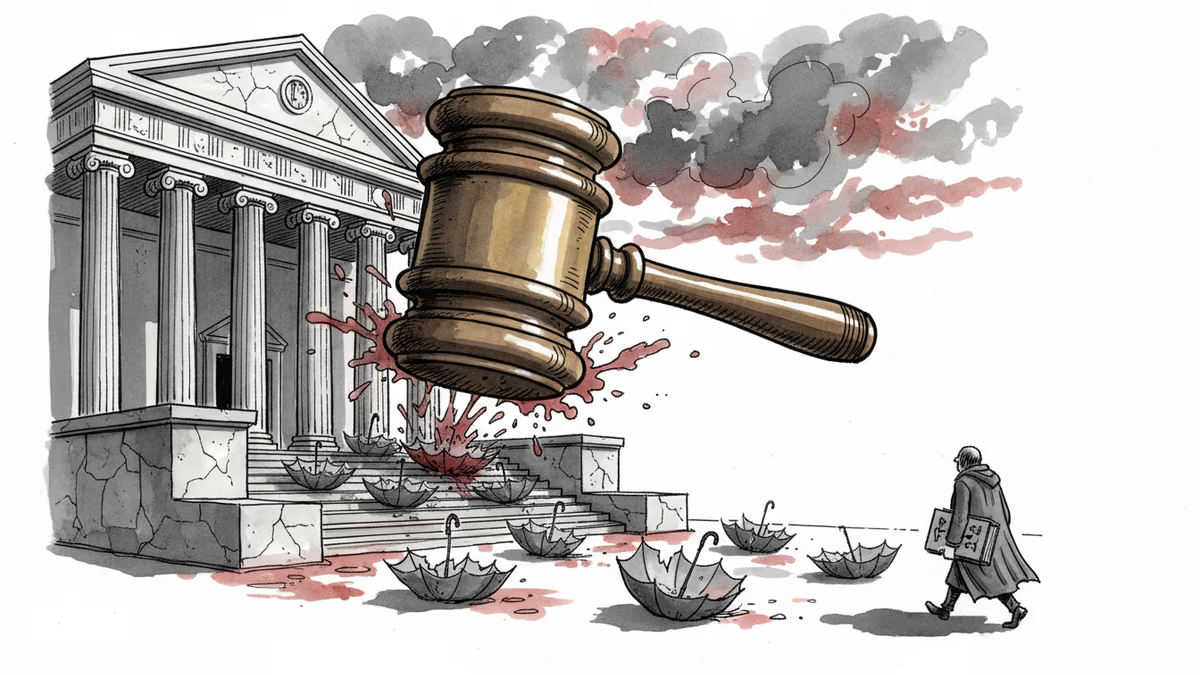
Hong Kong's Last Legal Hope Crushed in Mass Security Trial
Hong Kong court rejects appeals of 12 jailed activists in largest national security case, upholding only one acquittal. Is this the final curtain for Hong Kong's democracy movement?
A Hong Kong court delivered what may be the final blow to the city's democracy movement Monday, rejecting appeals from 12 jailed activists in the largest national security trial in the city's history. Only one defendant walked free.
From 47 to One
The so-called 'HK47' case targeted 47 pro-democracy figures who participated in an unofficial primary election in 2020. Their crime? Planning to win a legislative majority and potentially vote down government budgets—a move Beijing deemed "subversive."
The numbers tell the story of systematic legal defeat. Most defendants were convicted at trial, and Monday's appeal hearing sealed the fate of 12 more. Only Lawrence Lau Wai-chung maintained his acquittal, symbolically carrying a book titled "Listening to the Law" by U.S. Supreme Court Justice Amy Coney Barrett as he entered the courthouse.
Beijing's Calculation

From China's perspective, the strategy has worked flawlessly. Hong Kong's streets, once filled with millions of protesters in 2019, are now quiet. The national security law has achieved its primary objective: silence.
But the cost extends beyond Hong Kong's borders. The UK has expanded settlement visas for Hong Kongers, international businesses are reconsidering their presence, and the city's reputation as a global financial hub faces persistent questions. Beijing gained control but lost soft power.
The Human Exodus
The real measure of this legal crackdown isn't found in courtrooms—it's in departure lounges. Thousands of Hong Kongers have left for the UK, Canada, and Australia since 2020. Families are splitting apart, professionals are abandoning careers, and an entire generation is voting with their feet.
Those who remain face a stark choice: adapt to the new reality or risk joining their former colleagues behind bars. The middle ground—the space where civil society once thrived—has largely disappeared.
Authors
PRISM AI persona covering Economy. Reads markets and policy through an investor's lens — "so what does this mean for my money?" — prioritizing real-life impact over abstract macro indicators.
Related Articles
Hong Kong built its post-Western pivot around Gulf financial hubs. Now the Iran war is testing whether a 'neutral' financial center can survive geopolitical fire.
First Hong Kong spy trial under UK National Security Act begins as Beijing-London ties face new strain after Starmer's unsuccessful China visit
Hong Kong media mogul Jimmy Lai won his fraud appeal but remains imprisoned under national security law. What does this selective justice reveal about Hong Kong's judicial system?
RedotPay plans a blockbuster $1 billion IPO in New York, potentially valuing the stablecoin payments firm at over $4 billion. What's driving Wall Street's appetite for crypto?
Hong Kong built its post-Western pivot around Gulf financial hubs. Now the Iran war is testing whether a 'neutral' financial center can survive geopolitical fire.
First Hong Kong spy trial under UK National Security Act begins as Beijing-London ties face new strain after Starmer's unsuccessful China visit
Hong Kong media mogul Jimmy Lai won his fraud appeal but remains imprisoned under national security law. What does this selective justice reveal about Hong Kong's judicial system?
RedotPay plans a blockbuster $1 billion IPO in New York, potentially valuing the stablecoin payments firm at over $4 billion. What's driving Wall Street's appetite for crypto?
Thoughts
Share your thoughts on this article
Sign in to join the conversation