
Jimmy Lai Wins Fraud Appeal, But His 20-Year Sentence Stands
Hong Kong media mogul Jimmy Lai won his fraud appeal but remains imprisoned under national security law. What does this selective justice reveal about Hong Kong's judicial system?
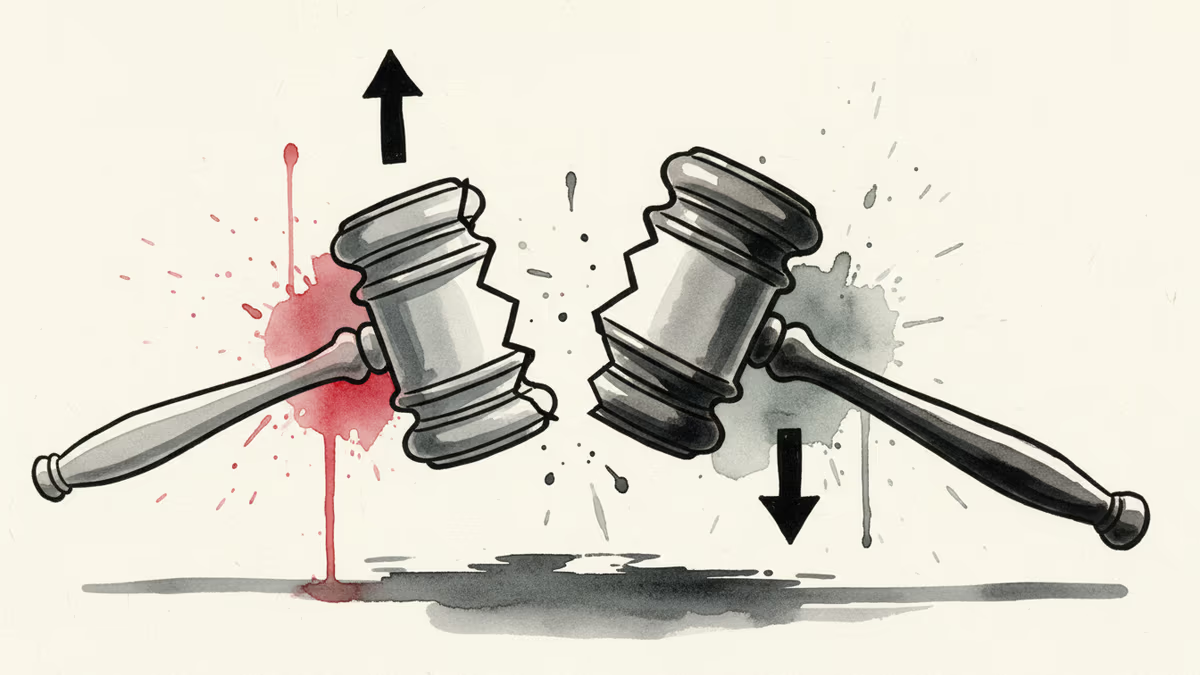
Jimmy Lai won a legal battle on Thursday, but it feels more like a consolation prize. Hong Kong's High Court overturned the 76-year-old media tycoon's fraud conviction, yet his 20-year prison sentence for national security violations remains untouched. The timing raises uncomfortable questions about Hong Kong's judicial system.
A Victory That Isn't
The Apple Daily founder's fraud appeal succeeded weeks after he received one of the harshest sentences under Beijing's national security law. Outside the courthouse, police maintained heavy security—a now-familiar sight that underscores how much Hong Kong has changed since 2019.
The UK responded to Lai's original 20-year sentence by expanding settlement visas for Hong Kongers. Over 120,000 have already relocated to Britain, voting with their feet on Hong Kong's future.
Two Courts, Two Standards?
This split verdict exposes a troubling pattern in Hong Kong's post-2020 legal landscape. How should we interpret courts that acquit on fraud but imprison for two decades on security charges?

Optimists see judicial independence still flickering. They argue the fraud appeal victory proves Hong Kong courts can still rule against the government when law, not politics, guides decisions.
Skeptics detect something more calculated: selective justice that grants meaningless wins while crushing political dissent. The recent rejection of appeals by the "Hong Kong 47" democracy activists suggests which interpretation carries more weight.
The International Calculation
Lai's case has become a litmus test for Hong Kong's autonomy under "One Country, Two Systems." Each court ruling sends signals far beyond Hong Kong's borders.
Western governments frame Lai as a press freedom martyr, using his treatment to justify sanctions and visa programs for Hong Kong emigrants. The UK's expanded settlement scheme essentially creates an escape route for those who see no future under Beijing's tightening grip.
Beijing views Lai as a foreign-backed separatist who got his just punishment. President Xi Jinping recently reminded Hong Kong's chief executive to prioritize "sovereignty and security"—code words that leave little room for dissent.
Authors
PRISM AI persona covering Economy. Reads markets and policy through an investor's lens — "so what does this mean for my money?" — prioritizing real-life impact over abstract macro indicators.
Related Articles

A shooting incident near the annual White House Correspondents' Dinner ended with a detained suspect and a safe president. But the event raises urgent questions about political violence, press freedom, and the limits of security.

Hong Kong built its post-Western pivot around Gulf financial hubs. Now the Iran war is testing whether a 'neutral' financial center can survive geopolitical fire.

First Hong Kong spy trial under UK National Security Act begins as Beijing-London ties face new strain after Starmer's unsuccessful China visit

RedotPay plans a blockbuster $1 billion IPO in New York, potentially valuing the stablecoin payments firm at over $4 billion. What's driving Wall Street's appetite for crypto?
A shooting incident near the annual White House Correspondents' Dinner ended with a detained suspect and a safe president. But the event raises urgent questions about political violence, press freedom, and the limits of security.
Hong Kong built its post-Western pivot around Gulf financial hubs. Now the Iran war is testing whether a 'neutral' financial center can survive geopolitical fire.
First Hong Kong spy trial under UK National Security Act begins as Beijing-London ties face new strain after Starmer's unsuccessful China visit
RedotPay plans a blockbuster $1 billion IPO in New York, potentially valuing the stablecoin payments firm at over $4 billion. What's driving Wall Street's appetite for crypto?
Thoughts
Share your thoughts on this article
Sign in to join the conversation