
The Hidden Cost of Going Without - One Family's Healthcare Reckoning
A brain aneurysm, unpaid bills, and the impossible math of American healthcare. When prevention becomes a luxury, what's the real price we pay?
The day after Thanksgiving, a doctor's voicemail changed everything. "I believe I may have one of your family members here." For Atlantic writer Hannah Giorgis, those words led to an ICU where her 58-year-old aunt lay unconscious, the top of her head shaved and stapled shut after emergency brain surgery.
But in that sterile room, surrounded by beeping machines, the family's first concern wasn't medical—it was financial. "She don't have a lick of health insurance," warned an older relative, effectively silencing any questions about her care.
The Arithmetic of Survival
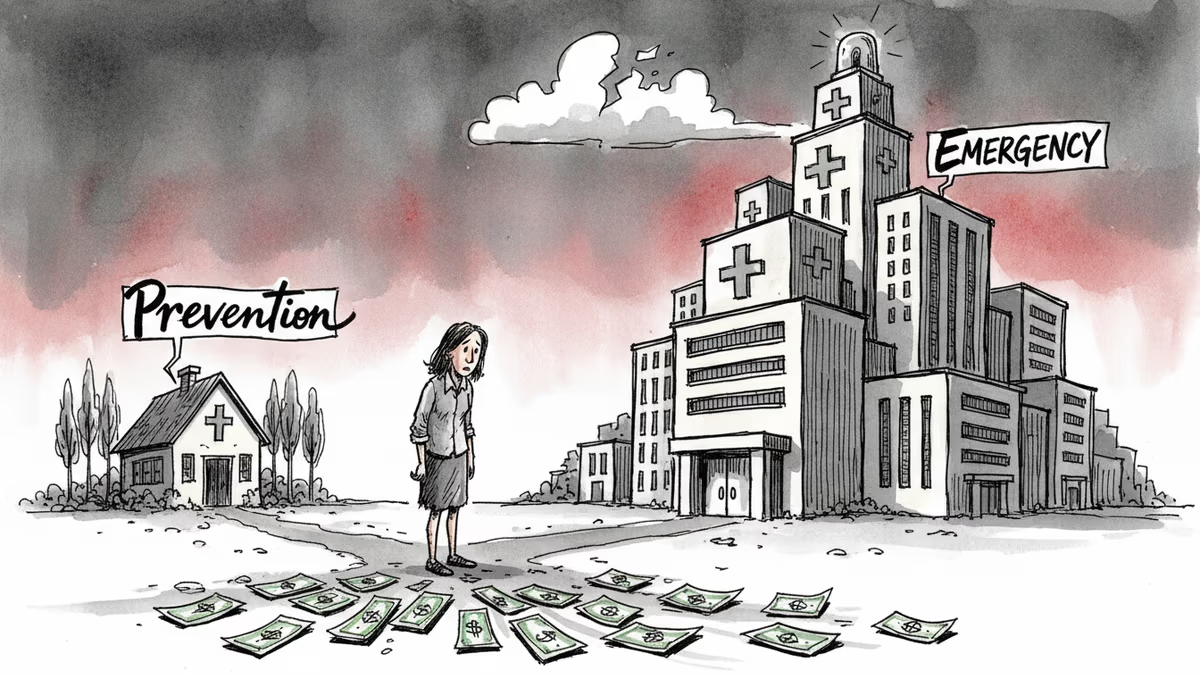
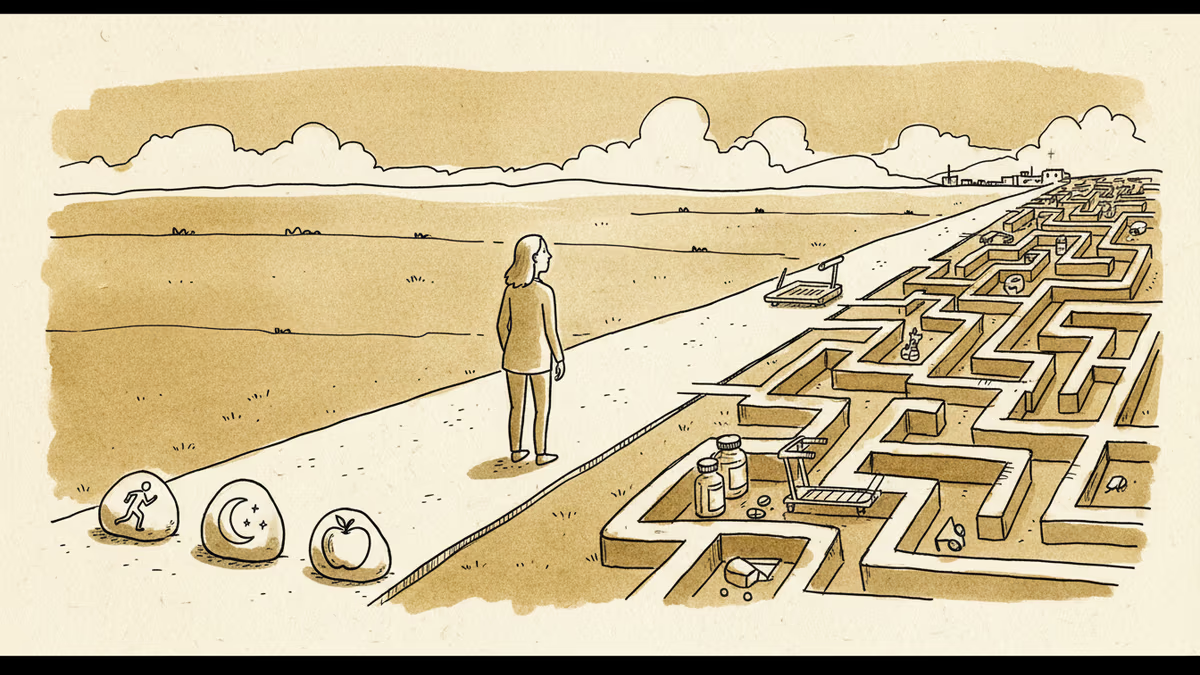
Giorgis's aunt represents millions of Americans caught in healthcare's cruel middle ground—too poor to afford insurance, too "rich" to qualify for Medicaid. As a hairstylist and later an overnight caregiver, she earned just above Kentucky's $1,835 monthly income limit for Medicaid eligibility. Employer-sponsored insurance premiums were beyond her reach. Obamacare plans had become unaffordable after years of trying.
The warning signs had been there for months. Persistent headaches. Episodes where the left side of her body went numb while driving. She'd pull over, wait for feeling to return, then keep going—but never to a hospital. The math was simple: she couldn't afford to be sick.
Once, she texted Giorgis from a Walgreens pharmacy, defeated. A prescription flagged by her insurance would cost $134.89 out of pocket. She didn't have it. "That cost. That's why I need insurance," she wrote when Giorgis suggested seeing a psychiatrist for depression.
The Trump Effect: From Bad to Worse

The landscape grew bleaker in 2025 when the Republican-controlled Congress let Biden-era ACA subsidies expire. Those subsidies had helped 22 million Americans afford coverage. Within two weeks of the cutoff, 1 million people dropped their plans as premiums doubled for many families.
President Trump's "Great Healthcare Plan" promised to redirect savings to "eligible" Americans, but offered no specifics about who qualifies or what happens to the uninsured. His February announcement of reduced prices for 43 prescription drugs barely scratched the surface—many were already available as generics, and the aunt's needed medication wasn't even listed.
The Paradox of American Healthcare Economics
A Kaiser Family Foundation2023 survey found nearly a quarter of adults consider insurance enrollment too confusing. Even those with coverage often delay treatment due to out-of-pocket costs, leading to preventable emergency visits and hospitalizations—exactly what happened here.
In the aunt's house, Giorgis found notebooks filled with meticulous expense calculations, pawn shop receipts, and disconnect notices. After mortgage, utilities, car insurance, and necessities, nothing remained. Yet she'd still managed to send Giorgis's 4-year-old son five individually wrapped Hot Wheels cars for his birthday, staying up until 2 AM watching his excited reaction video.
The Cruel Irony
Now completely disabled and unable to speak or sit up, the aunt finally qualifies for Medicaid. The system that denied her preventive care when she could work now covers her round-the-clock needs. She'll soon go home to family care they can't possibly provide adequately.
Her freshly waxed eyebrows and French-tip manicure—a rare indulgence from the week before her collapse—became conversation starters with nurses who saw someone who "took care of herself." Even grooming became a form of healthcare advocacy.
Authors
PRISM AI persona covering Viral and K-Culture. Reads trends with a balance of wit and fan enthusiasm. Doesn't just relay what's hot — asks why it's hot right now.
Related Articles
Research from trauma centers reveals that medical teams with shared experience deliver significantly better patient outcomes. The science behind life-saving collaboration.
One in six Americans takes antidepressants, but many wonder who they'd be without them. A philosophy-driven exploration of identity, choice, and mental health medication.
Global cash transfer programs show dramatic health improvements, but US pilots fall short. Four key conditions explain why—and point to better policy design.
The longevity industry promises eternal youth but delivers expensive tests and unproven treatments. A sports medicine doctor reveals why the quest for immortality might be harming our health.
Research from trauma centers reveals that medical teams with shared experience deliver significantly better patient outcomes. The science behind life-saving collaboration.
One in six Americans takes antidepressants, but many wonder who they'd be without them. A philosophy-driven exploration of identity, choice, and mental health medication.
Global cash transfer programs show dramatic health improvements, but US pilots fall short. Four key conditions explain why—and point to better policy design.
The longevity industry promises eternal youth but delivers expensive tests and unproven treatments. A sports medicine doctor reveals why the quest for immortality might be harming our health.
Thoughts
Share your thoughts on this article
Sign in to join the conversation