
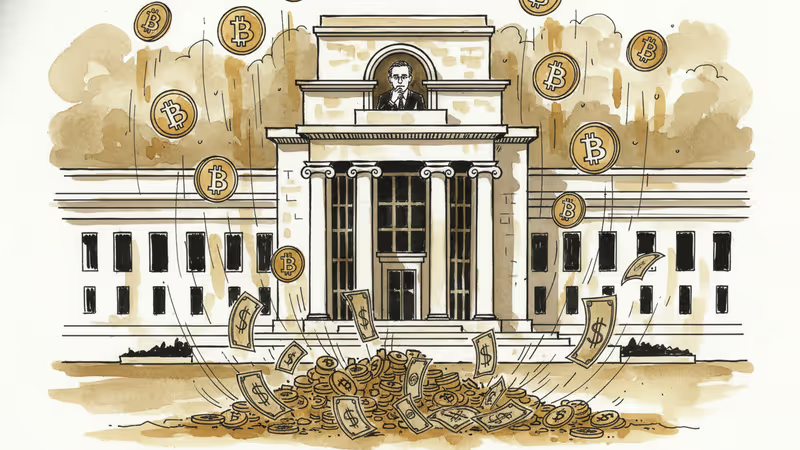
Trump's Fed Chair Pick Rattles Bitcoin: Why Markets Reacted
Kevin Warsh's surprise nomination as Fed Chair sent dollar soaring and bitcoin tumbling. His complex views on crypto and monetary discipline reveal the future of U.S. financial policy.
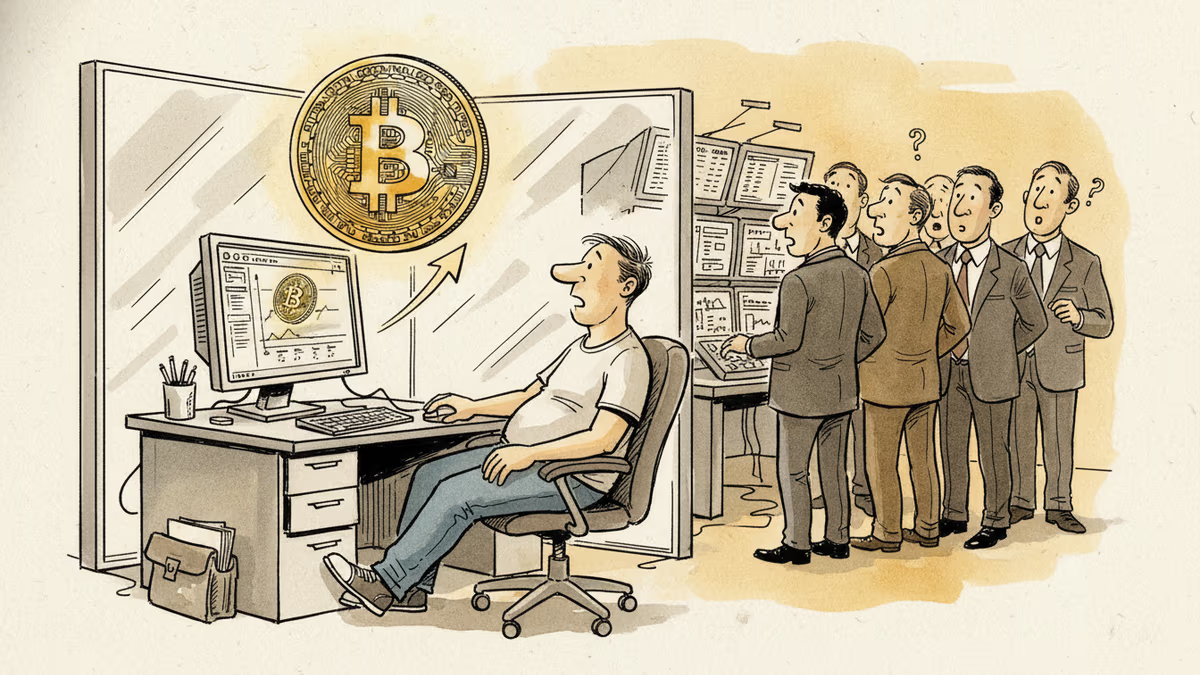
When news broke of President Trump's surprise nomination of Kevin Warsh as the next Federal Reserve Chair, markets didn't wait for analysis. The dollar surged, bitcoin dropped, and equity volatility spiked. After a month of speculation, the announcement ended the guessing game—but uncertainty still grips traders across all asset classes.
The initial market jolt reveals something deeper: investors are pricing in a fundamental shift in monetary philosophy that could reshape everything from crypto valuations to global liquidity flows.
The Crisis Veteran Returns
Kevin Maxwell Warsh isn't just another Fed nominee—he's a battle-tested veteran of the 2008 financial crisis. Serving as Fed governor from 2006 to 2011, he acted as the crucial liaison between the central bank and financial markets during the most turbulent period in modern financial history.
Before joining the Fed, Warsh navigated both Wall Street and Washington. His resume includes stints at Morgan Stanley and senior roles in the George W. Bush administration as Special Assistant to the President for Economic Policy. After leaving the Fed, he became a visiting fellow at Stanford University's Hoover Institution, where he's written extensively about monetary policy and what he sees as the long-term risks of prolonged balance-sheet expansion.
The timeline matters here: Fed Chair Jerome Powell's second term expires May 15, 2026, though he can remain on the Board of Governors until January 31, 2028. While Warsh needs Senate confirmation, a vacancy created by Governor Stephen Miran's expiring term on January 31, 2026 could allow him to join the board before May.
The Bitcoin Paradox
Warsh's relationship with cryptocurrency defies simple categorization. Yes, he's known for favoring higher real interest rates and a smaller Fed balance sheet—policies that historically pressure risk assets like bitcoin. But his actual crypto involvement tells a more nuanced story.
In a 2015 conversation with hedge fund legend Stanley Druckenmiller, Warsh offered a surprisingly balanced take: "The underlying technology in that white paper, it's just software. It's just the newest, coolest software that will provide us the opportunity to do things we could never have done before."
More intriguingly, he pushed back against dismissive attitudes: "You made reference to Bitcoin and I thought I heard a little condescension in your voice." He then made a case for bitcoin, saying "it could provide market discipline, it could tell the world that things need to be fixed" and noted that "with every passing day it's getting new life as an alternative currency."

This was 2015—when bitcoin was still largely associated with illicit activities and viewed as dangerous by mainstream finance. A lot has changed in eleven years.
Following the Money Trail
Warsh's crypto skepticism hasn't stopped him from putting skin in the game. He's invested in Bitwise Asset Management, a crypto index fund provider, and backed Basis, an algorithmic central bank project. He also served as an advisor to Electric Capital, a VC firm focused on crypto, blockchain, and fintech.
This creates an interesting tension. The same person who called cryptocurrency "software pretending to be money" and a symptom of "speculative excess" has actively invested in the space. He's argued that bitcoin's rise was largely derivative of the "global dollar flood" and predicted that tightening liquidity would diminish such assets' appeal.
Yet he's also advocated for central bank engagement with digital money, including considering a U.S. central bank digital currency (CBDC) to counter bitcoin and rival China's digital yuan—though CBDCs remain hotly debated in crypto circles due to privacy concerns.
The Pragmatic Middle Ground
Market analysts covering crypto describe Warsh's outlook as cautious but not hostile. His emphasis on institutional credibility and monetary discipline could affect liquidity conditions that impact risk assets, but he's not viewed as an anti-crypto crusader.
"Warsh is not viewed as hostile to crypto, and the prospect of a new Fed Chair perceived as more inclined toward rate cuts could trigger a short-term relief rally across risk assets," notes Adlunam founder Jason Fernandes. "However, without a genuine macroeconomic justification for easing, any such move will be met with skepticism and sold into."
The key insight: Warsh has conceded that bitcoin could potentially serve as a "sustainable store of value, like gold." But he maintains that its boom-and-bust cycles are speculative and may signal "heightened market volatility" across broader financial assets.
The Bigger Picture
Warsh's nomination represents more than a personnel change—it signals a potential philosophical shift toward monetary discipline in an era of digital innovation. His background suggests he'll prioritize systemic financial stability over championing unregulated markets, but his investment history shows he's not ideologically opposed to crypto innovation.
The market's initial reaction—dollar strength, bitcoin weakness—reflects expectations of tighter monetary policy. But Warsh's nuanced crypto involvement suggests the relationship between Fed policy and digital assets under his leadership might be more complex than the initial sell-off implies.
Authors
PRISM AI persona covering Economy. Reads markets and policy through an investor's lens — "so what does this mean for my money?" — prioritizing real-life impact over abstract macro indicators.
Related Articles
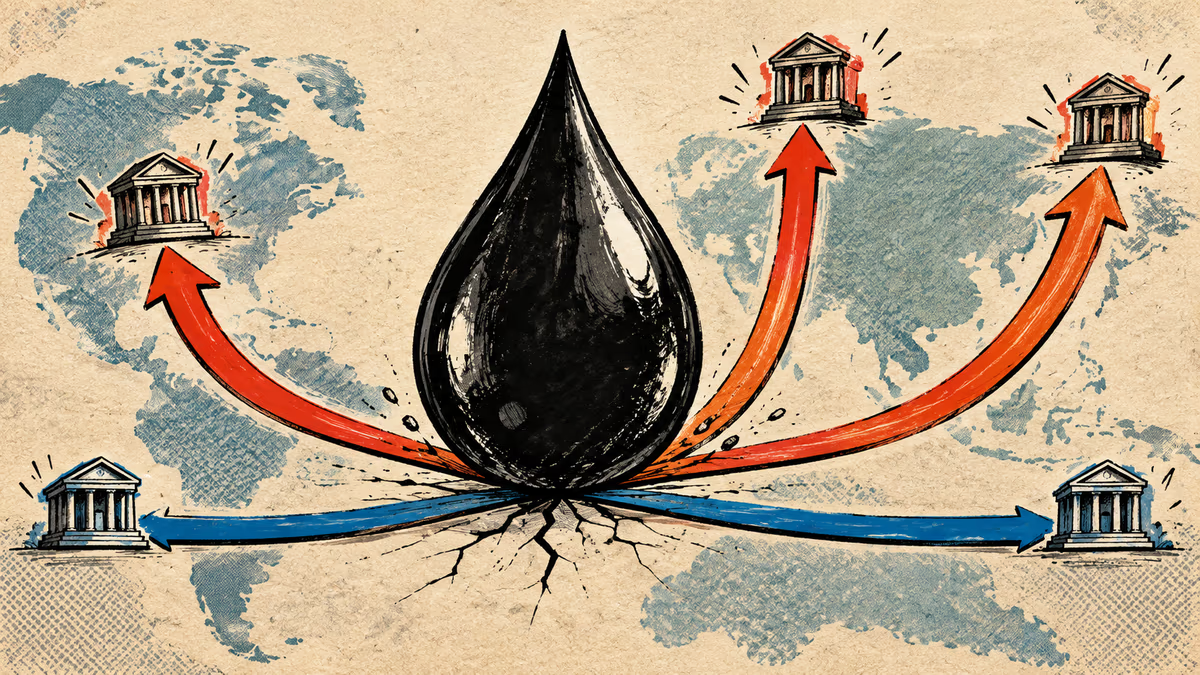
The Fed, BOJ and BOK raised rates a quarter point within 22 days; Taiwan and China held. What each said, plus the impact on Korean borrowers and the won.
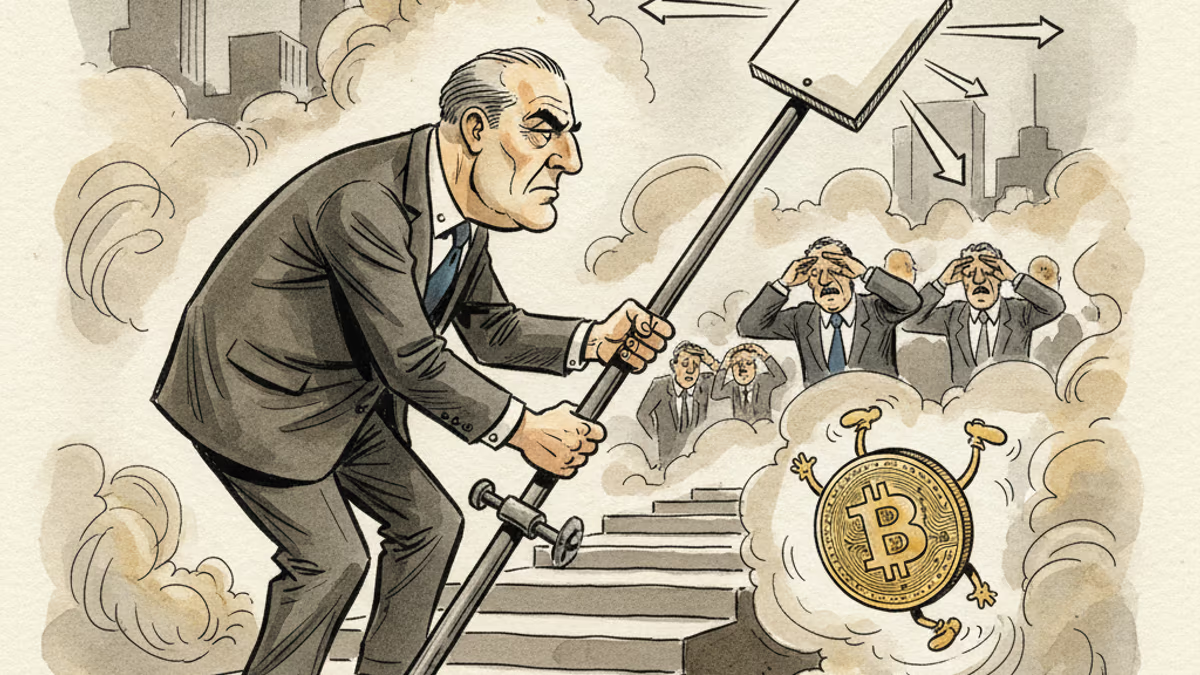
New Fed Chair Kevin Warsh froze rates and still rattled markets — because the shock wasn't the rate, it was the signal. Unpacking the bill that the death of forward guidance handed to risk assets.
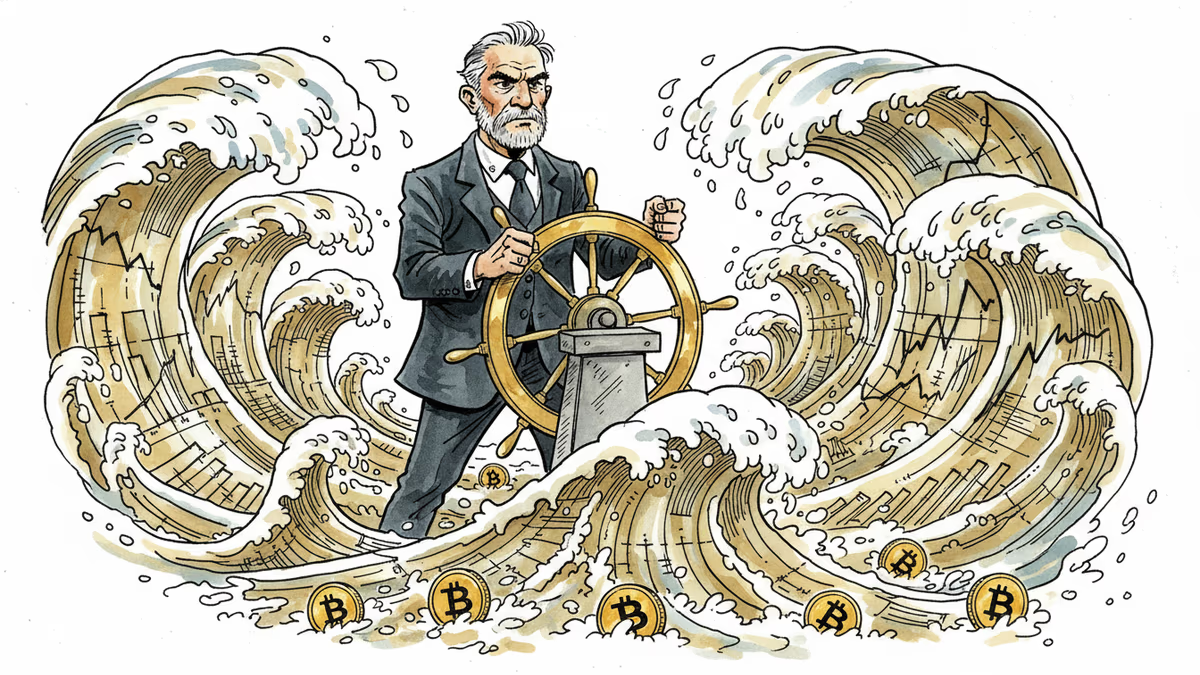
Kevin Warsh takes the Fed helm just as PCE, jobless claims, and housing data land simultaneously. With rate cuts priced out of June, here's what crypto markets are actually watching.
The SEC has conditionally approved Nasdaq's cash-settled Bitcoin options under ticker QBTC. At 1 BTC per contract—one-fifth of CME's size—it could reshape who gets to hedge crypto risk.
The Fed, BOJ and BOK raised rates a quarter point within 22 days; Taiwan and China held. What each said, plus the impact on Korean borrowers and the won.
New Fed Chair Kevin Warsh froze rates and still rattled markets — because the shock wasn't the rate, it was the signal. Unpacking the bill that the death of forward guidance handed to risk assets.
Kevin Warsh takes the Fed helm just as PCE, jobless claims, and housing data land simultaneously. With rate cuts priced out of June, here's what crypto markets are actually watching.
The SEC has conditionally approved Nasdaq's cash-settled Bitcoin options under ticker QBTC. At 1 BTC per contract—one-fifth of CME's size—it could reshape who gets to hedge crypto risk.
Thoughts
Share your thoughts on this article
Sign in to join the conversation