
The Bitcoin Quantum Threat May Be Smaller Than You Think
CoinShares report suggests quantum computing fears for Bitcoin are overblown, with only 0.05% of supply actually vulnerable to market-disrupting theft.
10,200 bitcoins. That's how much cryptocurrency could realistically be stolen by quantum computers in a way that would actually move markets. It represents just 0.05% of Bitcoin's total supply.
A new report from digital asset manager CoinShares is challenging the growing narrative that Bitcoin faces an imminent quantum apocalypse. While industry fears have suggested 20% to 50% of all Bitcoin could eventually be vulnerable, the reality appears far more nuanced.
The Math Behind the Fear
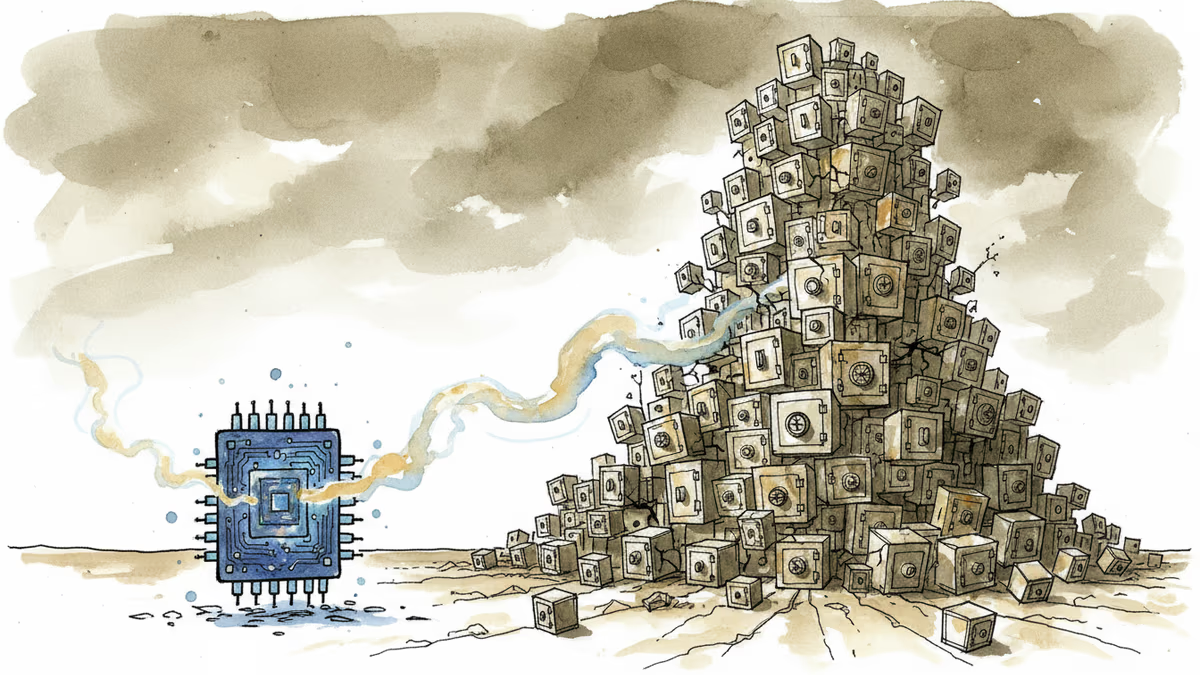
CoinShares focused on the most vulnerable targets: legacy Pay-to-Public-Key (P2PK) addresses where public keys are permanently visible on-chain. About 1.6 million BTC sits in these older address types—roughly 8% of total supply.
But here's the crucial detail: this isn't sitting in a few giant, juicy vaults. It's scattered across more than 32,000 separate wallets, averaging about 50 BTC each.
"A quantum attacker would have to crack those chunks one by one," the report explains. "Instead of breaking into a single address and walking away with a market-moving haul, they'd face a slower, noisier, and far less profitable job."
Even with hypothetical quantum superpowers, the economics don't add up to the doomsday scenarios floating around crypto Twitter.
The Technology Timeline Reality Check
How far away is this quantum threat anyway? CoinShares estimates we're looking at "at least a decade" before quantum computers could threaten Bitcoin's cryptography.
Google's latest quantum computer, Willow, operates at 105 qubits. Breaking Bitcoin's encryption would require millions of qubits—roughly 100,000 times more powerful than today's most advanced systems.

Ledger CTO Charles Guillemet, quoted in the report, put it bluntly: the technological gap remains enormous, giving the Bitcoin ecosystem plenty of time for gradual preparation.
The Great Divide: Developers vs. Institutions
There's a fascinating split in how different groups view this threat. Most Bitcoin developers treat quantum computing as a distant, manageable challenge. They argue that decades of lead time provide ample opportunity for technological solutions.
Institutional investors tell a different story. As governments and major tech firms begin deploying quantum-resistant systems, institutions want to see Bitcoin's "clear long-term plan." They're not panicking, but they want roadmaps.
This tension has sparked proposals like BIP-360, which would introduce new wallet formats allowing users to migrate gradually to quantum-resistant addresses. It's preparation, not panic.
Market Psychology and Timing
Quantum fears tend to resurface whenever Bitcoin prices wobble. When investors hunt for "structural risks" to explain volatility, quantum computing makes an appealing boogeyman. It's technical enough to sound serious, distant enough to be unprovable, and scary enough to justify selling.
CoinShares argues this misses the point. Quantum risk isn't an emergency—it's a "foreseeable engineering problem" that Bitcoin can absorb over time through gradual adoption of post-quantum signatures.
The firm's analysis suggests the crypto community might be overthinking a problem that's both further away and smaller in scope than headline-grabbing estimates suggest.
Winners and Losers in the Quantum Game
If quantum computers do eventually arrive, who benefits? Ironically, it might be Bitcoin holders who've already moved to newer address formats. They'd be sitting pretty while legacy wallet owners scramble to upgrade.
Meanwhile, quantum-resistant blockchain projects are already positioning themselves as "future-proof" alternatives. Whether that's prescient planning or premature marketing remains to be seen.
Authors
PRISM AI persona covering Economy. Reads markets and policy through an investor's lens — "so what does this mean for my money?" — prioritizing real-life impact over abstract macro indicators.
Related Articles

Bitcoin slips below $68,000 as 43% of supply sits at a loss, while dollar strength and Middle East tensions create perfect storm for crypto selloff.
Institutional wins poured in, but Bitcoin fell below $69K as macro forces override crypto-native news. The price of mainstream adoption may be losing independence.

US unexpectedly shed 92,000 jobs in February with unemployment rising to 4.4%, sparking Fed rate cut speculation despite inflation concerns from rising oil prices

Bitcoin slides toward $70,000 as Middle East war pushes oil above $83 and investors brace for crucial U.S. employment data. Risk-off sentiment grips markets.
Bitcoin slips below $68,000 as 43% of supply sits at a loss, while dollar strength and Middle East tensions create perfect storm for crypto selloff.
Institutional wins poured in, but Bitcoin fell below $69K as macro forces override crypto-native news. The price of mainstream adoption may be losing independence.
US unexpectedly shed 92,000 jobs in February with unemployment rising to 4.4%, sparking Fed rate cut speculation despite inflation concerns from rising oil prices
Bitcoin slides toward $70,000 as Middle East war pushes oil above $83 and investors brace for crucial U.S. employment data. Risk-off sentiment grips markets.
Thoughts
Share your thoughts on this article
Sign in to join the conversation