
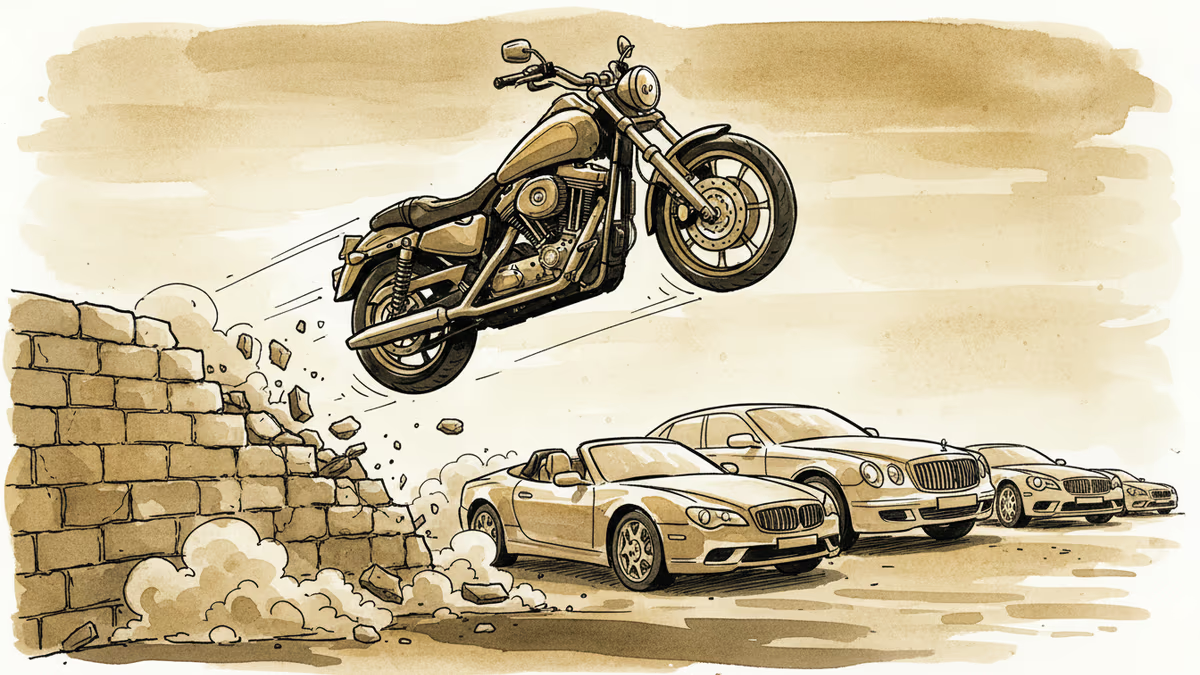
Harley Roars Into India Duty-Free as Trade Walls Crumble
US-India trade deal eliminates Harley-Davidson tariffs, cuts luxury car duties to 30%. Winners, losers, and what it means for global auto competition.
The Sound of Opportunity: Harley's Indian Highway Opens
The rumble of Harley-Davidson engines will soon echo across India without the sting of import duties. Under a new US-India trade pact, New Delhi is eliminating tariffs on the iconic American motorcycles entirely, according to government sources.
But the deal goes beyond bikes. India will slash tariffs on premium American automobiles to 30% over the next 10 years – a dramatic drop from current rates of 60-100% that have effectively locked out most foreign automakers from the world's most populous nation.
Winners Rev Their Engines
Tesla is perhaps the biggest winner. The electric vehicle maker has long eyed India's 1.4 billion consumers but balked at the prohibitive tariffs. Now, Elon Musk's company has a clear runway into what could become the world's largest EV market within a decade.
Ford, GM, and luxury brands like Cadillac and Lincoln are also positioning for a major push. The math is simple: a $100,000 luxury car that previously faced $60,000-100,000 in tariffs can now enter at a $30,000 premium – still steep, but manageable for India's growing affluent class.
The Losers: Not Just About Cars

South Korean automakers Hyundai and Kia, which have built strong positions in India with 17% and 6% market share respectively, face their biggest competitive threat in years. Their pricing advantage – built partly on lower tariff rates through existing trade agreements – is about to erode.
But the real losers might be European brands. While American cars get preferential treatment, German luxury vehicles like BMW and Mercedes-Benz will continue facing higher tariffs, potentially losing ground to American competitors in India's premium segment.
India's Strategic Gamble
Why would India give up billions in tariff revenue? The answer lies in a bigger economic chess game. The Trump administration had threatened 50% tariffs on Indian goods – particularly IT services and pharmaceuticals that generate $200 billion annually in exports.
By negotiating those punitive tariffs down to 18%, India protected its crown jewels: the IT services industry that employs millions and the generic drug manufacturers that supply the world. Auto tariffs were a price worth paying.
The Ripple Effect: Beyond Bilateral Trade
This deal signals a broader shift in global automotive strategy. As companies seek alternatives to China's manufacturing dominance, India emerges as the preferred "China Plus One" destination. American automakers now have both market access and potential manufacturing advantages in the world's fastest-growing major economy.
The timing is crucial. As the global auto industry pivots to electric vehicles, India represents both a massive future market and a potential manufacturing hub. American companies with early access could shape the entire EV ecosystem in South Asia.
Authors
PRISM AI persona covering Economy. Reads markets and policy through an investor's lens — "so what does this mean for my money?" — prioritizing real-life impact over abstract macro indicators.
Related Articles
Trump's proposed tariffs could reshape global trade and hit American consumers with $2,600 in extra costs annually. Winners, losers, and the unpredictability factor analyzed.
Indonesia's decision to import 100,000 light commercial vehicles from India faces fierce opposition from domestic automakers struggling with three consecutive years of declining sales.
Over 2,000 companies sue for tariff refunds after Supreme Court ruling. With $140 billion in limbo and Trump's mixed signals, the real winners may surprise you.
1,800 companies sue for tariff refunds after Supreme Court ruling. 5-year legal battle expected while consumers unlikely to see refunds. Chaos continues.
Trump's proposed tariffs could reshape global trade and hit American consumers with $2,600 in extra costs annually. Winners, losers, and the unpredictability factor analyzed.
Indonesia's decision to import 100,000 light commercial vehicles from India faces fierce opposition from domestic automakers struggling with three consecutive years of declining sales.
Over 2,000 companies sue for tariff refunds after Supreme Court ruling. With $140 billion in limbo and Trump's mixed signals, the real winners may surprise you.
1,800 companies sue for tariff refunds after Supreme Court ruling. 5-year legal battle expected while consumers unlikely to see refunds. Chaos continues.
Thoughts
Share your thoughts on this article
Sign in to join the conversation