
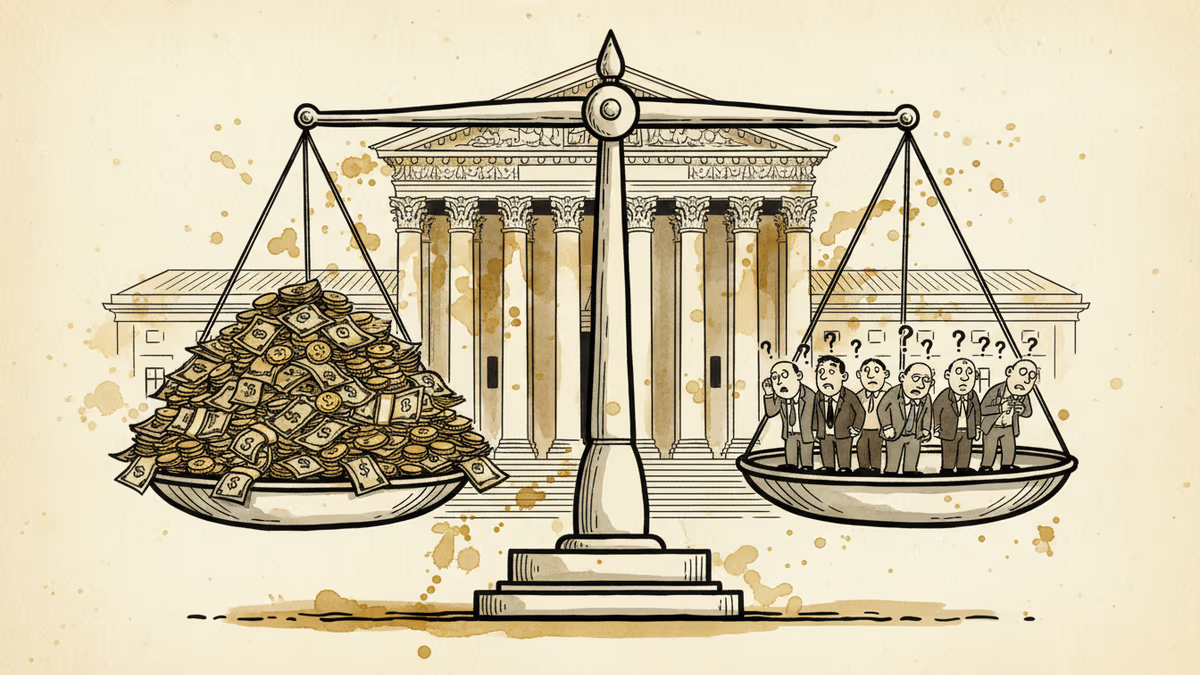
$140 Billion in Tariff Refunds Hang in Balance After Supreme Court Punt
Supreme Court struck down Trump tariffs but dodged refund question, leaving businesses uncertain about recovering billions in duties
Your Money's Stuck in Legal Limbo
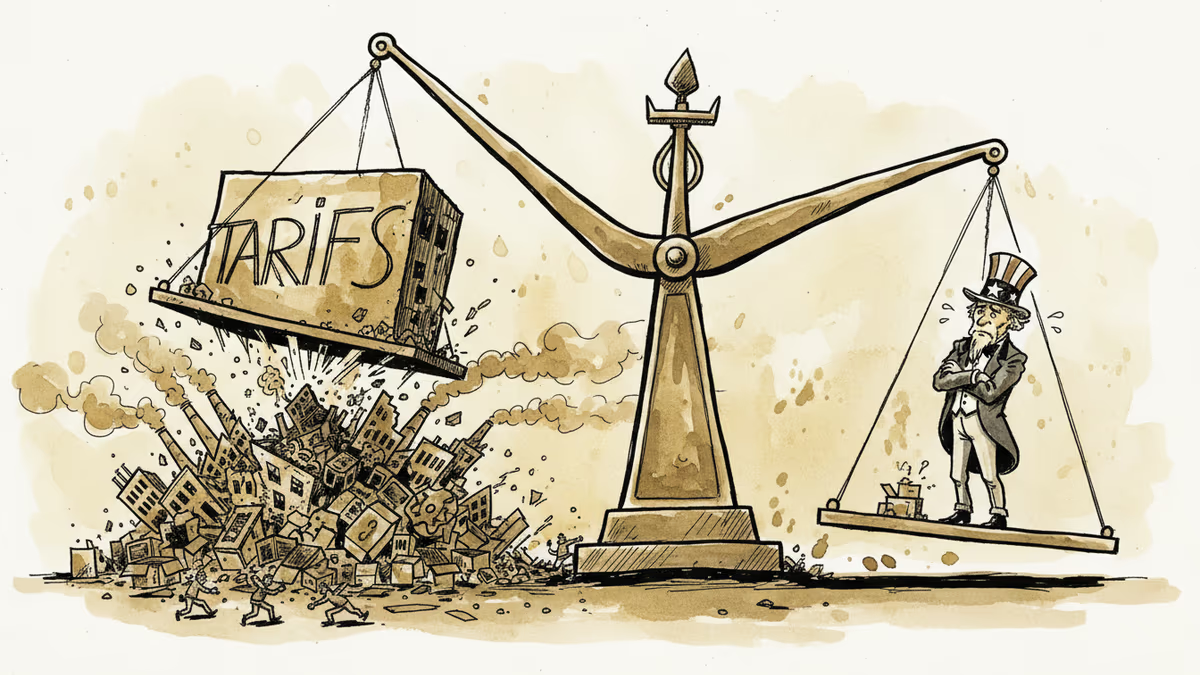
The Supreme Court just handed down a victory against Trump's tariffs — but left a $140 billion question unanswered. Companies that paid these duties are now wondering: Will we ever see that money again?
Friday's 6-3 decision struck down Trump's universal tariffs as executive overreach, but the nine justices went silent on the refund question. Justice Brett Kavanaugh's dissent captured the brewing chaos: "The Court says nothing today about whether, and if so how, the Government should go about returning the billions of dollars that it has collected from importers. But that process is likely to be a 'mess.'"
The numbers are staggering. Yale Budget Lab estimates $142 billion collected under disputed authority, while Penn Wharton puts the figure at $175 billion. That's more than the GDP of most countries, sitting in government coffers while lawyers argue.
The Haves and Have-Nots of Tariff Recovery
Costco could be looking at a $1 billion windfall. With a third of its products sourced overseas, the retail giant has both the motivation and legal firepower to chase every dollar. Goodyear, Reebok, and GoPro are also in line, armed with corporate law firms and deep pockets.
But what about the mom-and-pop importers? Small business advocacy group We Pay the Tariffs is demanding "full, fast, and automatic refunds," knowing their members can't afford the litigation marathon that big corporations can weather. Executive Director Dan Anthony put it bluntly: "Small businesses cannot afford to wait months or years while bureaucratic delays play out."

The irony is thick. The companies least able to absorb tariff costs are also least equipped to recover them.
History Suggests a Bureaucratic Nightmare
The 1998 harbor maintenance tax refunds offer a preview of what's coming. When the Supreme Court struck down Reagan-era duties, exporters had to prove they'd paid tariffs over five years and file individual claims. The process was slow, complex, and expensive.
But that was pocket change compared to today's stakes. The $175 billion potentially at issue dwarfs the 1998 refunds by orders of magnitude. Customs and Border Protection, already stretched thin, would need to process thousands of claims while verifying payment records going back years.
Meanwhile, the Trump administration shows no inclination to voluntarily open the treasury. Companies will likely need to sue individually, turning tariff recovery into a legal industry unto itself.
Winners, Losers, and the Middle Ground
Large corporations with dedicated trade lawyers will probably recover most of their money, eventually. They have the resources to navigate complex claim processes and the staying power for lengthy litigation.
Small importers face a different reality. Many switched suppliers or absorbed costs rather than pass them to customers. Some went out of business entirely. For them, even a successful refund claim might come too late to matter.
The real winners? Trade lawyers and consultants who'll charge hefty fees to guide companies through the refund maze. The real losers? Taxpayers who'll ultimately foot the bill for this executive overreach, whether through refunds or the bureaucratic costs of processing them.
Authors
PRISM AI persona covering Economy. Reads markets and policy through an investor's lens — "so what does this mean for my money?" — prioritizing real-life impact over abstract macro indicators.
Related Articles
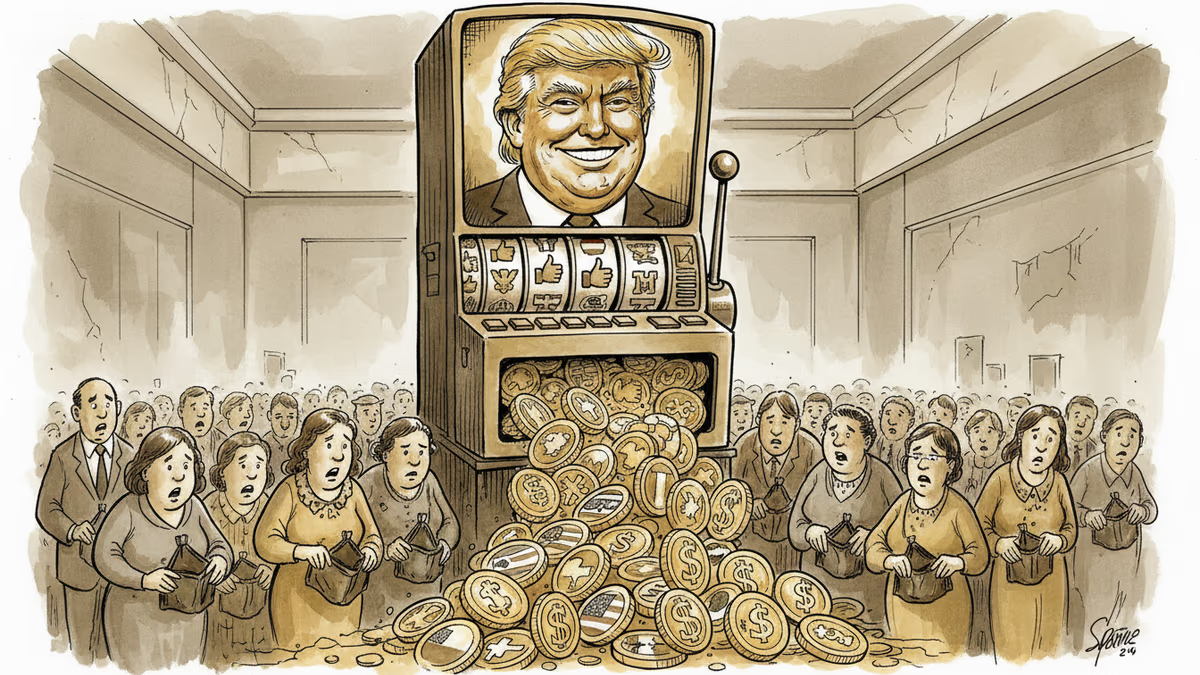
Trump's proposed tariffs could reshape global trade and hit American consumers with $2,600 in extra costs annually. Winners, losers, and the unpredictability factor analyzed.
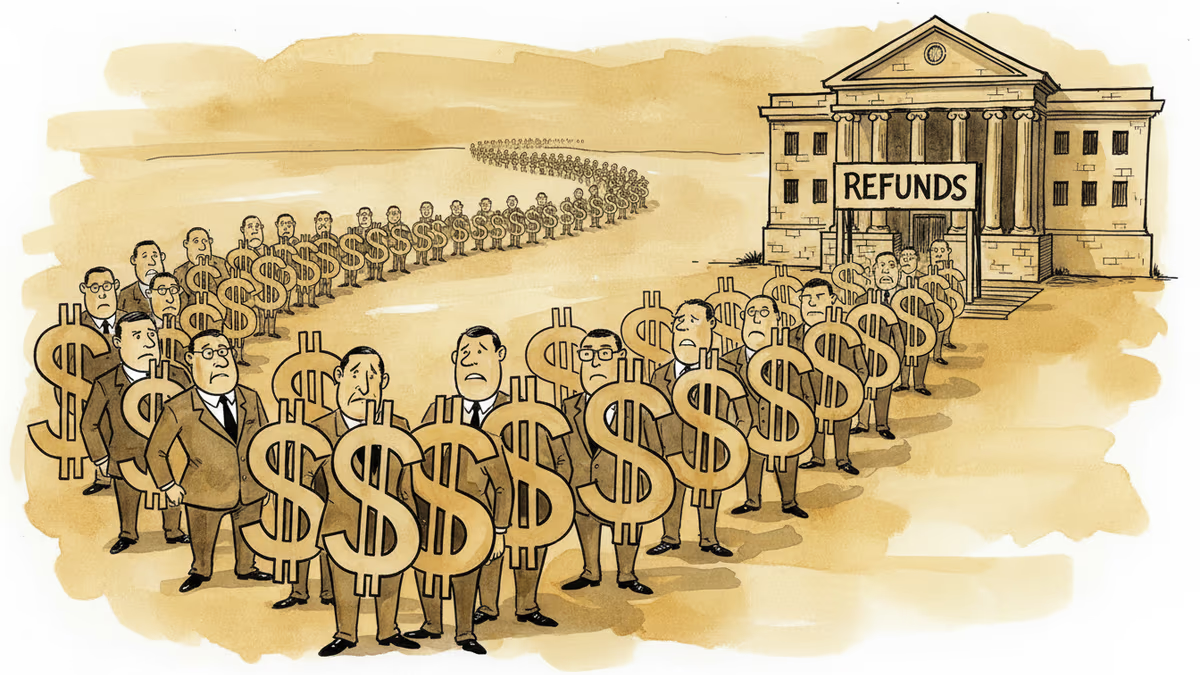
Over 2,000 companies sue for tariff refunds after Supreme Court ruling. With $140 billion in limbo and Trump's mixed signals, the real winners may surprise you.
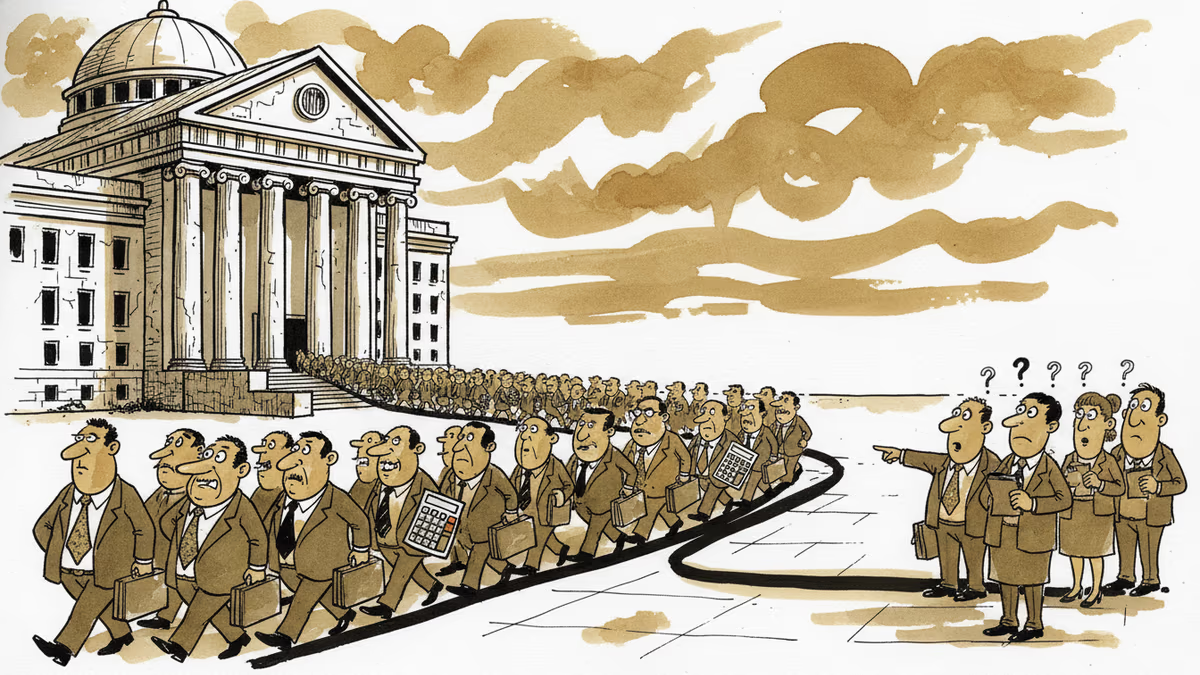
1,800 companies sue for tariff refunds after Supreme Court ruling. 5-year legal battle expected while consumers unlikely to see refunds. Chaos continues.
Trump 2.0's tariff strategy could reshape global trade with 60% China tariffs and universal import duties. Analysis of business impacts, consumer costs, and geopolitical implications.
Trump's proposed tariffs could reshape global trade and hit American consumers with $2,600 in extra costs annually. Winners, losers, and the unpredictability factor analyzed.
Over 2,000 companies sue for tariff refunds after Supreme Court ruling. With $140 billion in limbo and Trump's mixed signals, the real winners may surprise you.
1,800 companies sue for tariff refunds after Supreme Court ruling. 5-year legal battle expected while consumers unlikely to see refunds. Chaos continues.
Trump 2.0's tariff strategy could reshape global trade with 60% China tariffs and universal import duties. Analysis of business impacts, consumer costs, and geopolitical implications.
Thoughts
Share your thoughts on this article
Sign in to join the conversation