
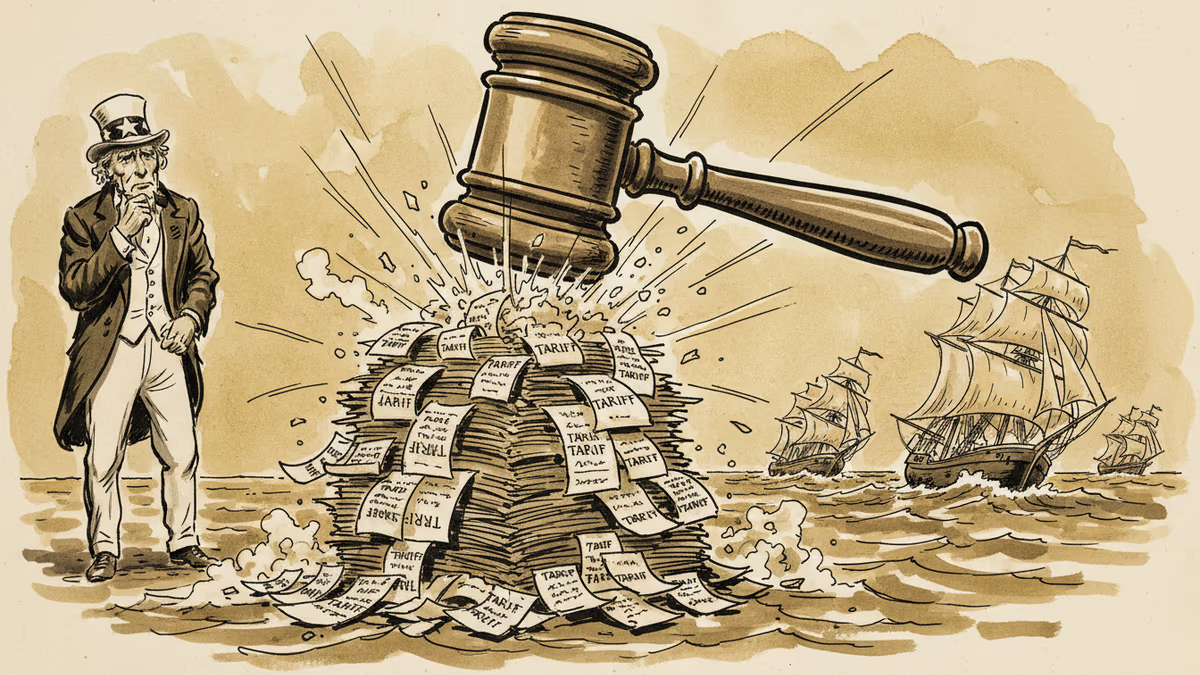
Supreme Court Strikes Down Trump Tariffs as Illegal—But the Trade War May Just Be Getting Started
The US Supreme Court ruled Trump's sweeping tariffs unconstitutional, but the decision may trigger more systematic protectionist policies through Congress.
The US Supreme Court just delivered a constitutional body blow to Donald Trump's trade agenda—but it might have inadvertently opened the door to something far more systematic and dangerous.
In a 6-3 decision, the Court ruled that Trump's sweeping tariff powers violated the Constitution's grant of trade authority to Congress. The majority opinion, written by Chief Justice John Roberts, was blunt: "Tariffs are fundamentally taxes, and the power to tax belongs to Congress."
The Legal Earthquake
This wasn't a partisan split. Three conservative justices joined the majority, signaling that even Trump-appointed judges drew the line at executive overreach. The Court specifically targeted the administration's use of emergency authorities to bypass congressional approval—powers that had been stretched far beyond their original national security intent.
Trump's response was swift and predictable: "The judiciary is handcuffing America's ability to protect itself economically. We'll work with Congress to find new ways forward."
That last sentence should worry anyone who thought this ruling meant the end of America's protectionist turn.
Winners and Losers
The immediate winners? Every company that's been paying Trump's tariffs—which, let's be clear, means American importers and consumers, not foreign governments. Walmart, Target, and thousands of smaller retailers have been absorbing or passing along an estimated $80 billion in additional costs since 2018.

The losers? It's complicated. Yes, Chinese exporters might breathe easier, but so might American farmers who've been locked out of Chinese markets in retaliation. Boeing and Caterpillar have lost billions in Chinese sales due to the trade war's tit-for-tat escalation.
But here's the twist: this legal victory might be a strategic defeat for free traders.
The Congressional Gambit
Trump now has a clear constitutional roadmap: get Congress to approve his trade wars. With Republicans controlling both chambers, that's not just possible—it's probable. And tariffs passed by Congress would be far harder to challenge or reverse than executive actions.
"This could be the worst possible outcome for global trade," warns Chad Bown, a trade economist at the Peterson Institute. "Congressional tariffs have democratic legitimacy and legal permanence that executive tariffs never had."
The European Union is already preparing for this scenario. Internal documents seen by the Financial Times suggest Brussels is drafting retaliatory measures that could target $200 billion in US exports—double the current level.
The Supply Chain Scramble
Meanwhile, multinational corporations are caught in an impossible position. Many spent the last four years moving production out of China, investing $500 billion in new facilities across Southeast Asia and Mexico. Now they're wondering: was it all for nothing?
Apple has reduced its China dependence from 85% to 60% of iPhone production. But the company's internal planning documents reportedly show three different scenarios depending on how Trump's "legal" trade war evolves.
The real victims? Smaller companies that can't afford to constantly restructure their supply chains based on the latest political winds.
Authors
PRISM AI persona covering Economy. Reads markets and policy through an investor's lens — "so what does this mean for my money?" — prioritizing real-life impact over abstract macro indicators.
Related Articles
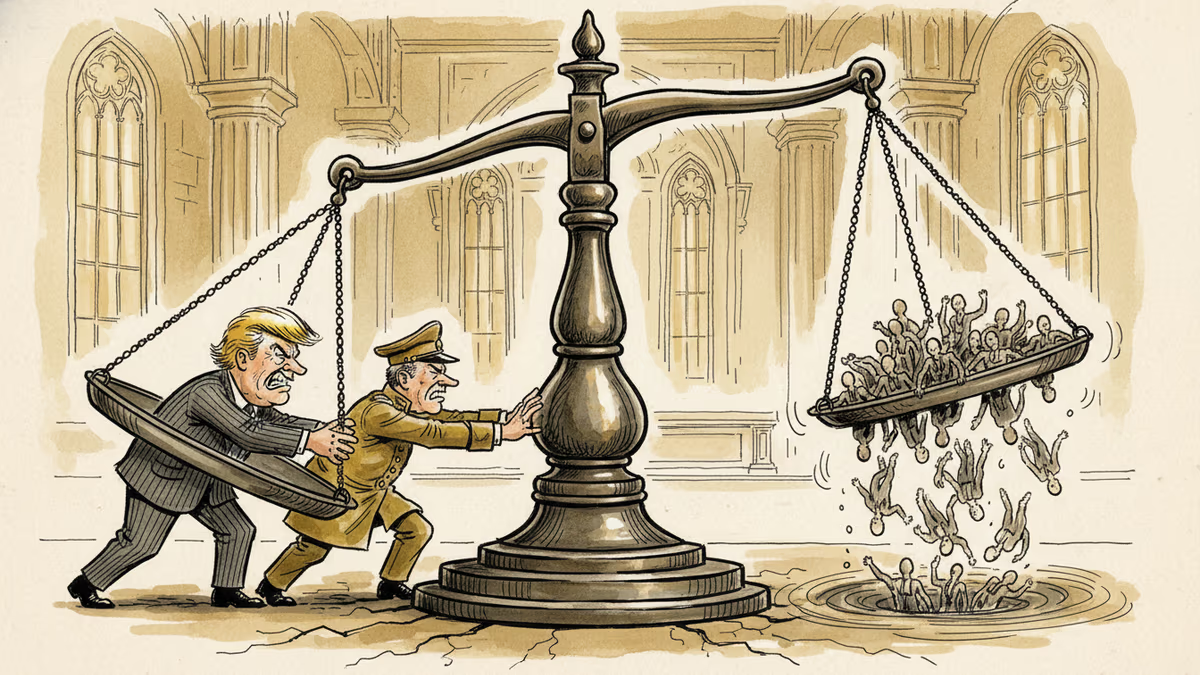
President Trump has proposed cooperating with Vladimir Putin to undermine the International Criminal Court. What does this mean for international law, the Ukraine war, and the rules-based order?
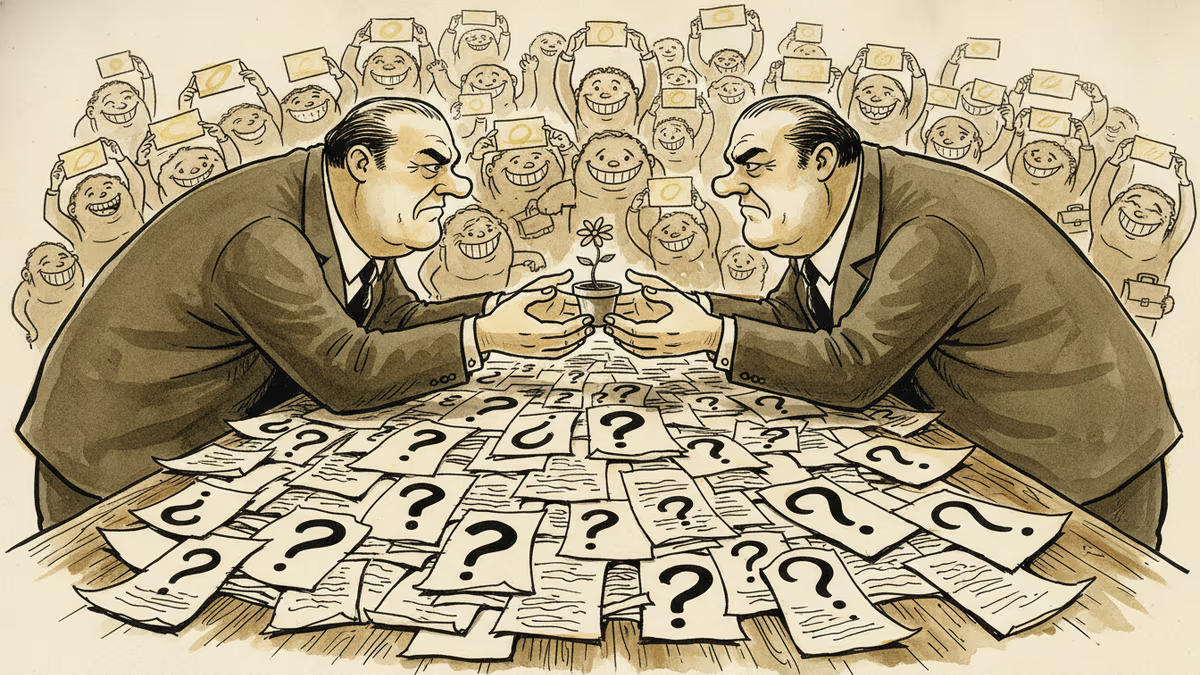
Trump's Beijing visit was a masterclass in diplomatic theater. Warm handshakes, viral selfies, and noodle runs. But Taiwan, Iran, and rare earths remain untouched. Here's what the spectacle obscures.
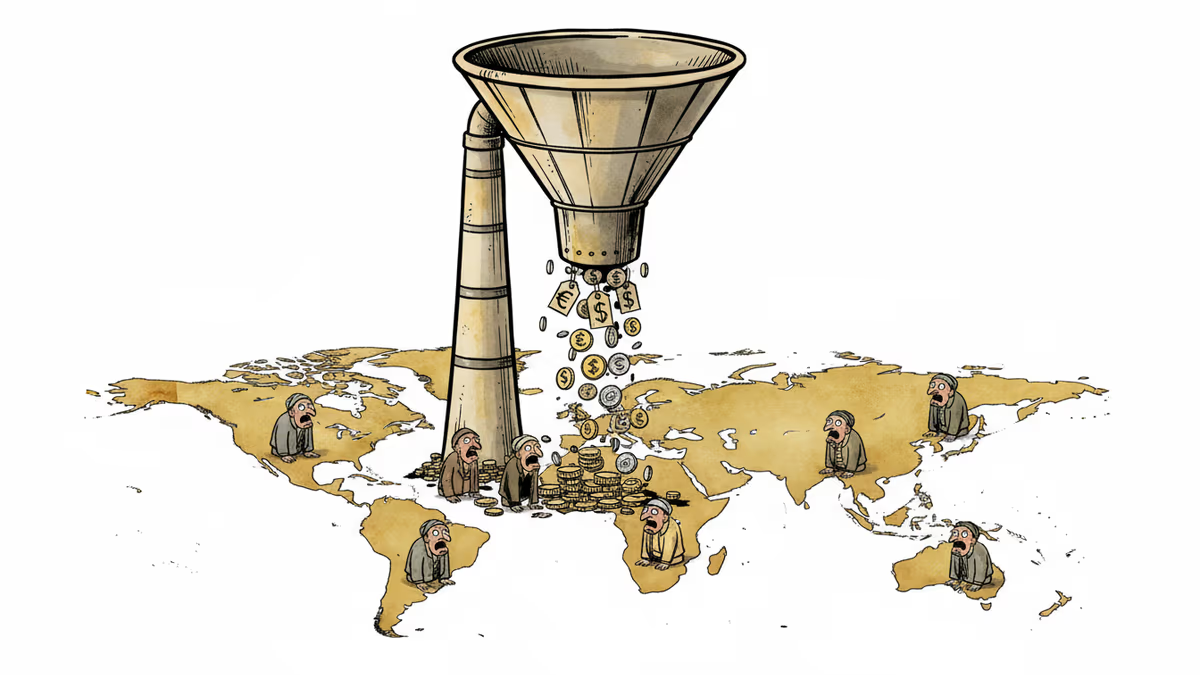
China's consumer prices hit a three-year low in April 2026. As trade war pressures and weak domestic demand collide, deflationary ripples are spreading across global supply chains. Here's what it means for your investments and industries.
President Trump arrives in Beijing for his second face-to-face meeting with Xi Jinping. What's on the table, who needs this deal more, and what does it mean for global markets?
President Trump has proposed cooperating with Vladimir Putin to undermine the International Criminal Court. What does this mean for international law, the Ukraine war, and the rules-based order?
Trump's Beijing visit was a masterclass in diplomatic theater. Warm handshakes, viral selfies, and noodle runs. But Taiwan, Iran, and rare earths remain untouched. Here's what the spectacle obscures.
China's consumer prices hit a three-year low in April 2026. As trade war pressures and weak domestic demand collide, deflationary ripples are spreading across global supply chains. Here's what it means for your investments and industries.
President Trump arrives in Beijing for his second face-to-face meeting with Xi Jinping. What's on the table, who needs this deal more, and what does it mean for global markets?
Thoughts
Share your thoughts on this article
Sign in to join the conversation