
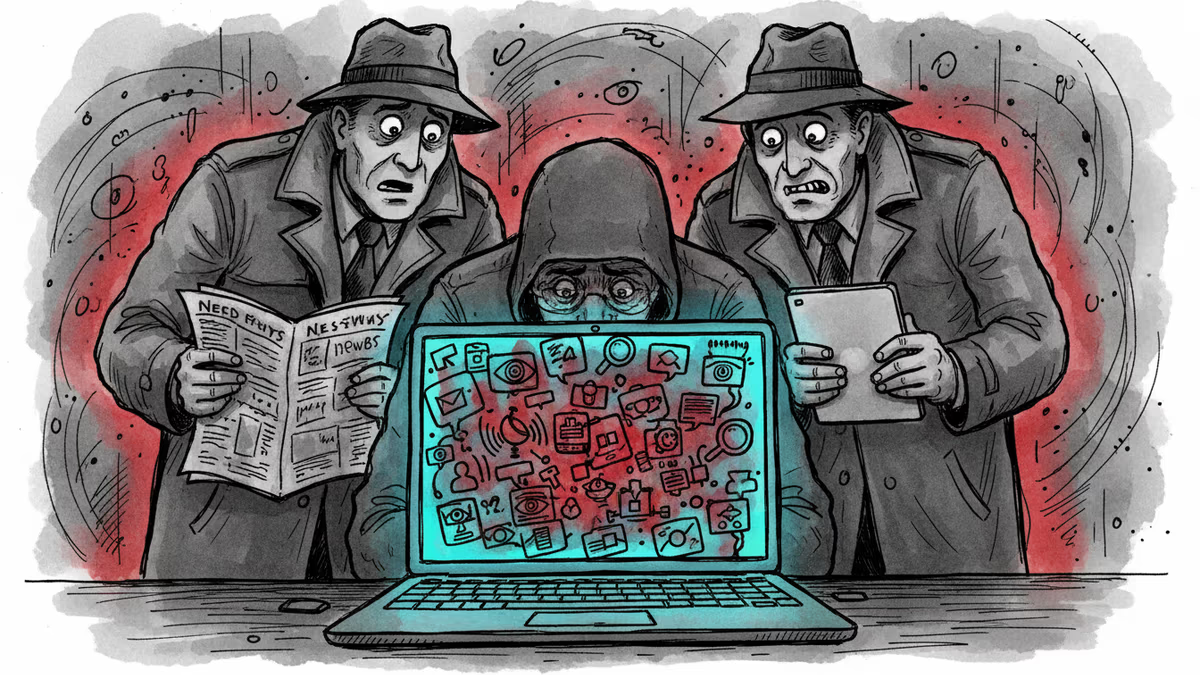
When Stalkers Get Stalked: Half a Million Surveillance Buyers Exposed
A hacktivist exposed 536,000 payment records from stalkerware companies, revealing customers who paid to spy on others. What does this breach say about digital surveillance ethics?
The Watchers Get Watched
What happens when someone who profits from spying gets spied on? A hacktivist calling themselves "wikkid" just answered that question by scraping 536,000 payment records from stalkerware companies, exposing customers who paid to secretly monitor others' phones.
The leaked data reveals email addresses, payment amounts, and partial credit card information from customers of surveillance apps like uMobix, Geofinder, and Xnspy. These aren't security tools—they're apps explicitly marketed for spying on spouses and partners, often without consent.
The irony is thick: companies that make millions helping people violate privacy just had their own customers' privacy shredded by a "trivial" website bug.
The Surveillance Economy Exposed
The breach targeted Struktura, a Ukrainian company operating under the British front Ersten Group. Their portfolio reads like a stalker's wishlist: apps that harvest call records, text messages, photos, browsing history, and precise location data from infected phones.
Xnspy alone has a troubled history—in 2022, it spilled private data from tens of thousands of Android and iPhone users. Yet customers keep paying, apparently undeterred by the security risks of the very tools they use to violate others' security.

TechCrunch verified the breach's authenticity by testing disposable email addresses from the dataset, successfully resetting passwords on real accounts. The vulnerability was so basic that transaction data could be retrieved from checkout pages without authentication.
The Bigger Picture: Digital Surveillance Goes Mainstream
This isn't an isolated incident. Dozens of stalkerware companies have suffered breaches in recent years, creating a perverse cycle where surveillance tools become surveillance victims.
But here's what makes this different: the scale suggests domestic surveillance has become a mainstream consumer product. Half a million payment records represent real people who decided monitoring someone else was worth their credit card number.
The customers span the spectrum—from suspicious partners to controlling parents to potentially more sinister actors. What unites them is the willingness to pay for digital stalking capabilities that would have required professional equipment just a decade ago.
The Regulatory Blind Spot
While lawmakers debate AI regulation and social media oversight, the stalkerware industry operates in a legal gray zone. These apps are illegal when used without consent, yet they're marketed openly with winking disclaimers about "employee monitoring" and "parental controls."
The companies behind them use shell corporations and international jurisdictions to avoid accountability. Struktura operates from Ukraine while presenting as British Ersten Group—a common pattern that makes enforcement nearly impossible.
Meanwhile, app stores play whack-a-mole with these tools, banning them only to see new versions appear under different names. The fundamental business model—monetizing privacy violations—remains untouched.
Authors
Related Articles
A critical vulnerability in Starlette—downloaded 325 million times per week—puts millions of AI agent servers at risk, exposing stored credentials for email, databases, and third-party services.
The FTC fined Cox Media and two ad firms $930,000 — not for actually eavesdropping on users, but for falsely claiming they could. The case raises uncomfortable questions about surveillance capitalism.
GitHub confirmed hackers stole data from 3,800 internal repositories via a poisoned VS Code extension. Here's why developer tools are now the most dangerous attack surface in tech.
A Utah woman was sentenced to life in prison partly because of her Google searches and deleted texts. The Kouri Richins case reveals how digital footprints have become the courtroom's most reliable witness.
A critical vulnerability in Starlette—downloaded 325 million times per week—puts millions of AI agent servers at risk, exposing stored credentials for email, databases, and third-party services.
The FTC fined Cox Media and two ad firms $930,000 — not for actually eavesdropping on users, but for falsely claiming they could. The case raises uncomfortable questions about surveillance capitalism.
GitHub confirmed hackers stole data from 3,800 internal repositories via a poisoned VS Code extension. Here's why developer tools are now the most dangerous attack surface in tech.
A Utah woman was sentenced to life in prison partly because of her Google searches and deleted texts. The Kouri Richins case reveals how digital footprints have become the courtroom's most reliable witness.
Thoughts
Share your thoughts on this article
Sign in to join the conversation