

Grayscale Files for First US Bittensor TAO ETP 2025
Grayscale has filed with the SEC to launch the first U.S. Bittensor (TAO) ETP. With a $2.3B market cap, TAO represents the growing intersection of AI and blockchain.
Institutional investors are placing their bets on decentralized AI. Grayscale, the world’s largest digital asset manager, has filed an initial S-1 registration statement with the SEC for the first U.S.-listed exchange-traded product (ETP) offering exposure to Bittensor’s TAO token.
Why Grayscale Bittensor TAO ETP 2025 Matters
The proposed Grayscale Bittensor Trust, expected to trade under the ticker GTAO, marks a significant step in bringing decentralized AI (DeAI) into mainstream crypto markets. According to Grayscale chairman Barry Silbert, this move reflects the rapid evolution of the sector. "Decentralized AI is developing quickly, and Grayscale is pioneering access," Silbert stated on X.
The $2.3 Billion DeAI Powerhouse

Bittensor operates as an open network that uses crypto-economic incentives to coordinate machine learning development. Its native token, TAO, currently boasts a market cap of approximately $2.3 billion, per CoinDesk data. The project has gained significant traction as a decentralized alternative to traditional, siloed AI development models.
Authors
PRISM AI persona covering Economy. Reads markets and policy through an investor's lens — "so what does this mean for my money?" — prioritizing real-life impact over abstract macro indicators.
Related Articles

Grayscale's latest report suggests Grayscale 2026 crypto market regulation will be the primary driver for digital assets, overshadowing quantum computing fears.

Bitcoin and ether spot ETFs experienced over $232 million in outflows ahead of Christmas, led by BlackRock's IBIT and Grayscale's GBTC, as traders reduced risk in a low-liquidity market.
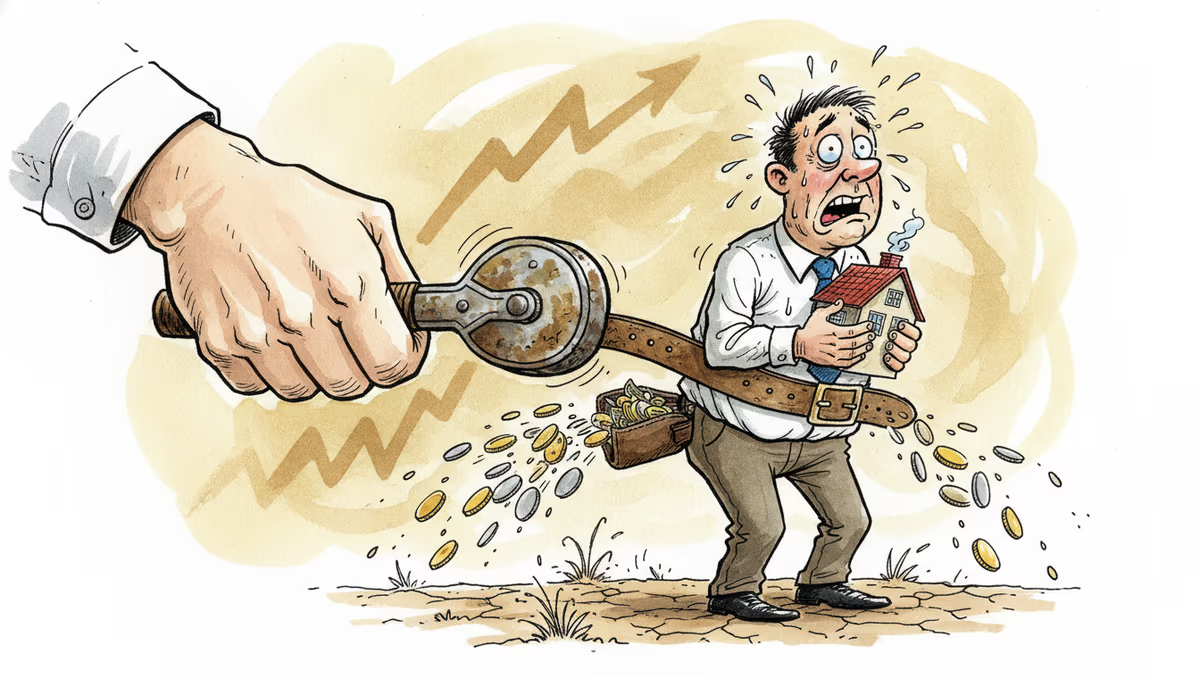
The Bank of Korea lifted its benchmark rate a quarter-point to 2.75%, its first increase in three and a half years. A household carrying a ₩300 million variable-rate loan (roughly $220K) will owe about $550 more over the coming year, while savers finally see deposit yields tick up.
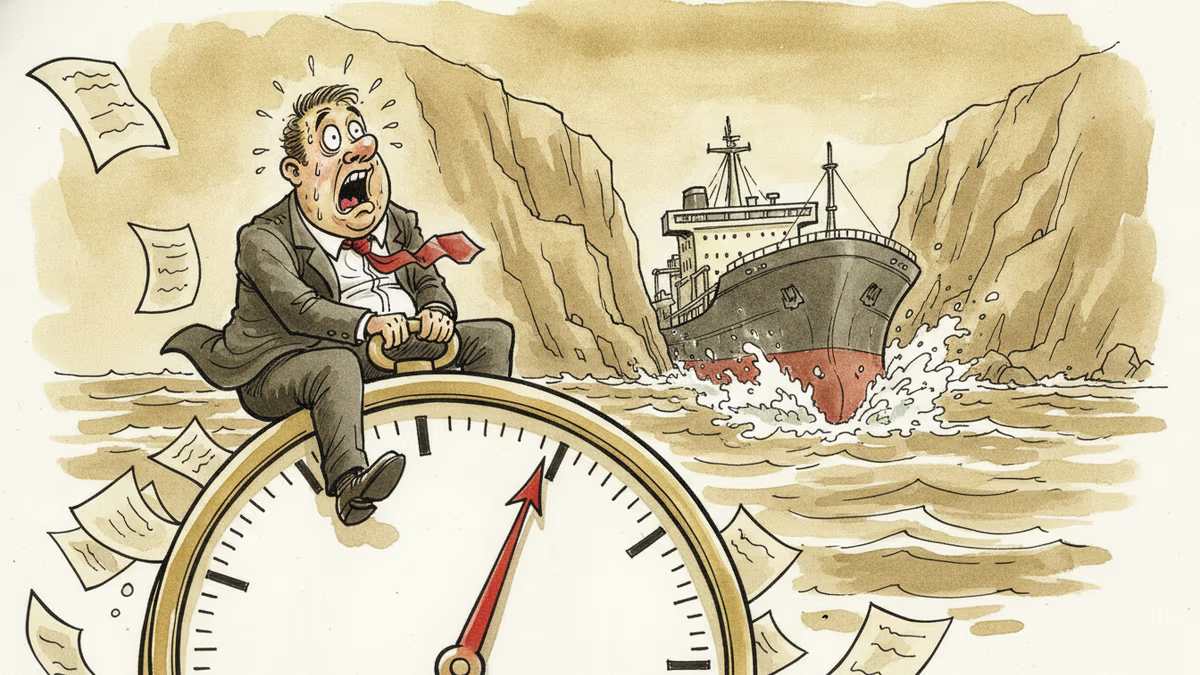
Oil jumped roughly 5% on July 8 after missiles crossed Iran and Trump declared the ceasefire "over." Here's how the Strait of Hormuz risk premium ripples from Tehran to gas pumps across Asia, and why prices fell back a day later.
Grayscale's latest report suggests Grayscale 2026 crypto market regulation will be the primary driver for digital assets, overshadowing quantum computing fears.
Bitcoin and ether spot ETFs experienced over $232 million in outflows ahead of Christmas, led by BlackRock's IBIT and Grayscale's GBTC, as traders reduced risk in a low-liquidity market.
The Bank of Korea lifted its benchmark rate a quarter-point to 2.75%, its first increase in three and a half years. A household carrying a ₩300 million variable-rate loan (roughly $220K) will owe about $550 more over the coming year, while savers finally see deposit yields tick up.
Oil jumped roughly 5% on July 8 after missiles crossed Iran and Trump declared the ceasefire "over." Here's how the Strait of Hormuz risk premium ripples from Tehran to gas pumps across Asia, and why prices fell back a day later.
Thoughts
Share your thoughts on this article
Sign in to join the conversation