

Google's Movies Anywhere Return: A Stress Test for the Fragile Promise of Digital Ownership
Google's return to Movies Anywhere is more than a glitch. It's a critical look at the fragile state of digital ownership and the future of our media libraries.
The Lede: Beyond the Reconnect Button
Google has quietly rejoined the Movies Anywhere platform, ending a brief but telling outage for users of Google Play and YouTube. While cinephiles rush to resync their accounts, executives and investors should see this not as a simple technical glitch, but as a critical stress test of the entire digital ownership model. This temporary fracture in the ecosystem reveals the precarious, handshake-based nature of our digital collections and raises a fundamental question: In the age of cloud-based media, what do you truly own?
Why It Matters: The Interoperability Imperative
The core value proposition of Movies Anywhere is its role as a digital peacekeeper—a neutral ground where competing studios and retailers agree to let their content coexist for the user's benefit. It’s the essential glue in a fragmented market where a consumer might buy a film from Apple, another from Amazon, and a third from Google. The temporary removal of a titan like Google, even for a short period, undermines this core promise.
The second-order effects are significant:
- Erosion of Consumer Trust: Every such incident teaches consumers that their multi-thousand-dollar digital library is not a permanent asset but a licensed service subject to the whims of corporate negotiations and technical failures.
- Strengthening Subscription Models: Unreliability in the "to-own" market inadvertently makes all-you-can-eat subscription services like Netflix or Disney+ look more straightforward and dependable, despite their own content rotation.
- Highlighting Platform Risk: It's a stark reminder that building a content library on any single platform, or even an interoperable one, carries inherent risk controlled by the platform holders, not the end-user.

The Analysis: A Alliance Under Strain
Movies Anywhere was born from a Disney initiative to solve a problem the industry itself created: walled gardens. By bringing together major studios (Sony, Universal, Warner Bros., Disney) and digital retailers, it established a rare instance of "co-opetition." However, this alliance is not a charity. It's a strategic pact where each member constantly recalculates the value of participation.
While the official reason for the outage remains undisclosed, we can infer two likely scenarios:
- A Contract Negotiation Went Sideways: The most probable cause is a renewal negotiation that hit a snag. The service disruption could have been a hardball tactic or an unintended consequence of brinkmanship over data sharing, revenue cuts, or promotional commitments.
- A Critical Technical Failure: A less dramatic but equally concerning possibility is a deep-seated technical integration issue that required a complete, temporary severance to resolve. This would expose the operational fragility of the cross-platform architecture.
The context is also critical: Paramount remains a notable holdout from the service. This demonstrates that the dream of a truly universal digital locker is still incomplete, and the alliance, while powerful, is not absolute. Google's brief departure was a warning shot demonstrating that even the most established partners are not guaranteed to stay forever.
PRISM's Take: A Necessary Wake-Up Call
Google's return to Movies Anywhere is a relief for users, but it should serve as a wake-up call for the entire digital media industry. The value of the premium digital purchase market is predicated on a sense of permanence and reliability that this event directly challenged. Consumers are being asked to pay a premium for a product that is proving to be less of a concrete asset and more of a long-term rental agreement with complex, hidden clauses. If the major players cannot maintain a seamless and trustworthy user experience, they risk devaluing the very concept of digital ownership and pushing an entire generation of consumers to see subscription as the only viable model.
Authors
Related Articles
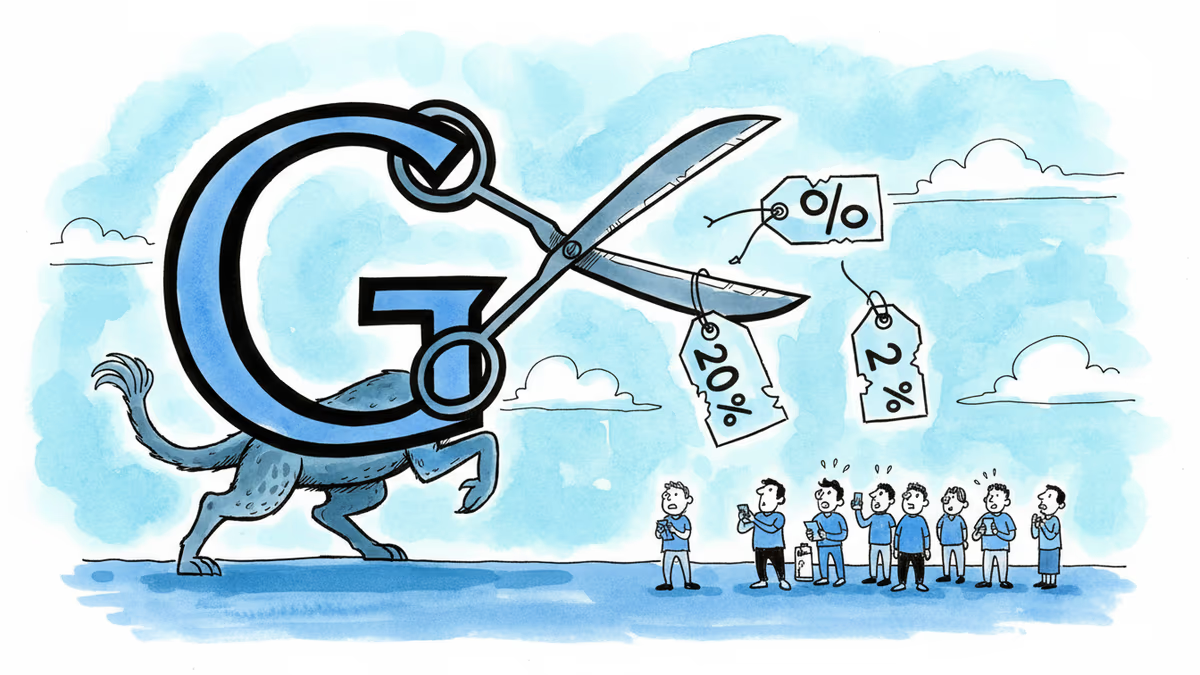
Google slashes app store fees from 30% to 20% after antitrust ruling. What this means for developers, competitors, and the future of digital marketplaces.
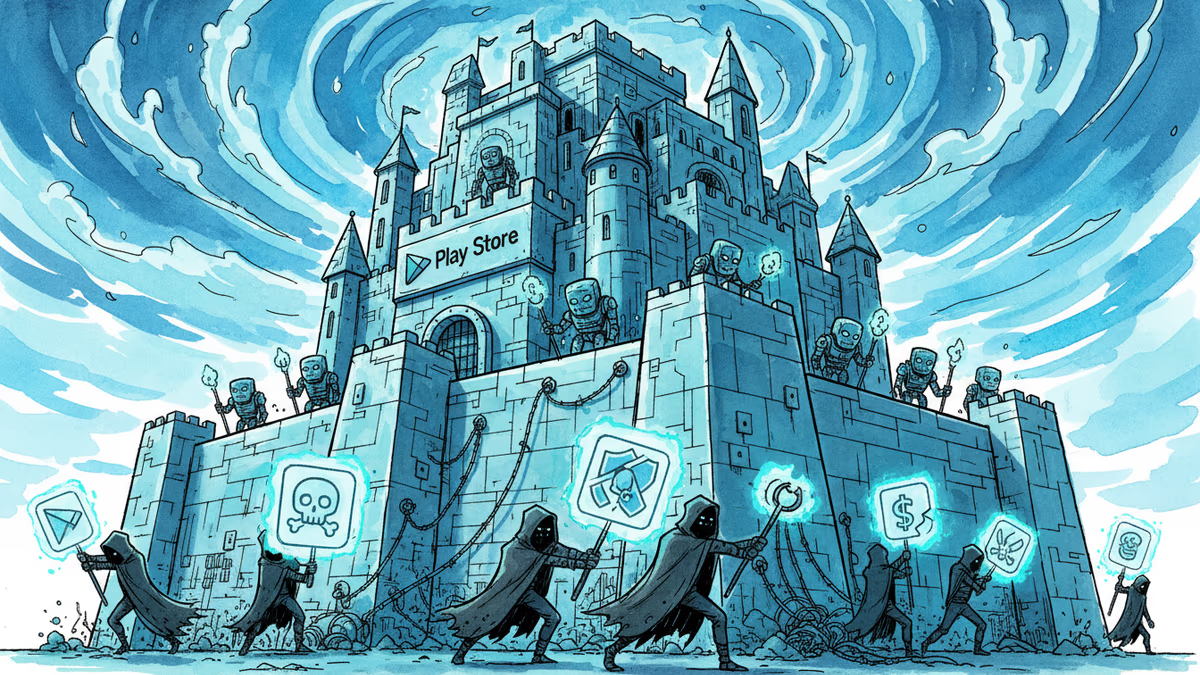
Google's AI-powered security systems prevented 1.75M policy-violating apps in 2025, down 26% from 2024. But malicious apps outside Play Store doubled, revealing a strategic shift by bad actors.
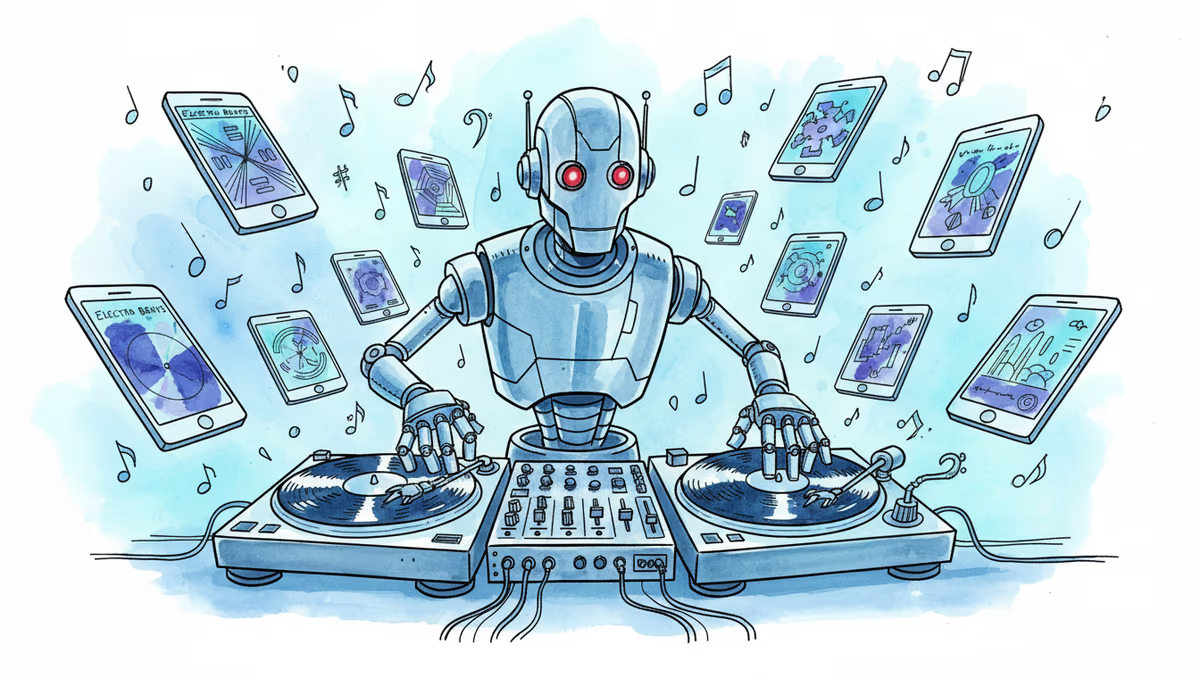
YouTube Music launches AI playlist generation for Premium users, joining Spotify in the battle for streaming dominance. What does this mean for music discovery?
Apple announces massive slate of new shows and movies for 2025, signaling shift from quality-only strategy to compete with Netflix and Disney Plus
Google slashes app store fees from 30% to 20% after antitrust ruling. What this means for developers, competitors, and the future of digital marketplaces.
Google's AI-powered security systems prevented 1.75M policy-violating apps in 2025, down 26% from 2024. But malicious apps outside Play Store doubled, revealing a strategic shift by bad actors.
YouTube Music launches AI playlist generation for Premium users, joining Spotify in the battle for streaming dominance. What does this mean for music discovery?
Apple announces massive slate of new shows and movies for 2025, signaling shift from quality-only strategy to compete with Netflix and Disney Plus
Thoughts
Share your thoughts on this article
Sign in to join the conversation