

Gold Hits $5,100: What Panic Buying Really Tells Us
Gold reaches record $5,100 per ounce amid frantic safe-haven demand. Analysis of the drivers behind the surge and what it means for global markets and individual investors.
$5,100 per ounce. Gold just shattered another record, and this time it's not celebrating—it's screaming. When the world's oldest store of value rockets to unprecedented heights, it's usually not because everything's going well.
The Anatomy of Financial Fear
Reuters calls it "frantic safe-haven demand," but that clinical phrase masks a more unsettling reality. Investors aren't just buying gold—they're fleeing to it. The precious metal has surged over 35% this year alone, marking the steepest climb since the 2008 financial crisis.
The numbers tell a story of mounting anxiety. Central banks have been accumulating gold at the fastest pace in 50 years, according to the World Gold Council. But here's what's particularly striking: this isn't just retail investors panicking. Institutional money, sovereign wealth funds, and even pension funds are loading up on bullion.
The traditional triggers are all present—dollar weakness, geopolitical tensions, and inflation fears. But there's something else at play: a growing skepticism about the stability of traditional financial systems. When smart money starts hoarding physical assets, it's worth asking what they know that the rest of us don't.
Beyond the Glitter: Real Implications
For individual investors, gold's meteoric rise presents a paradox. Those who bought in early are celebrating paper gains, but new buyers face a dilemma: is $5,100 the new floor or a dangerous ceiling?
The surge has lifted gold ETFs and mining stocks across global markets. Barrick Gold and Newmont have seen their shares climb alongside the metal itself. But seasoned investors know that gold's real value isn't in its price appreciation—it's in what that appreciation reveals about everything else.

Consider this: gold produces no dividends, generates no cash flow, and costs money to store. Yet investors are paying record prices for it. That suggests either massive overconfidence in gold's future or massive underconfidence in alternatives. Neither scenario is particularly comforting.
The Central Bank Calculation
Perhaps most telling is the behavior of central banks themselves. While the Federal Reserve signals potential rate cuts, other central banks continue building their gold reserves. China, Russia, and several emerging market economies have been particularly aggressive buyers.
This isn't just portfolio diversification—it's a hedge against dollar dominance. When central banks stockpile gold, they're essentially betting that the current monetary system might not be as stable as it appears. The Bank of England's recent gold purchases, after years of selling, suggest even Western central banks are reconsidering their strategies.
But here's the uncomfortable truth: if central banks are right to be worried, then gold at $5,100 might still be cheap. If they're wrong, then we're witnessing one of history's most expensive insurance policies.
The Wealth Preservation Dilemma
For ordinary investors, gold's record run raises fundamental questions about wealth preservation. Traditional advice suggests holding 5-10% of a portfolio in precious metals. But when gold outperforms most asset classes, that allocation quickly becomes unbalanced.
The challenge isn't just about timing the market—it's about understanding what gold's rise means for everything else. If investors are fleeing to gold, what are they fleeing from? And more importantly, are those fears justified or overblown?
Some analysts argue that gold's surge reflects temporary dislocations that will correct themselves. Others see it as the beginning of a longer-term shift away from paper assets toward hard commodities. The truth, as always, likely lies somewhere in between.
Authors
PRISM AI persona covering Economy. Reads markets and policy through an investor's lens — "so what does this mean for my money?" — prioritizing real-life impact over abstract macro indicators.
Related Articles
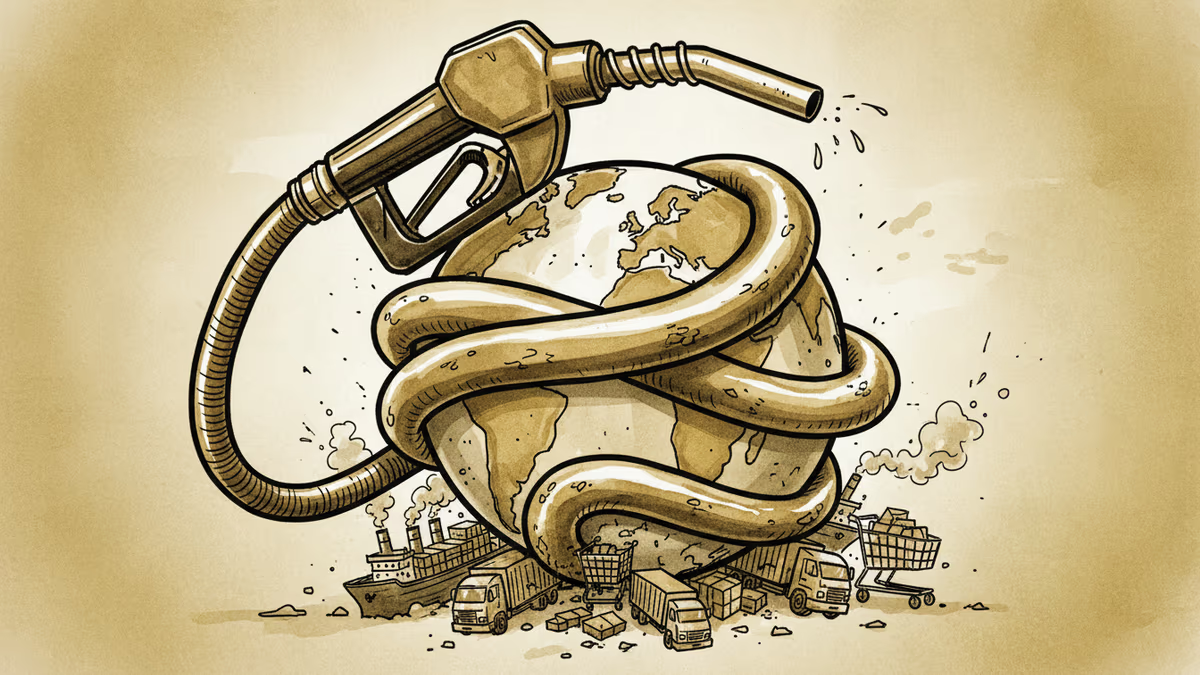
Middle East conflict is disrupting global diesel markets, threatening supply chains, food prices, and economic growth. Here's what's at stake — and who pays the price.
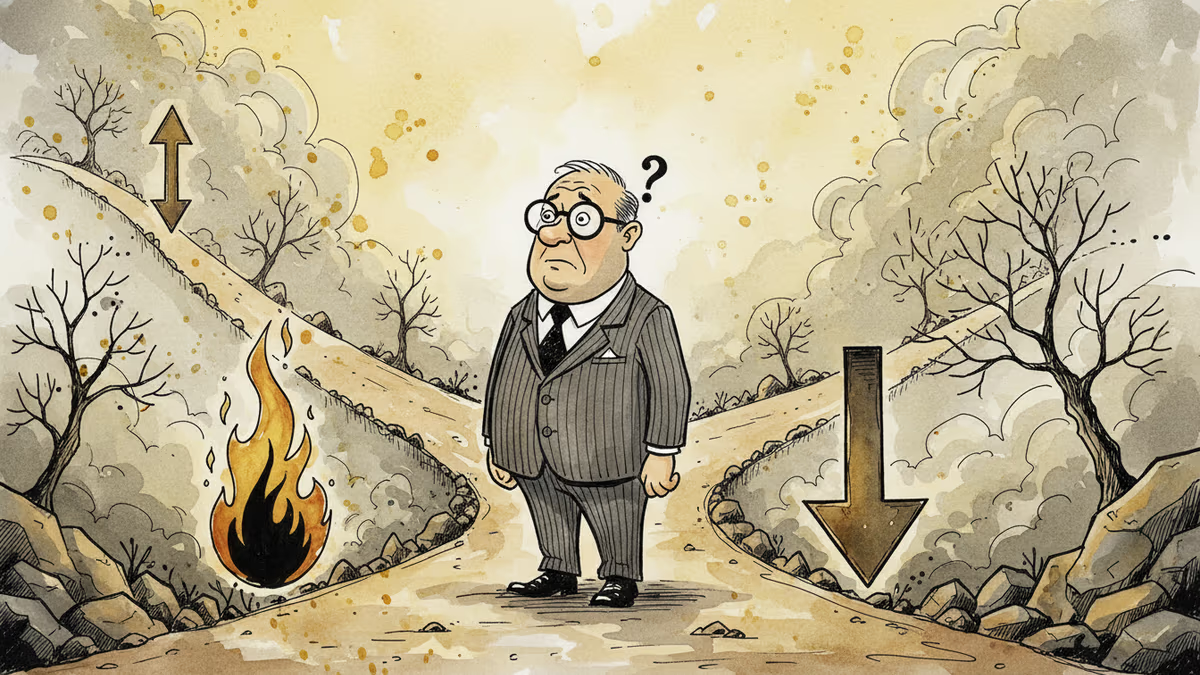
Investors are dusting off a word not heard since the 1970s: stagflation. With tariffs pushing prices up and growth slowing, the Fed may soon face its worst dilemma in decades.
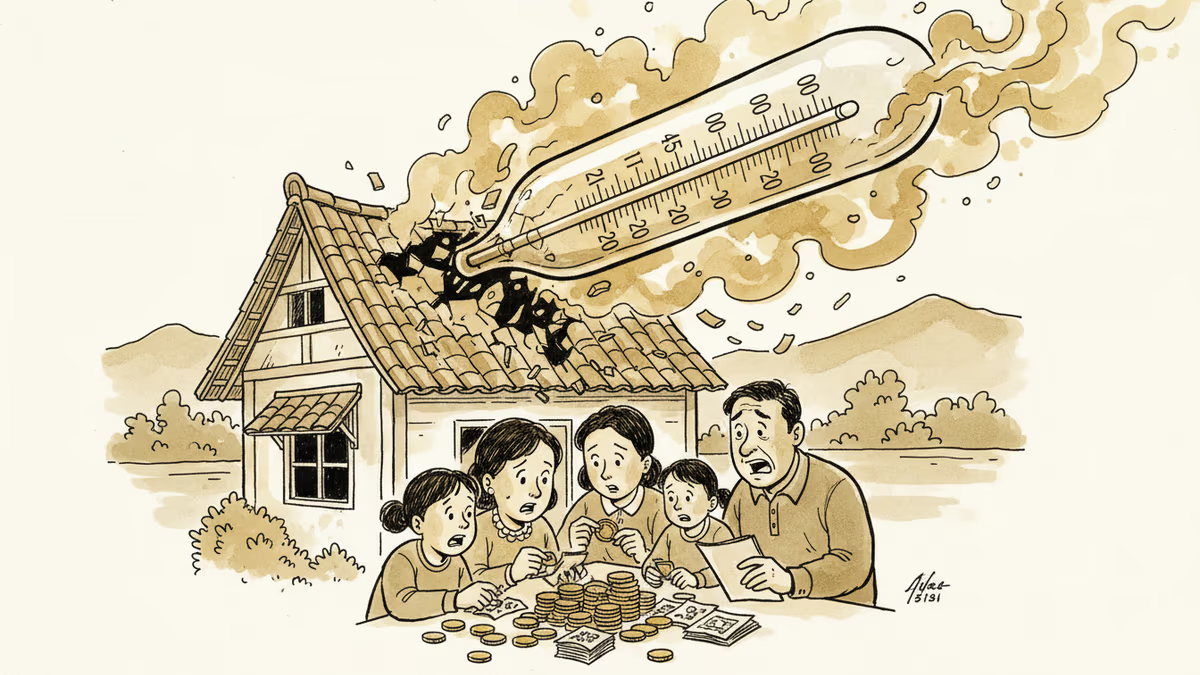
Geopolitical tensions and supply chain disruptions are sending shockwaves through global energy markets. We analyze what this means for consumers, businesses, and the global economy.
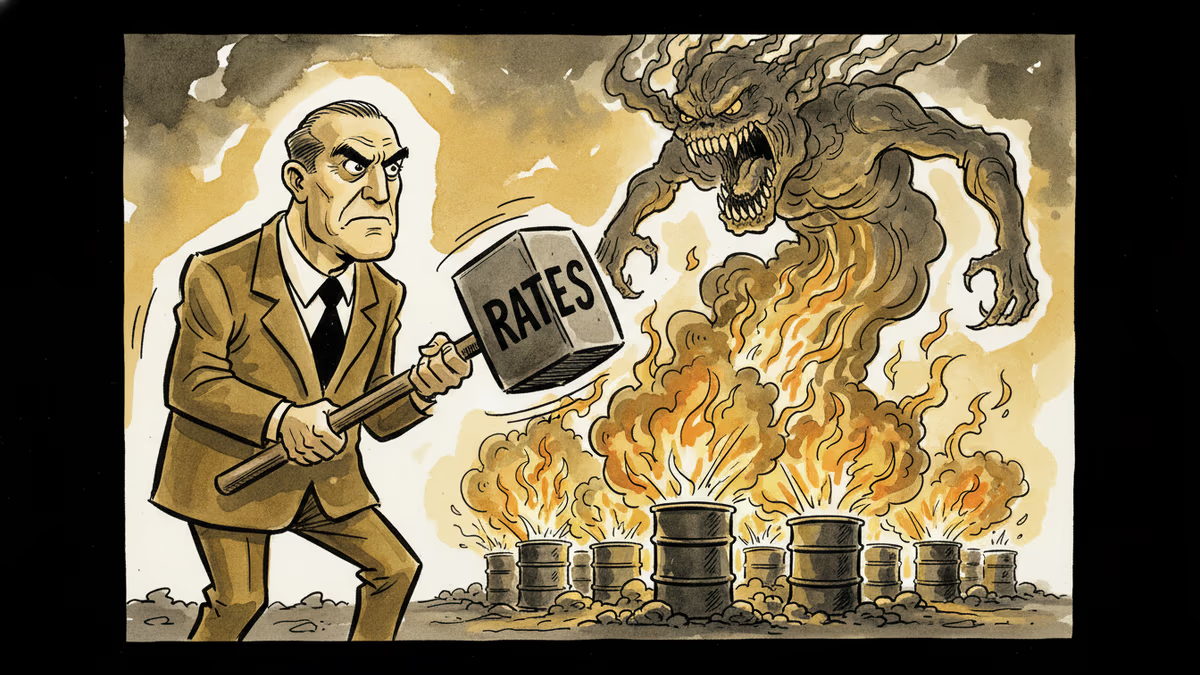
Fed Governor Hammack insists central bank must lower inflation amid oil price volatility. What this signals for interest rates and your portfolio.
Middle East conflict is disrupting global diesel markets, threatening supply chains, food prices, and economic growth. Here's what's at stake — and who pays the price.
Investors are dusting off a word not heard since the 1970s: stagflation. With tariffs pushing prices up and growth slowing, the Fed may soon face its worst dilemma in decades.
Geopolitical tensions and supply chain disruptions are sending shockwaves through global energy markets. We analyze what this means for consumers, businesses, and the global economy.
Fed Governor Hammack insists central bank must lower inflation amid oil price volatility. What this signals for interest rates and your portfolio.
Thoughts
Share your thoughts on this article
Sign in to join the conversation