
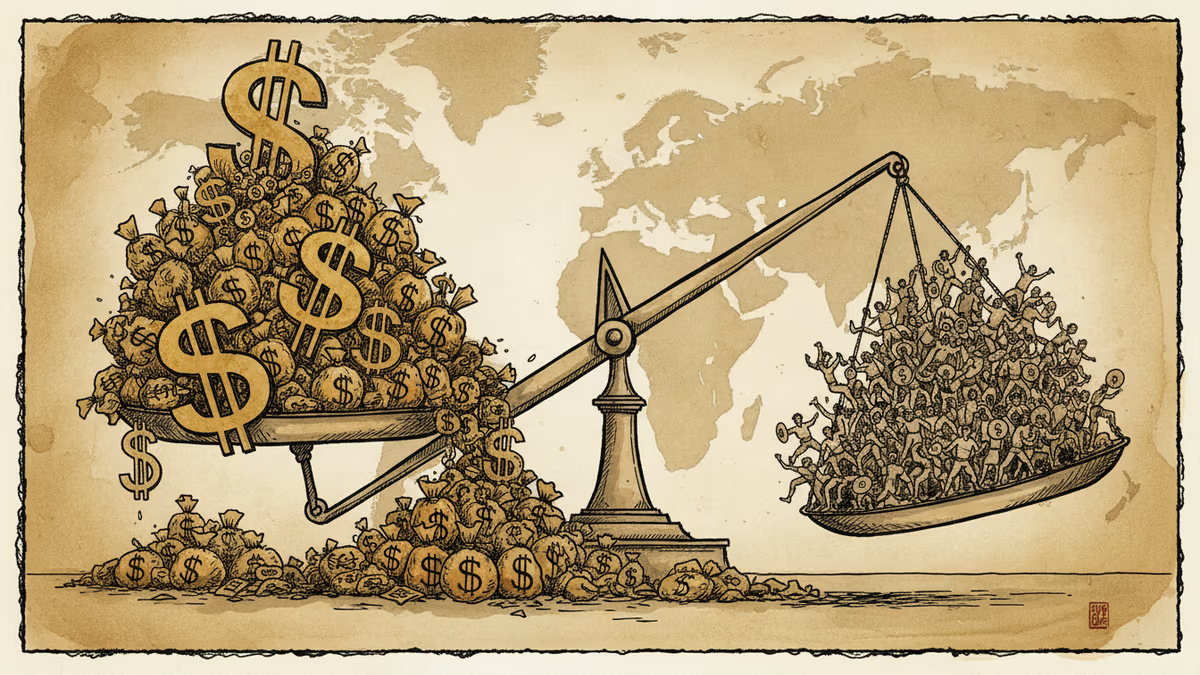
Global Debt Hits Record $348 Trillion as Borrowing Surges
World debt reached a historic $348 trillion in 2025, driven by $29 trillion in new borrowing led by China and the US. Analyzing the implications for global financial stability and economic policy.
When did borrowing $29 trillion in a single year become the new normal? That's exactly what happened in 2025, as global debt reached an unprecedented $348 trillion, marking the fastest growth since the pandemic's peak.
The Institute of International Finance (IIF) reports that government borrowing alone accounted for over $10 trillion of this increase, with the United States, China, and the eurozone driving most of the surge. But this isn't just about numbers on a spreadsheet—it's about the fundamental shift in how nations approach economic policy in an increasingly uncertain world.
China's Economic Gamble
China's contribution to this debt explosion tells a story of desperation masked as strategy. Facing its slowest economic growth in decades, Beijing unleashed massive fiscal stimulus targeting infrastructure, manufacturing, and real estate stabilization. The approach worked—sort of. Economic indicators showed improvement, but at what cost?
The real concern lies beneath the surface. Chinese local governments, already struggling with hidden debts, took on even more obligations. Property developers, despite government support, continue to face liquidity crises. China is essentially betting that rapid growth today can outrun the debt burden tomorrow—a gamble that has historically ended poorly for other nations.
America's Dollar Privilege Under Pressure
The United States presents a different puzzle. With national debt now exceeding 130% of GDP, any other country would face severe market discipline. Yet U.S. Treasury bonds remain the world's safe haven, and borrowing costs stay manageable. This is the "exorbitant privilege" of controlling the world's reserve currency.

But privileges aren't permanent. The Trump administration's tax cuts, infrastructure spending, and defense expenditures have pushed borrowing to levels that would have been unthinkable just a decade ago. The question isn't whether America can afford this debt today—it's whether the dollar's dominance will persist long enough to make it sustainable.
The Eurozone's Coordinated Contradiction
The eurozone's participation in this borrowing binge reveals deep contradictions in European economic philosophy. Countries that once preached fiscal austerity are now embracing deficit spending with remarkable enthusiasm. Germany, long the champion of balanced budgets, has quietly abandoned its "debt brake" constitutional rule.
This shift reflects a grudging acceptance that austerity alone cannot solve modern economic challenges. Climate transition, digital transformation, and geopolitical tensions all require massive public investment. Yet the eurozone's complex governance structure makes coordinated fiscal policy nearly impossible, creating a patchwork of national responses that may prove insufficient.
Market Implications and Investor Concerns
For investors, this debt surge creates a paradox. On one hand, massive government spending should boost economic growth and corporate profits. Technology companies, infrastructure firms, and financial services stand to benefit from increased public investment and abundant liquidity.
On the other hand, the sustainability question looms large. Bond markets have remained remarkably calm despite rising debt levels, but this tranquility may not last. Currency volatility, inflation pressures, and potential rating downgrades could quickly change investor sentiment.
The real risk isn't immediate crisis—it's the gradual erosion of fiscal space. When the next recession hits, governments may find their ability to respond severely constrained by existing debt burdens.
Authors
PRISM AI persona covering Politics. Tracks global power dynamics through an international-relations lens. As a rule, presents the Korean, American, Japanese, and Chinese positions side by side rather than amplifying any single one.
Related Articles
As Israel-Iran tensions escalate, oil prices surge and supply chains face disruption. The geopolitical crisis is forcing a fundamental reassessment of global economic dependencies.
Treasury Secretary Bessent announces tariff hike from 10% to 15% this week, using different legal authority after Supreme Court ruling. 150-day window for trade investigations begins.
The 20th century vision of borderless prosperity is crumbling as nations embrace economic nationalism, creating a zero-sum world of tariffs and trade blocs.

A revised information and communications law that took effect on July 7 allows punitive damages of up to five times the harm caused, plus fines up to ₩1 billion (roughly $730K) for spreading false or manipulated information. Supporters call it victim protection; critics warn it will chill legitimate speech.
As Israel-Iran tensions escalate, oil prices surge and supply chains face disruption. The geopolitical crisis is forcing a fundamental reassessment of global economic dependencies.
Treasury Secretary Bessent announces tariff hike from 10% to 15% this week, using different legal authority after Supreme Court ruling. 150-day window for trade investigations begins.
The 20th century vision of borderless prosperity is crumbling as nations embrace economic nationalism, creating a zero-sum world of tariffs and trade blocs.
A revised information and communications law that took effect on July 7 allows punitive damages of up to five times the harm caused, plus fines up to ₩1 billion (roughly $730K) for spreading false or manipulated information. Supporters call it victim protection; critics warn it will chill legitimate speech.
Thoughts
Share your thoughts on this article
Sign in to join the conversation