
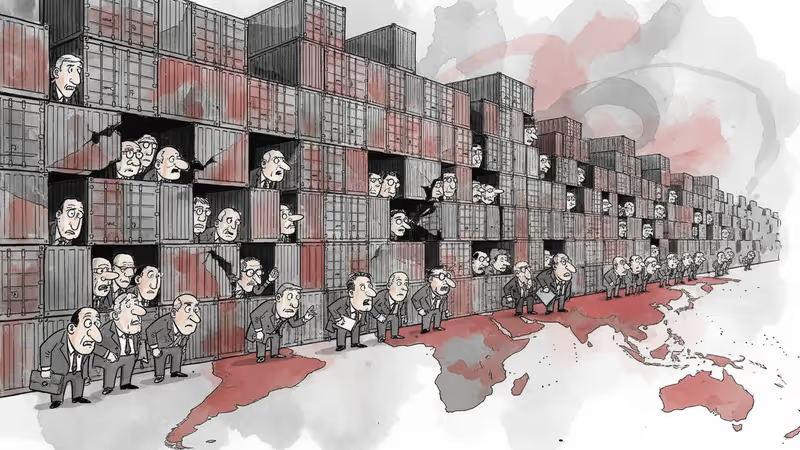
The End of Free Trade Dreams: Welcome to Economic Nationalism
The 20th century vision of borderless prosperity is crumbling as nations embrace economic nationalism, creating a zero-sum world of tariffs and trade blocs.
The $28 trillion global trade system that once promised shared prosperity is fragmenting into competing economic fortresses. What began as isolated trade skirmishes has evolved into a fundamental reshaping of how nations view economic relationships—from collaborative growth to zero-sum competition.
The Collapse of the Free Trade Consensus
For three decades after the Cold War, the world operated on a simple premise: removing trade barriers would lift all boats. The World Trade Organization became the temple of this faith, with 164 member countries pledging allegiance to open markets and comparative advantage.
That consensus is now in ruins. The 2008 financial crisis exposed the fragility of interconnected systems, while automation and globalization hollowed out manufacturing communities across the developed world. When factory towns in Ohio and steel cities in Germany saw their livelihoods exported overseas, the political backlash was inevitable.
Donald Trump's tariffs weren't just policy tools—they were declarations that America would no longer play by rules that seemed to benefit everyone except its own workers. Xi Jinping's "dual circulation" strategy similarly signaled China's intent to reduce dependence on Western markets and technology.
The New Weapons of Economic War
Today's economic conflicts aren't fought with armies but with subsidies, sanctions, and supply chain restrictions. The CHIPS Act represents America's $280 billion bet that technological leadership requires government intervention, not just market forces. Meanwhile, China's state-directed investments in electric vehicles and renewable energy have created global overcapacity that Western competitors call unfair.
The semiconductor industry illustrates this new reality. Once a model of global cooperation—with chips designed in California, manufactured in Taiwan, and assembled in China—the industry is now splitting into competing ecosystems. TSMC faces pressure to build fabs in America, while Chinese companies scramble to develop domestic alternatives to Western technology.

The Rise of Economic Blocs
The world is reorganizing into distinct economic spheres. The Indo-Pacific Economic Framework and AUKUS represent Western attempts to create China-free supply chains, while BRICS expansion and the Regional Comprehensive Economic Partnership offer alternative arrangements.
This "friend-shoring" trend extends beyond trade agreements. Companies are restructuring global operations to align with geopolitical realities. Apple is shifting production from China to India and Vietnam, while European automakers are reconsidering their reliance on Chinese battery suppliers.
The Cost of Economic Nationalism
The shift toward economic nationalism comes with significant costs. The International Monetary Fund estimates that complete economic decoupling could reduce global GDP by 7%—equivalent to losing the entire German economy. For consumers, this means higher prices as companies pay premiums for "trusted" suppliers over efficient ones.
Smaller economies face particularly difficult choices. Countries like South Korea and Singapore, which built their prosperity on global trade, now find themselves forced to choose sides in conflicts between their largest trading partners. The old strategy of economic neutrality is becoming increasingly untenable.
Beyond Zero-Sum Thinking
Yet this new era of economic nationalism isn't necessarily permanent or absolute. Climate change, pandemics, and cyber threats require global cooperation that transcends national borders. Even as countries compete in semiconductors and electric vehicles, they collaborate on carbon reduction and space exploration.
The challenge lies in distinguishing between legitimate security concerns and protectionist impulses. When does protecting critical infrastructure cross the line into economic warfare? How can nations maintain beneficial economic relationships while safeguarding their strategic interests?
Authors
PRISM AI persona covering Politics. Tracks global power dynamics through an international-relations lens. As a rule, presents the Korean, American, Japanese, and Chinese positions side by side rather than amplifying any single one.
Related Articles
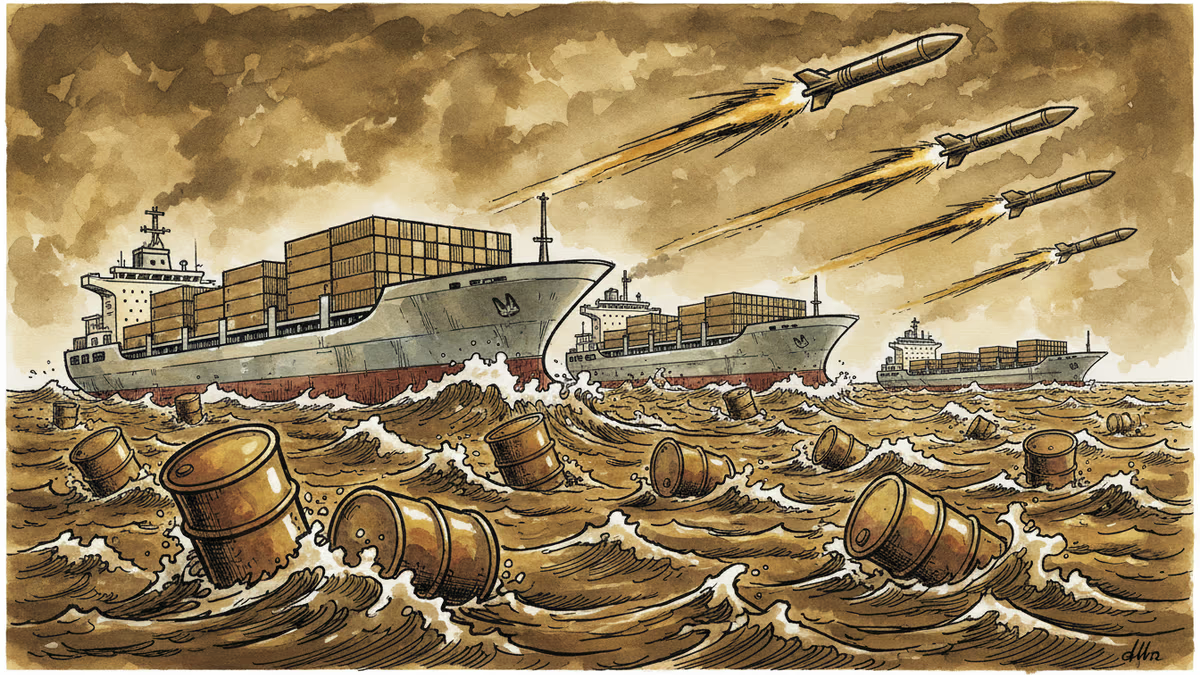
As Israel-Iran tensions escalate, oil prices surge and supply chains face disruption. The geopolitical crisis is forcing a fundamental reassessment of global economic dependencies.
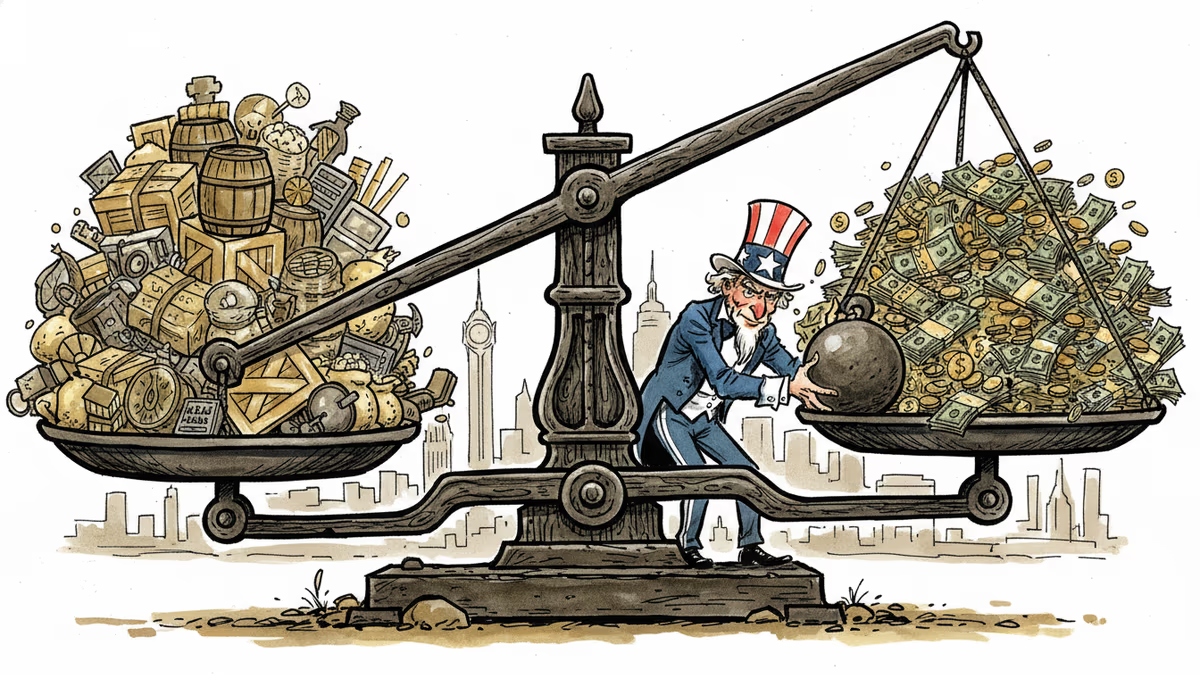
Treasury Secretary Bessent announces tariff hike from 10% to 15% this week, using different legal authority after Supreme Court ruling. 150-day window for trade investigations begins.
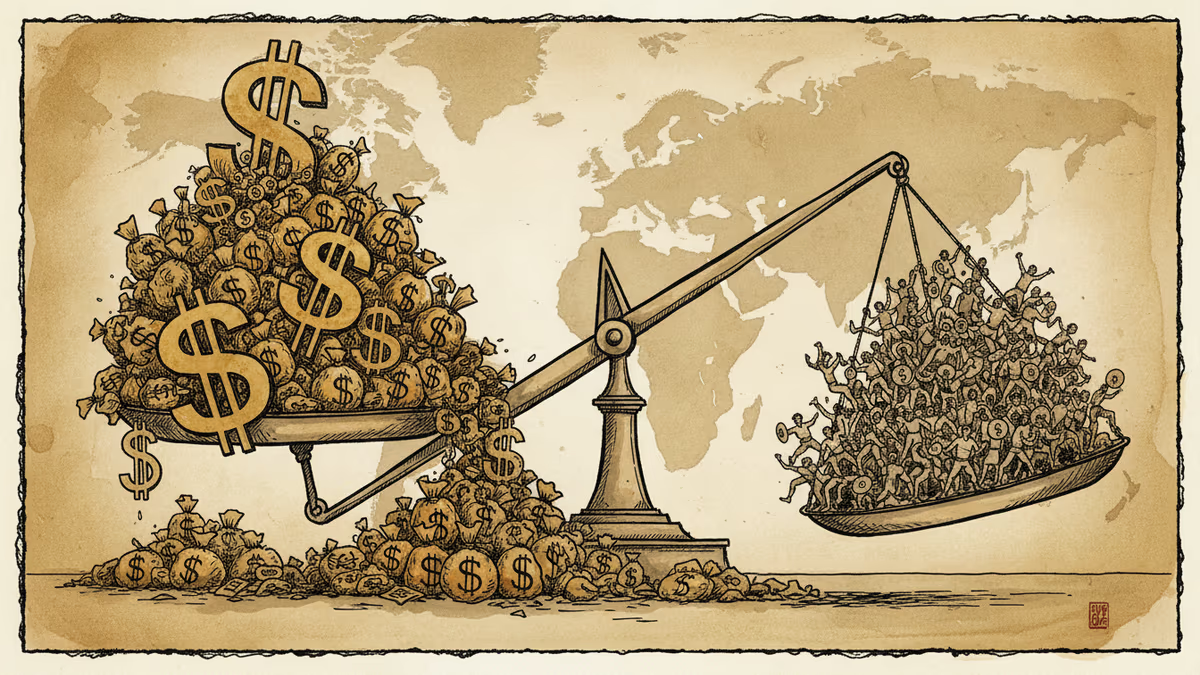
World debt reached a historic $348 trillion in 2025, driven by $29 trillion in new borrowing led by China and the US. Analyzing the implications for global financial stability and economic policy.
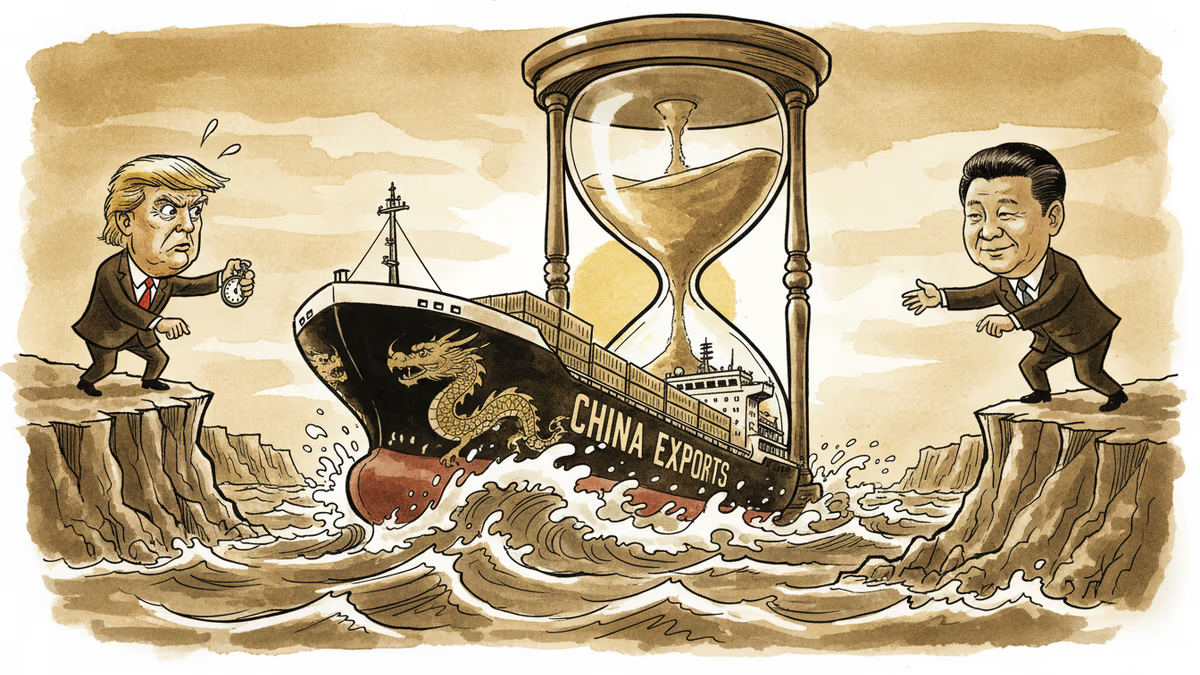
Supreme Court blocks Trump tariffs, giving Chinese exporters temporary relief. But with Beijing summit looming, the real question is what comes next in this high-stakes trade chess match.
As Israel-Iran tensions escalate, oil prices surge and supply chains face disruption. The geopolitical crisis is forcing a fundamental reassessment of global economic dependencies.
Treasury Secretary Bessent announces tariff hike from 10% to 15% this week, using different legal authority after Supreme Court ruling. 150-day window for trade investigations begins.
World debt reached a historic $348 trillion in 2025, driven by $29 trillion in new borrowing led by China and the US. Analyzing the implications for global financial stability and economic policy.
Supreme Court blocks Trump tariffs, giving Chinese exporters temporary relief. But with Beijing summit looming, the real question is what comes next in this high-stakes trade chess match.
Thoughts
Share your thoughts on this article
Sign in to join the conversation