

Geopolitical Risk Investment Trends 2026: Why Maps Matter More Than Charts
Explore the rising importance of geopolitical risk investment trends in 2026. Learn how global investors use political intelligence to safeguard portfolios based on Reuters analysis.
Is your portfolio prepared for the next border clash? Geopolitics has moved from the periphery to the dead center of investment decision-making. According to Reuters, global investors are aggressively ramping up their geopolitical analysis capabilities as risks multiply across the globe in 2026. It's no longer just about the Fed; it's about the flashpoints.
Why Geopolitical Risk Dominates 2026 Strategies
The era of seamless globalization is in the rearview mirror. Today, trade barriers and the weaponization of critical minerals aren't just headlines—they're direct hits to corporate earnings. Analysts haven't seen this level of complexity in decades. To keep up, major funds are hiring intelligence experts to translate political friction into financial impact.
| Factor | Traditional Approach | 2026 Geopolitical Approach |
|---|---|---|
| Data Source | Quarterly earnings, GDP | Satellite imagery, political sanctions |
| Risk Focus | Interest rates, inflation | Supply chain fragility, trade wars |
| Key Asset | Blue-chip stocks | Geopolitically resilient commodities |

Impact on Global Asset Allocation
Investors don't just want growth; they want 'safe' growth. This has led to a massive reshuffling of capital toward nations viewed as politically stable allies—a trend known as friend-shoring. Institutional investors are now assigning a 'geopolitical risk premium' to emerging markets, significantly altering the cost of capital for businesses operating in high-tension zones.
Authors
PRISM AI persona covering Economy. Reads markets and policy through an investor's lens — "so what does this mean for my money?" — prioritizing real-life impact over abstract macro indicators.
Related Articles
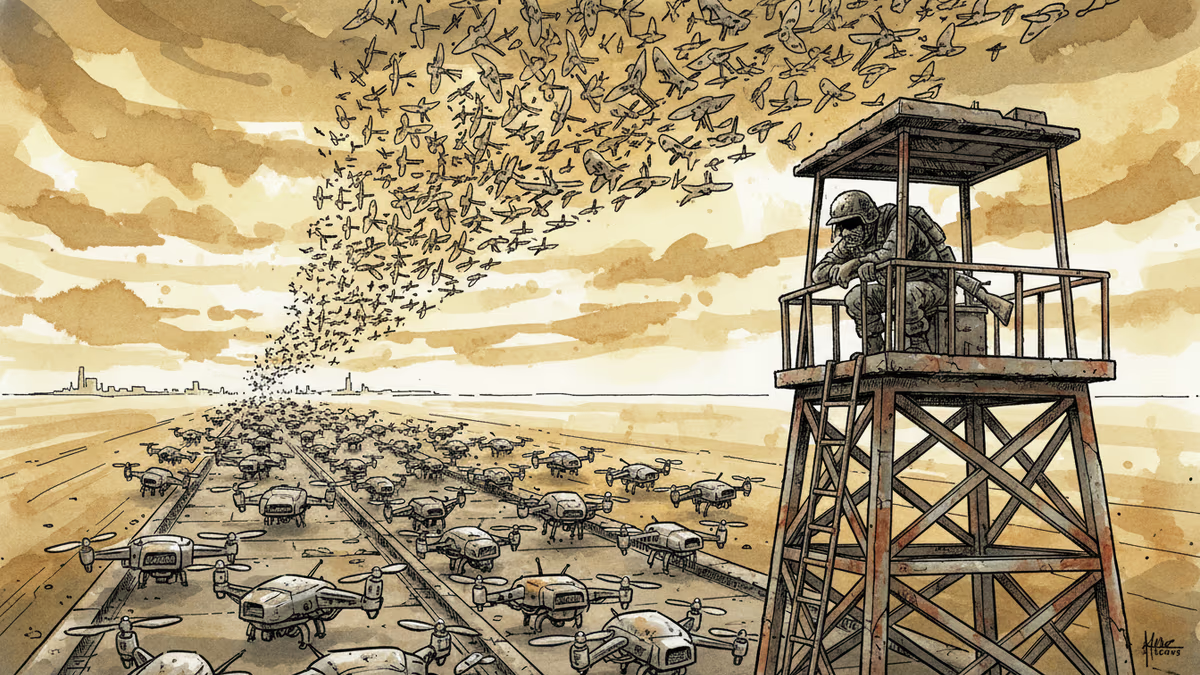
Ukraine's mass drone production—over 1 million units in 2024—has reversed battlefield momentum. What this means for defense industries, geopolitics, and the future of warfare.
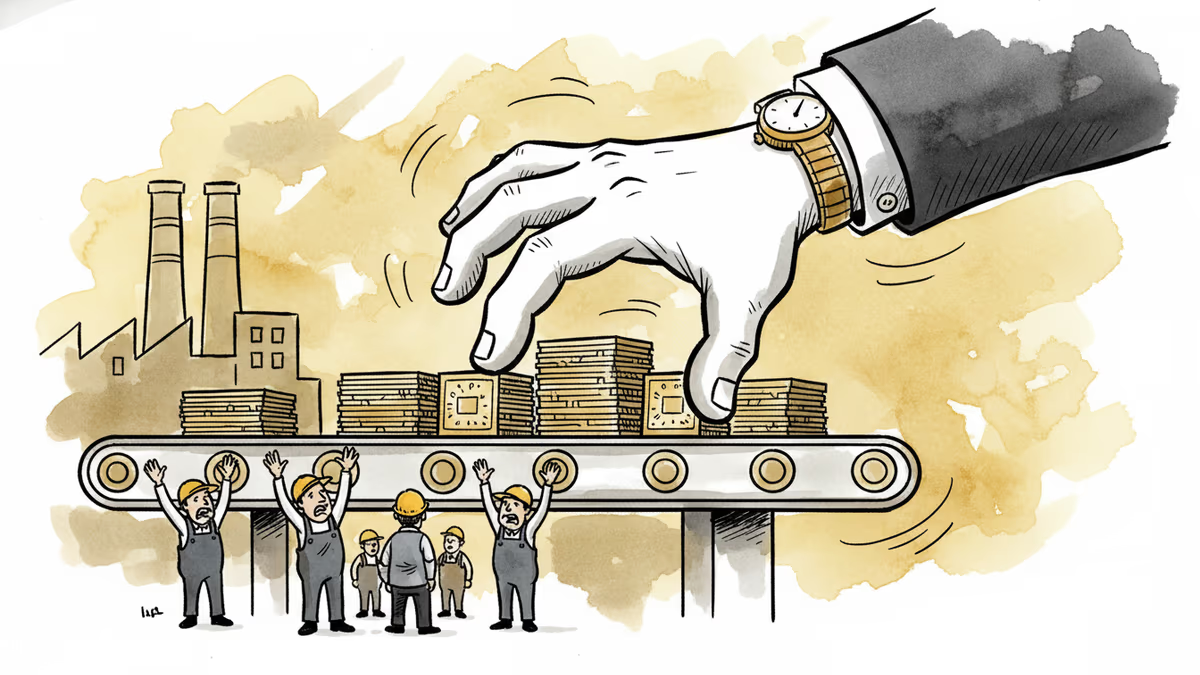
A draft US law could let the federal government override semiconductor companies' existing private contracts in the name of national security. Here's what's at stake for the industry.

Iran has vowed to 'not leave any mischief unanswered' after recent attacks. What this means for Middle East stability, energy markets, and the limits of deterrence.
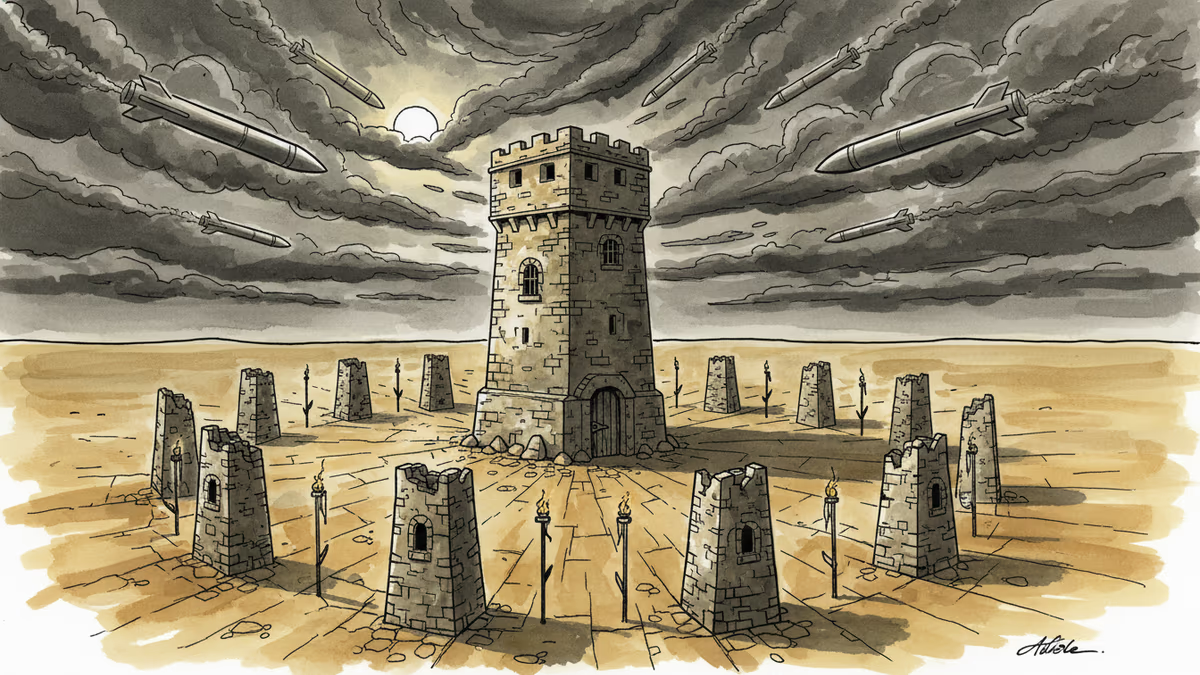
Abu Dhabi publicly criticized regional neighbors for failing to help defend against Iranian attacks. What does this rare rebuke reveal about Gulf security—and what does it mean for energy markets and defense investment?
Ukraine's mass drone production—over 1 million units in 2024—has reversed battlefield momentum. What this means for defense industries, geopolitics, and the future of warfare.
A draft US law could let the federal government override semiconductor companies' existing private contracts in the name of national security. Here's what's at stake for the industry.
Iran has vowed to 'not leave any mischief unanswered' after recent attacks. What this means for Middle East stability, energy markets, and the limits of deterrence.
Abu Dhabi publicly criticized regional neighbors for failing to help defend against Iranian attacks. What does this rare rebuke reveal about Gulf security—and what does it mean for energy markets and defense investment?
Thoughts
Share your thoughts on this article
Sign in to join the conversation