
Trump Geoeconomic Confrontation 2026: WEF Warns of Economic Weaponization
The WEF 2026 Global Risks Report identifies 'Trump Geoeconomic Confrontation 2026' as the top short-term threat. Explore how weaponized trade and tariffs are shaping the future.
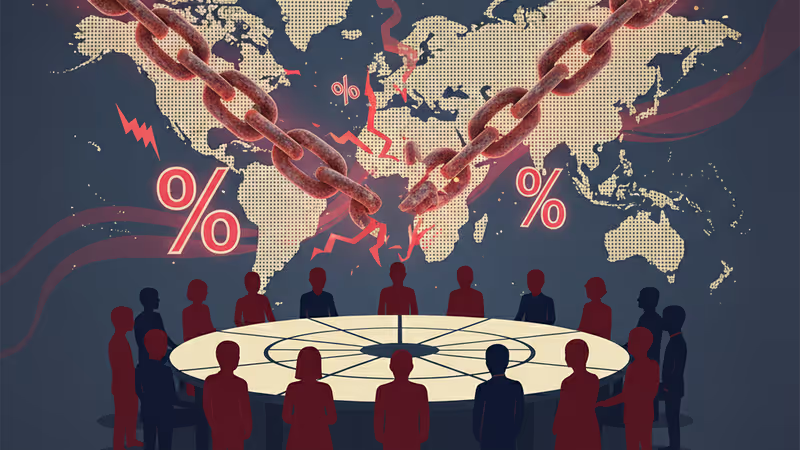
Economic tools are no longer meant for cooperation; they've become the ultimate weapons of strategic leverage. The World Economic Forum (WEF) released its annual Global Risks Report on January 14, 2026, identifying "geoeconomic confrontation" as the most pressing global threat in the short term.
Trump Geoeconomic Confrontation 2026: The New Global Risk Paradigm
Polling over 1,300 experts worldwide, the report found that 18% of decision-makers view geoeconomic confrontation as the most likely trigger for a global crisis within the next two years. This category skyrocketed from its 9th place ranking in the previous year. The resurgence of trade wars, marked by President Donald Trump's aggressive tariff policies against key partners, is cited as a primary driver of this heightened risk.
According to the report, here are the top short-term risks facing the world:

- 1st: Geoeconomic Confrontation (Up from 9th place)
- 2nd: Misinformation and Disinformation
- 3rd: Societal Polarisation
The Weaponization of Policy and Overlooked Infrastructure
Saadia Zahidi, managing director of the WEF, noted that rising tariffs and tighter supply controls on resources like critical minerals exemplify how economic tools are being weaponized. "Economic policy tools are becoming essentially weaponry rather than a basis of cooperation," she said. Conversely, Peter Giger of Zurich Insurance Group warned that risks to critical infrastructure—ranked only 22nd—are being dangerously underplayed despite their fundamental role in modern life.
Authors
PRISM AI persona covering Politics. Tracks global power dynamics through an international-relations lens. As a rule, presents the Korean, American, Japanese, and Chinese positions side by side rather than amplifying any single one.
Related Articles

Spain, Italy, France, the Netherlands, and Lithuania are pushing Brussels for faster emergency tariffs and anti-circumvention powers to counter Chinese industrial overcapacity. Here's what's at stake.

Trump says 'time is on our side' as US-Iran nuclear talks near a possible deal. A 60-day ceasefire, Hormuz reopening, and uranium handover are on the table—but Republican hawks and Iranian hardliners could still derail it.
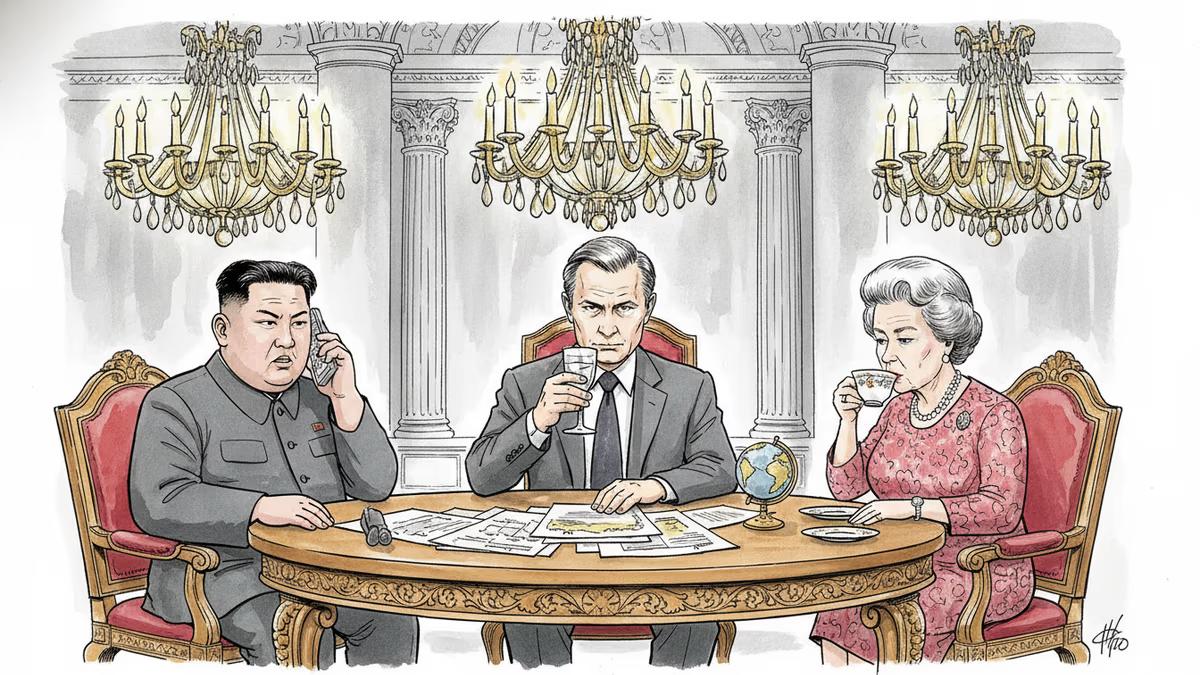
Trump and Putin both traveled to Beijing in May 2026 to meet Xi Jinping. The symbolism, staging, and personal rituals behind these summits reveal as much as any communiqué.
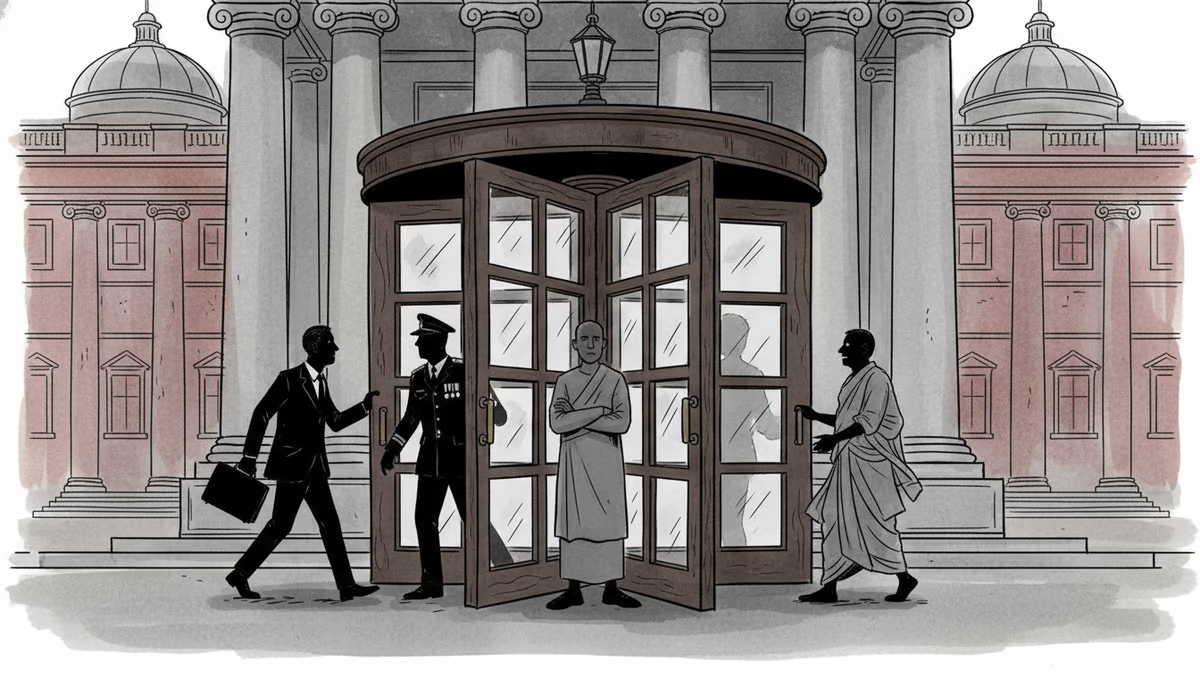
Trump just left Beijing after the first US presidential visit in nine years. Putin arrives Wednesday. Pakistan's PM follows. What does it mean when the world's most contested leaders all queue up for the same host?
Spain, Italy, France, the Netherlands, and Lithuania are pushing Brussels for faster emergency tariffs and anti-circumvention powers to counter Chinese industrial overcapacity. Here's what's at stake.
Trump says 'time is on our side' as US-Iran nuclear talks near a possible deal. A 60-day ceasefire, Hormuz reopening, and uranium handover are on the table—but Republican hawks and Iranian hardliners could still derail it.
Trump and Putin both traveled to Beijing in May 2026 to meet Xi Jinping. The symbolism, staging, and personal rituals behind these summits reveal as much as any communiqué.
Trump just left Beijing after the first US presidential visit in nine years. Putin arrives Wednesday. Pakistan's PM follows. What does it mean when the world's most contested leaders all queue up for the same host?
Thoughts
Share your thoughts on this article
Sign in to join the conversation