

Google's Pixel 10a: Same Phone, New Name?
Google announces Pixel 10a preorders starting February 18, but leaked specs suggest minimal changes from the 9a. Is this incremental upgrade worth the wait, or should you grab the 9a on sale?
Google just announced that preorders for its next budget smartphone, the Pixel 10a, will begin on February 18. But here's the twist: based on leaked specifications, you'd be hard-pressed to tell the difference between this "new" phone and its predecessor.
Déjà Vu in Your Pocket
The teaser video reveals a familiar story. The Pixel 10a maintains the same design language as the 9a, complete with the signature flat back without a camera bump. Even the color scheme looks nearly identical to the 9a's iris variant—just slightly tweaked.
But it's the internal specs that really raise eyebrows. While Pixel A-series phones typically inherit processors from their flagship siblings, rumors suggest the 10a will stick with the same Tensor G4 chip as its predecessor. The leaked 6.3-inch display with 120Hz refresh rate, 5,100mAh battery, and 48MP main camera? All identical to what the 9a already offers.
The Art of Minimal Upgrades

So what's actually new? Expect minor tweaks like a slightly brighter screen and perhaps a few software enhancements. But if Google maintains the $499 price point, these incremental improvements raise a crucial question: why not just buy the 9a when it goes on sale?
This strategy reflects a broader challenge in the smartphone industry. As hardware capabilities plateau, manufacturers are struggling to justify annual upgrades, especially in the budget segment where dramatic innovations are cost-prohibitive.
When "New" Isn't Really New
Google's approach with the Pixel 10a mirrors what we're seeing across the industry. Companies are caught between consumer expectations for annual releases and the reality that meaningful improvements take time—and money—to develop.
For consumers, this presents both an opportunity and a dilemma. The opportunity? Last year's model often delivers 90% of the experience at a discounted price. The dilemma? Navigating marketing messages that suggest you're missing out by not upgrading.
The memory shortage affecting Valve's delayed Steam hardware launch illustrates another dimension of this challenge. When supply chain constraints drive up costs, manufacturers face pressure to maintain margins by limiting hardware improvements.
Authors
Related Articles

In a post-Google I/O interview, Sundar Pichai acknowledged flawed search results, real AI anxiety, and an AGI timeline that makes the label irrelevant. Here's what he said — and what it means.
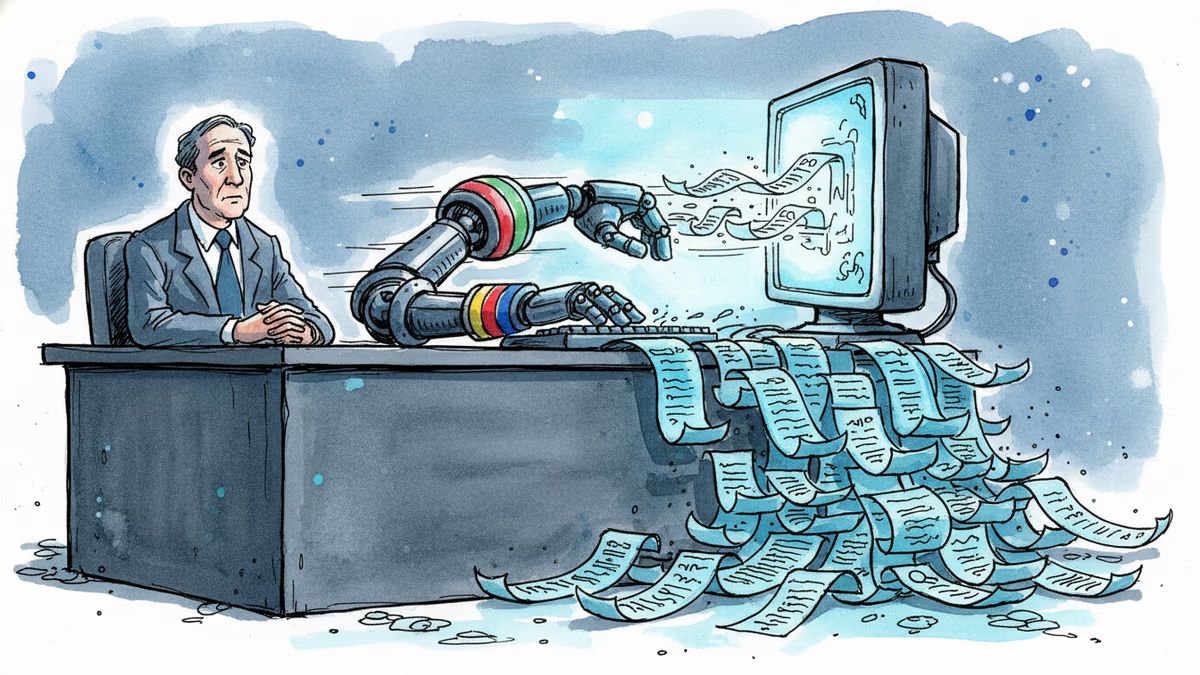
Google is building AI agents that search the web proactively, without user prompting. That's not just a product update — it's a fundamental shift in who controls the information you receive.
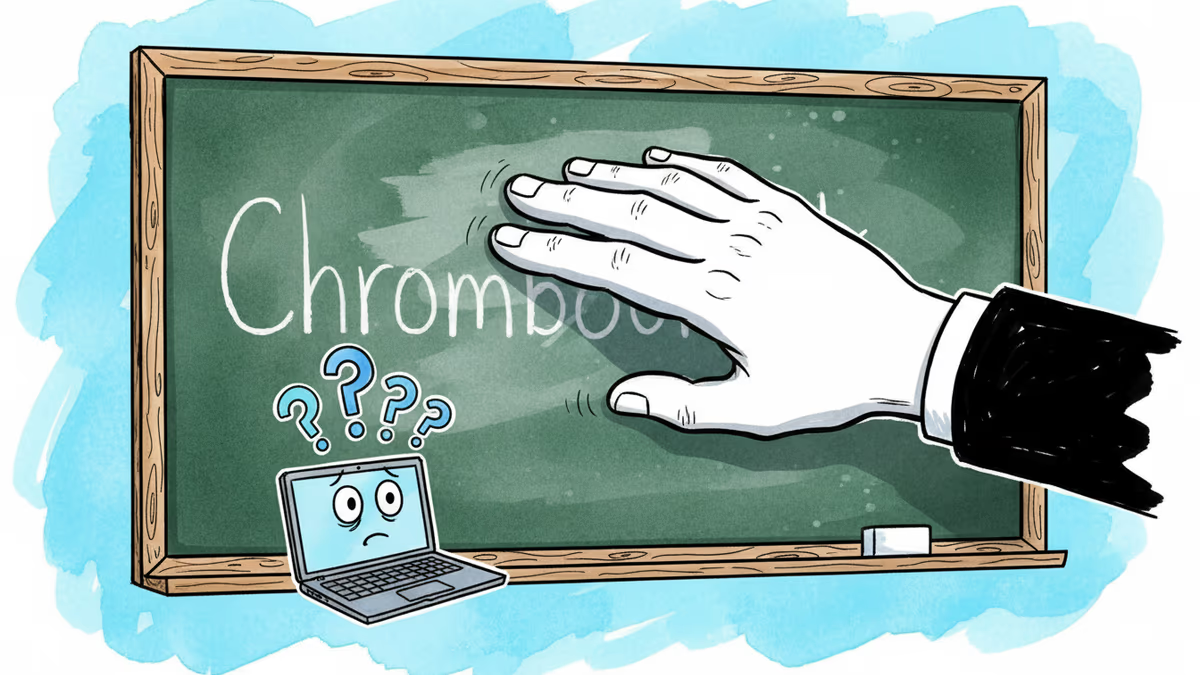
Google unveiled the 'Googlebook' platform to replace Chromebook and ChromeOS—but revealed zero hardware specs. What's the strategy, and what does it mean for users, manufacturers, and the education market?

After 15 years of fragmented mobile messaging, Apple and Google are rolling out end-to-end encrypted RCS messaging between iPhones and Android devices. Here's what changed, why it took so long, and what it means for your privacy.
In a post-Google I/O interview, Sundar Pichai acknowledged flawed search results, real AI anxiety, and an AGI timeline that makes the label irrelevant. Here's what he said — and what it means.
Google is building AI agents that search the web proactively, without user prompting. That's not just a product update — it's a fundamental shift in who controls the information you receive.
Google unveiled the 'Googlebook' platform to replace Chromebook and ChromeOS—but revealed zero hardware specs. What's the strategy, and what does it mean for users, manufacturers, and the education market?
After 15 years of fragmented mobile messaging, Apple and Google are rolling out end-to-end encrypted RCS messaging between iPhones and Android devices. Here's what changed, why it took so long, and what it means for your privacy.
Thoughts
Share your thoughts on this article
Sign in to join the conversation