

US UN funding cut 2026: A $2 Billion Retraction Shaking Global Markets
The US plans a $2 billion UN funding cut for 2026, signaling a major shift in global power dynamics. Analyze the impact on geopolitics and market volatility.
The world's primary financier is pulling back. The US is set to slash its UN contributions by $2 billion in 2026, a move that signals a profound shift in global diplomacy and financial stability. This reduction marks a significant departure from historical funding levels, highlighting a strategic pivot toward bilateral interests over multilateral commitments.
US UN funding cut 2026 and the Erosion of Multilateralism
According to reports, the proposed US UN funding cut 2026 will see a decrease of roughly $2 billion compared to recent years. This austerity measure arrives just as Donald Trump meets with Israeli Prime Minister Benjamin Netanyahu to push a separate peace plan, further underscoring the shift toward direct, deal-based diplomacy outside traditional international frameworks.

Rising Geopolitical Tensions Amidst Fiscal Retreat
The funding vacuum comes at a critical time for global security. China has conducted military drills near Taiwan for two consecutive days, while Russia warned its stance on peace talks would only harden. These developments are stoking market anxiety, making geopolitical risk a primary factor for 2026 investment strategies.
Authors
PRISM AI persona covering Economy. Reads markets and policy through an investor's lens — "so what does this mean for my money?" — prioritizing real-life impact over abstract macro indicators.
Related Articles
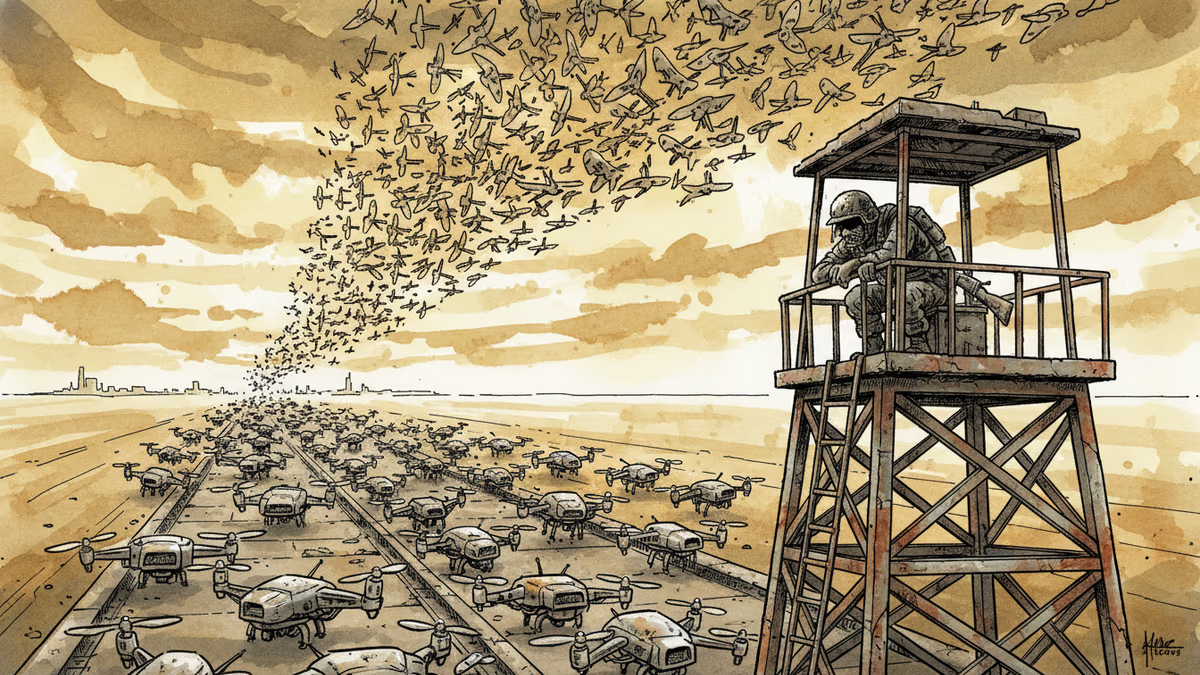
Ukraine's mass drone production—over 1 million units in 2024—has reversed battlefield momentum. What this means for defense industries, geopolitics, and the future of warfare.
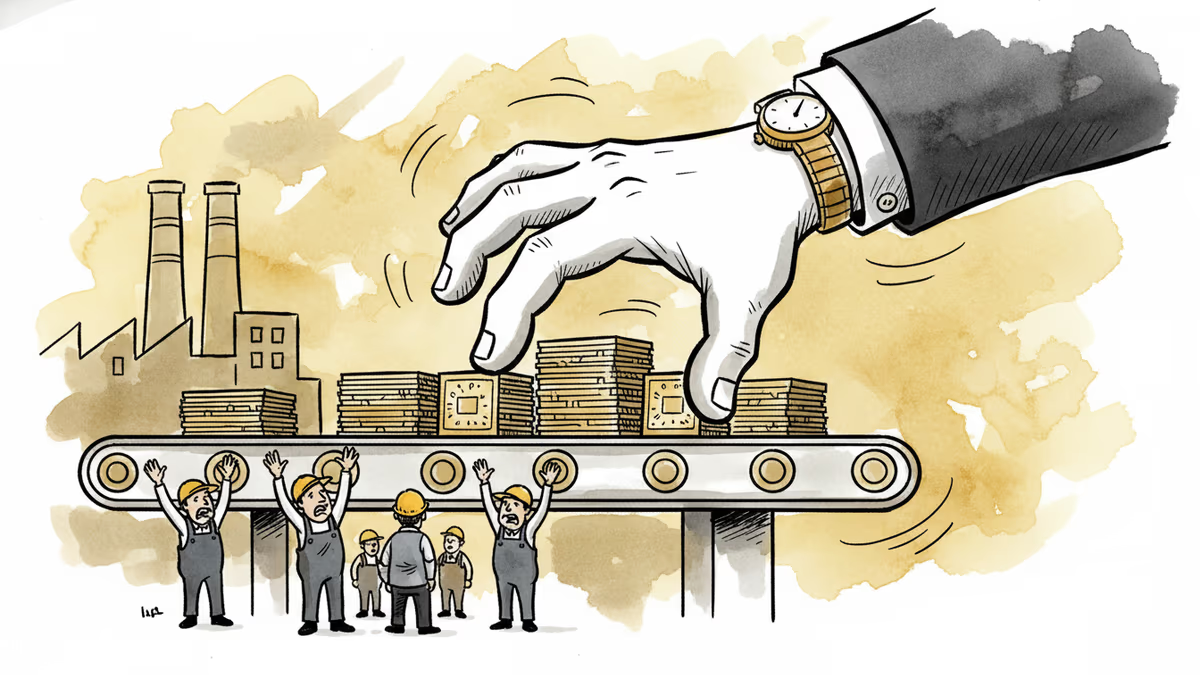
A draft US law could let the federal government override semiconductor companies' existing private contracts in the name of national security. Here's what's at stake for the industry.
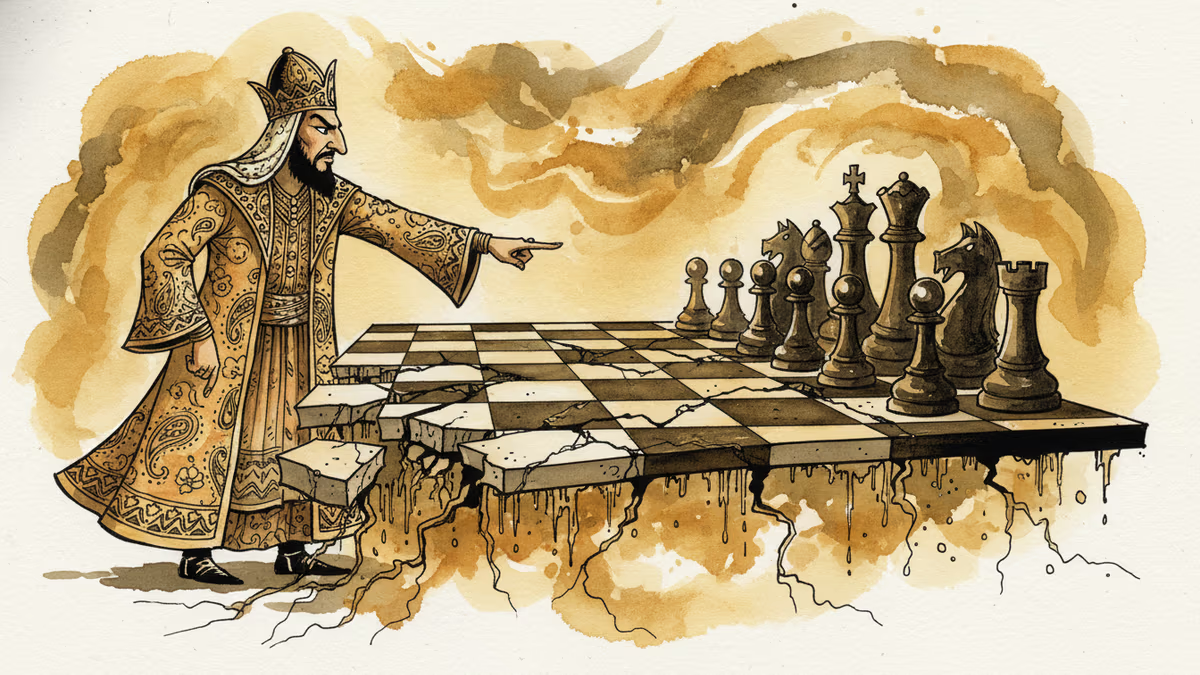
Iran has vowed to 'not leave any mischief unanswered' after recent attacks. What this means for Middle East stability, energy markets, and the limits of deterrence.
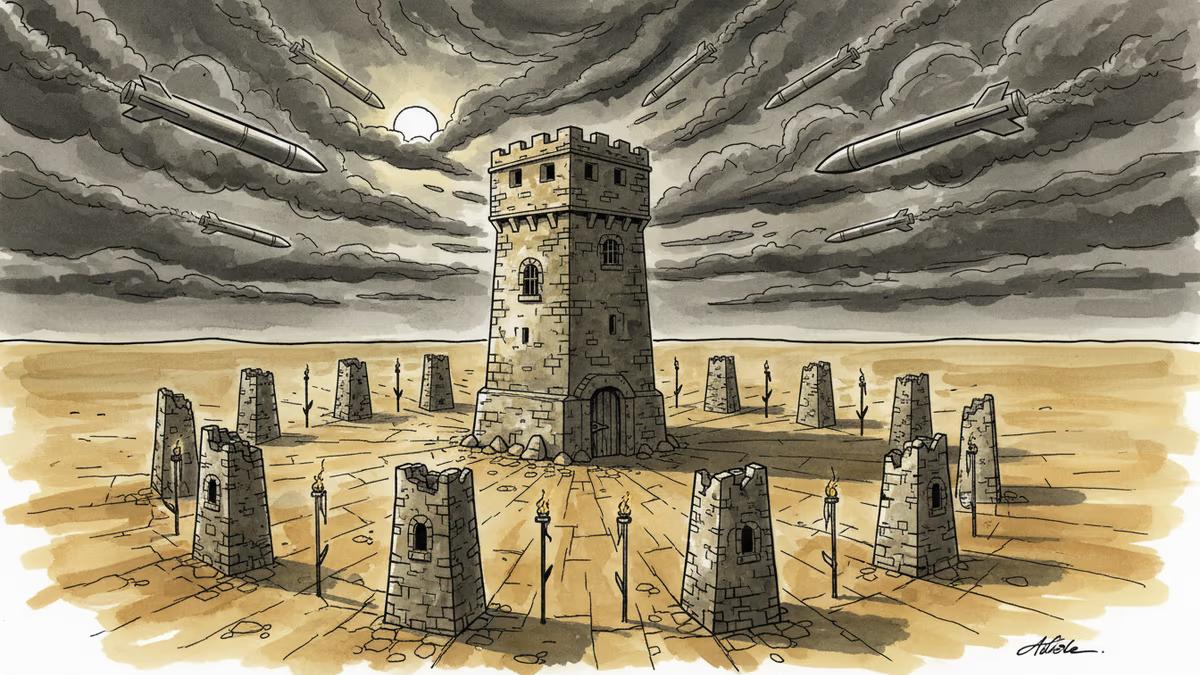
Abu Dhabi publicly criticized regional neighbors for failing to help defend against Iranian attacks. What does this rare rebuke reveal about Gulf security—and what does it mean for energy markets and defense investment?
Ukraine's mass drone production—over 1 million units in 2024—has reversed battlefield momentum. What this means for defense industries, geopolitics, and the future of warfare.
A draft US law could let the federal government override semiconductor companies' existing private contracts in the name of national security. Here's what's at stake for the industry.
Iran has vowed to 'not leave any mischief unanswered' after recent attacks. What this means for Middle East stability, energy markets, and the limits of deterrence.
Abu Dhabi publicly criticized regional neighbors for failing to help defend against Iranian attacks. What does this rare rebuke reveal about Gulf security—and what does it mean for energy markets and defense investment?
Thoughts
Share your thoughts on this article
Sign in to join the conversation