
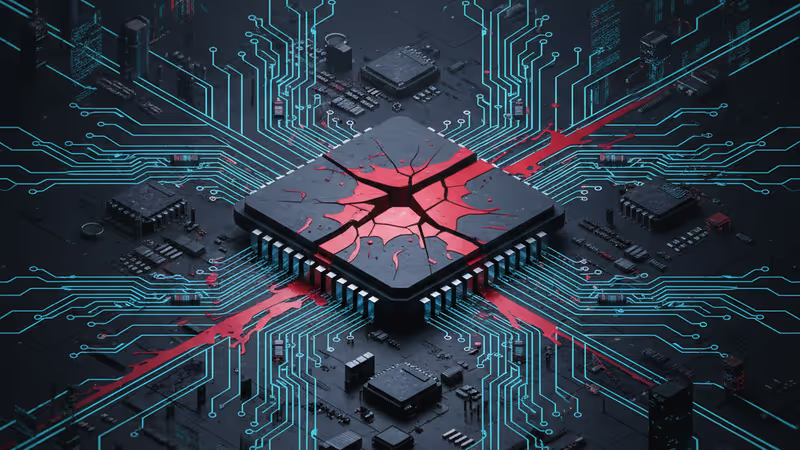
From Texas to the Trenches: The Lawsuit Forcing Big Tech to Confront Its 'Blood Chip' Problem
A Texas lawsuit accuses Intel, AMD, and TI of negligence as their chips power Russian weapons. This analysis breaks down the 'blood chip' crisis and its impact on tech investors.
The Big Picture
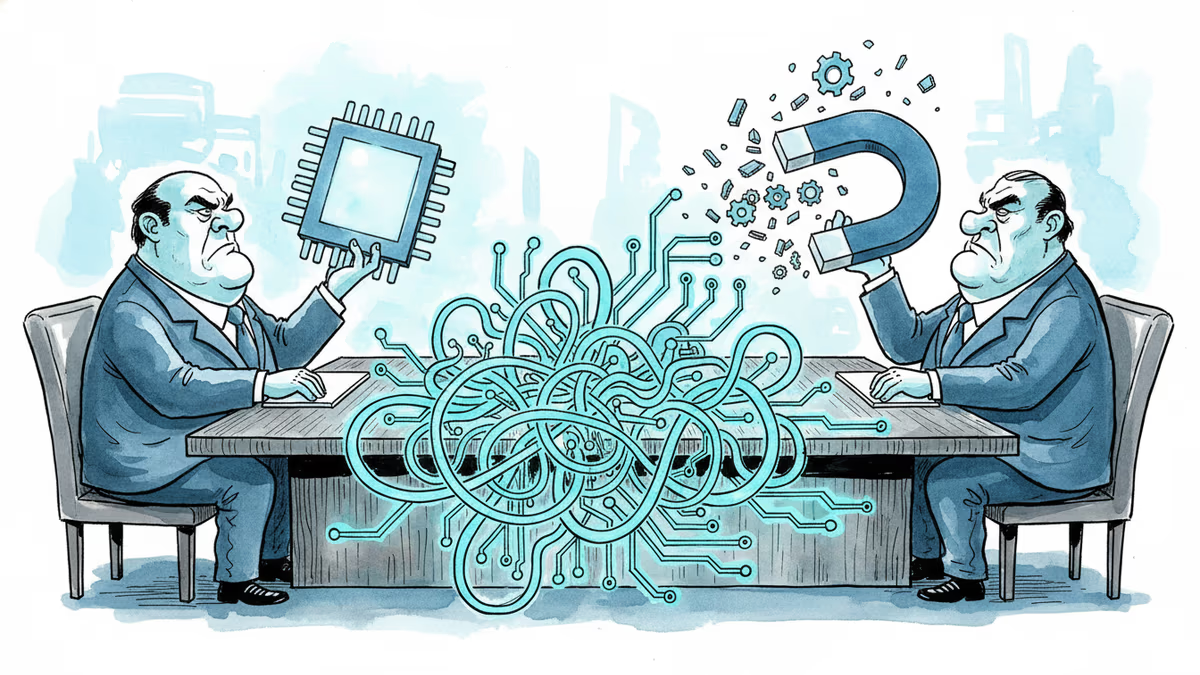
A lawsuit filed by Ukrainian civilians against Texas Instruments, AMD, and Intel is more than just another legal challenge; it’s a moral and operational reckoning for the multi-trillion-dollar semiconductor industry. The core allegation—that these giants negligently allowed their chips to fuel Russian and Iranian war machines—threatens to shatter the long-held shield of plausible deniability that has protected tech firms from the consequences of their sprawling, opaque supply chains. For investors and executives, this marks the arrival of a new, material ESG risk that can no longer be ignored.
The End of Plausible Deniability
For decades, the semiconductor industry has operated on a simple, compartmentalized model: design and manufacture chips, then sell them to a global network of distributors. What happens next has largely been considered someone else’s problem. This lawsuit directly attacks that firewall. The plaintiffs argue that with billions in resources and advanced tracking capabilities, ignoring government warnings and public reports about chips ending up in sanctioned states isn’t just an oversight—it's a choice. A choice, they allege, that prioritizes profit over human lives.
This legal action transforms a foreign policy issue into a corporate liability one. It argues that the responsibility to enforce export controls doesn’t stop with customs agents; it extends deep into the corporate boardroom. The precedent this could set is immense, potentially forcing the entire tech hardware industry to fundamentally re-architect its global sales and distribution channels.
'Conflict Minerals' 2.0: The Rise of 'Conflict Chips'
We've been here before. The battles over "blood diamonds" and "conflict minerals" in the early 2000s forced jewelry and electronics industries to create traceability systems like the Kimberley Process and comply with regulations like the Dodd-Frank Act. This lawsuit is the opening shot in the battle against "conflict chips."

The parallels are striking:
- Complex Supply Chains: Both involve raw materials or components passing through numerous, hard-to-track intermediaries.
- Dual-Use Nature: A standard chip, like a raw mineral, is agnostic; its ethical status is defined by its final application.
- Moral Imperative: Both movements are driven by the direct link between a commercial product and human rights atrocities.
The key difference? Unlike raw materials, sophisticated microchips are man-made, serialized products from a handful of powerful companies. The plaintiffs' argument is that this makes traceability not just possible, but an absolute obligation. The industry can no longer claim ignorance when its products become the brains of a hostile drone or missile system.
Investment & Market Impact:
The financial risks are threefold. First, the potential for massive legal damages and settlements. Second, the severe brand and reputational damage from being associated with war crimes. Third, and perhaps most significant, the forced operational overhaul that will be required to build a more transparent, secure supply chain. This means higher compliance costs, potentially lower margins, and a painful untangling of relationships with high-risk, gray-market distributors who may have been driving volume in emerging markets.
Industry & Business Implications:
For tech executives, this is a call to action. The era of outsourcing supply chain ethics is over. Companies must now proactively invest in "Know Your Customer's Customer" (KYCC) protocols. This will likely accelerate the adoption of technologies like blockchain for component tracking and lead to industry-wide certification standards for distributors. Those who lead in creating a secure, ethical supply chain will not only mitigate legal risk but will also build a powerful competitive advantage in an increasingly geopolitically conscious market.
PRISM's Take
Regardless of the verdict in a Texas courtroom, the case has already succeeded in one crucial aspect: it has put the global tech industry on notice. The argument that a chipmaker's responsibility ends at the distributor's loading dock is no longer tenable in a world where a commercial microprocessor can become a weapon of war overnight. This lawsuit is the catalyst that will force a generational shift from willful ignorance to active accountability. The age of the 'conflict chip' is here, and the companies that fail to adapt will face consequences not just in court, but in the market.
Authors
Related Articles
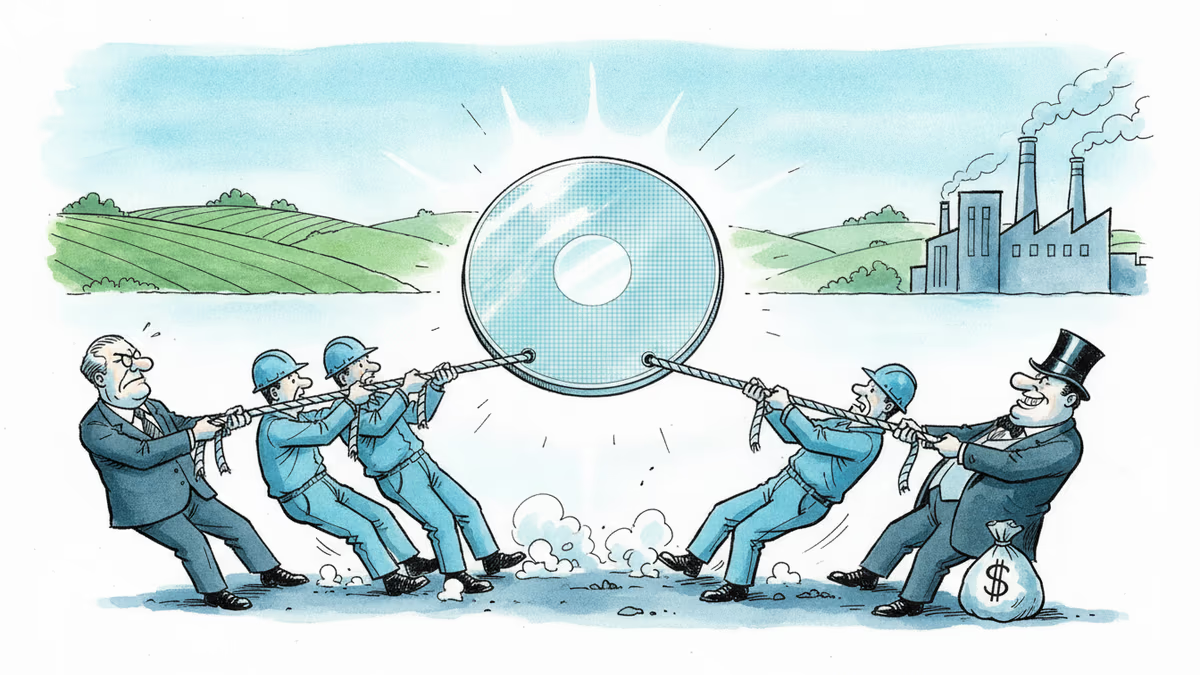
Samsung Electronics' union branch revealed that 84% of survey respondents oppose the government's roughly $290 billion (₩400 trillion) semiconductor megaproject in Gwangju. Government, management, the union and shareholders are all reading the same national project in sharply different ways.
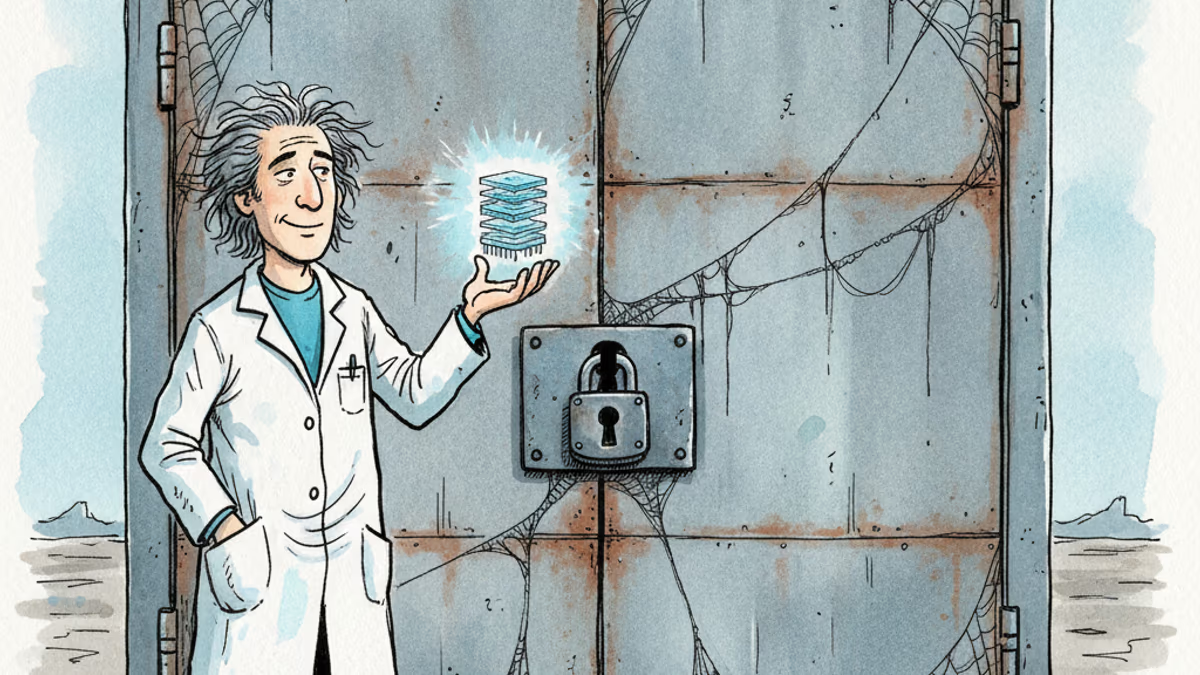
IBM has unveiled 'nanostack,' the world's first sub-1nm (0.7nm) chip research. Some say it adds a decade to Moore's Law; others say a lab demo is a long way from a fab. Either way, mass production isn't IBM's job.
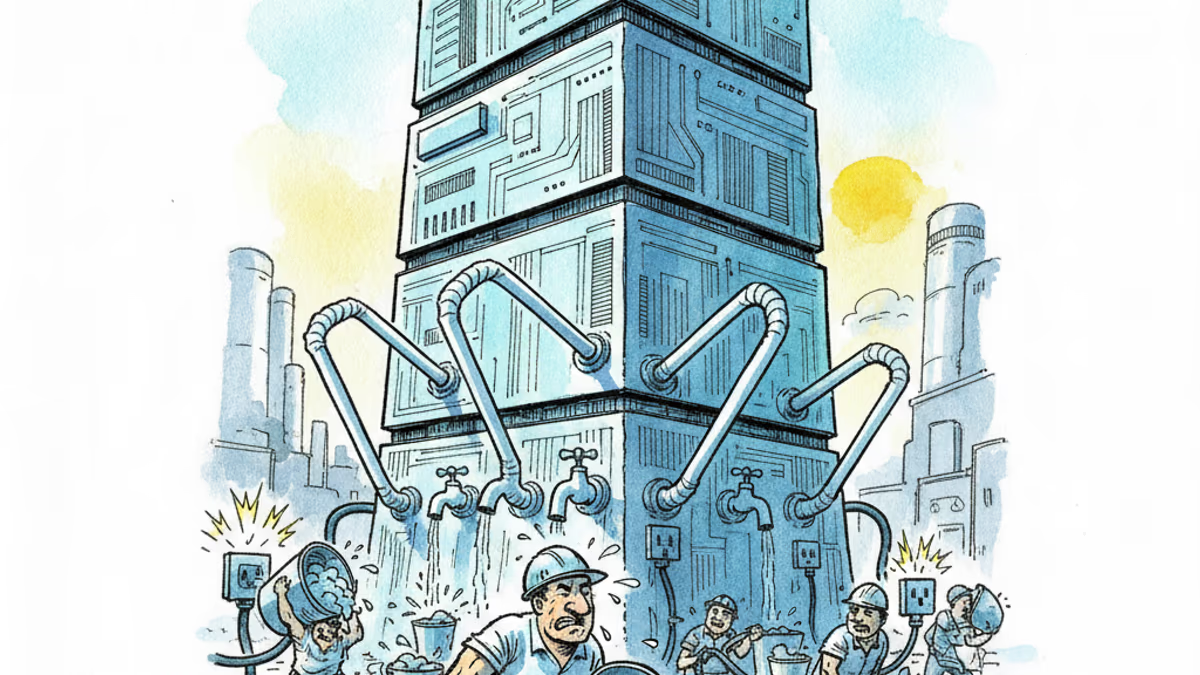
Samsung and SK unveiled a chip and AI investment package worth thousands of trillions of won on June 29. The headline number swings wildly by outlet, but the real contest isn't capital — it's water and power.
As Trump and Xi meet in Beijing, five tech flashpoints—chips, AI rivalry, supply chains, EVs, and rare earths—will quietly shape the global economy more than any diplomatic communiqué.
Samsung Electronics' union branch revealed that 84% of survey respondents oppose the government's roughly $290 billion (₩400 trillion) semiconductor megaproject in Gwangju. Government, management, the union and shareholders are all reading the same national project in sharply different ways.
IBM has unveiled 'nanostack,' the world's first sub-1nm (0.7nm) chip research. Some say it adds a decade to Moore's Law; others say a lab demo is a long way from a fab. Either way, mass production isn't IBM's job.
Samsung and SK unveiled a chip and AI investment package worth thousands of trillions of won on June 29. The headline number swings wildly by outlet, but the real contest isn't capital — it's water and power.
As Trump and Xi meet in Beijing, five tech flashpoints—chips, AI rivalry, supply chains, EVs, and rare earths—will quietly shape the global economy more than any diplomatic communiqué.
Thoughts
Share your thoughts on this article
Sign in to join the conversation