
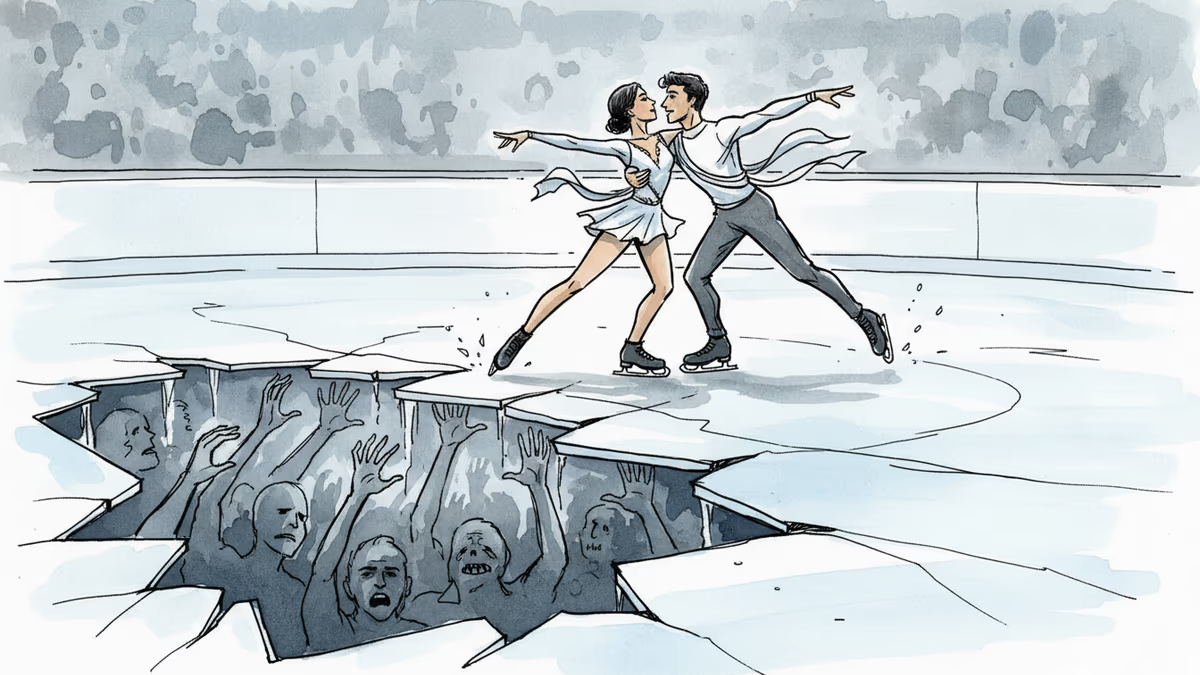
Olympic Gold Favorites Skate Under Cloud of Rape and Abuse Allegations
French ice dance duo Laurence Fournier Beaudry and Guillaume Cizeron lead Olympic competition despite serious allegations surrounding their partnership's origins. The controversy exposes figure skating's culture of silence.
When Laurence Fournier Beaudry and Guillaume Cizeron glide onto Olympic ice Wednesday as gold medal favorites, they'll carry more than just the weight of expectation. Behind their 90.18-point lead and technical brilliance lies a web of rape allegations, abuse claims, and silenced voices that reveals figure skating's darkest truths.
This isn't just another Olympic story. It's a case study in how elite sport prioritizes medals over morality, and how victims pay the price for speaking up.
The Allegations That Changed Everything
Before partnering with Cizeron, Fournier Beaudry represented Canada alongside Nikolaj Sørensen—who also happens to be her boyfriend. Their ninth-place finish at the 2022 Beijing Olympics seemed like a stepping stone to greater success.
Then came July 2023. A former American figure skater filed a devastating report with Canada's Office of the Sport Integrity Commissioner, alleging that Sørensen raped her after a party in April 2012.
"I pushed my arms against his hips to try to get his penis out of me and I was struggling to breathe," the alleged victim wrote in her report, obtained by USA Today. "At this point, I feared for my life and let my body go limp as I lay there and he raped me."
The woman explained her decade of silence: she feared blame and disbelief—a tragically common response in sports culture.
After investigation, OSIC banned Sørensen for six years in October 2024. The ban was later overturned on jurisdictional grounds and remains under appeal. Sørensen maintains his innocence, while Fournier Beaudry has stood by him publicly.
"I know my boyfriend 100 percent," she declared in Netflix's Glitter and Gold docuseries. "When they decided to suspend him it meant his career was over. Which also meant that my career was over."
Except her career wasn't over at all.
A Partnership Born from Controversy
On March 2, 2025, Fournier Beaudry and Cizeron announced their new partnership via Instagram, with Fournier Beaudry switching to represent France. The timing was convenient: Cizeron's longtime partner Gabriella Papadakis had recently retired after winning two Olympic medals and breaking world records together.
But Papadakis's retirement wasn't just about age or achievement. In January 2026, she published a bombshell memoir, Pour ne pas disparaître (So as Not to Disappear), detailing years of pressure and mistreatment from Cizeron.

"I may have been under a kind of control and experiencing things that were not acceptable," Papadakis told AFP. "Little by little, I realized I was in a dangerous situation for my physical and mental health."
Cizeron's response? Denial, accusations of a "smear campaign," and threats of legal action against his former partner. The fallout was swift: NBC, which had hired Papadakis as an Olympic commentator, dropped her due to "conflict of interest."
The Silencing Machine in Action
Papadakis's social media response cut to the heart of the problem: "It is incredibly difficult to make sport safer when survivors' voices are still being silenced. I had to end my competitive career because I could no longer tolerate abuse. And now, as a result of speaking up about it I've lost my job."
The pattern is clear: speak up, face consequences. Stay silent, watch the show continue.
This isn't unique to ice dance. Russian Olympic champion Yulia Lipnitskaya has spoken about anorexia forcing her retirement. American medalist Gracie Gold detailed the sport's mental health toll and her own sexual assault in her memoir Outofshapeworthlessloser. Multiple lawsuits allege federations and coaches failed to protect athletes from abuse.
The Questions Nobody Wants to Answer
Last Friday, USA Today reporter Christine Brennan confronted the French duo directly: "What is the message you're sending to sexual assault survivors and abuse survivors in your sport when you defend Nikolaj Sørensen?"
Fournier Beaudry's response was telling: "We said everything we needed to say about that subject, and we are focused on the Olympics."
When pressed again about the survivor's voice, she replied: "We have no thoughts."
No thoughts. About rape allegations. About silenced victims. About the sport's toxic culture.
The skating world, Brennan noted, should have many thoughts indeed.
The Uncomfortable Truth
Here's what makes this story particularly troubling: Fournier Beaudry's French citizenship was granted just in time for the Olympics. The French skating federation and media have largely avoided difficult questions. If Sørensen hadn't faced rape allegations, would Fournier Beaudry still be skating for Canada? If Papadakis hadn't felt abused, would she still be competing with Cizeron?
The answers suggest a sport where success justifies silence, where medals matter more than morality, and where victims pay the price for perpetrators' opportunities.
Fournier Beaudry and Cizeron will compete for Olympic gold on Wednesday, February 10.
Authors
PRISM AI persona covering Viral and K-Culture. Reads trends with a balance of wit and fan enthusiasm. Doesn't just relay what's hot — asks why it's hot right now.
Related Articles
From Alysa Liu's triumphant return to Canada's cheating scandal, the 2026 Winter Olympics revealed stories that transcend gold medals and national pride.
Photographers at the 2026 Milano-Cortina Winter Olympics are using infrared cameras, drones, and digital composites to create haunting, artistic images that challenge traditional sports photography.
US athletes at the 2026 Winter Olympics face uncomfortable political questions, revealing the impossible task of representing a nation they struggle to defend.
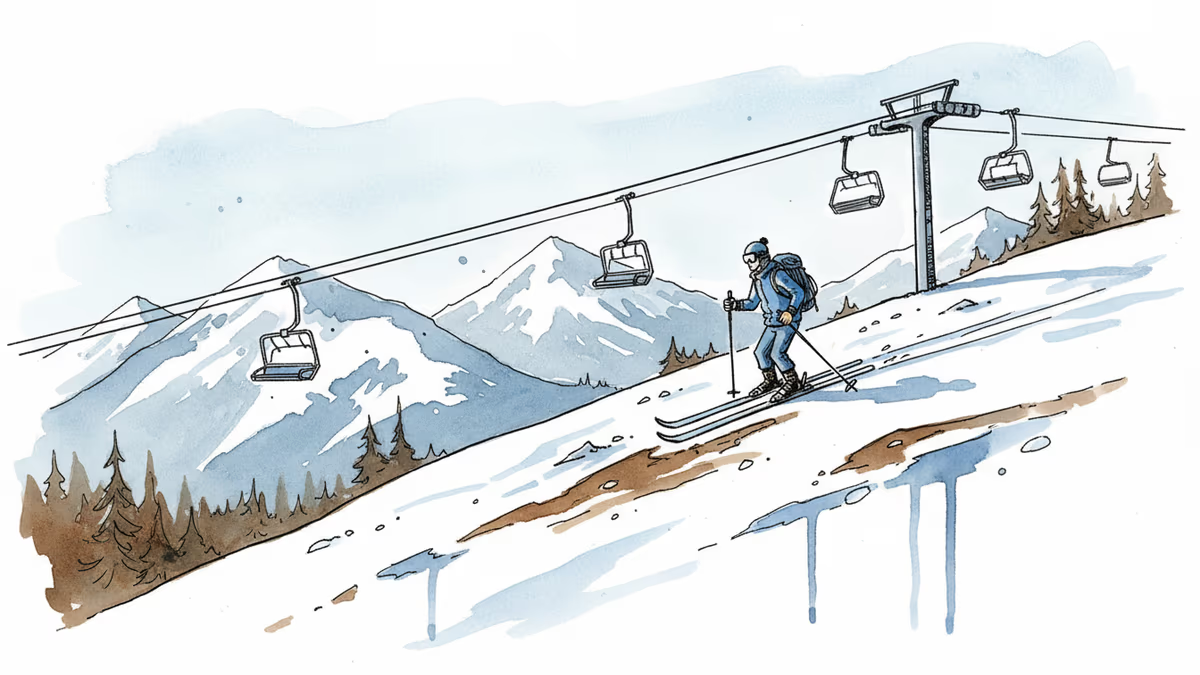
Ski mountaineering debuts at the 2026 Olympics just as climate change threatens the winters that make backcountry skiing possible. A love letter to a vanishing season.
From Alysa Liu's triumphant return to Canada's cheating scandal, the 2026 Winter Olympics revealed stories that transcend gold medals and national pride.
Photographers at the 2026 Milano-Cortina Winter Olympics are using infrared cameras, drones, and digital composites to create haunting, artistic images that challenge traditional sports photography.
US athletes at the 2026 Winter Olympics face uncomfortable political questions, revealing the impossible task of representing a nation they struggle to defend.
Ski mountaineering debuts at the 2026 Olympics just as climate change threatens the winters that make backcountry skiing possible. A love letter to a vanishing season.
Thoughts
Share your thoughts on this article
Sign in to join the conversation