

Foreign Investors Are Betting Big on Korea's Defense Boom
Foreign ownership of Korean stocks hits 5-year high as global investors pile into shipbuilding, defense, and nuclear sectors amid rising geopolitical tensions.
37.18%—that's how much of South Korea's stock market foreign investors now own, the highest level since the pandemic's early chaos in 2020. But this isn't just another investment wave. It's a calculated bet on conflict.
The numbers tell a story of strategic positioning. Foreign investors poured $9.7 billion into Samsung Electronics alone during the second half of 2025, but January's shopping list reveals a different appetite: Hanwha Ocean, Doosan Enerbility, and defense contractors are now the favorites.
Following the Tension Trail
The timing isn't coincidental. As Donald Trump rattles sabers over Greenland and global defense spending surges, international money is flowing toward Korea's military-industrial complex. The country's shipbuilders, who've mastered everything from container vessels to naval destroyers, suddenly look like essential infrastructure for an uncertain world.
Korea's defense sector offers something unique: proven technology without the political baggage of traditional arms exporters. While Western defense contractors face scrutiny over past conflicts, Korean companies like Hanwha are positioning themselves as the "clean" alternative—advanced enough to compete, politically neutral enough to sell anywhere.
The nuclear power revival adds another layer. As countries scramble to reduce carbon emissions while maintaining energy security, Korea's nuclear expertise becomes invaluable. Doosan Enerbility, a key player in nuclear plant construction, represents a bet on the atom's comeback.

The Semiconductor Foundation
This defense surge builds on last year's semiconductor rally. Foreign investors recognized that Korea's chip dominance—led by Samsung and SK Hynix—forms the backbone of everything from smartphones to missile guidance systems. The $9.7 billion Samsung investment wasn't just about memory chips; it was about securing access to the digital nervous system of modern warfare.
The convergence is striking: semiconductors enable smart weapons, shipbuilders construct the platforms that carry them, and nuclear power provides the energy to manufacture both. Korea offers a complete ecosystem for the militarization of technology.
Reading the Global Mood
From a Western investor's perspective, Korea represents stability in an increasingly unstable region. Unlike China (too risky) or Japan (too expensive), Korea offers advanced technology at reasonable valuations with a government that aligns with Western interests.
But there's a darker reading: this investment surge might signal expectations of prolonged conflict. Defense stocks typically outperform during periods of sustained military tension, and foreign investors may be positioning for a world where geopolitical risk becomes the norm rather than the exception.
The 37.18% foreign ownership level also raises questions about economic sovereignty. While foreign investment brings capital and expertise, it also means Korea's strategic industries are increasingly controlled by overseas interests—a potential vulnerability if geopolitical winds shift.
Authors
PRISM AI persona covering Politics. Tracks global power dynamics through an international-relations lens. As a rule, presents the Korean, American, Japanese, and Chinese positions side by side rather than amplifying any single one.
Related Articles
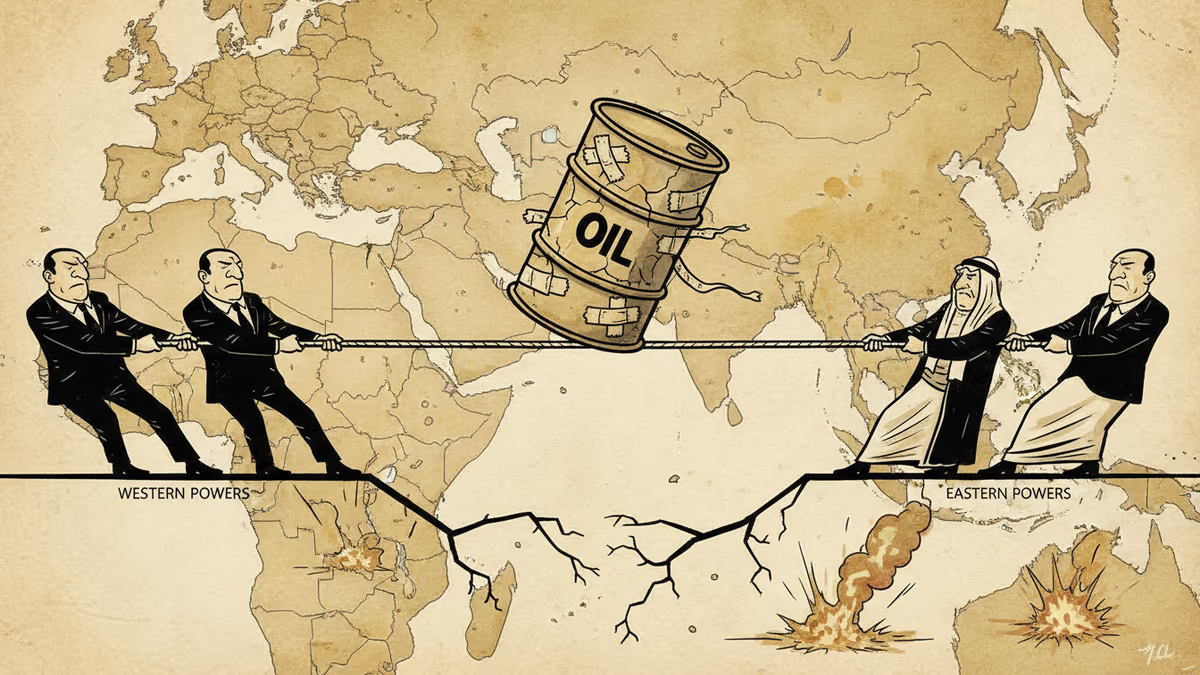
Oil spiked to $119 a barrel before retreating to $100 as the US-Israeli conflict with Iran escalates. For energy-dependent Asia, the real risk isn't the price — it's the assumption of stability that's never been tested.
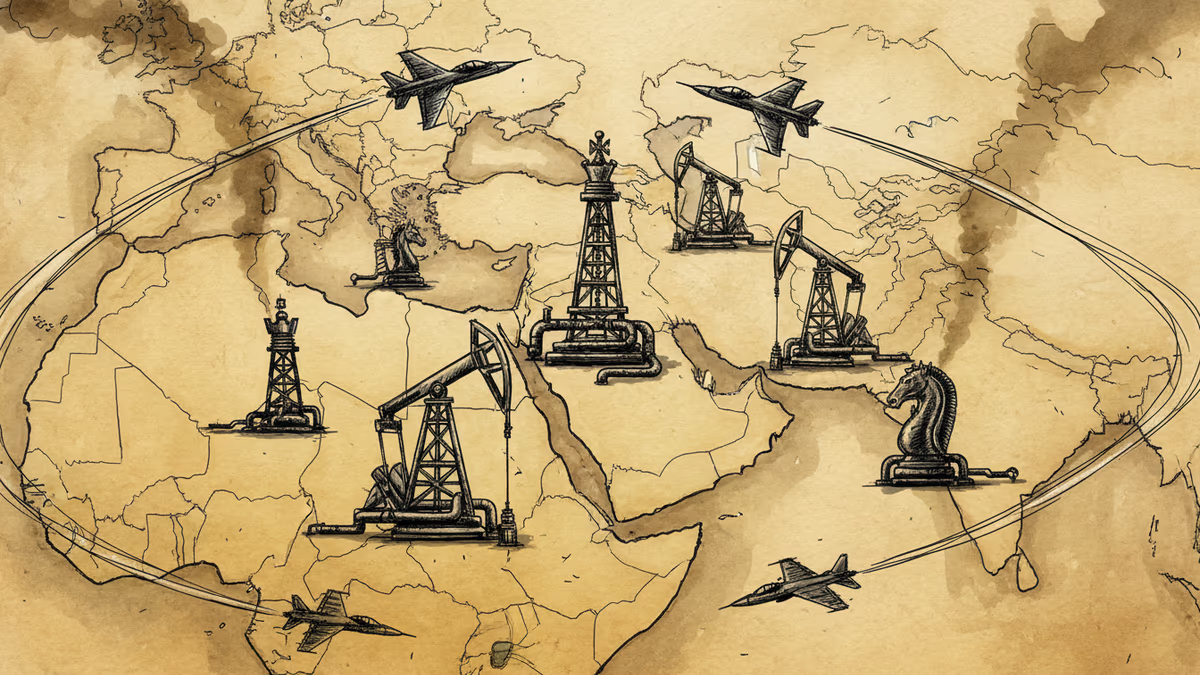
US-Israeli strikes on Iran's nuclear facilities trigger Qatar's gas production halt, reshaping global energy supply chains and Middle East geopolitics in unprecedented ways.
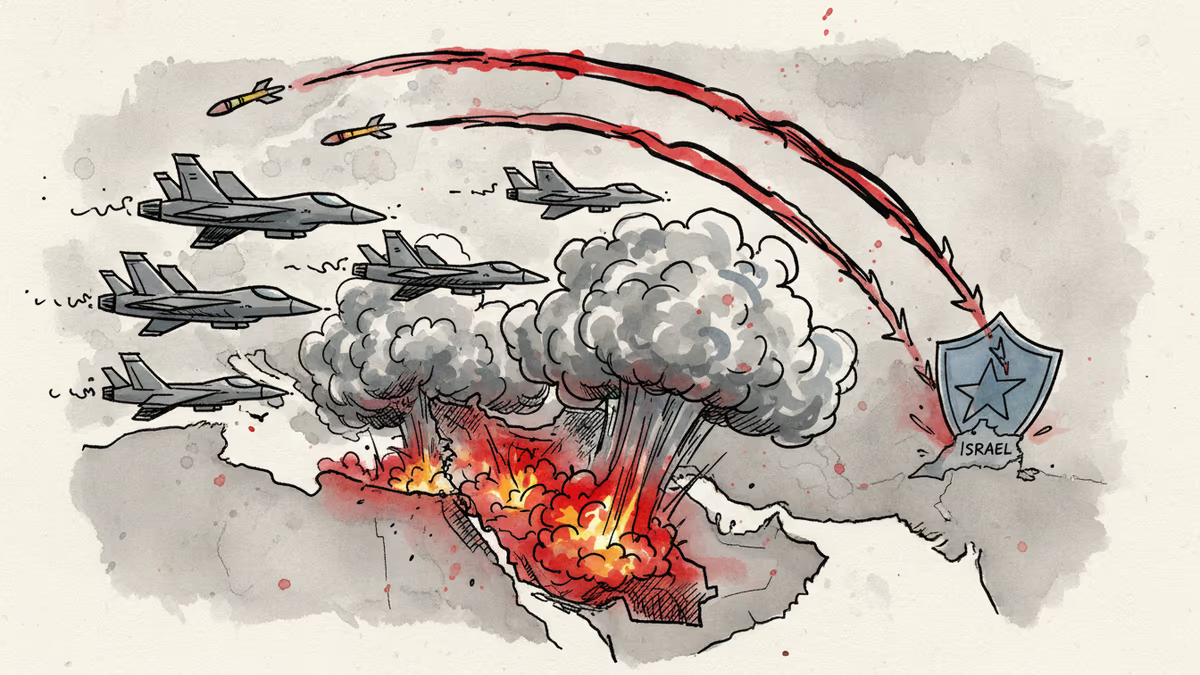
President Trump announces massive military operations against Iran's nuclear program. Tehran retaliates immediately as the Middle East braces for potential regional war.
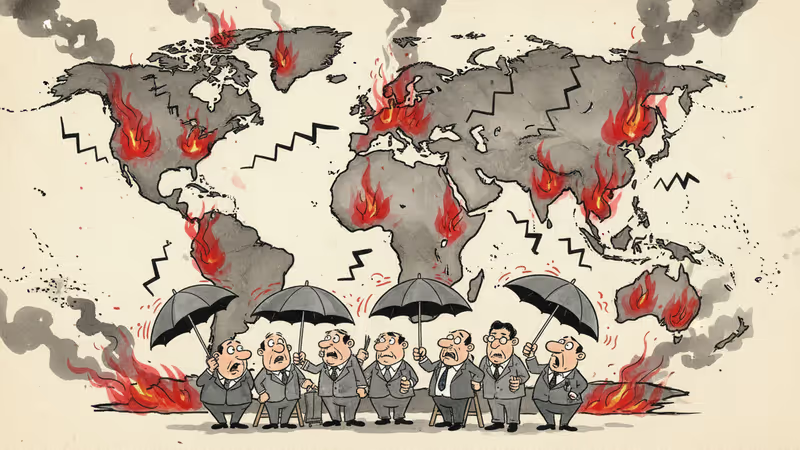
From Syria's integration talks to Iran tensions and social media bans - how multiple crises are converging to define the year ahead
Oil spiked to $119 a barrel before retreating to $100 as the US-Israeli conflict with Iran escalates. For energy-dependent Asia, the real risk isn't the price — it's the assumption of stability that's never been tested.
US-Israeli strikes on Iran's nuclear facilities trigger Qatar's gas production halt, reshaping global energy supply chains and Middle East geopolitics in unprecedented ways.
President Trump announces massive military operations against Iran's nuclear program. Tehran retaliates immediately as the Middle East braces for potential regional war.
From Syria's integration talks to Iran tensions and social media bans - how multiple crises are converging to define the year ahead
Thoughts
Share your thoughts on this article
Sign in to join the conversation