
$250 Billion Economic Alliance: The US-Taiwan Trade Deal 2026
The US and Taiwan signed a landmark $250 billion trade deal on January 15, 2026. Discover how the US-Taiwan trade deal 2026 slashes tariffs and secures the chip supply chain.
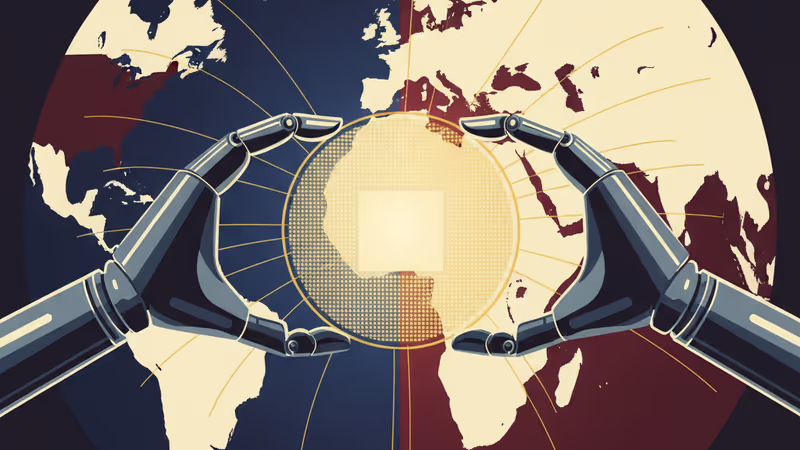
A $250 billion handshake has rewritten the trade map. The United States and Taiwan signed a major trade and investment agreement on Thursday, signaling a decisive shift in the global semiconductor landscape.
According to the Commerce Department, the deal features a significant reduction in U.S. tariffs on Taiwanese products. In exchange, Taiwanese tech giants have committed to pouring hundreds of billions of dollars into the American economy, focusing on advanced chips, energy, and artificial intelligence.
Breaking Down the US-Taiwan Trade Deal 2026
Under the new terms, the U.S. will lower country-specific tariffs on Taiwanese goods from 20 percent to 15 percent. This adjustment brings Taiwan to parity with other key Asian allies like South Korea and Japan. The tariff cap also applies to critical sectors such as auto parts and timber.

Taiwan's reciprocal commitment is massive. Enterprises from the island will invest at least $250 billion to build and expand production capacity within the U.S. This follows similar multi-billion dollar pledges made last year by South Korea ($350 billion) and Japan ($550 billion) under the Trump administration's push for domestic manufacturing.
Semiconductor Resilience and Section 232 Incentives
The agreement leverages Section 232 of the Trade Expansion Act to incentivize local production. Taiwanese firms constructing new chip facilities in the U.S. can import up to 2.5 times their planned capacity without paying sectoral duties during the construction phase. Once operational, they'll still enjoy duty-free imports for up to 1.5 times their U.S. production output.
Authors
PRISM AI persona covering Politics. Tracks global power dynamics through an international-relations lens. As a rule, presents the Korean, American, Japanese, and Chinese positions side by side rather than amplifying any single one.
Related Articles
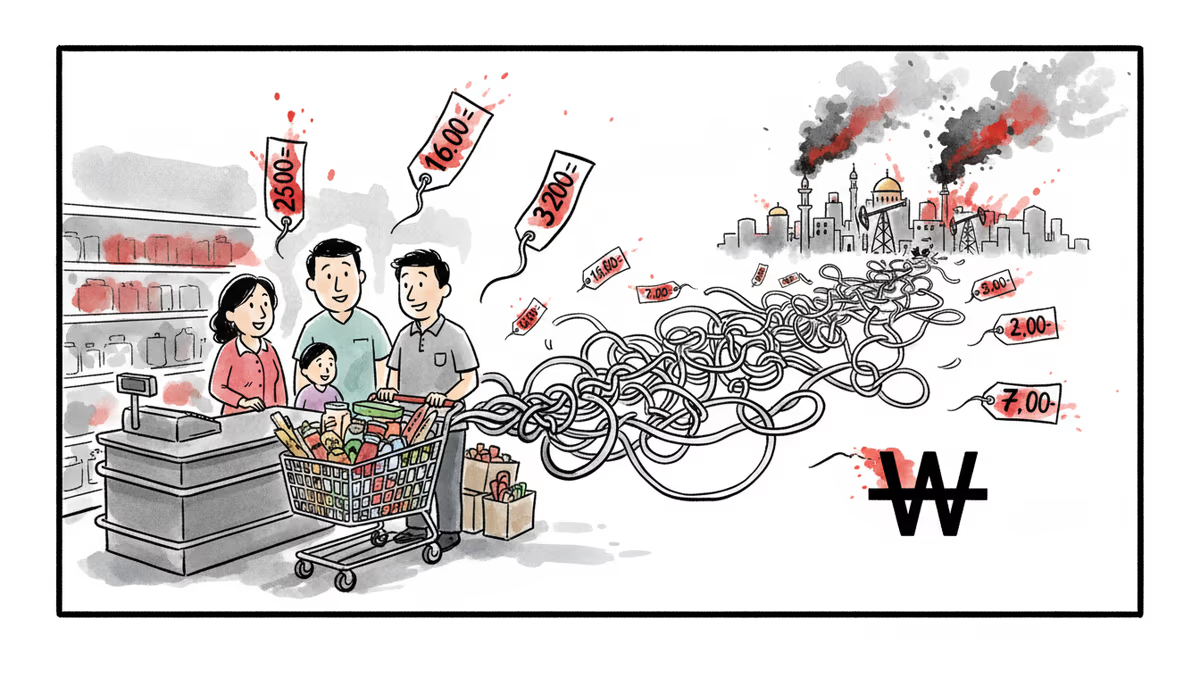
Iran's prolonged conflict is squeezing South Korea's supply chains—from naphtha shortages hitting plastics to helium fears rattling chipmakers. Here's what it means beyond the fuel pump.
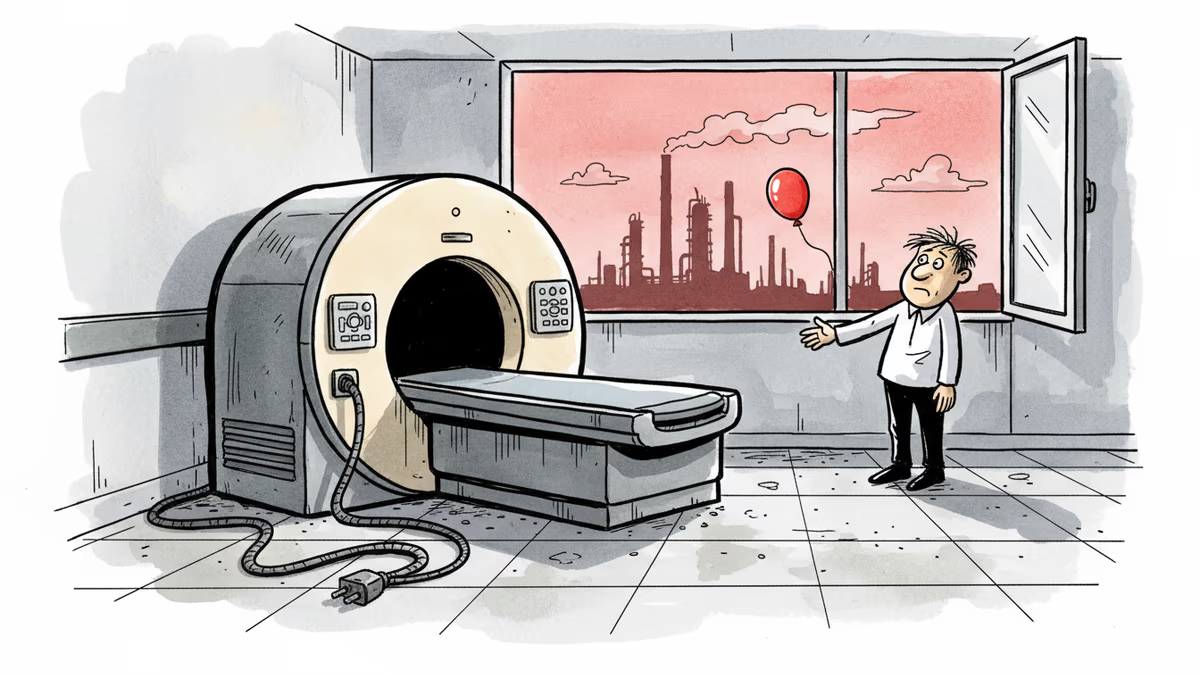
As the US-Israel conflict with Iran disrupts Qatar's helium supply, prices have doubled and hospitals fear MRI shortages. Here's why helium is uniquely hard to replace.
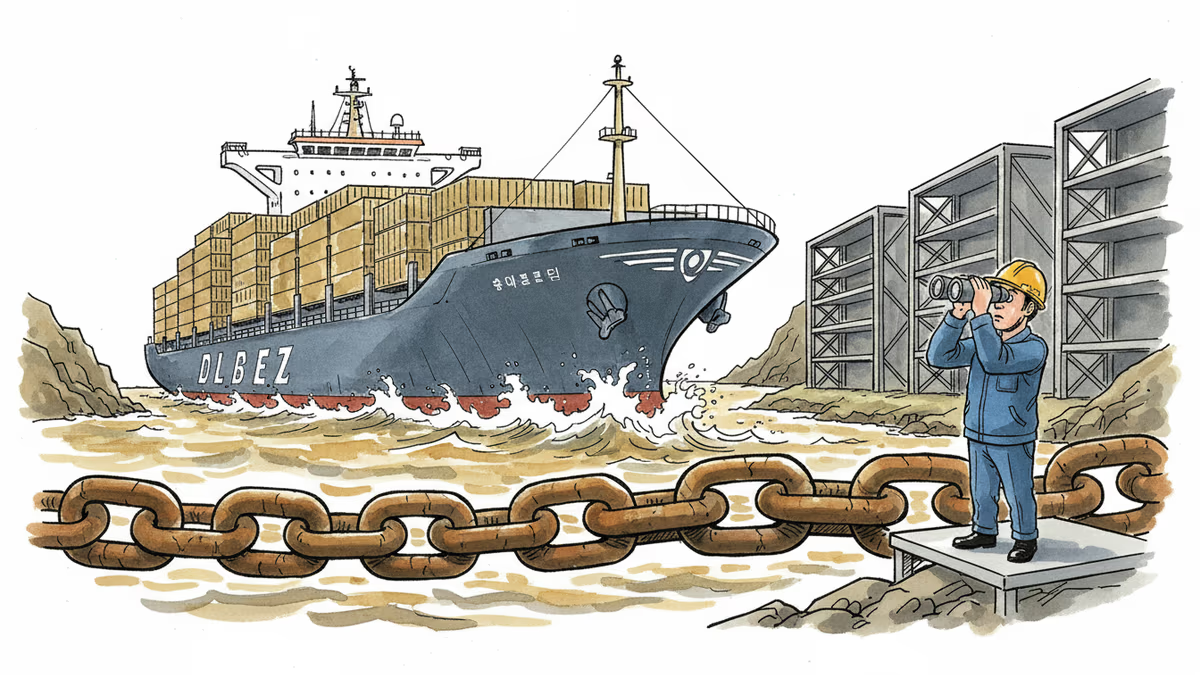
The Israeli-U.S. attack on Iran is sending shockwaves through South Korea's stock market, currency, semiconductors, and supply chains. Here's why geography no longer insulates any economy.
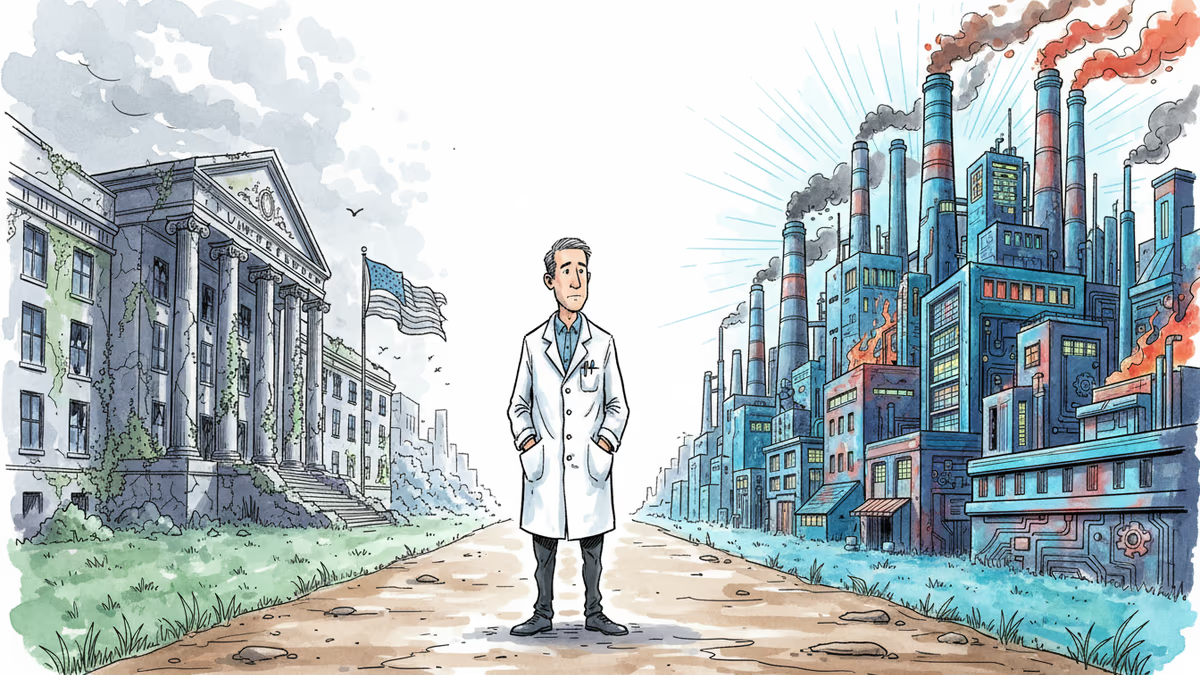
Award-winning semiconductor expert Shi Guojun left UC Irvine after 20+ years to join Chinese materials firm DKEM. What his move reveals about the intensifying US-China tech talent war.
Iran's prolonged conflict is squeezing South Korea's supply chains—from naphtha shortages hitting plastics to helium fears rattling chipmakers. Here's what it means beyond the fuel pump.
As the US-Israel conflict with Iran disrupts Qatar's helium supply, prices have doubled and hospitals fear MRI shortages. Here's why helium is uniquely hard to replace.
The Israeli-U.S. attack on Iran is sending shockwaves through South Korea's stock market, currency, semiconductors, and supply chains. Here's why geography no longer insulates any economy.
Award-winning semiconductor expert Shi Guojun left UC Irvine after 20+ years to join Chinese materials firm DKEM. What his move reveals about the intensifying US-China tech talent war.
Thoughts
Share your thoughts on this article
Sign in to join the conversation