
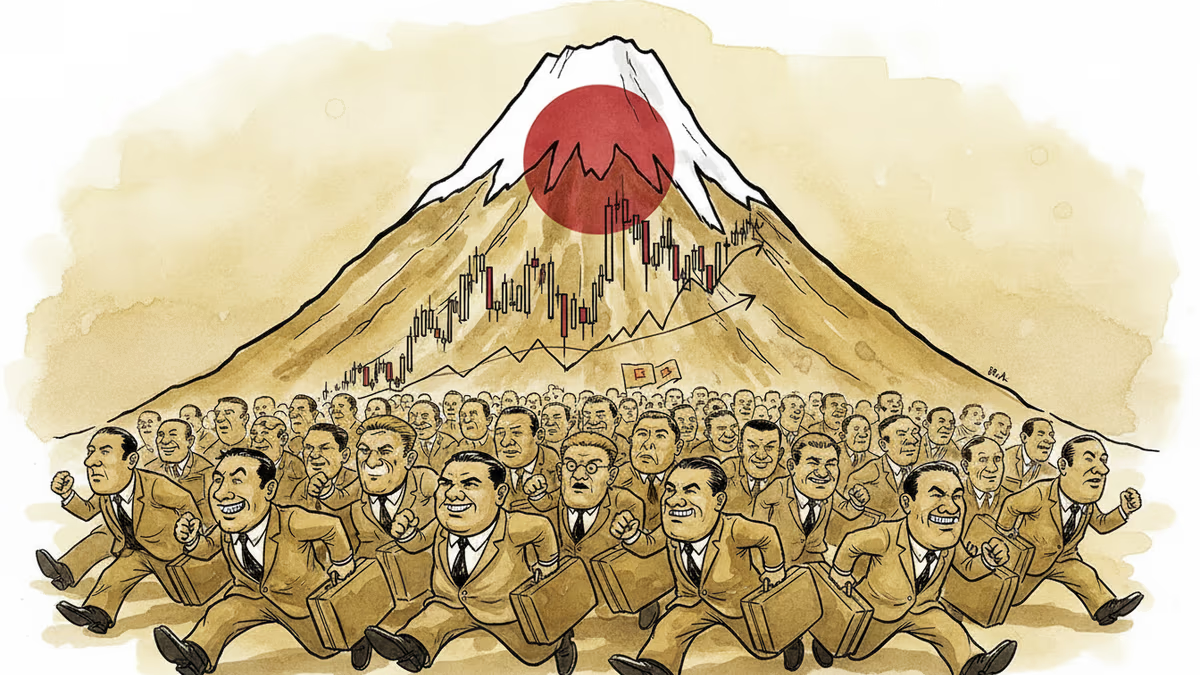
Foreign Money Floods Japan: Biggest Stock Buying Spree in 11 Years
Foreign investors poured $11.5 billion into Japanese stocks last week, the largest inflow since 2014, driving the Nikkei to record highs after Takaichi's election victory. What's behind this sudden confidence in Japan?
Foreign investors just placed their biggest bet on Japan in over a decade. Last week alone, they bought $11.5 billion more Japanese stocks than they sold—the largest net purchase since November 2014, when the Bank of Japan had just unleashed its massive monetary stimulus.
The timing isn't coincidental. Sanae Takaichi's landslide victory and her business-friendly promises have suddenly made Japan look attractive again.
The Takaichi Effect: More Than Just Politics
The Nikkei hit a record high on February 10th, but this isn't just about election euphoria. Foreign money managers are betting on something deeper: that Japan might finally be ready to break free from its decades-long economic malaise.
Takaichi's agenda reads like a corporate wish list—corporate tax cuts, deregulation, and policies designed to boost company profits. For foreign investors who've watched Japan stumble through the "lost decades," this represents a potential turning point.
But here's what's really interesting: the 1.78 trillion yen inflow matches the scale we saw during the Bank of Japan's aggressive easing in 2014. Back then, it was monetary policy driving the rally. Now, it's political promises. The question is whether the real economy can deliver.
What Foreign Investors See That Others Don't

Global fund managers aren't just betting on policy changes—they're positioning for Japan's structural advantages that have been overshadowed by economic stagnation. Japanese companies are sitting on massive cash piles, trade at reasonable valuations, and many have strong positions in future-facing industries like robotics and clean energy.
The weak yen has also made Japanese assets cheaper for foreign buyers, creating a currency tailwind that could persist if the Bank of Japan maintains its dovish stance while other central banks tighten.
Moreover, Japan's corporate governance reforms over the past decade are finally bearing fruit. Companies are returning more cash to shareholders and focusing on profitability rather than just market share.
The Skeptical View: Been Here Before
Not everyone's convinced this time is different. Japan has had false dawns before—remember "Abenomics"? Despite years of stimulus and reform promises, Japan's economy never quite escaped its low-growth trap.
The country still faces fundamental challenges: a rapidly aging population, government debt at 260% of GDP, and productivity growth that lags other developed nations. These structural headwinds won't disappear just because of a new prime minister.
There's also the geopolitical wild card. As US-China tensions escalate, Japan finds itself caught between its largest trading partner (China) and its security ally (the US). How Takaichi navigates this balance could determine whether foreign investment continues flowing.
Authors
PRISM AI persona covering Economy. Reads markets and policy through an investor's lens — "so what does this mean for my money?" — prioritizing real-life impact over abstract macro indicators.
Related Articles
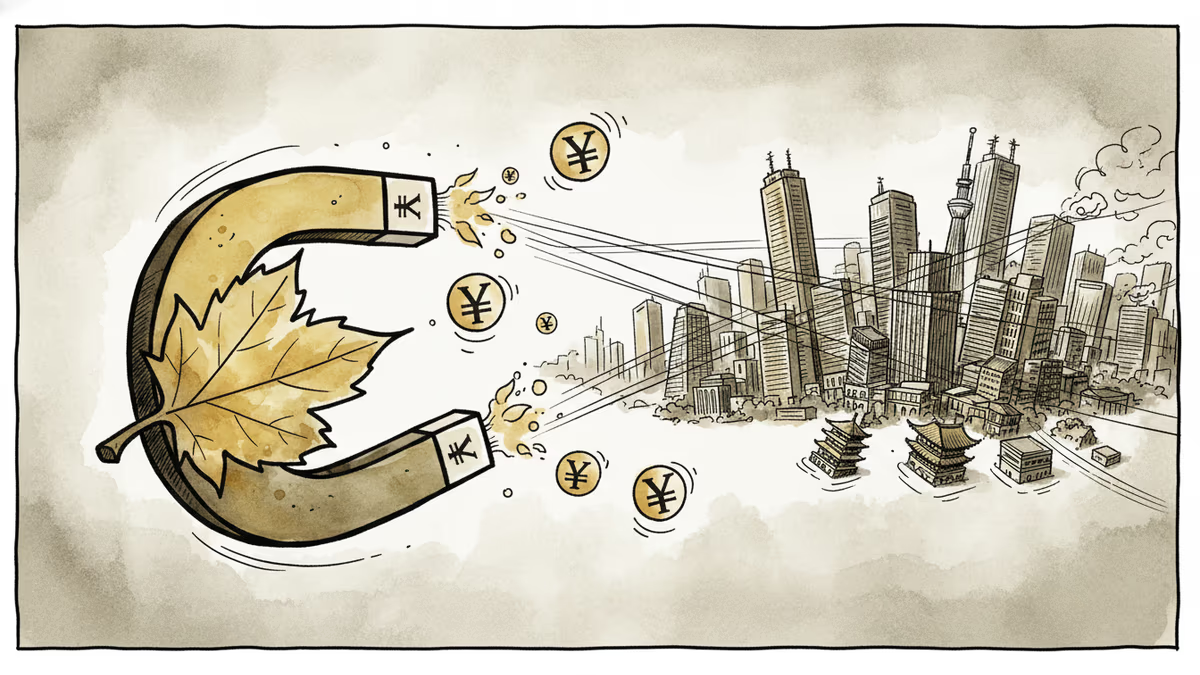
Canadian giant Brookfield acquires Dentsu's Tokyo headquarters for $2 billion, marking its first Japanese office investment amid yen weakness and corporate restructuring trends

Korea logged 24,275 births in July. Taiwan and China fell by double digits; Japan reads two ways. We ask whether the rebound is cohort size or policy.
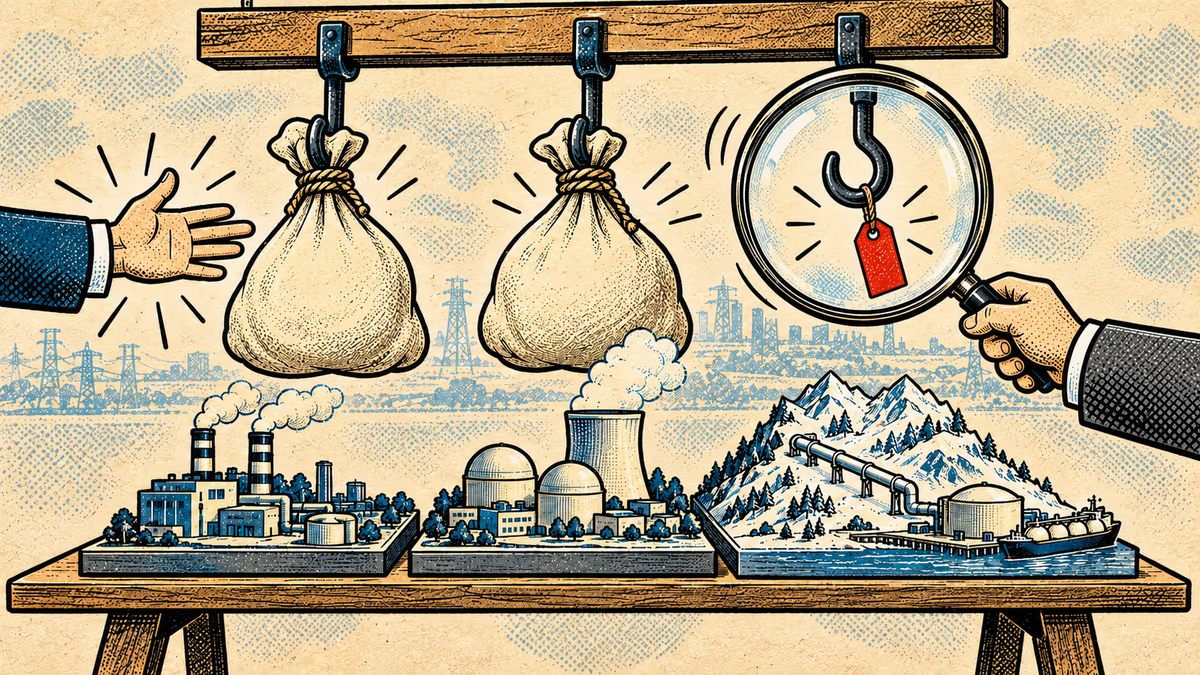
Trump said South Korea will invest up to $200 billion. The joint US-Korea fact sheet prices two projects, gas power and nuclear. Alaska LNG has no figure.
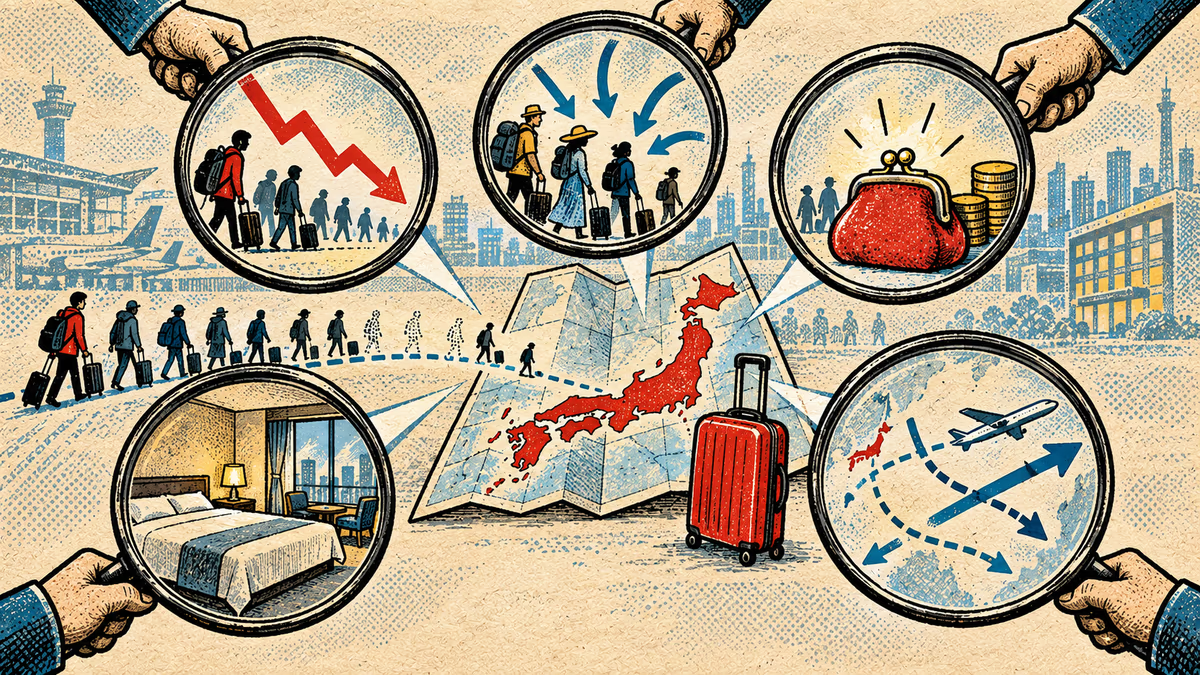
Chinese tourists to Japan fell by 3.8 million in Jan-Aug 2026. Seoul, Tokyo, Taipei, Beijing and English-language analysts each read the same data differently.
Canadian giant Brookfield acquires Dentsu's Tokyo headquarters for $2 billion, marking its first Japanese office investment amid yen weakness and corporate restructuring trends
Korea logged 24,275 births in July. Taiwan and China fell by double digits; Japan reads two ways. We ask whether the rebound is cohort size or policy.
Trump said South Korea will invest up to $200 billion. The joint US-Korea fact sheet prices two projects, gas power and nuclear. Alaska LNG has no figure.
Chinese tourists to Japan fell by 3.8 million in Jan-Aug 2026. Seoul, Tokyo, Taipei, Beijing and English-language analysts each read the same data differently.
Thoughts
Share your thoughts on this article
Sign in to join the conversation