
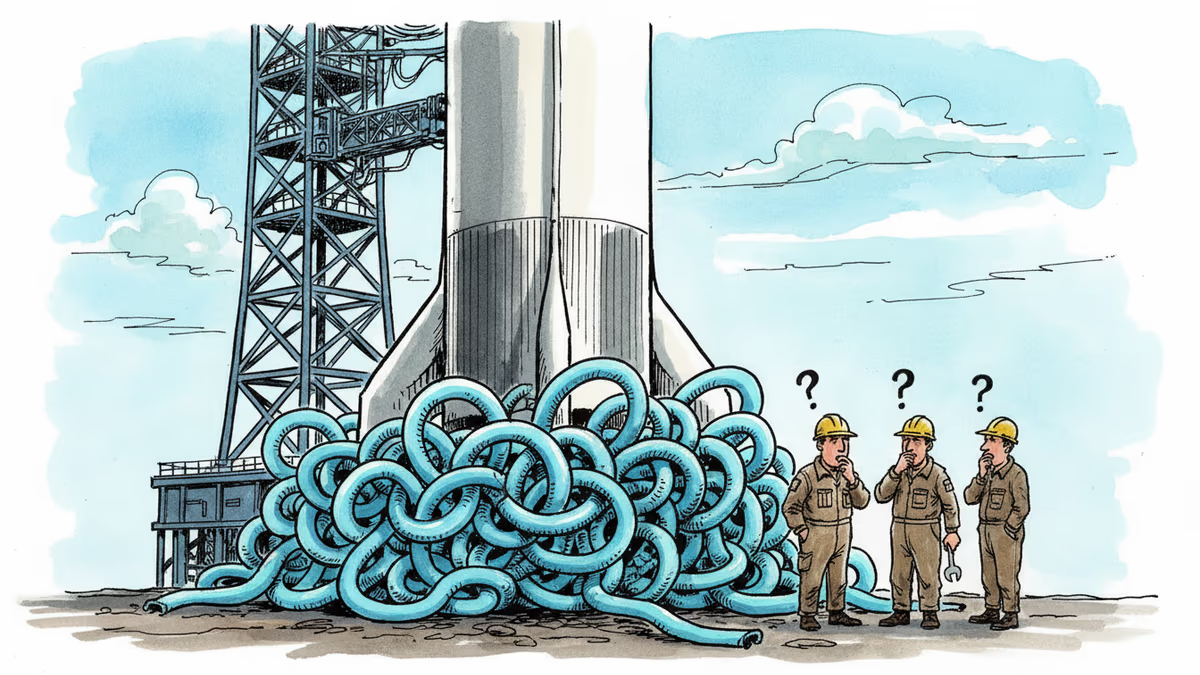
Artemis II Faces Another Setback in Moon Race
NASA's Artemis II mission encounters helium supply issues just days after successful fuel test, highlighting the challenges of returning humans to the Moon after 50 years.
322 Feet of Rocket, One Small Helium Problem
Just when NASA thought they'd solved their hydrogen headache, another gremlin appeared. The Artemis II rocket, standing tall as a 32-story building, passed its crucial fueling test on February 21st. No major leaks, no drama—finally, some good news.
Then came February 22nd. Ground teams couldn't get helium flowing to the upper stage. Unlike the lower connections that can be fixed right at the launch pad, this problem requires rolling the entire rocket back to the Vehicle Assembly Building. Translation: no launch this week, and probably not for several more weeks.
The Price of Perfection
Every trip between the launch pad and the assembly building costs millions. Every delay pushes back humanity's return to the Moon—something that hasn't happened since 1972. Meanwhile, China is eyeing a 2030 lunar landing, and private companies like SpaceX are breathing down NASA's neck.
The frustration is palpable among space enthusiasts. "We've been 'almost ready' for years now," says one aerospace engineer who requested anonymity. "At some point, you have to accept calculated risks instead of chasing zero risk."

Two Schools of Thought
The space community is split. NASA defenders point to the Columbia and Challenger disasters—rushing to space can be deadly. Critics argue that excessive caution is its own form of risk, potentially ceding American leadership to competitors.
Blue Origin and other private companies are watching closely. If NASA keeps stumbling, they might just leapfrog the government program entirely. Jeff Bezos has been notably quiet about his lunar ambitions lately, but industry insiders suggest he's simply waiting for the right moment to pounce.
The Bigger Picture
This isn't just about one rocket or one mission. Artemis represents America's attempt to reclaim space leadership after decades of relying on Russian rockets to reach the International Space Station. The program aims to establish a permanent lunar presence and eventually reach Mars.
But space doesn't wait for anyone. Every month of delay gives competitors more time to catch up—or surpass.
Authors
Related Articles

NASA's Artemis III has been redesigned as an Earth-orbit mission. SpaceX and Blue Origin say their landers won't be ready until late 2027. What does this mean for the future of lunar exploration?

Artemis II splashed down successfully in the Pacific, marking humanity's first crewed deep space mission in over 50 years. But the harder question isn't whether we can go back — it's why we should.

NASA's Orion capsule splashed down safely after humanity's first crewed lunar voyage in 54 years. The mission succeeded. Now the harder questions begin.
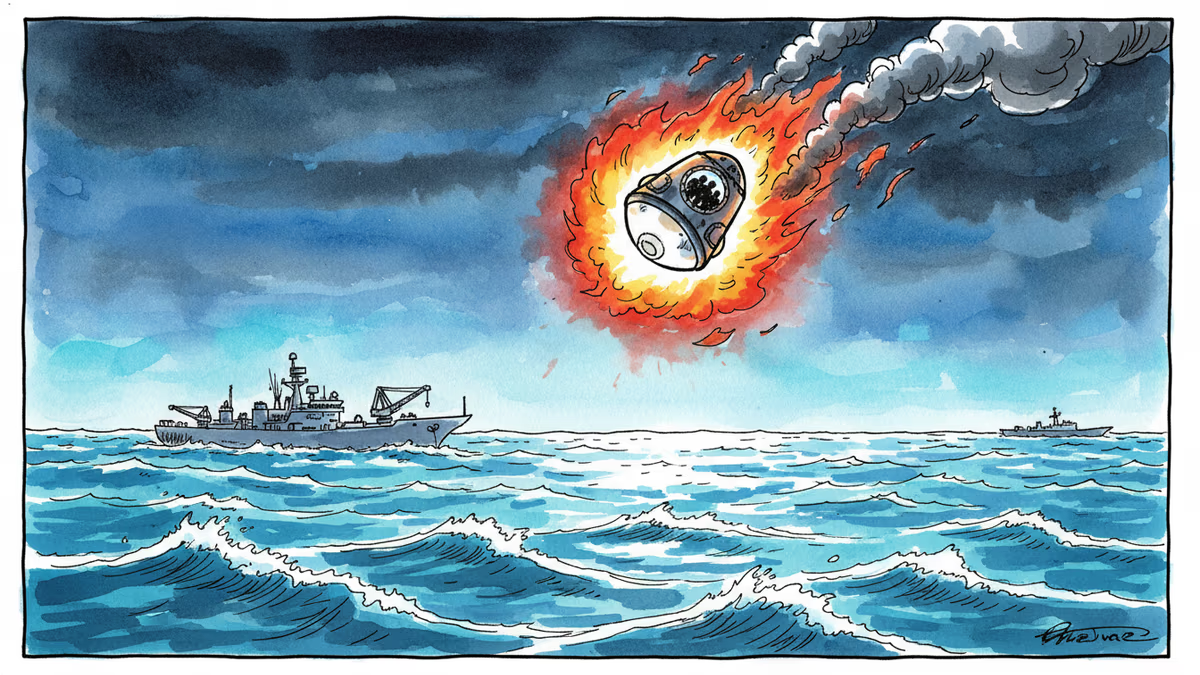
Artemis II's four astronauts are returning to Earth Friday night. The splashdown off Southern California isn't the anticlimax it sounds—it's the most technically perilous moment of the entire lunar journey.
NASA's Artemis III has been redesigned as an Earth-orbit mission. SpaceX and Blue Origin say their landers won't be ready until late 2027. What does this mean for the future of lunar exploration?
Artemis II splashed down successfully in the Pacific, marking humanity's first crewed deep space mission in over 50 years. But the harder question isn't whether we can go back — it's why we should.
NASA's Orion capsule splashed down safely after humanity's first crewed lunar voyage in 54 years. The mission succeeded. Now the harder questions begin.
Artemis II's four astronauts are returning to Earth Friday night. The splashdown off Southern California isn't the anticlimax it sounds—it's the most technically perilous moment of the entire lunar journey.
Thoughts
Share your thoughts on this article
Sign in to join the conversation