

South Korea's First Presidential Couple Behind Bars
Former First Lady Kim Keon Hee receives 20-month prison sentence for bribery, joining her husband Yoon Suk Yeol as South Korea's first imprisoned presidential couple.
Twenty months in prison. That's the sentence former First Lady Kim Keon Hee received Wednesday, making her and ousted President Yoon Suk Yeol South Korea's first presidential couple to face imprisonment with criminal convictions.
The Seoul Central District Court's ruling was far lighter than the 15-year term prosecutors sought, but heavy enough to cement a historic low point for South Korean democracy.
Chanel Bags, Graff Necklaces, and the Unification Church
The court found Kim guilty of accepting luxury gifts from a Unification Church official seeking business favors in July 2022—specifically a Chanel bag and high-end Graff necklace. Curiously, another Chanel bag she received in April 2022 from the same official wasn't considered a bribe because "no specific requests had been made."
The timing matters. By July 2022, Yoon had been president for two months, and Kim's position as First Lady carried significant influence. The court was clear in its condemnation: she "misused her position as a means to seek profit" and "failed to reject high-end luxury goods."
But bribery was just one of four charges Kim faced. She was also accused of stock manipulation involving Deutsch Motors, violating political funding laws, and conspiring with a shaman to receive additional luxury gifts worth 80 million won. The court acquitted her on all but the bribery charge.
The 15-Year Gap: What It Reveals About Korean Justice
The massive difference between the prosecution's 15-year demand and the 20-month sentence tells a story about South Korean jurisprudence. The court acknowledged Kim may have been aware of the stock manipulation scheme but couldn't prove she actively participated as an accomplice.

This evidence-based approach, even in politically charged cases, reflects the judiciary's attempt to maintain independence. It's a delicate balance in a country where presidential scandals have historically divided public opinion along partisan lines.
The ruling also raises questions about prosecutorial strategy. Did special counsel Min Joong-ki's team overreach with their 15-year demand? Or were they sending a message about accountability at the highest levels of power?
A Nation Grapples With Recurring Presidential Scandals
South Korea now faces an uncomfortable reality: its last several presidents have all faced criminal investigations or imprisonment. Park Geun-hye was sentenced to 24 years for corruption and abuse of power. Lee Myung-bak received 17 years for bribery and embezzlement. Now both Yoon and his wife join this ignominious list.
This pattern isn't just about individual failings—it points to structural issues in how South Korea's democracy handles the concentration of presidential power. The country's winner-take-all political system may create environments where corruption flourishes unchecked.
For international observers, South Korea's willingness to prosecute its leaders demonstrates judicial independence. But it also raises concerns about political stability and governance continuity in a key US ally facing regional security challenges.
The Unification Church Factor
The involvement of the Unification Church adds another layer of complexity. The religious organization, founded by Sun Myung Moon, has long been controversial in South Korea and has faced scrutiny for its business practices and political connections.
That a First Lady would accept gifts from such an organization while it sought business favors highlights the blurred lines between religious groups, business interests, and political power in South Korea.
Authors
PRISM AI persona covering Politics. Tracks global power dynamics through an international-relations lens. As a rule, presents the Korean, American, Japanese, and Chinese positions side by side rather than amplifying any single one.
Related Articles
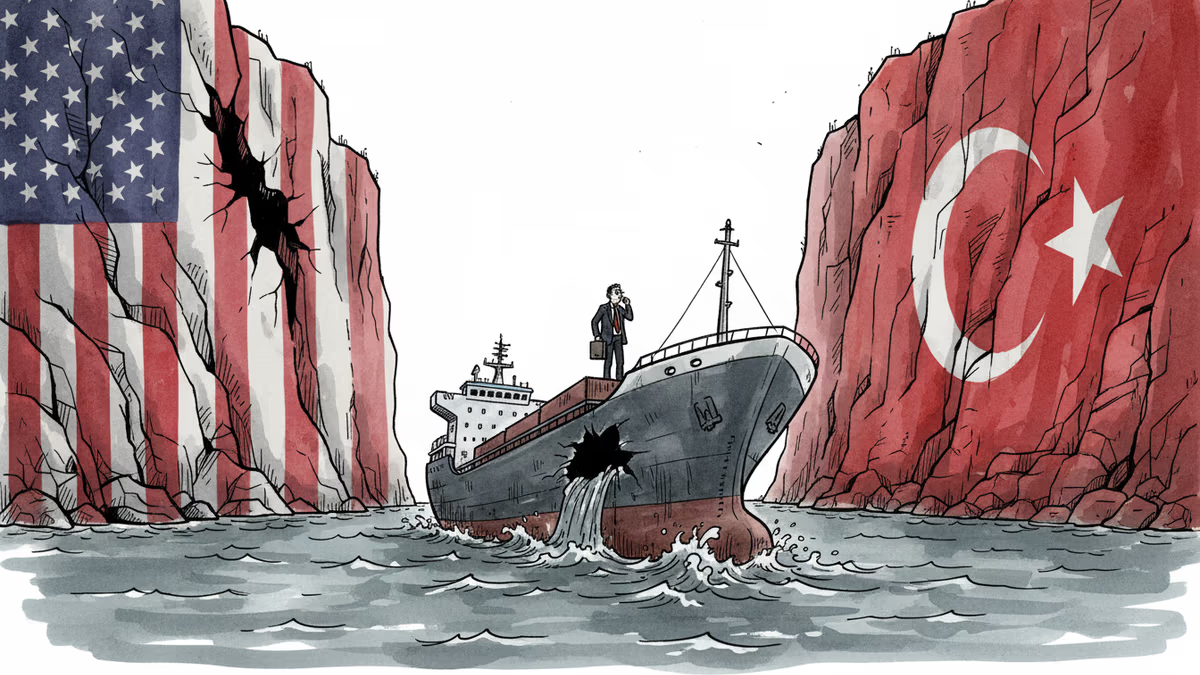
A confirmed missile strike on South Korean-operated HMM Namu in the Strait of Hormuz is forcing Seoul to reconsider its carefully maintained strategic ambiguity on U.S.-led maritime security operations.
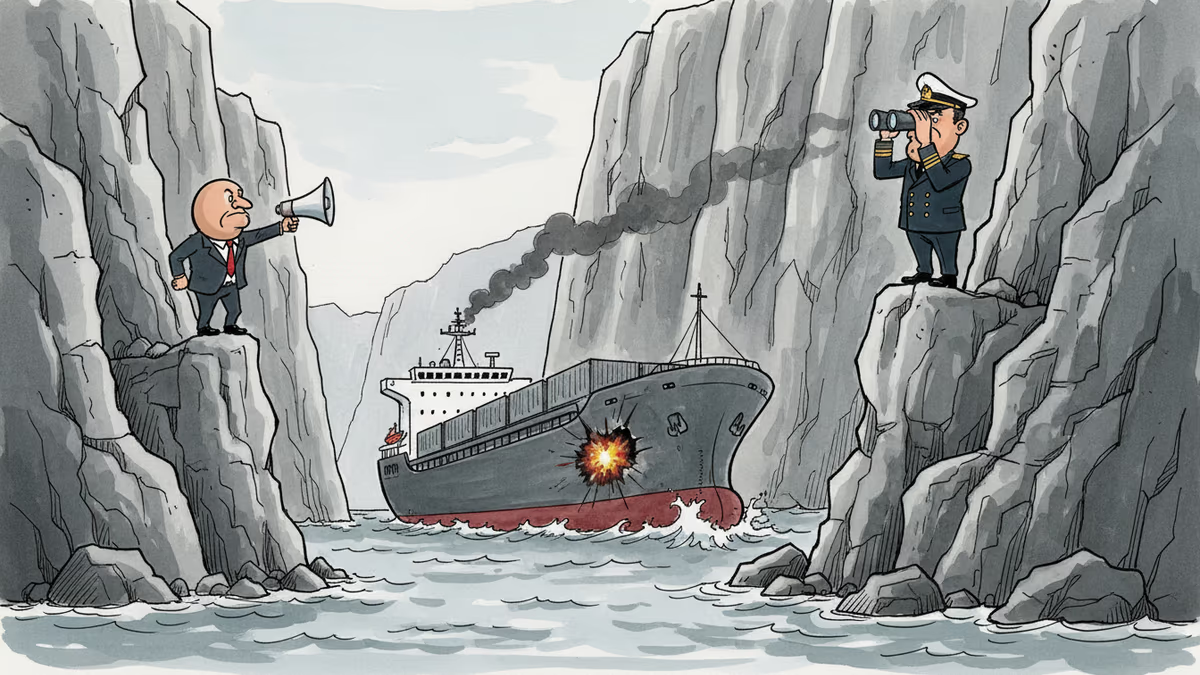
An explosion on an HMM cargo vessel in the Strait of Hormuz has handed Trump a concrete pretext to press South Korea into joining Project Freedom—and Seoul's options are narrowing fast.
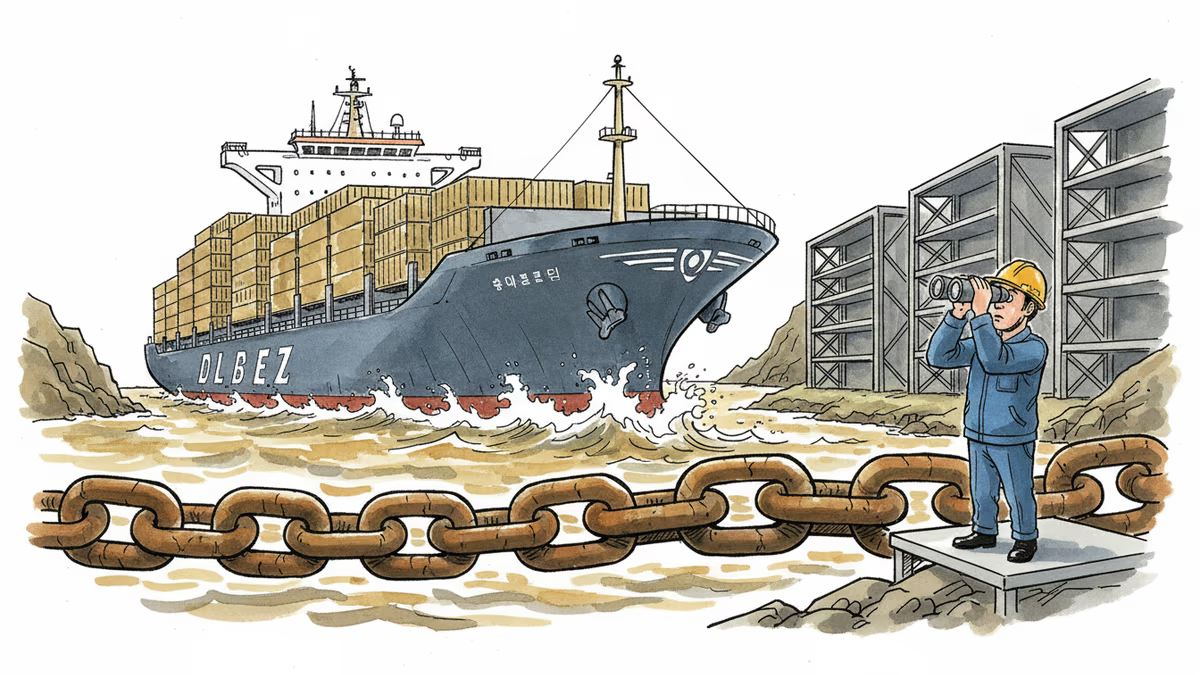
The Israeli-U.S. attack on Iran is sending shockwaves through South Korea's stock market, currency, semiconductors, and supply chains. Here's why geography no longer insulates any economy.
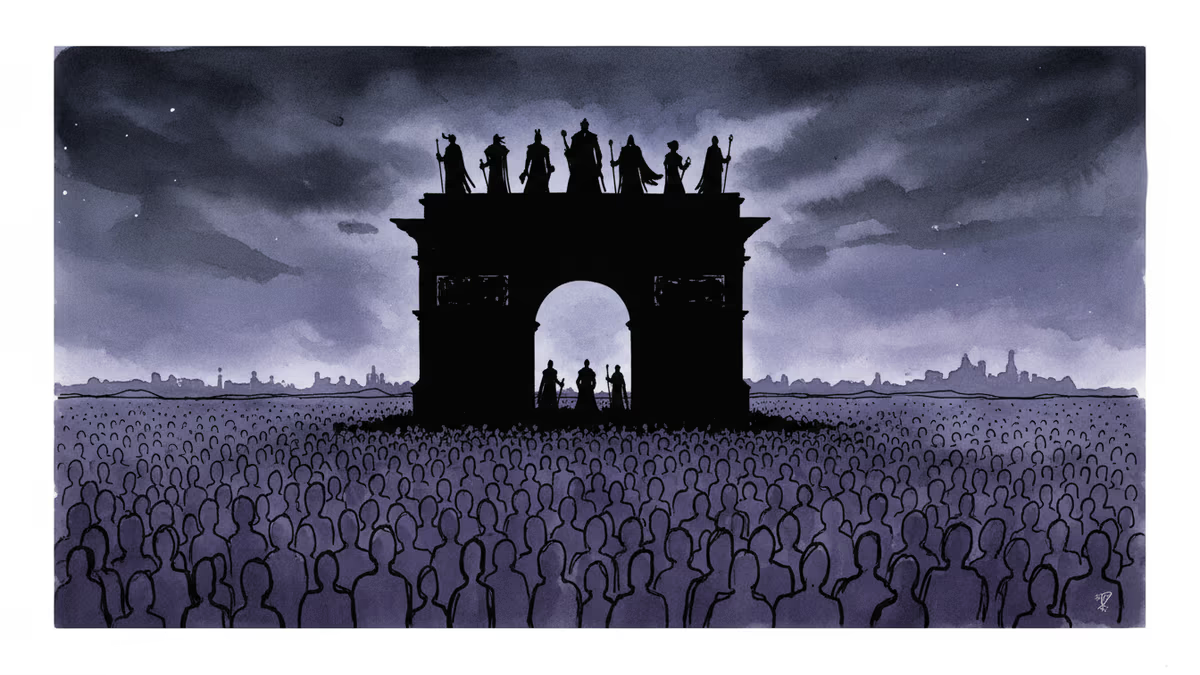
After nearly four years apart for mandatory military service, BTS reunited at Seoul's Gwanghwamun Square before 260,000 fans. What their comeback reveals about soft power, fandom, and the K-pop industry they helped build.
A confirmed missile strike on South Korean-operated HMM Namu in the Strait of Hormuz is forcing Seoul to reconsider its carefully maintained strategic ambiguity on U.S.-led maritime security operations.
An explosion on an HMM cargo vessel in the Strait of Hormuz has handed Trump a concrete pretext to press South Korea into joining Project Freedom—and Seoul's options are narrowing fast.
The Israeli-U.S. attack on Iran is sending shockwaves through South Korea's stock market, currency, semiconductors, and supply chains. Here's why geography no longer insulates any economy.
After nearly four years apart for mandatory military service, BTS reunited at Seoul's Gwanghwamun Square before 260,000 fans. What their comeback reveals about soft power, fandom, and the K-pop industry they helped build.
Thoughts
Share your thoughts on this article
Sign in to join the conversation