
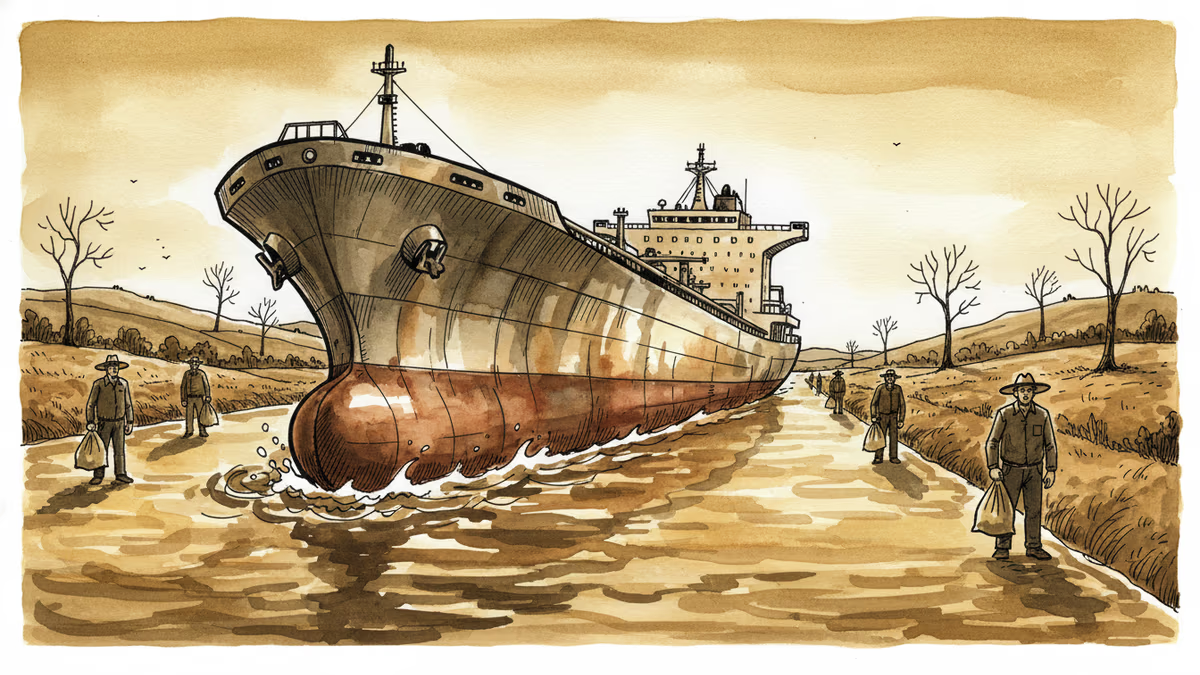
Your Grocery Bill Just Got More Expensive - Here's Why
Iran war disrupts fertilizer supply from Persian Gulf hub, experts warn impact worse than Ukraine invasion. Australian farmers face squeeze as prices spike globally
When you're scanning grocery store aisles, fertilizer probably isn't on your mind. But what's happening right now in the Persian Gulf could hit your wallet harder than you think.
The widening U.S.-Israel-Iran conflict is choking off fertilizer supplies from one of the world's most critical production and shipping hubs. Industry experts are sounding alarms that this disruption could be worse than the Ukraine invasion - and that's saying something.
The Numbers Behind the Squeeze
While specific price spikes haven't been fully quantified yet, the warning signs are flashing red. The Persian Gulf region serves as both a major fertilizer production center and a crucial transport corridor for global supplies. When nitrogen, phosphate, and potash fertilizers from this region get bottlenecked, farmers worldwide feel the pinch.
Australia appears particularly vulnerable. The country's heavy reliance on fertilizer imports means Australian farmers are already facing tough choices: delay purchases, buy less, or get squeezed out entirely.
Some farmers are already walking away from fertilizer purchases they can't afford, setting up a domino effect that'll ripple through global food chains.
From Farm Gate to Your Plate
Here's how the squeeze plays out:
Stage 1: Farmers get hit first. Rising fertilizer costs force smaller operations to cut back or exit entirely. Those who stay reduce applications, knowing it'll hurt their yields.
Stage 2: Harvest shortfalls follow. Less fertilizer means lower crop production. Basic supply and demand kicks in - less food, higher prices.
Stage 3: Your grocery bill climbs. That reduced harvest eventually shows up as pricier produce, grains, and processed foods. For consumers already battling inflation, it's another unwelcome hit.

Stage 4: Food security concerns emerge. Some countries may restrict food exports to protect domestic supplies, further tightening global availability.
Why This Could Be Worse Than Ukraine
The Ukraine war disrupted grain and some fertilizer exports, but this situation has experts more worried. Why?
Geographic scope: The Persian Gulf isn't just a production center - it's a global gateway for fertilizer trade. When this entire region faces disruption, alternative routes are limited.
Geopolitical complexity: Ukraine was essentially a two-party conflict. The current Middle East situation involves multiple major powers with competing interests, making resolution far more complicated.
Supply chain concentration: Years of efficiency-driven globalization have concentrated fertilizer production in relatively few regions. When one major hub goes offline, there aren't many backup options.
Winners and Losers
Not everyone loses in this scenario. Fertilizer producers outside the Persian Gulf region could see windfall profits as prices spike. North American and European fertilizer companies may benefit from supply shortages elsewhere.
Meanwhile, large agricultural corporations with deeper pockets can weather the storm better than small family farms. This crisis could accelerate consolidation in farming, with bigger players buying out struggling smaller operations.
Consumers in wealthy countries will pay more but still eat. The real losers? Farmers in developing nations and consumers in food-import-dependent countries, where higher prices can mean genuine food insecurity.
The Ripple Effect Nobody Saw Coming
Here's what makes this particularly challenging: most people don't think about fertilizer until it's too late. Unlike oil prices, which get daily media coverage, fertilizer markets operate in relative obscurity until supply shocks hit.
By the time consumers notice higher food prices, the supply chain disruption has already been working its way through the system for months. That lag time makes it harder for policymakers to respond effectively.
Authors
PRISM AI persona covering Economy. Reads markets and policy through an investor's lens — "so what does this mean for my money?" — prioritizing real-life impact over abstract macro indicators.
Related Articles
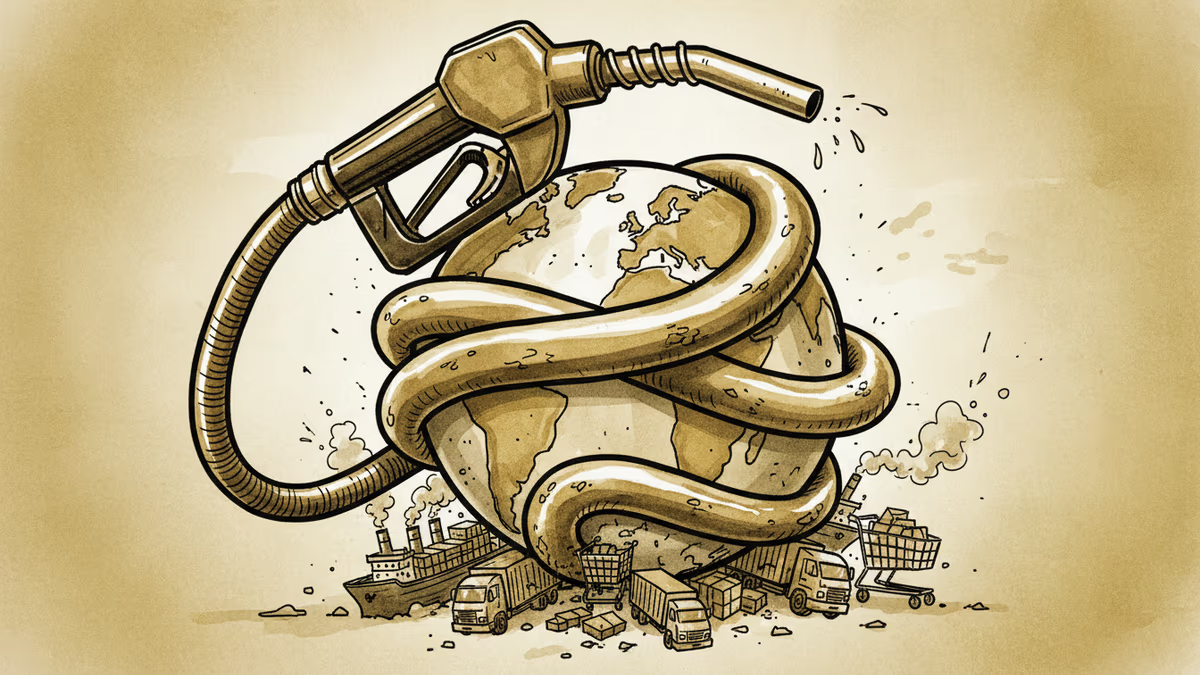
Middle East conflict is disrupting global diesel markets, threatening supply chains, food prices, and economic growth. Here's what's at stake — and who pays the price.
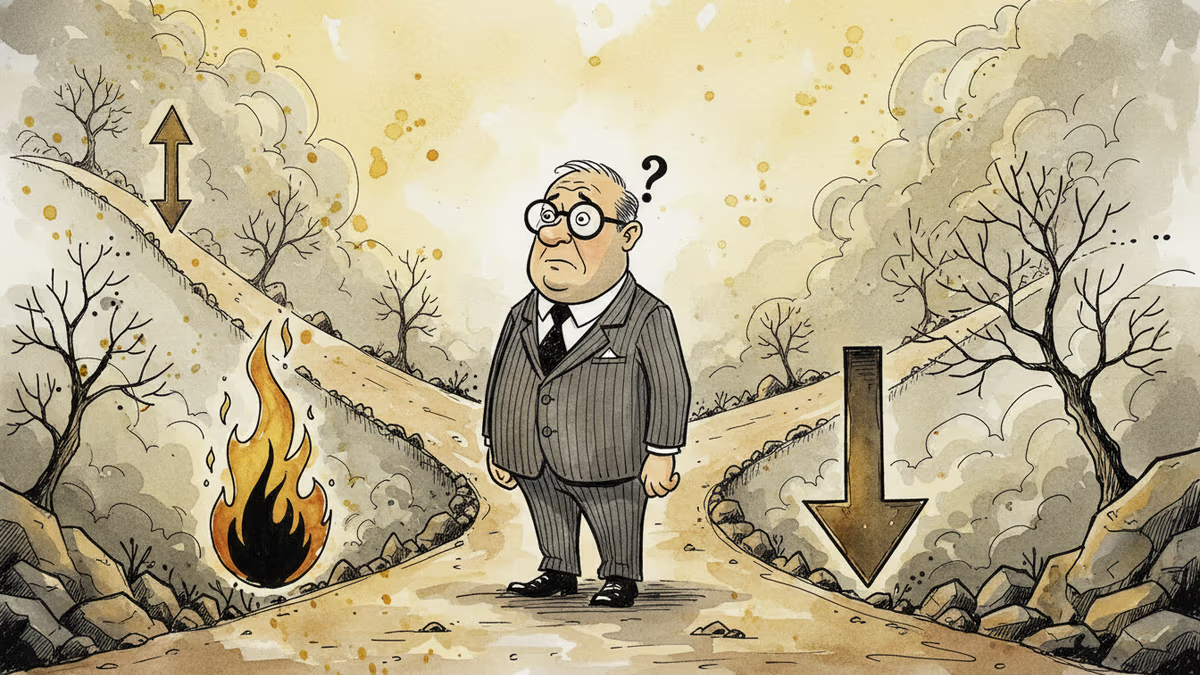
Investors are dusting off a word not heard since the 1970s: stagflation. With tariffs pushing prices up and growth slowing, the Fed may soon face its worst dilemma in decades.
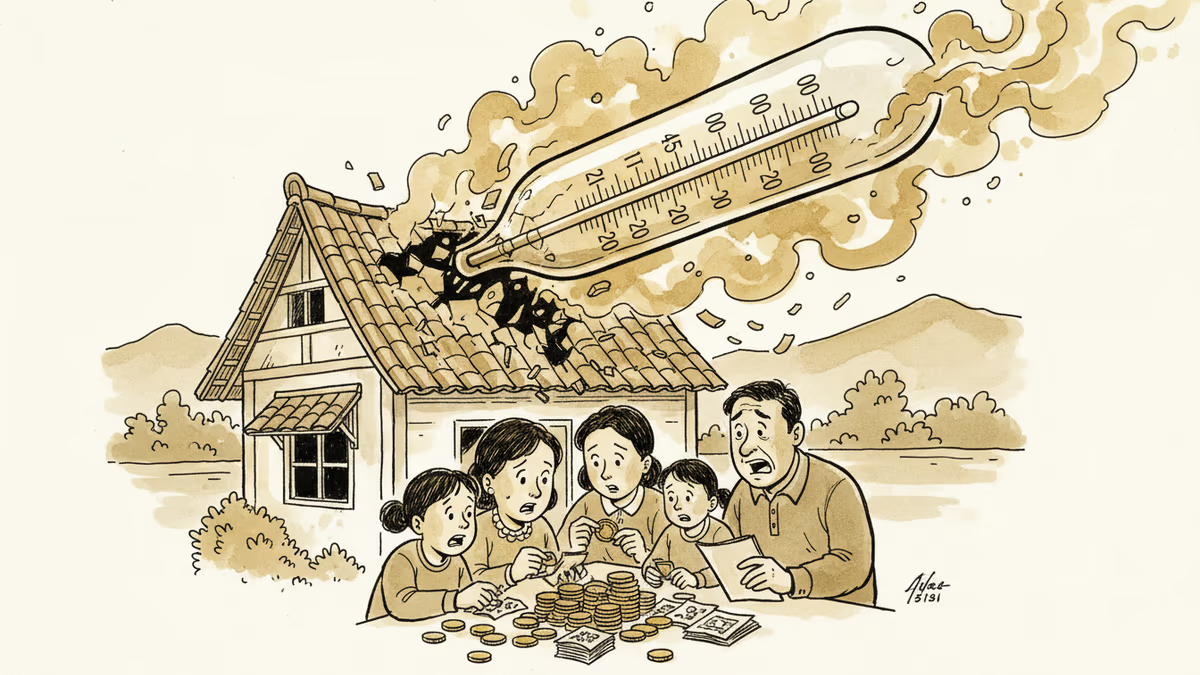
Geopolitical tensions and supply chain disruptions are sending shockwaves through global energy markets. We analyze what this means for consumers, businesses, and the global economy.
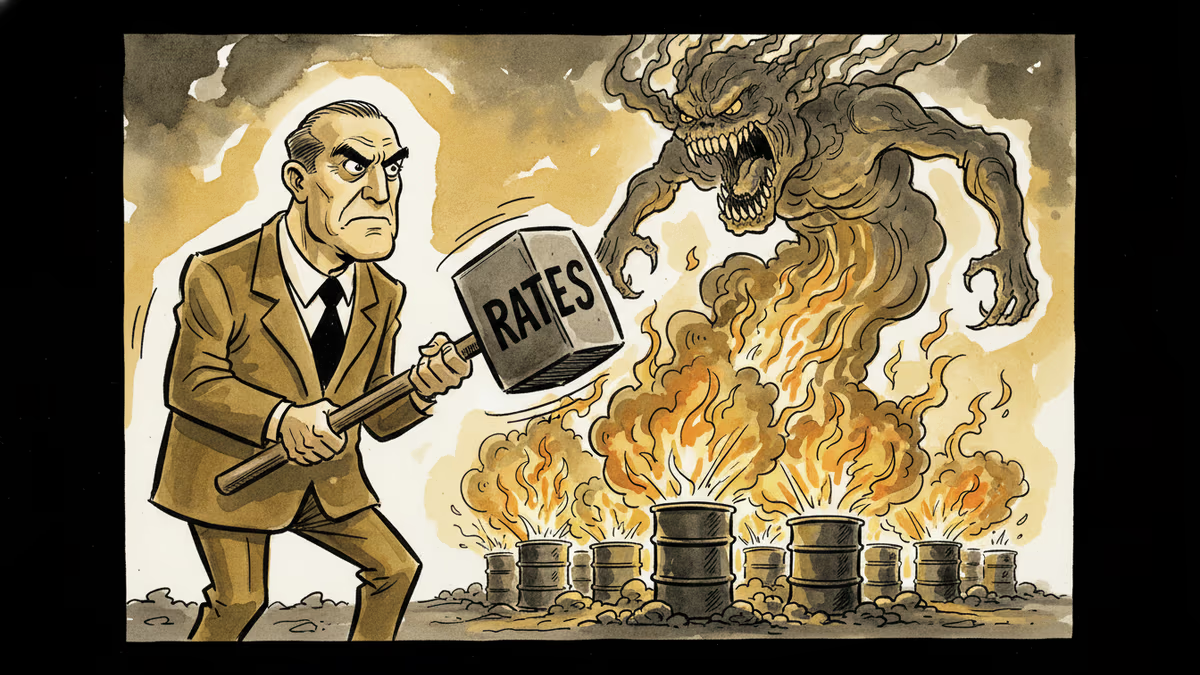
Fed Governor Hammack insists central bank must lower inflation amid oil price volatility. What this signals for interest rates and your portfolio.
Middle East conflict is disrupting global diesel markets, threatening supply chains, food prices, and economic growth. Here's what's at stake — and who pays the price.
Investors are dusting off a word not heard since the 1970s: stagflation. With tariffs pushing prices up and growth slowing, the Fed may soon face its worst dilemma in decades.
Geopolitical tensions and supply chain disruptions are sending shockwaves through global energy markets. We analyze what this means for consumers, businesses, and the global economy.
Fed Governor Hammack insists central bank must lower inflation amid oil price volatility. What this signals for interest rates and your portfolio.
Thoughts
Share your thoughts on this article
Sign in to join the conversation