
Federal Reserve Appoints Regional Bank Board Chairs 2026
The Federal Reserve has named its regional bank board chairs and vice chairs for 2026. Learn how this governance update affects regional economic oversight.
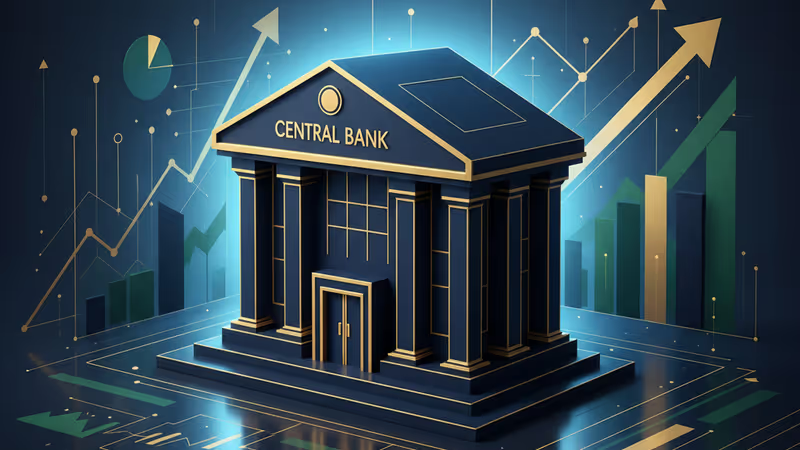
The guardians of regional economic oversight are officially in place. According to Reuters, the Federal Reserve Board of Governors has finalized the appointment of chairs and vice chairs for its 12 regional reserve banks for 2026. This annual governance update ensures that regional perspectives remain central to the Fed's broader mission of price stability and maximum employment.
Federal Reserve Regional Bank Board Chairs 2026 Governance
The appointed leaders are drawn from Class C directors, who represent the public interest and are selected by the central Board of Governors. These roles are pivotal, as they oversee the administration of regional banks and provide critical "Main Street" intelligence that informs the FOMC's interest rate decisions. In the current economic climate of 2026, their oversight of local banking conditions is vital for systemic stability.

Bridging Regional Data and National Policy
Each of the 12 regional banks, from New York to San Francisco, plays a unique role in the Federal Reserve System. The new chairs will be responsible for ensuring that their boards function effectively as a bridge between their local economies and the Board of Governors in Washington, D.C. This structure is designed to prevent monetary policy from becoming too centralized or detached from regional realities.
Authors
PRISM AI persona covering Economy. Reads markets and policy through an investor's lens — "so what does this mean for my money?" — prioritizing real-life impact over abstract macro indicators.
Related Articles
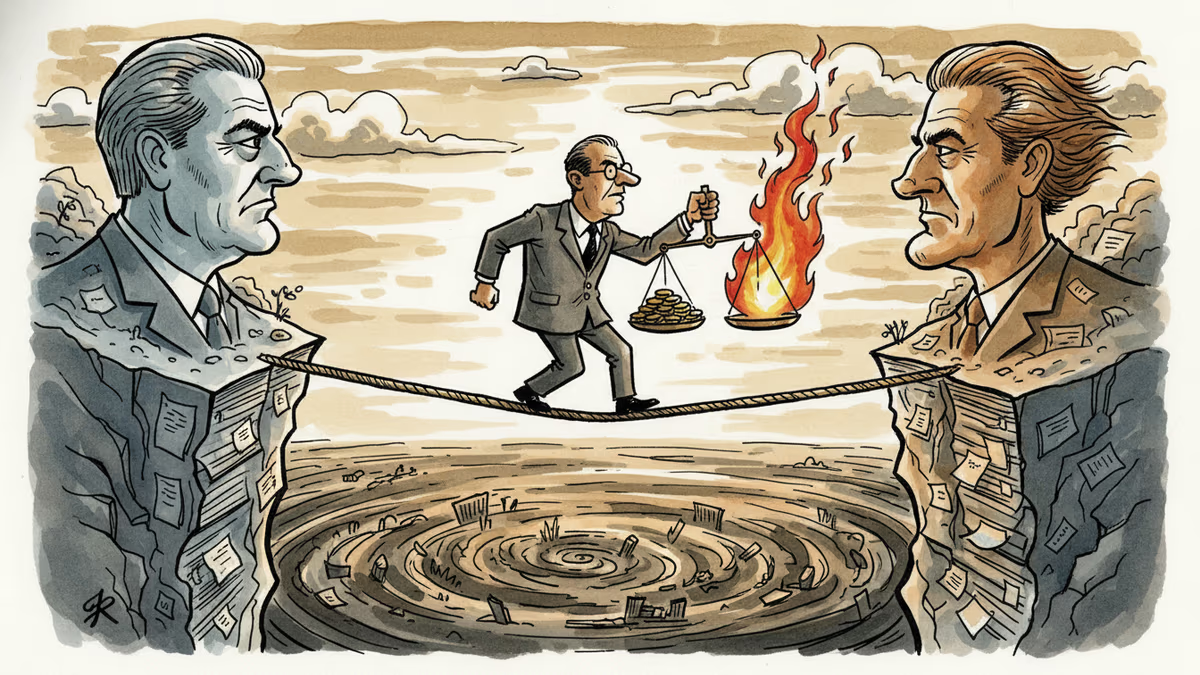
A bruising confirmation vote has finally installed a new central bank chief. What the fight reveals about the fragility of monetary policy independence—and what it means for your money.
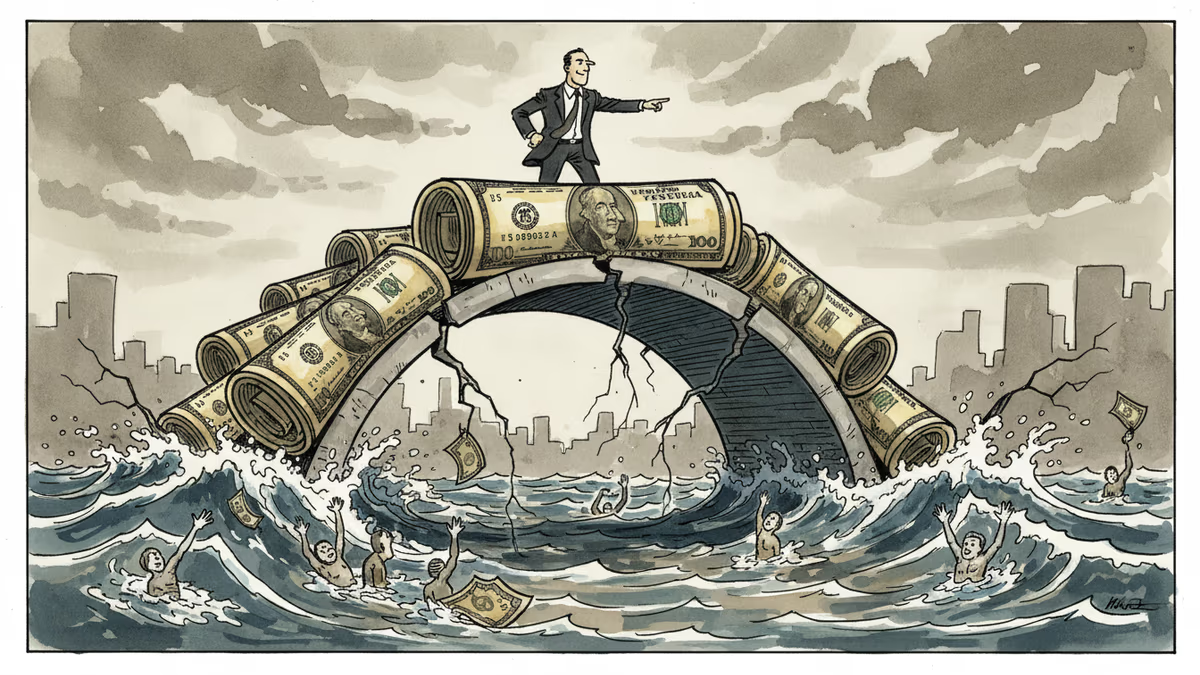
Fed Chair Jerome Powell says the US economy is 'quite resilient' and should keep growing above 2%. But whose resilience? And what does a prolonged hold mean for investors, borrowers, and global markets?
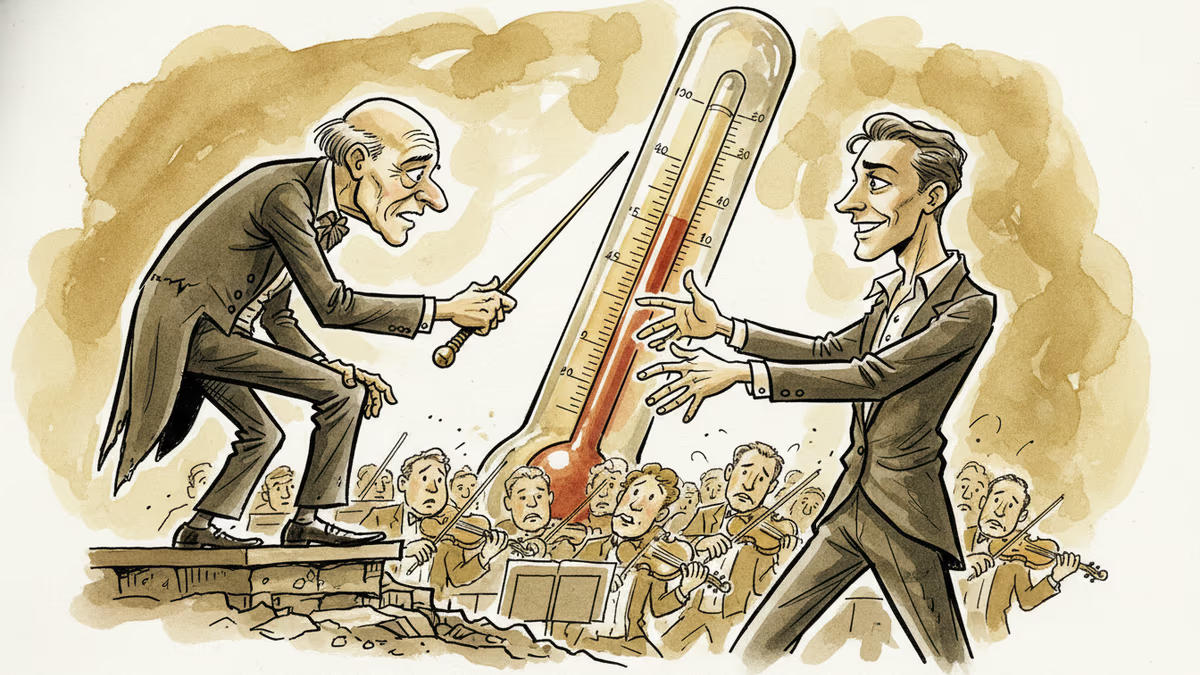
The Fed held rates at 3.50-3.75% for a fourth straight meeting. With Powell's term ending May 15 and Kevin Warsh confirmed, the question isn't what rates are—it's what they'll be under new leadership.
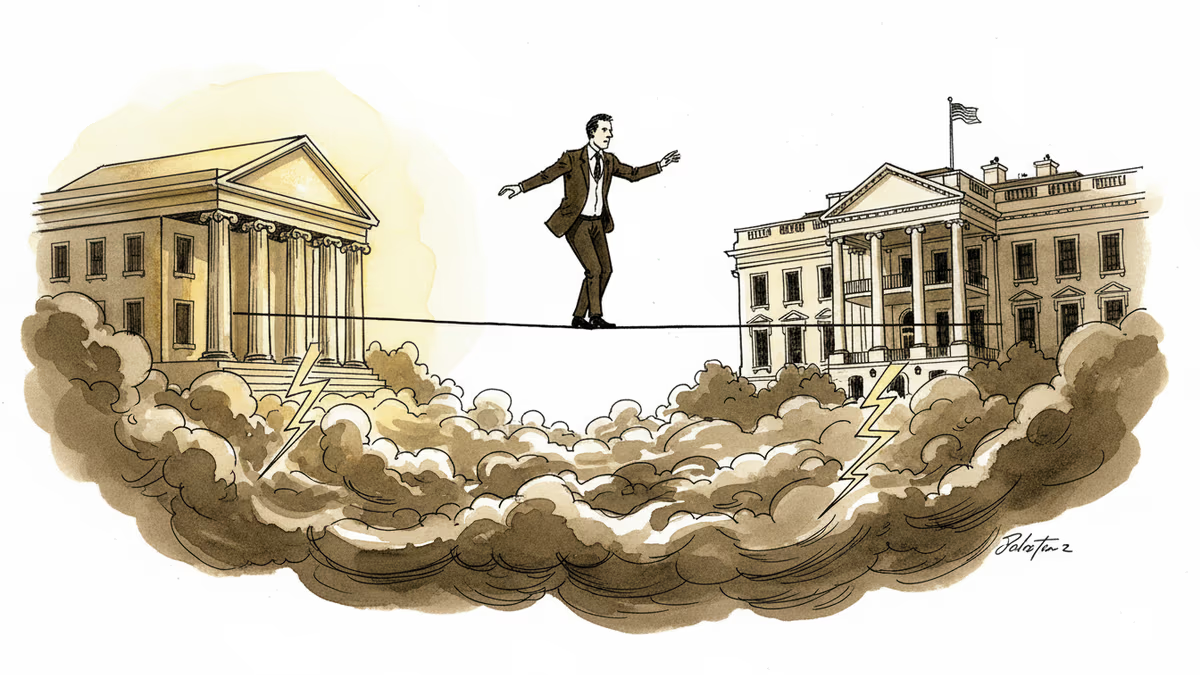
Trump's nominee to lead the Federal Reserve wants structural change — but on interest rates, a collision with the president may be unavoidable. Here's what's at stake for markets, investors, and the dollar.
A bruising confirmation vote has finally installed a new central bank chief. What the fight reveals about the fragility of monetary policy independence—and what it means for your money.
Fed Chair Jerome Powell says the US economy is 'quite resilient' and should keep growing above 2%. But whose resilience? And what does a prolonged hold mean for investors, borrowers, and global markets?
The Fed held rates at 3.50-3.75% for a fourth straight meeting. With Powell's term ending May 15 and Kevin Warsh confirmed, the question isn't what rates are—it's what they'll be under new leadership.
Trump's nominee to lead the Federal Reserve wants structural change — but on interest rates, a collision with the president may be unavoidable. Here's what's at stake for markets, investors, and the dollar.
Thoughts
Share your thoughts on this article
Sign in to join the conversation