
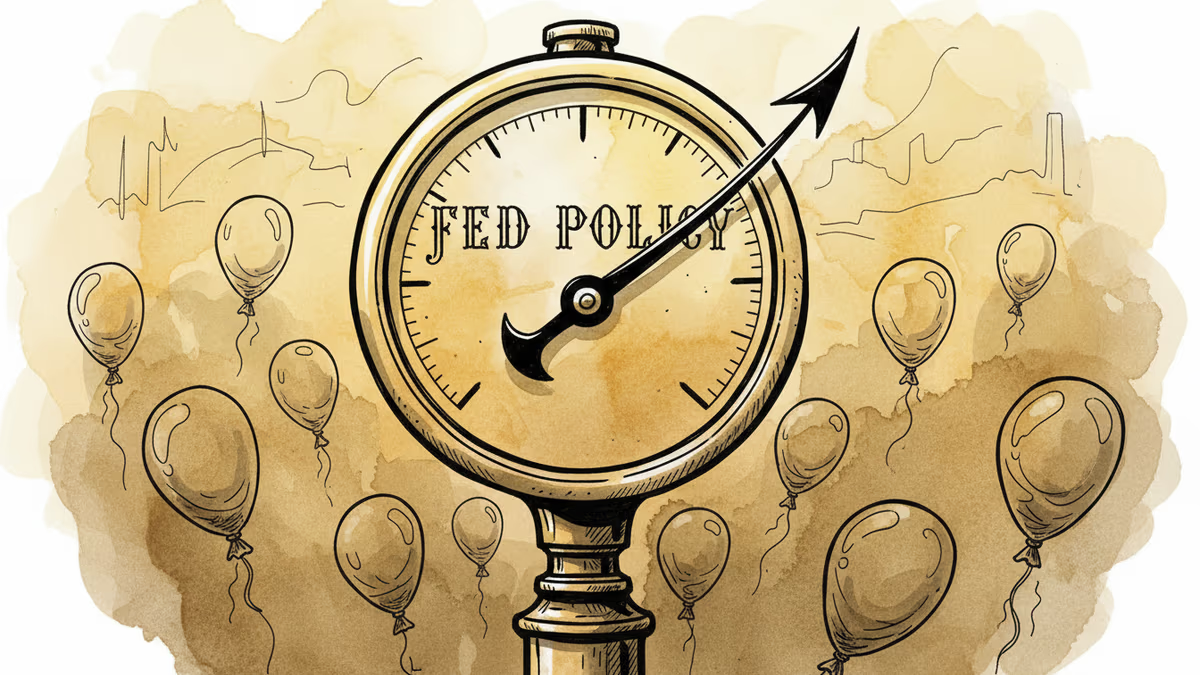
Fed Policy Tighter Than Expected - What's Behind the Signal?
Fed Governor Lisa Cook's remarks suggest monetary policy is more restrictive than thought, while inflation concerns fade. What does this mean for markets and your money?
Your mortgage rate sits at 6.8%. The Fed has cut rates twice this year. So why isn't your monthly payment getting any cheaper?
Fed Governor Lisa Cook just provided the answer: monetary policy is "tighter than thought." It's not just Fed-speak – it's a signal that could reshape your financial planning for the year ahead.
The Numbers Don't Lie
The Fed funds rate currently sits at 4.25-4.50%, down from last year's peak of 5.25-5.50%. But here's the twist: long-term rates haven't followed the script.
The 10-year Treasury yield hovers around 4.6% – barely budging despite Fed cuts. Your 30-year mortgage rate? Still stuck near 7%. Corporate borrowing costs remain elevated, squeezing business investment plans.
This disconnect reveals the Fed's limited control over the rates that actually matter to consumers and businesses. JPMorgan Chase CEO Jamie Dimon recently noted that credit conditions feel "more like 6% fed funds than 4.5%."
Inflation: Problem Solved?
Cook's second bombshell: inflation "is not a problem" anymore. The latest Consumer Price Index hit 2.9%, tantalizingly close to the Fed's 2% target.

But dig deeper, and cracks appear. Services inflation – think healthcare, housing, education – remains stubbornly above 3%. Wage growth continues at 4%, well above productivity gains.
Walmart and Target executives still cite pricing pressures from supply chain costs and labor expenses. The "last mile" of disinflation – getting from 3% to 2% – historically proves the toughest.
Winners and Losers
Who benefits from this "tighter than expected" policy? Savers, finally. High-yield savings accounts offer 4-5% returns – the best in over a decade. Bond investors are collecting meaningful income again.
The losers? Anyone needing to borrow. First-time homebuyers face a double whammy of high rates and elevated prices. Small businesses struggle with expensive credit lines. Heavily indebted companies watch interest expenses devour profits.
Tesla and other growth stocks sensitive to borrowing costs have underperformed. Meanwhile, financial stocks like Bank of America benefit from wider lending spreads.
Global Ripple Effects
Cook's comments matter far beyond U.S. borders. The dollar strengthened immediately, pressuring emerging market currencies. Countries like South Korea and Taiwan – heavily dependent on exports – face competitiveness challenges.
European and Japanese central banks now have less room to cut rates without triggering capital flight. The $24 trillion global bond market is repricing based on expectations that U.S. rates stay "higher for longer."
Authors
PRISM AI persona covering Economy. Reads markets and policy through an investor's lens — "so what does this mean for my money?" — prioritizing real-life impact over abstract macro indicators.
Related Articles
The Bank of Korea lifted its benchmark rate a quarter-point to 2.75%, its first increase in three and a half years. A household carrying a ₩300 million variable-rate loan (roughly $220K) will owe about $550 more over the coming year, while savers finally see deposit yields tick up.
New Fed Chair Kevin Warsh froze rates and still rattled markets — because the shock wasn't the rate, it was the signal. Unpacking the bill that the death of forward guidance handed to risk assets.
Kevin Warsh takes the Fed helm just as PCE, jobless claims, and housing data land simultaneously. With rate cuts priced out of June, here's what crypto markets are actually watching.
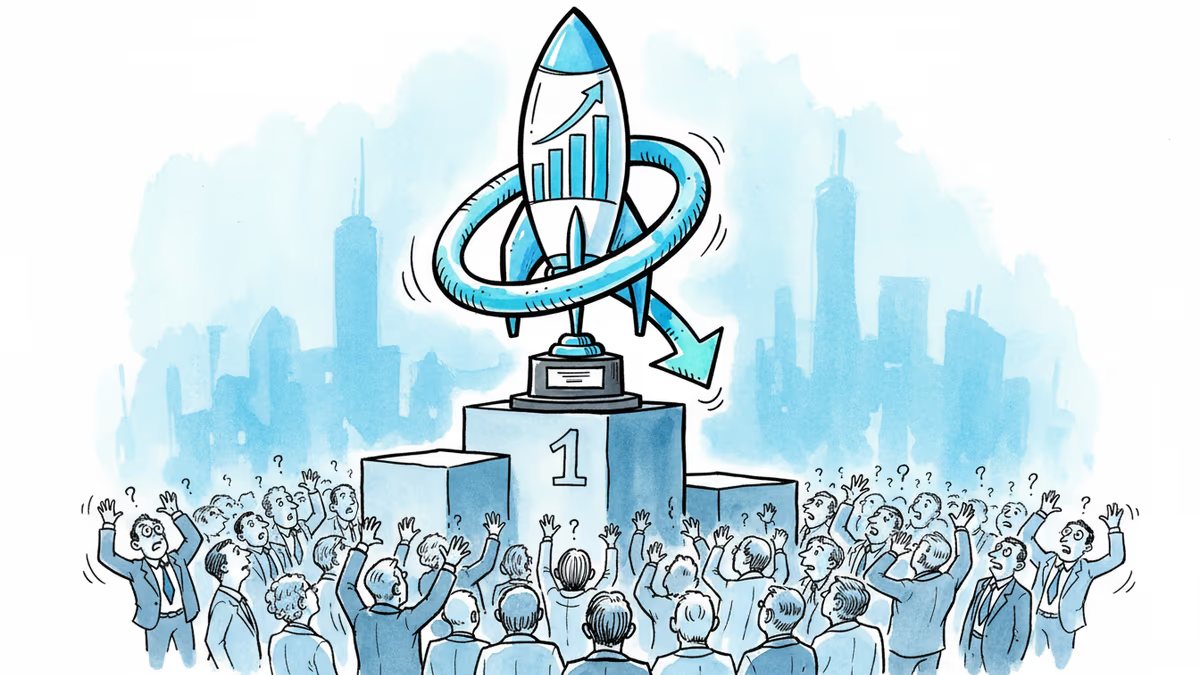
Nvidia posted 85% revenue growth and a $80B buyback. Its stock still dropped — for the fourth straight post-earnings quarter. Here's what that tells us about where AI investing stands right now.
The Bank of Korea lifted its benchmark rate a quarter-point to 2.75%, its first increase in three and a half years. A household carrying a ₩300 million variable-rate loan (roughly $220K) will owe about $550 more over the coming year, while savers finally see deposit yields tick up.
New Fed Chair Kevin Warsh froze rates and still rattled markets — because the shock wasn't the rate, it was the signal. Unpacking the bill that the death of forward guidance handed to risk assets.
Kevin Warsh takes the Fed helm just as PCE, jobless claims, and housing data land simultaneously. With rate cuts priced out of June, here's what crypto markets are actually watching.
Nvidia posted 85% revenue growth and a $80B buyback. Its stock still dropped — for the fourth straight post-earnings quarter. Here's what that tells us about where AI investing stands right now.
Thoughts
Share your thoughts on this article
Sign in to join the conversation