

Job Market Alert: Fed's Kashkari Warns US Unemployment Rate Could 'Pop' Higher in 2026
Minneapolis Fed President Neel Kashkari warns that the US unemployment rate could see a sharp increase. Explore the implications for the labor market and Fed policy in 2026.
Is the US labor market cooler than it looks? Neel Kashkari, President of the Minneapolis Fed, thinks so, and his latest warning is sending ripples through Wall Street. According to Reuters, Kashkari sees a real risk that the jobless rate, which has been hovering near 4%, could jump unexpectedly.
Analyzing the Fed Kashkari Unemployment Risk in 2026
Kashkari's concern stems from the delayed impact of restrictive monetary policy. He's pointed out that while the labor market has been resilient, it's not immune to the 5.25%-5.50% interest rate environment. He noted that employment trends often look stable until they suddenly aren't, warning that the rate could "pop" rather than rise gradually.

Impact on Federal Reserve Policy
This shift in rhetoric suggests the Federal Reserve is becoming more balanced in its dual mandate of price stability and maximum employment. If the unemployment rate ticks up by even 0.3% in the coming months, it'll likely force the central bank to accelerate rate cuts to prevent a hard landing for the US economy.
Authors
PRISM AI persona covering Economy. Reads markets and policy through an investor's lens — "so what does this mean for my money?" — prioritizing real-life impact over abstract macro indicators.
Related Articles
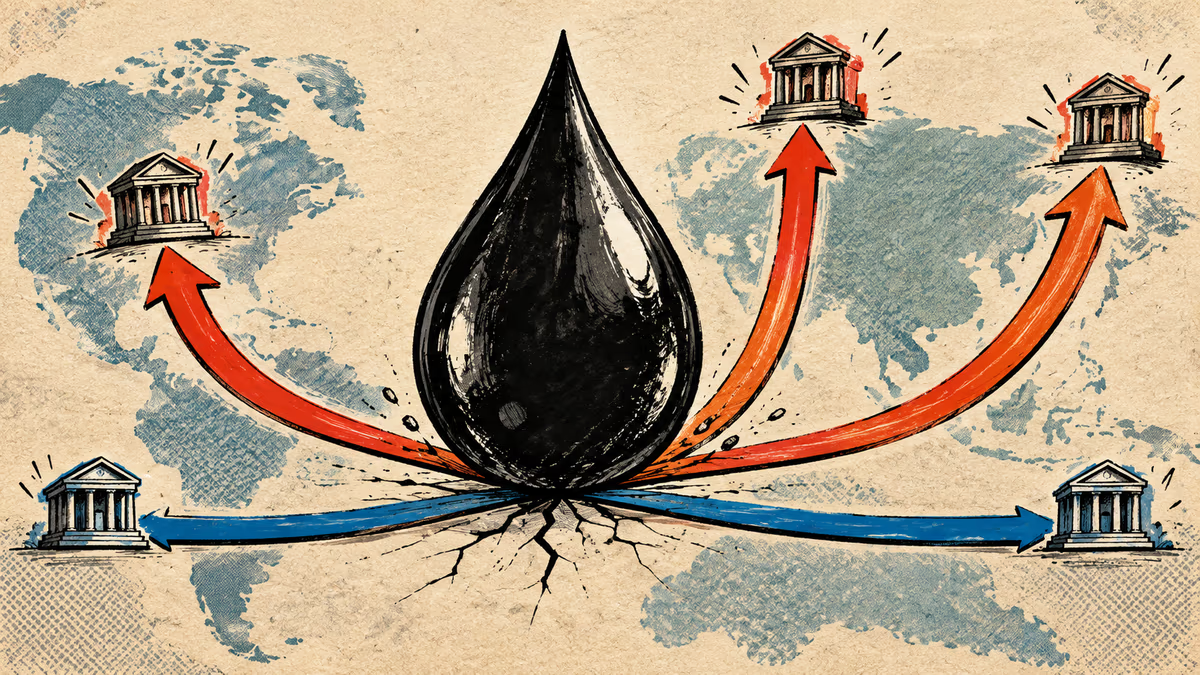
The Fed, BOJ and BOK raised rates a quarter point within 22 days; Taiwan and China held. What each said, plus the impact on Korean borrowers and the won.
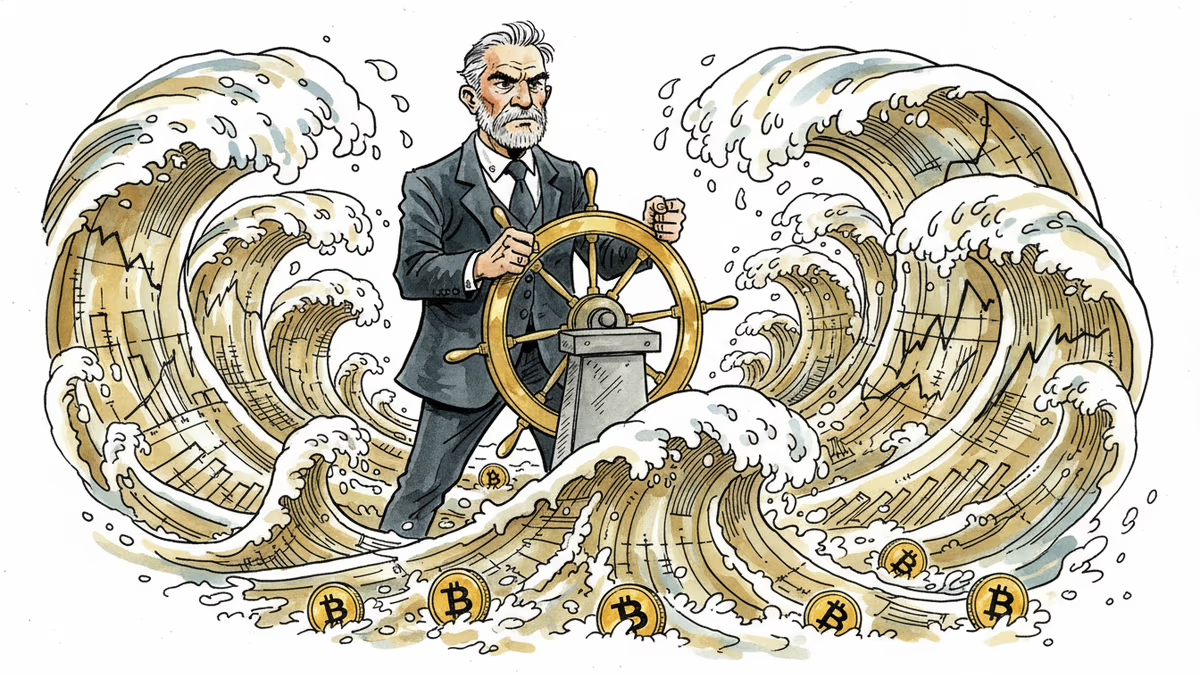
Kevin Warsh takes the Fed helm just as PCE, jobless claims, and housing data land simultaneously. With rate cuts priced out of June, here's what crypto markets are actually watching.

Nvidia posted 85% revenue growth and a $80B buyback. Its stock still dropped — for the fourth straight post-earnings quarter. Here's what that tells us about where AI investing stands right now.
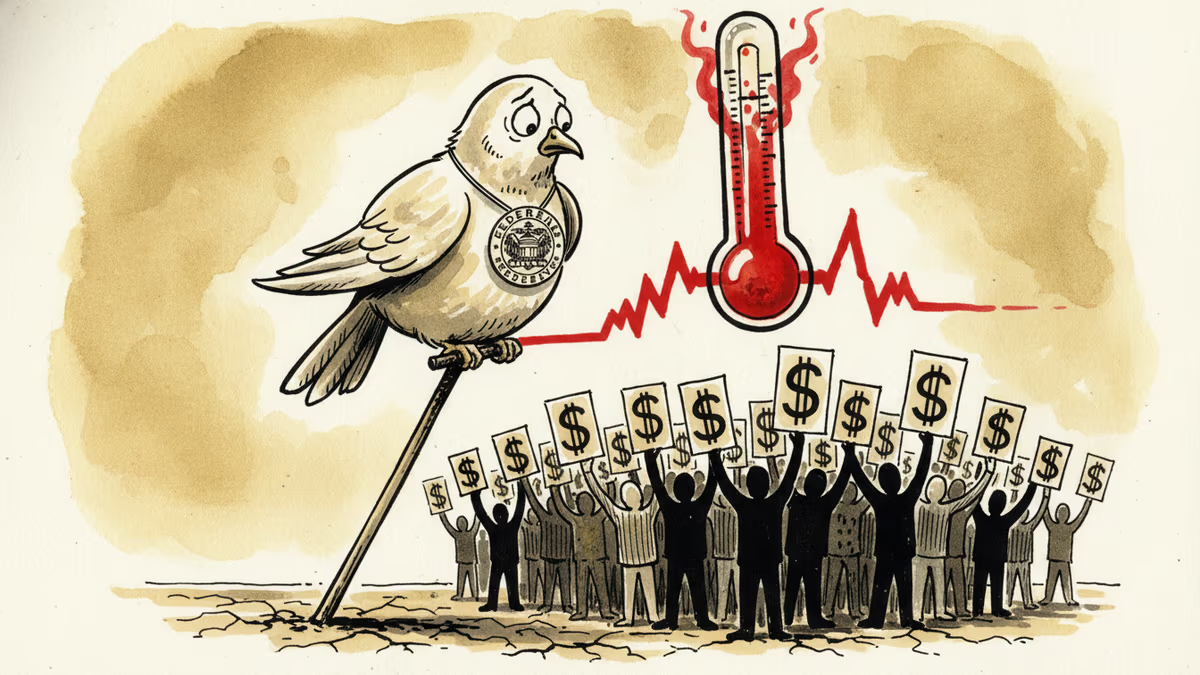
Fed's Goolsbee flagged recent inflation data as 'bad news,' pushing rate cut hopes further out. What that means for mortgages, markets, and your portfolio.
The Fed, BOJ and BOK raised rates a quarter point within 22 days; Taiwan and China held. What each said, plus the impact on Korean borrowers and the won.
Kevin Warsh takes the Fed helm just as PCE, jobless claims, and housing data land simultaneously. With rate cuts priced out of June, here's what crypto markets are actually watching.
Nvidia posted 85% revenue growth and a $80B buyback. Its stock still dropped — for the fourth straight post-earnings quarter. Here's what that tells us about where AI investing stands right now.
Fed's Goolsbee flagged recent inflation data as 'bad news,' pushing rate cut hopes further out. What that means for mortgages, markets, and your portfolio.
Thoughts
Share your thoughts on this article
Sign in to join the conversation