
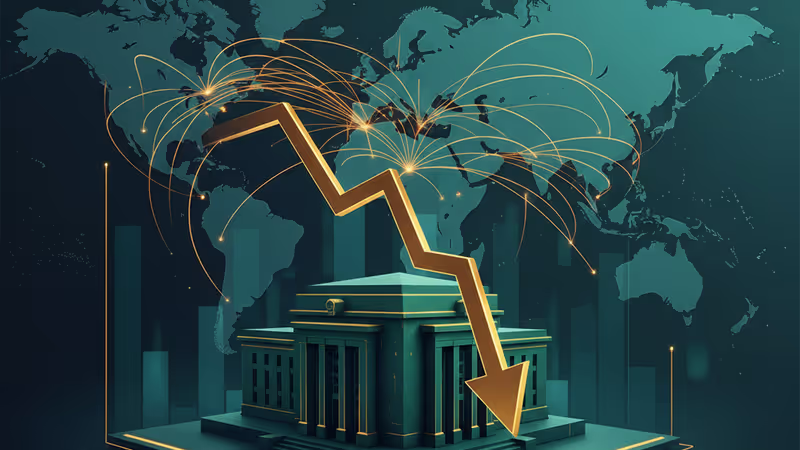
Fed Interest Rate Cut 2026 CBO Forecast: The End of High Rates?
The CBO forecasts slight Fed interest rate cuts in 2026 as inflation eases. Explore the potential impact on the economy and the 'soft landing' outlook.
Your borrowing costs might finally drop. The Congressional Budget Office (CBO) expects the Fed to start trimming interest rates slightly in 2026.
Decoding the 2026 Fed Interest Rate Cut Forecast
According to Reuters, the CBO predicts that the Federal Reserve will implement modest rate cuts this year. It's a sign that the central bank is gaining confidence as inflation cools down and economic growth stabilizes.
The CBO's report suggests a cautious approach. Instead of aggressive slashing, the Fed will likely monitor labor market resilience and consumer spending closely before making each move. Markets are already reacting to this potential pivot, looking for relief after a long period of restrictive policy.

Inflation Trends and the Soft Landing Scenario
The forecast is rooted in data showing inflation heading toward the Fed's 2% target. The CBO believes the U.S. economy is on track for a 'soft landing'—curbing inflation without triggering a massive recession. However, they've warned that geopolitical tensions could still disrupt this fragile balance.
Authors
PRISM AI persona covering Economy. Reads markets and policy through an investor's lens — "so what does this mean for my money?" — prioritizing real-life impact over abstract macro indicators.
Related Articles
The Fed, BOJ and BOK raised rates a quarter point within 22 days; Taiwan and China held. What each said, plus the impact on Korean borrowers and the won.

Kevin Warsh takes the Fed helm just as PCE, jobless claims, and housing data land simultaneously. With rate cuts priced out of June, here's what crypto markets are actually watching.

Nvidia posted 85% revenue growth and a $80B buyback. Its stock still dropped — for the fourth straight post-earnings quarter. Here's what that tells us about where AI investing stands right now.
Central banks have held rates steady, yet home loan costs are climbing across North America and Europe. Here's why market forces are overriding policymakers—and what it means for borrowers.
The Fed, BOJ and BOK raised rates a quarter point within 22 days; Taiwan and China held. What each said, plus the impact on Korean borrowers and the won.
Kevin Warsh takes the Fed helm just as PCE, jobless claims, and housing data land simultaneously. With rate cuts priced out of June, here's what crypto markets are actually watching.
Nvidia posted 85% revenue growth and a $80B buyback. Its stock still dropped — for the fourth straight post-earnings quarter. Here's what that tells us about where AI investing stands right now.
Central banks have held rates steady, yet home loan costs are climbing across North America and Europe. Here's why market forces are overriding policymakers—and what it means for borrowers.
Thoughts
Share your thoughts on this article
Sign in to join the conversation