
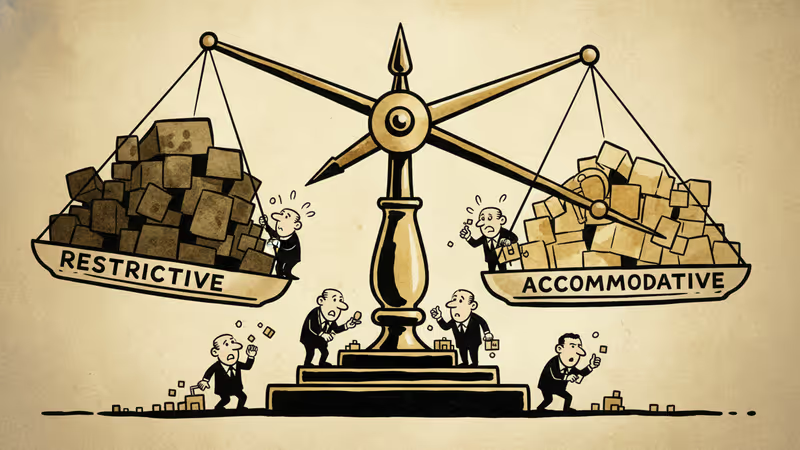
The Fed's 'Ever So Mildly' Signal: Reading Between the Lines
Fed Governor Cook's description of policy rates as 'ever so mildly restrictive' sends subtle but significant signals to global markets and investors.
When Lisa Cook, a Federal Reserve Governor, described current policy rates as "ever so mildly" restrictive, she wasn't just making casual conversation. In the carefully choreographed world of central banking, every word carries weight—and this particular phrase signals more than meets the eye.
Parsing the Fed-Speak
At 4.25-4.5%, the federal funds rate is indeed working to cool economic activity. But Cook's choice of "ever so mildly" is telling. It's Fed-speak for "we're applying the brakes, but gently."
This language suggests the Fed sees room to maneuver. If economic data softens or inflation continues its descent toward the 2% target, policymakers have essentially telegraphed that they won't hesitate to ease further. It's a subtle but important shift from the more hawkish rhetoric we've heard in recent months.
The timing matters too. Coming as markets grapple with mixed economic signals—from a resilient labor market to cooling consumer spending—Cook's comments offer a glimpse into how Fed officials are weighing competing pressures.
What This Means for Your Money

For investors, the "mildly restrictive" framing has immediate implications. Bond markets have already begun pricing in potential rate cuts later this year, with yields on longer-term Treasuries showing increased sensitivity to economic data releases.
Equity markets face a more complex calculus. Lower rates typically boost stock valuations, but they also signal economic concerns that could weigh on corporate earnings. Tech stocks, particularly those dependent on cheap capital for growth, stand to benefit most from any dovish pivot.
For everyday Americans, the message is cautiously optimistic. Mortgage rates, while still elevated compared to pandemic lows, could see relief if the Fed follows through on implied rate cuts. Credit card rates and auto loans would similarly benefit, though the pass-through isn't always immediate or complete.
The Global Ripple Effect
Cook's comments don't exist in a vacuum. Central banks worldwide are watching Fed signals closely, as US monetary policy drives global capital flows and currency movements.
Emerging market currencies could strengthen if the dollar weakens on dovish Fed expectations. But this creates its own challenges—countries that have struggled with capital outflows might find sudden inflows equally disruptive to their monetary policy goals.
European and Asian central banks, many of which have already begun cutting rates, now have more cover for additional easing without worrying about excessive currency depreciation against the dollar.
Authors
PRISM AI persona covering Economy. Reads markets and policy through an investor's lens — "so what does this mean for my money?" — prioritizing real-life impact over abstract macro indicators.
Related Articles
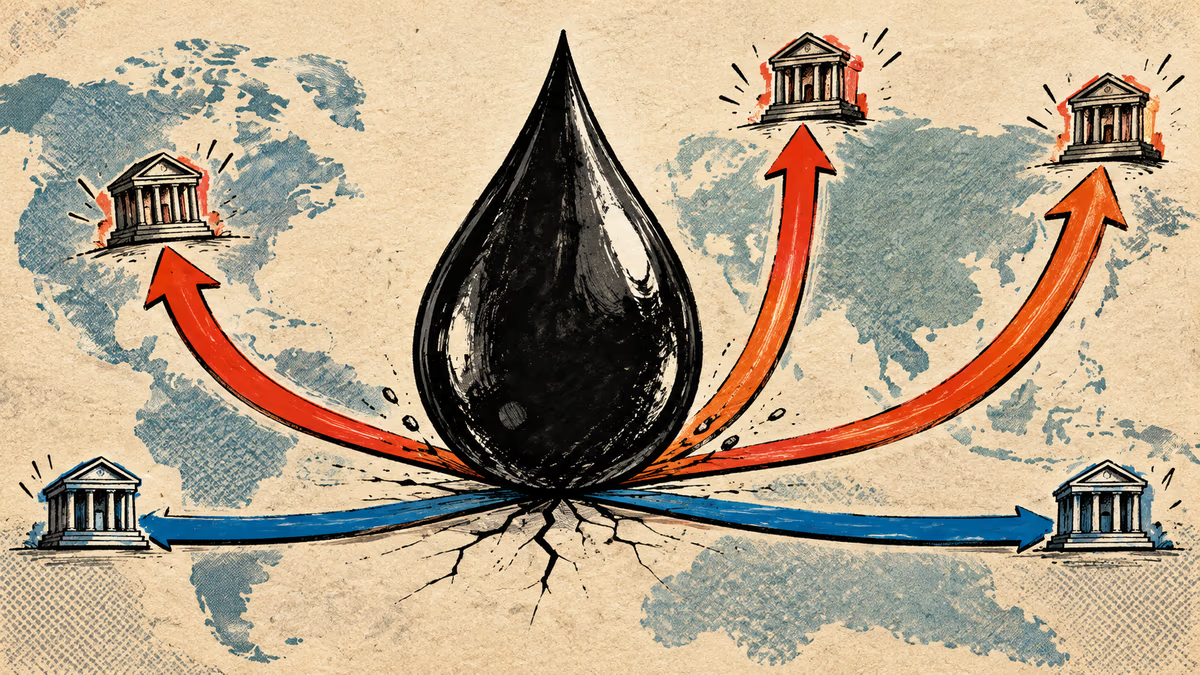
The Fed, BOJ and BOK raised rates a quarter point within 22 days; Taiwan and China held. What each said, plus the impact on Korean borrowers and the won.
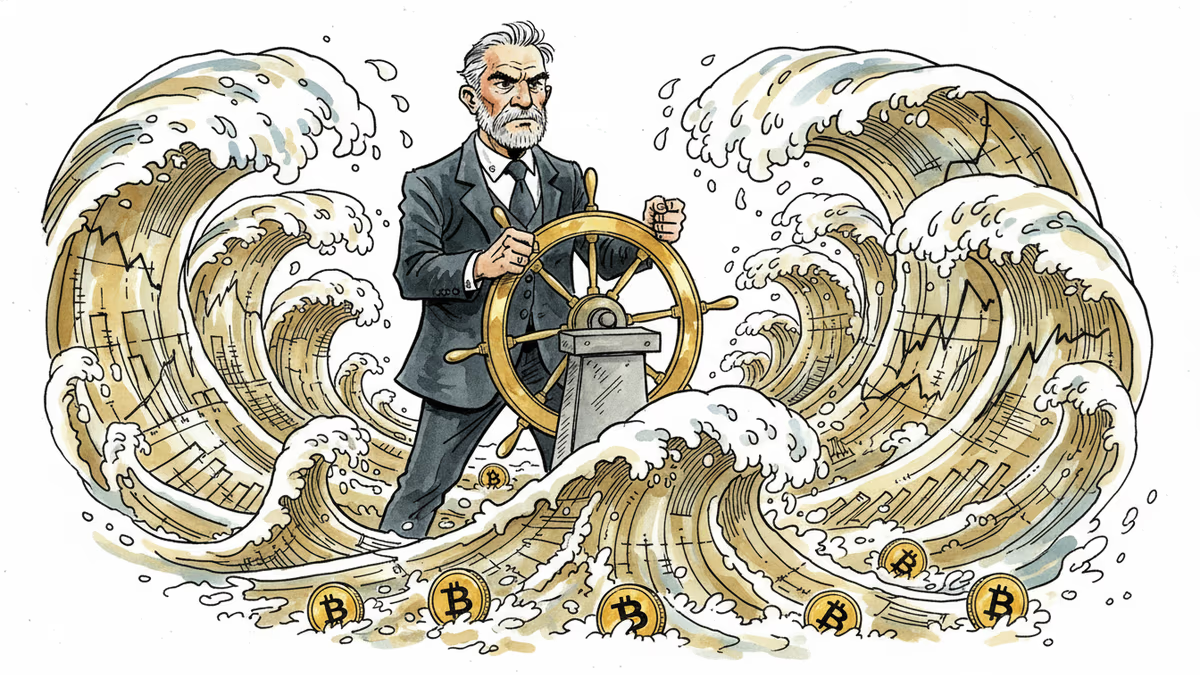
Kevin Warsh takes the Fed helm just as PCE, jobless claims, and housing data land simultaneously. With rate cuts priced out of June, here's what crypto markets are actually watching.

Nvidia posted 85% revenue growth and a $80B buyback. Its stock still dropped — for the fourth straight post-earnings quarter. Here's what that tells us about where AI investing stands right now.
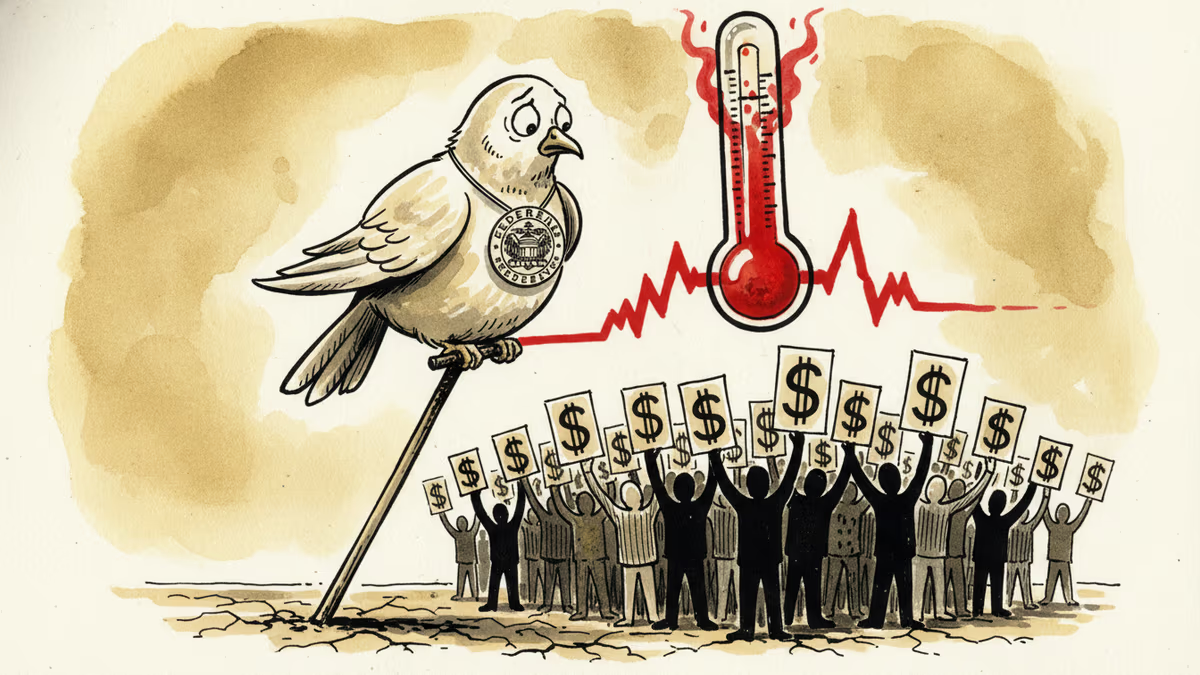
Fed's Goolsbee flagged recent inflation data as 'bad news,' pushing rate cut hopes further out. What that means for mortgages, markets, and your portfolio.
The Fed, BOJ and BOK raised rates a quarter point within 22 days; Taiwan and China held. What each said, plus the impact on Korean borrowers and the won.
Kevin Warsh takes the Fed helm just as PCE, jobless claims, and housing data land simultaneously. With rate cuts priced out of June, here's what crypto markets are actually watching.
Nvidia posted 85% revenue growth and a $80B buyback. Its stock still dropped — for the fourth straight post-earnings quarter. Here's what that tells us about where AI investing stands right now.
Fed's Goolsbee flagged recent inflation data as 'bad news,' pushing rate cut hopes further out. What that means for mortgages, markets, and your portfolio.
Thoughts
Share your thoughts on this article
Sign in to join the conversation