

Why $80 Earbuds Are Now $45: The New Budget Champion
Anker Soundcore Space A40 earbuds drop to $45 from $80 on Amazon. This 44% discount reveals shifting dynamics in the premium audio market and what it means for consumers.
Anker's Soundcore Space A40 earbuds have dropped to $45 on Amazon, down from their $80 list price—a discount of nearly 50 percent. But this isn't just another tech sale. It's a signal of something bigger happening in the audio market.
These earbuds pack features that would have cost $200+ just a few years ago: active noise canceling, customizable touch controls, and a proper multiband equalizer. The fact that they're now available for less than the price of a decent dinner out raises an interesting question: what happens when premium features become commodity?
The Performance That Surprised Everyone
Reviewers consistently highlight the A40's noise-canceling prowess, particularly for low-frequency sounds. They effectively block out urban noise—traffic, air conditioning, the constant hum of city life—allowing users to sink into their music rather than fight against their environment.
The battery life matches or exceeds pricier competitors: 7-8 hours with noise-canceling enabled, extending to 40 hours total with the charging case. That's AirPods Pro territory at a fraction of the cost.
What's telling is the color-based pricing strategy. Black, blue, and white variants hit the $45 sweet spot, while purple costs $60 and pale green remains at full price. This suggests Anker is using selective discounting to manage inventory while testing price elasticity across different consumer segments.
The Commoditization of Premium

This aggressive pricing reflects a broader shift in consumer electronics. Chinese manufacturers have rapidly closed the technology gap, making features once exclusive to premium brands available at budget prices. Anker, Soundcore, and similar brands are leveraging this technical democratization to challenge established players.
For consumers, this creates a new calculus. Why pay $200 for Sony WF-1000XM4s when you can get 80% of the performance for 25% of the price? The answer increasingly lies not in core functionality but in intangibles: brand trust, long-term software support, and ecosystem integration.
This puts pressure on premium brands to justify their price premiums. Apple, Sony, and Bose can no longer rely solely on feature superiority. They need to compete on experience, reliability, and brand ecosystem value.
The Smart Money Question
For budget-conscious consumers, the A40's discount represents more than savings—it's validation of a purchasing strategy. Why chase the latest flagship when last year's "budget" option delivers comparable performance at a fraction of the cost?
But this raises questions about market sustainability. If premium features become commoditized, how do companies maintain profit margins? The answer may lie in services, subscriptions, and ecosystem lock-in rather than hardware differentiation.
The A40's success suggests we're entering an era where "good enough" isn't just acceptable—it's smart. But that leaves us wondering: in a world of diminishing returns, what will drive our next upgrade?
Authors
Related Articles
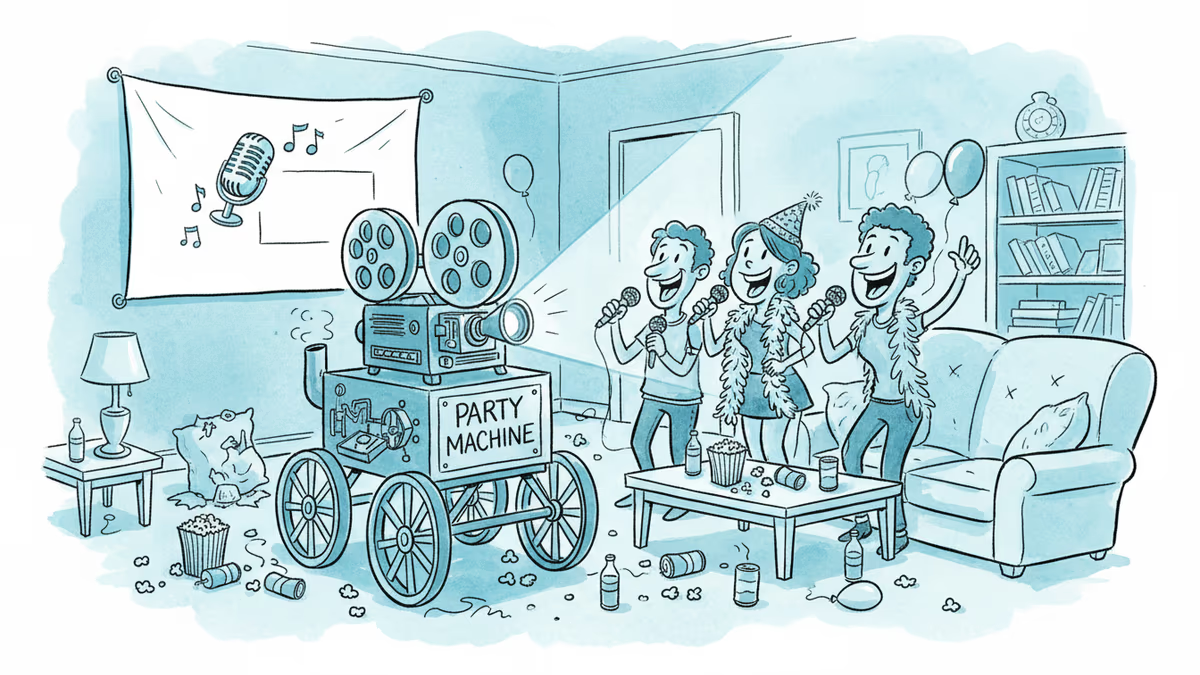
Anker's Soundcore Nebula X1 Pro combines a 4K projector, karaoke microphones, and 400W speakers into one wheeled party machine. Is this absurd fusion the future of home entertainment?

As robot vacuums add more AI features, budget models prove that sometimes less is more. Here's why simple cleaning bots might be the smarter choice for most homes.

Sony launches its first clip-style earbuds at $229.99. Can they differentiate in an increasingly crowded open-ear market?

Budget gaming laptops are finally getting good. Here's what changed in 2025 and why your next gaming rig might cost less than you think.
Anker's Soundcore Nebula X1 Pro combines a 4K projector, karaoke microphones, and 400W speakers into one wheeled party machine. Is this absurd fusion the future of home entertainment?
As robot vacuums add more AI features, budget models prove that sometimes less is more. Here's why simple cleaning bots might be the smarter choice for most homes.
Sony launches its first clip-style earbuds at $229.99. Can they differentiate in an increasingly crowded open-ear market?
Budget gaming laptops are finally getting good. Here's what changed in 2025 and why your next gaming rig might cost less than you think.
Thoughts
Share your thoughts on this article
Sign in to join the conversation