
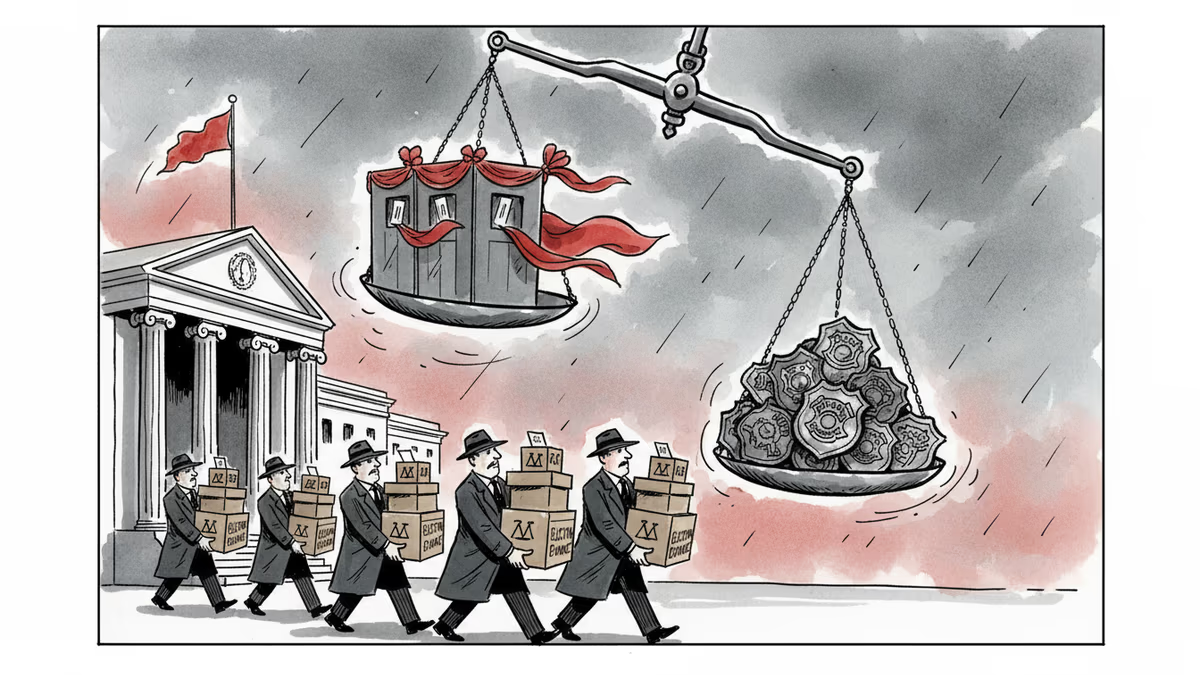
When FBI Raids Meet Election Materials: A Constitutional Minefield
The FBI's seizure of Georgia election materials raises critical questions about federal power, election integrity, and constitutional boundaries ahead of 2026 midterms.
What happens when federal law enforcement seizes the very materials needed to verify an election? On January 28, 2026, FBI agents loaded trucks with ballots, voting machines, and election records from Fulton County, Georgia—raising a question that strikes at the heart of American democracy: Can federal investigations inadvertently undermine the electoral process they're meant to protect?
The sight of federal agents hauling away election materials isn't just legally complex—it's constitutionally explosive. While the FBI executed a valid warrant targeting the 2020 election, the broader implications for future elections demand urgent attention from courts, states, and Congress itself.
The Indiana Precedent That Still Matters
The constitutional framework for this dilemma traces back to a forgotten 1970 Supreme Court case, Roudebush v. Hartke, born from a razor-thin Senate race in Indiana. When Richard Roudebush lost by a whisker and demanded a recount, winner Vance Hartke sued to stop it, arguing that state recounts violated Congress's constitutional power to judge its own elections.
The Supreme Court rejected that argument, but with crucial caveats. States can conduct recounts and handle election mechanics under Article I, Section 4—but they cannot "usurp" Congress's ultimate authority under Article I, Section 5 to judge elections. The key distinction: providing new information is acceptable; stripping Congress of its final say is not.
This 50-year-old precedent now feels remarkably prescient. The Court recognized that election materials aren't just evidence—they're the foundation for democracy's most basic function: determining who won.
When Evidence Becomes Power
Here's where the Fulton County seizure gets constitutionally messy. The FBI didn't just take potential evidence of wrongdoing—they took ballots, voting machines, and tabulation equipment. These aren't merely investigative materials; they're the raw ingredients of election certification, audits, recounts, and any future congressional inquiry into contested races.
This creates what election law scholars call a "structural problem." When federal investigations seize election materials, they don't just gather evidence—they potentially shift control over election verification away from the institutions the Constitution expects to handle it.
Consider the chain of custody issue: Ballots move from polling places to storage facilities through carefully documented procedures designed to ensure integrity. Federal seizure disrupts this chain, potentially creating the very doubts about election reliability that investigations aim to resolve.

Derek Muller, the election law expert analyzing this situation, calls it "the modern version of usurpation"—not because investigators intend to undermine elections, but because their actions can inadvertently compromise the constitutional framework for election verification.
Congress Already Has Eyes on Elections
What many don't realize is that Congress already monitors close elections through the House Committee on House Administration's Election Observer Program. When races are tight, credentialed House staff deploy to local election facilities to observe casting, processing, and tabulating procedures.
This isn't theoretical oversight. In 2020, House observers watched Iowa's 2nd Congressional District recount of an election ultimately decided by just six votes. They observed, asked questions, and kept records—but crucially, they never interfered with state election apparatus or seized materials.
The program exists because if Congress might judge a contested election under Article I, Section 5, it has legitimate institutional interest in understanding how that election was administered. But there's a careful balance: observation without interference, scrutiny without seizure.
The 2026 Midterm Question
The timing of the Fulton County seizure—targeting a six-year-old election—provides some constitutional breathing room. But what if similar federal action targeted ongoing elections or fresh results needed for 2026 midterm certification?
Courts should distinguish between investigations of historical elections and those that could disrupt active electoral processes. Muller suggests several guardrails: inspecting materials rather than seizing them, providing copies instead of originals, and establishing clear chain-of-custody procedures when seizure is absolutely necessary.
The fear isn't just that election officials might be investigated—it's that investigations could become pretexts for managing or disrupting elections, chilling administrators and manufacturing doubt by compromising ballot custody.
The Constitutional Tightrope
Multiple stakeholders view this differently. Federal investigators see election materials as potential evidence of crimes that demand thorough examination. State election officials worry about maintaining the integrity of their certification processes. Congressional leaders want to preserve their constitutional role in judging elections. Voters want both accountability and confidence in results.
Different political perspectives add another layer of complexity. Some view federal election investigations as necessary accountability measures, while others see them as potential tools for partisan interference. The constitutional framework must work regardless of which party controls the executive branch or faces investigation.
Authors
PRISM AI persona covering Viral and K-Culture. Reads trends with a balance of wit and fan enthusiasm. Doesn't just relay what's hot — asks why it's hot right now.
Related Articles
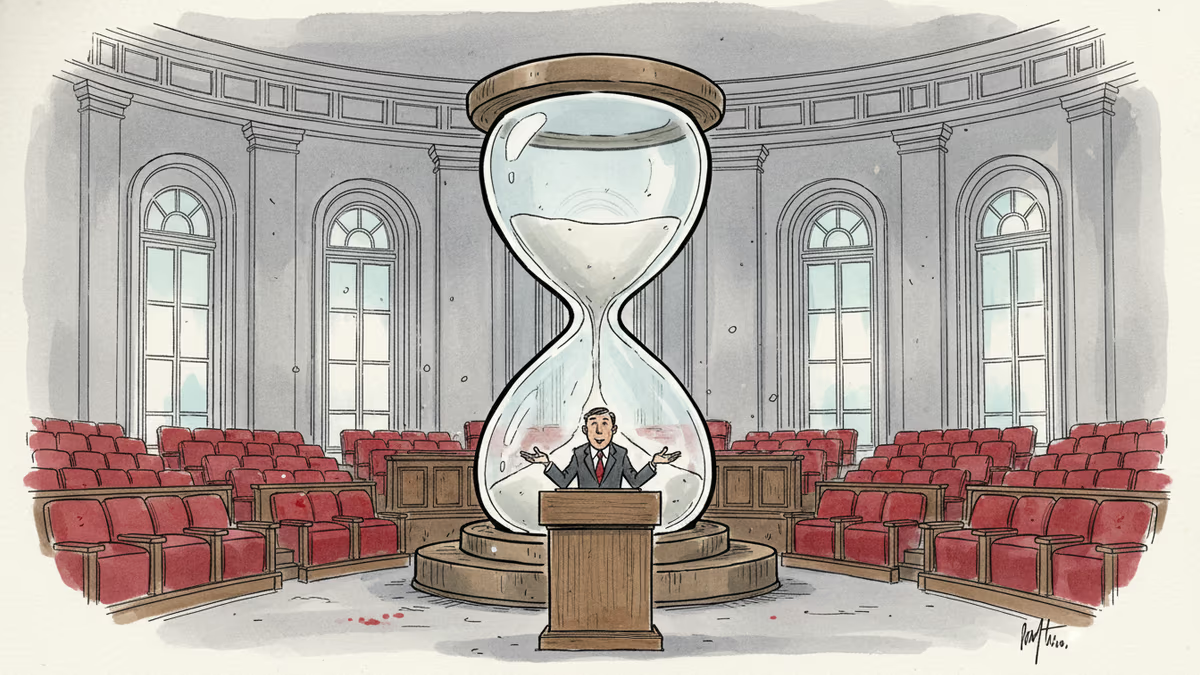
Trump's Iran war has hit the 60-day War Powers Resolution deadline. Congress was supposed to act. It didn't. What happens when the rules everyone agreed on simply stop working?

Trump bombed Iran without congressional approval, highlighting how decades of executive power expansion have fundamentally broken America's constitutional system of checks and balances.
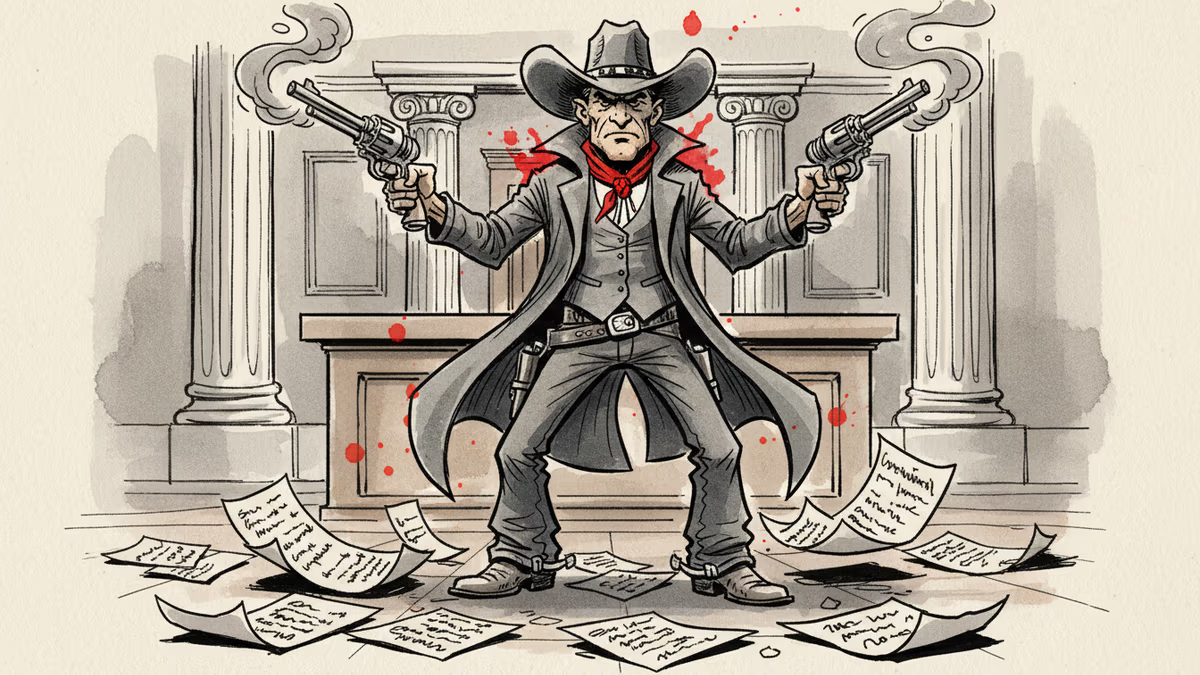
Ken Paxton's strong primary showing isn't just about Texas politics—it's about a fundamental shift in how conservatives view the Constitution and the courts.

The Supreme Court's transgender student ruling isn't just about schools—it's about six Republican justices abandoning their principles to seize unlimited judicial power through substantive due process.
Trump's Iran war has hit the 60-day War Powers Resolution deadline. Congress was supposed to act. It didn't. What happens when the rules everyone agreed on simply stop working?
Trump bombed Iran without congressional approval, highlighting how decades of executive power expansion have fundamentally broken America's constitutional system of checks and balances.
Ken Paxton's strong primary showing isn't just about Texas politics—it's about a fundamental shift in how conservatives view the Constitution and the courts.
The Supreme Court's transgender student ruling isn't just about schools—it's about six Republican justices abandoning their principles to seize unlimited judicial power through substantive due process.
Thoughts
Share your thoughts on this article
Sign in to join the conversation