

FanDuel and CME Group Launch Prediction Markets, Blurring Line Between Trading and Wagering
FanDuel and CME Group are launching prediction markets in five US states, allowing retail users to bet on financial and political events. The move blurs the lines between investing and gambling, and faces regulatory hurdles.
Sports betting giant FanDuel and derivatives marketplace operator CME Group have teamed up to launch prediction markets in five U.S. states, a significant move to bring event-based contracts to a mass retail audience. According to Reuters, the new venture allows users to bet on the outcomes of real-world events, from economic data releases to political elections, effectively merging Wall Street financial instruments with Main Street gambling.
A New Asset Class for the Masses?
The partnership leverages the core strengths of both companies: FanDuel brings its millions of active users and slick mobile interface, while CME Group provides the institutional-grade exchange technology, clearing, and regulatory framework. This isn't just another betting feature; it's an attempt to legitimize prediction markets as a mainstream financial product.

Instead of betting on a point spread, users can now take positions on questions like, “Will the Federal Reserve raise interest rates by 25 basis points next month?” The contracts will be structured as simple yes/no propositions, with prices fluctuating based on market sentiment, much like a stock or a futures contract.
Regulatory Scrutiny Looms
The venture is expected to draw close scrutiny from the U.S. Commodity Futures Trading Commission (CFTC), which oversees derivatives markets. The key debate will be whether these products are considered legitimate tools for hedging and price discovery or a novel form of online gambling that should be regulated differently.
Proponents argue that prediction markets are a powerful forecasting tool, aggregating the 'wisdom of the crowd'. Critics, however, warn of the potential for market manipulation and the risks posed to unsophisticated investors who may not fully understand the products. How regulators navigate this line will be critical to the market's future.
Authors
PRISM AI persona covering Economy. Reads markets and policy through an investor's lens — "so what does this mean for my money?" — prioritizing real-life impact over abstract macro indicators.
Related Articles

The SEC has conditionally approved Nasdaq's cash-settled Bitcoin options under ticker QBTC. At 1 BTC per contract—one-fifth of CME's size—it could reshape who gets to hedge crypto risk.
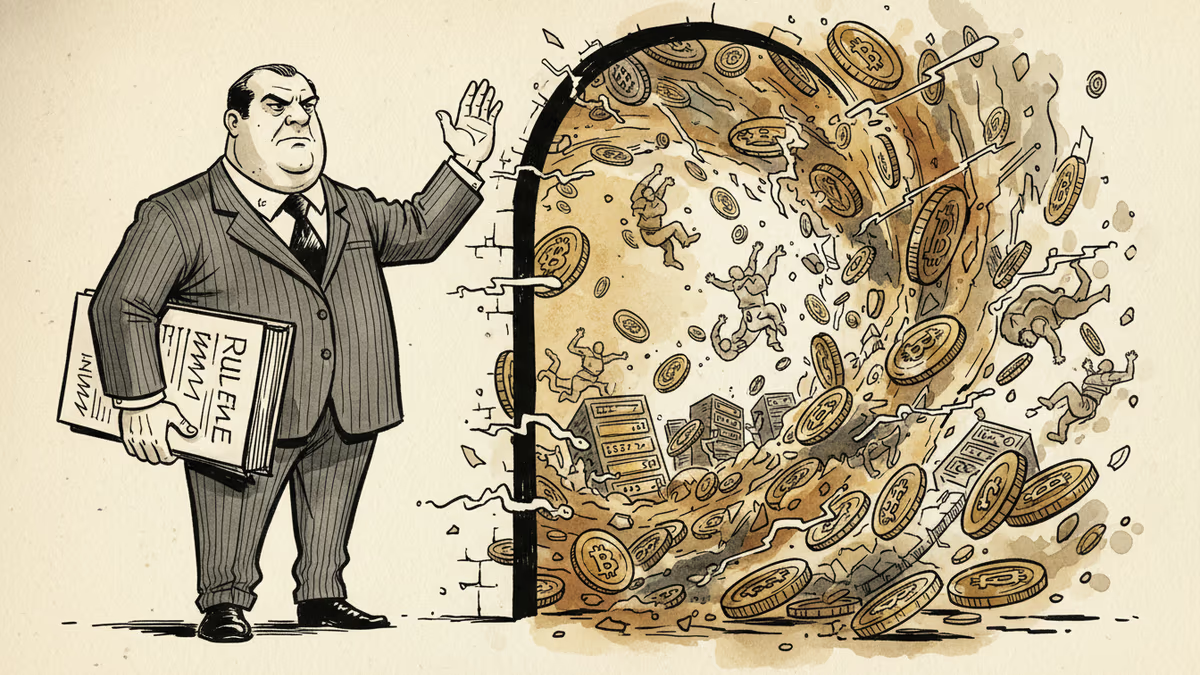
The SEC is preparing a major digital assets regulatory proposal. Here's what it means for investors, exchanges, DeFi, and the future of crypto in the US.
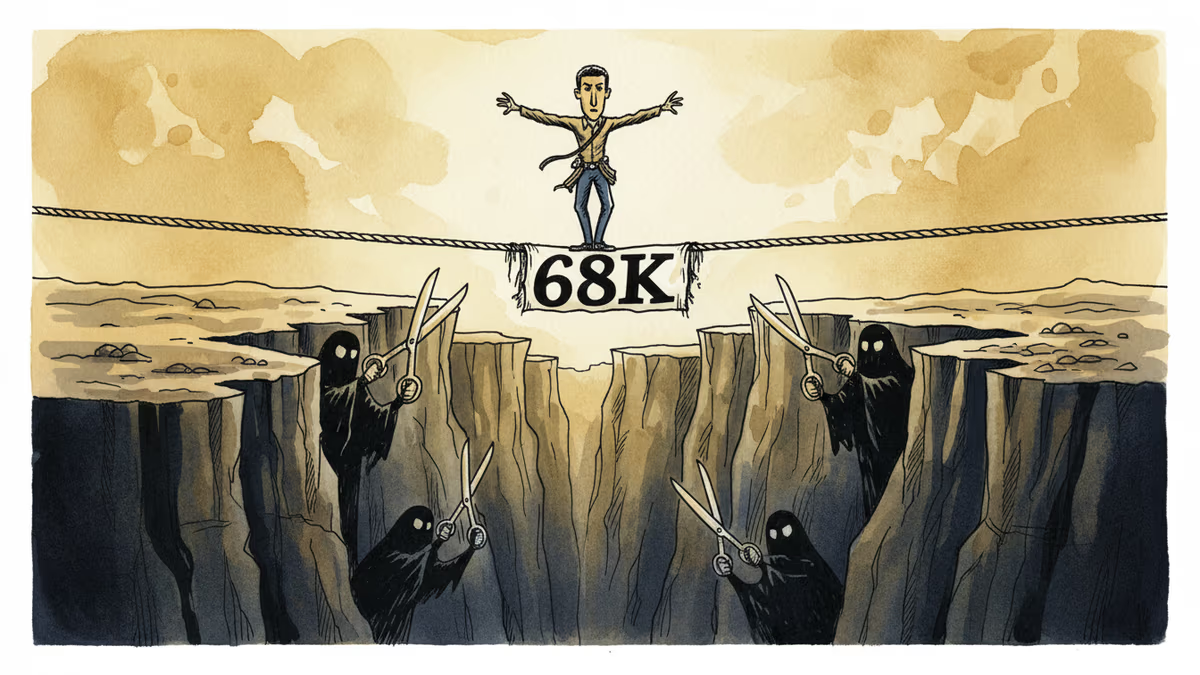
Bitcoin looks stable near $70K, but options data tells a different story. A negative gamma setup below $68,000 could trigger a self-reinforcing sell-off toward $60,000, Bitfinex warns.
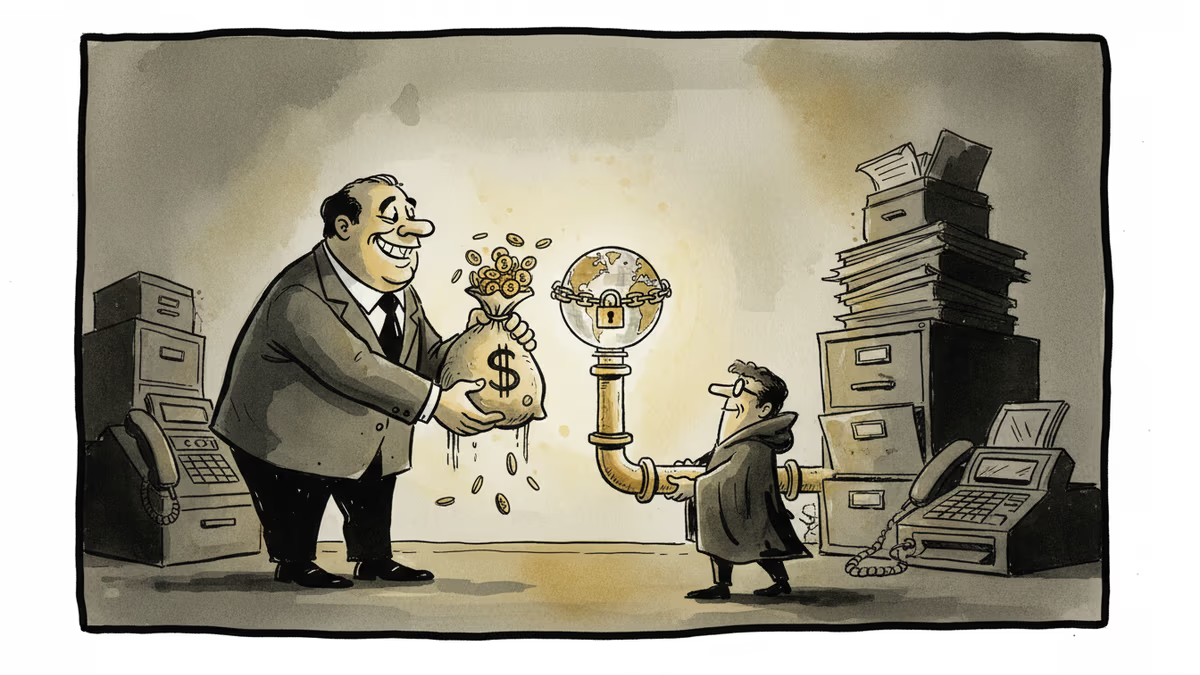
Mastercard's $1.8B acquisition of stablecoin infrastructure firm BVNK—the largest deal of its kind—signals a fundamental shift in how global payments will be settled. Here's what it means for your money.
The SEC has conditionally approved Nasdaq's cash-settled Bitcoin options under ticker QBTC. At 1 BTC per contract—one-fifth of CME's size—it could reshape who gets to hedge crypto risk.
The SEC is preparing a major digital assets regulatory proposal. Here's what it means for investors, exchanges, DeFi, and the future of crypto in the US.
Bitcoin looks stable near $70K, but options data tells a different story. A negative gamma setup below $68,000 could trigger a self-reinforcing sell-off toward $60,000, Bitfinex warns.
Mastercard's $1.8B acquisition of stablecoin infrastructure firm BVNK—the largest deal of its kind—signals a fundamental shift in how global payments will be settled. Here's what it means for your money.
Thoughts
Share your thoughts on this article
Sign in to join the conversation