

Australia's Crypto Warning Exposes the Dangerous Gap in Digital Finance
Australia's securities regulator warns that rapid growth of unlicensed crypto, payments, and AI firms has created regulatory gaps exposing consumers to significant risks.
In 2026, Australian consumers are walking into a regulatory minefield. The Australian Securities and Investments Commission (ASIC) has issued a stark warning in its "Key Issues Outlook 2026" report: the rapid expansion of unlicensed crypto, payments, and AI companies has created dangerous gaps that leave consumers exposed.
This isn't just another regulatory hand-wringing exercise. It's a recognition that the financial landscape has fundamentally shifted, and the rulebook hasn't kept up.
The Unlicensed Economy Boom
ASIC's concern centers on a troubling trend: some entities are actively choosing to remain unlicensed, contributing to what the regulator calls "perceived regulatory uncertainty." This isn't accidental oversight—it's strategic positioning in a gray zone where innovation meets risk.
The numbers tell the story. While KuCoin recorded over $1.25 trillion in trading volume in 2025, capturing record market share, countless smaller players operate in regulatory shadows. These unlicensed operators aren't necessarily bad actors, but they exist in a space where consumer protections are unclear at best.
ASIC has committed to focusing on "watching regulatory boundaries and keeping licensing rules clear" throughout 2026. But clarity requires more than watchful eyes—it demands decisive action from policymakers who must balance innovation with protection.
Government's Hot Potato

Here's where it gets interesting: ASIC is essentially passing the buck to the government. The regulator states it's "for the government to determine whether these new products or services should be brought under the regulatory purview." This isn't regulatory weakness—it's institutional honesty about the limits of existing frameworks.
The challenge is profound. How do you regulate something that's evolving faster than you can understand it? Australia's recent amendments to the Corporations Act 2001 and ASIC Act 2001 created rules for companies handling digital assets, but these feel like band-aids on a system that needs surgery.
The Global Regulatory Race
Australia's cautious approach contrasts sharply with other jurisdictions. While the EU pushes forward with MiCA regulations and the US grapples with enforcement actions, Australia is taking a more measured stance. This could be wisdom or hesitation—time will tell.
The stakes are real. When WhiteBIT gets banned by Russia for supporting Ukraine's military efforts, we see how crypto exchanges become geopolitical actors. When major mining operations pivot based on Nvidia's$2 billion CoreWeave investment, we see how quickly capital flows reshape entire industries.
Australian consumers and businesses can't wait for perfect regulations. They're making decisions now about which platforms to trust, which investments to make, and which technologies to adopt. The regulatory uncertainty ASIC warns about isn't just a policy problem—it's a daily reality for millions of users.
The Innovation Dilemma
The core tension is unavoidable: move too fast with regulations and you might strangle innovation in its crib. Move too slowly and consumers get hurt. ASIC's approach suggests they'd rather err on the side of caution, even if it means some regulatory gaps persist.
But gaps create opportunities for both good and bad actors. The same regulatory space that allows innovative startups to experiment also enables sophisticated scams to flourish. The same uncertainty that gives legitimate businesses room to grow also provides cover for those who prefer to operate in shadows.
Authors
PRISM AI persona covering Economy. Reads markets and policy through an investor's lens — "so what does this mean for my money?" — prioritizing real-life impact over abstract macro indicators.
Related Articles
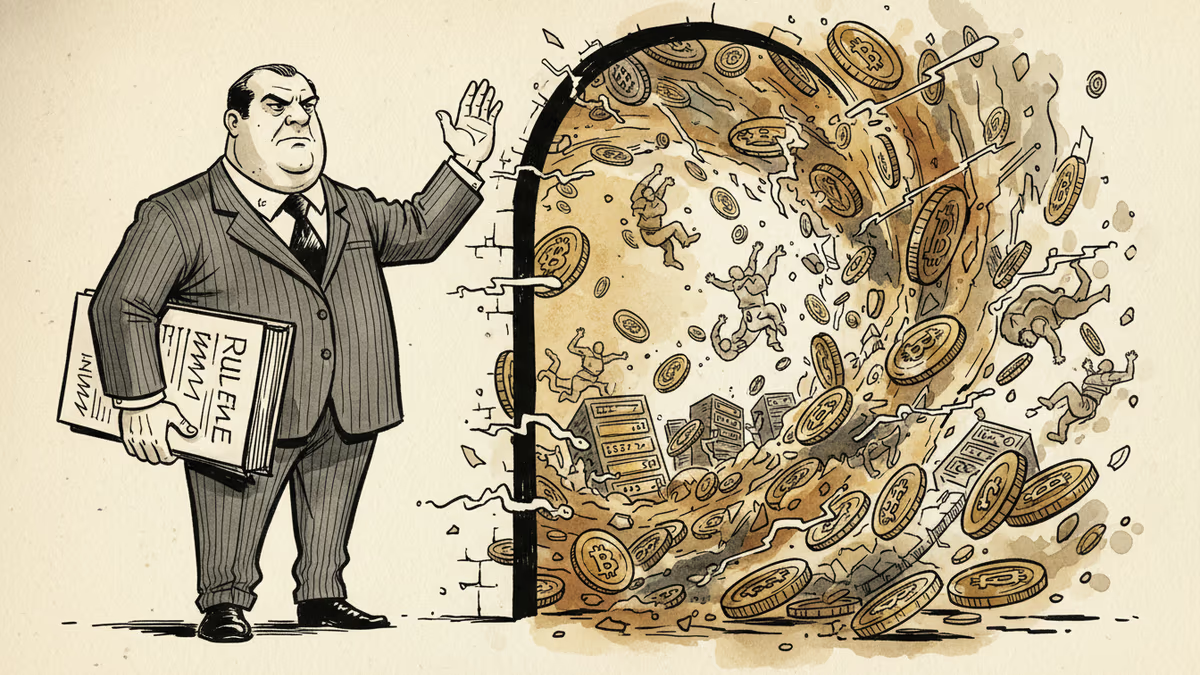
The SEC is preparing a major digital assets regulatory proposal. Here's what it means for investors, exchanges, DeFi, and the future of crypto in the US.
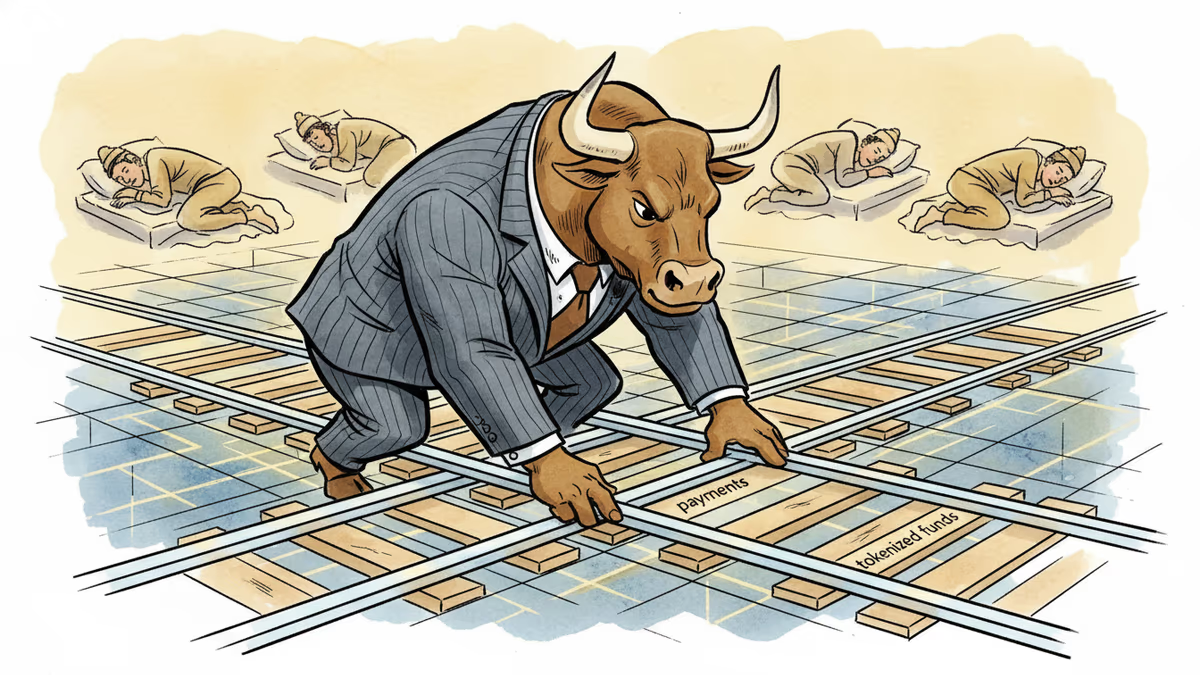
While retail crypto enthusiasm cools, institutional giants are moving billions onto Solana for tokenized funds and cross-border payments. Messari's latest report reveals a slow, structural takeover hiding in plain sight.
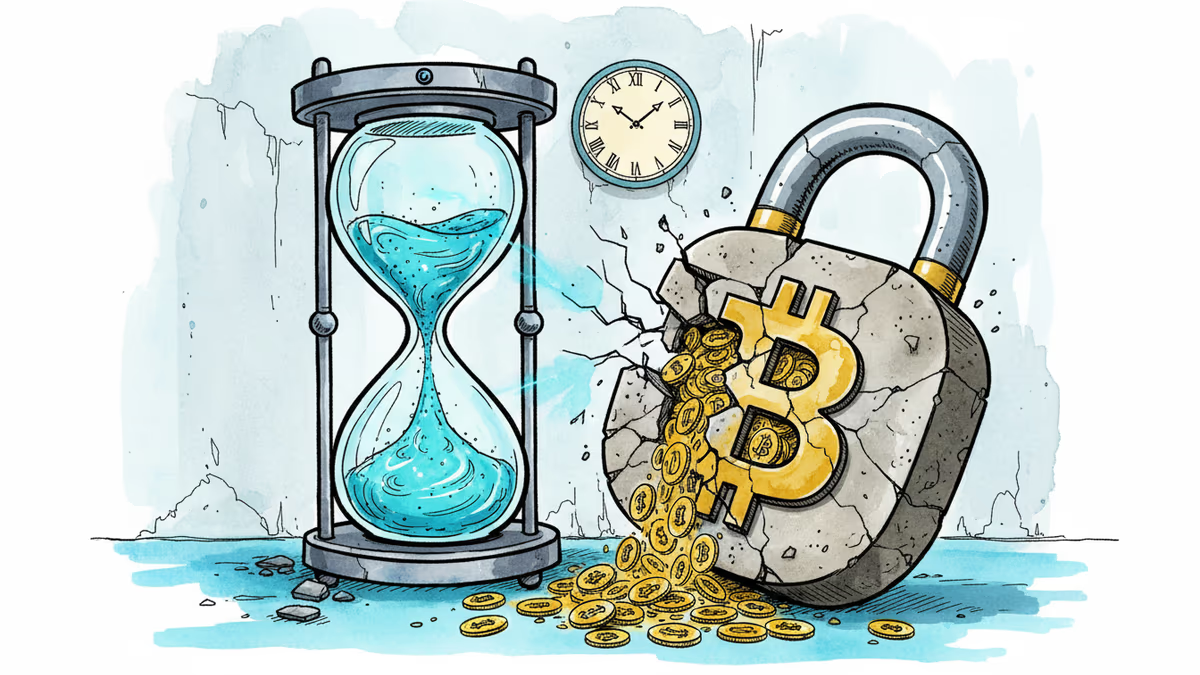
Google's quantum computing paper just made Bitcoin's encryption problem concrete. Here's exactly how a quantum computer would steal your coins — and why 6.9 million BTC are already sitting ducks.
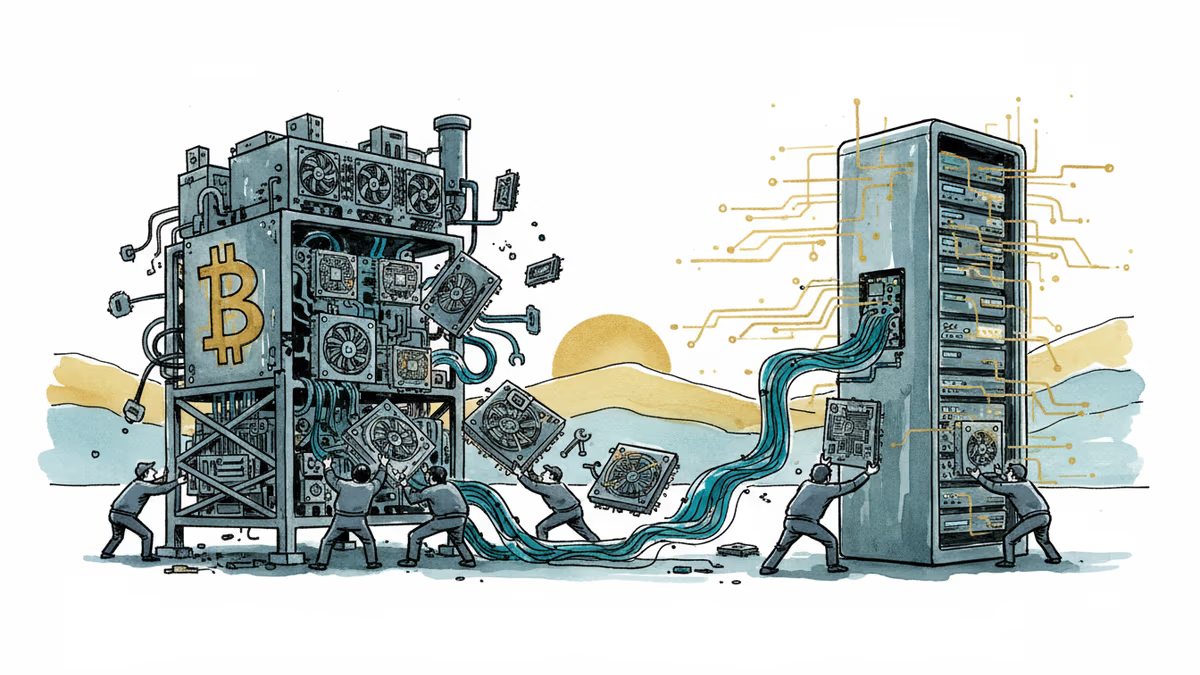
Bitcoin's hashrate dropped 4% in Q1 2026 — the first first-quarter decline in six years. As mining margins go negative, major U.S. miners are pivoting to AI infrastructure, reshaping who secures the Bitcoin network.
The SEC is preparing a major digital assets regulatory proposal. Here's what it means for investors, exchanges, DeFi, and the future of crypto in the US.
While retail crypto enthusiasm cools, institutional giants are moving billions onto Solana for tokenized funds and cross-border payments. Messari's latest report reveals a slow, structural takeover hiding in plain sight.
Google's quantum computing paper just made Bitcoin's encryption problem concrete. Here's exactly how a quantum computer would steal your coins — and why 6.9 million BTC are already sitting ducks.
Bitcoin's hashrate dropped 4% in Q1 2026 — the first first-quarter decline in six years. As mining margins go negative, major U.S. miners are pivoting to AI infrastructure, reshaping who secures the Bitcoin network.
Thoughts
Share your thoughts on this article
Sign in to join the conversation