

F1's 2026 Reboot: Why 'Boost Mode' and Active Aero Will Kill DRS and Reinvent Racing
F1's 2026 regulations kill DRS for a new era of active aerodynamics and 'Boost Mode'. PRISM analyzes why this matters for racing, strategy, and auto tech.
The Lede: From Gimmick to Grand Strategy
Formula 1's 2026 regulations are not merely an update; they represent a fundamental strategic pivot. The sport is decommissioning the controversial Drag Reduction System (DRS) and replacing it with a fully active aerodynamic platform. This shift from a blunt, tactical 'push-to-pass' button to an integrated, software-defined performance system mirrors the evolution of modern technology itself—from single-purpose hardware to intelligent, dynamic platforms. For leaders watching the future of high-performance engineering, F1 is once again becoming a crucial barometer for the fusion of physical and digital systems.
Why It Matters: Beyond the Overtake
This overhaul is designed to solve systemic issues that have plagued the sport, with significant second-order effects for the automotive industry.
- Authentic Racing, Not Artificial Passes: The core objective is to reduce the dreaded 'dirty air' that makes close racing nearly impossible. Lighter, nimbler cars combined with dynamic aero management aim to enable genuine wheel-to-wheel battles, moving away from the often-criticized 'highway passes' that DRS facilitated.
- Renewed Road Relevance: Fully active front and rear wings are no longer a sci-fi concept; they are a staple of elite hypercars. By making this technology central to F1, the sport re-establishes its credentials as a high-speed R&D lab for manufacturers like Audi, who join the grid in 2026. This isn't just about speed; it's about pioneering active efficiency.
- The Sustainability Mandate: A 30kg weight reduction and cars that can actively shed drag on straights contribute directly to efficiency. Paired with the switch to 100% sustainable fuels, this forms a more cohesive and credible sustainability narrative for a sport under intense environmental scrutiny.

The Analysis: The End of the DRS Band-Aid
To understand the significance of this change, we must look at the history. DRS was introduced in 2011 as a clever but crude 'band-aid' to fix a problem F1 had created for itself: cars so aerodynamically complex that following another car was nearly impossible. It worked, but it was a binary, asymmetrical tool—only the chasing car could use it, and only in designated zones. It solved the symptom, not the cause.
The 2026 philosophy is a complete paradigm shift. The new system will feature two primary modes for all cars:
- Z-Mode: A standard, high-downforce configuration for cornering.
- X-Mode: A low-drag configuration where both front and rear wing elements flatten for maximum straight-line speed.
The competitive element, replacing DRS, will be a manual override—likely the new 'Boost Mode'—allowing a chasing driver to deploy extra electrical energy to gain an advantage. The battle shifts from a simple button press to a complex, strategic dance of energy management and aerodynamic mode-switching. The competitive advantage will no longer be a given; it will have to be earned through superior strategy and driver skill.
PRISM's Take: A Necessary and High-Stakes Gamble
F1 is making a courageous bet on intelligence over brute force. Moving away from the simplicity of DRS introduces risk—the new systems could be confusing for casual viewers or create new, unforeseen loopholes for teams to exploit. However, the potential reward is immense: a more dynamic, authentic, and technologically relevant sport. This isn't just a regulatory reset; it's a conscious decision to make the cars smarter, more efficient, and ultimately, better for racing. It’s a high-stakes gamble on the future, but it's the right one to take.
Authors
Related Articles
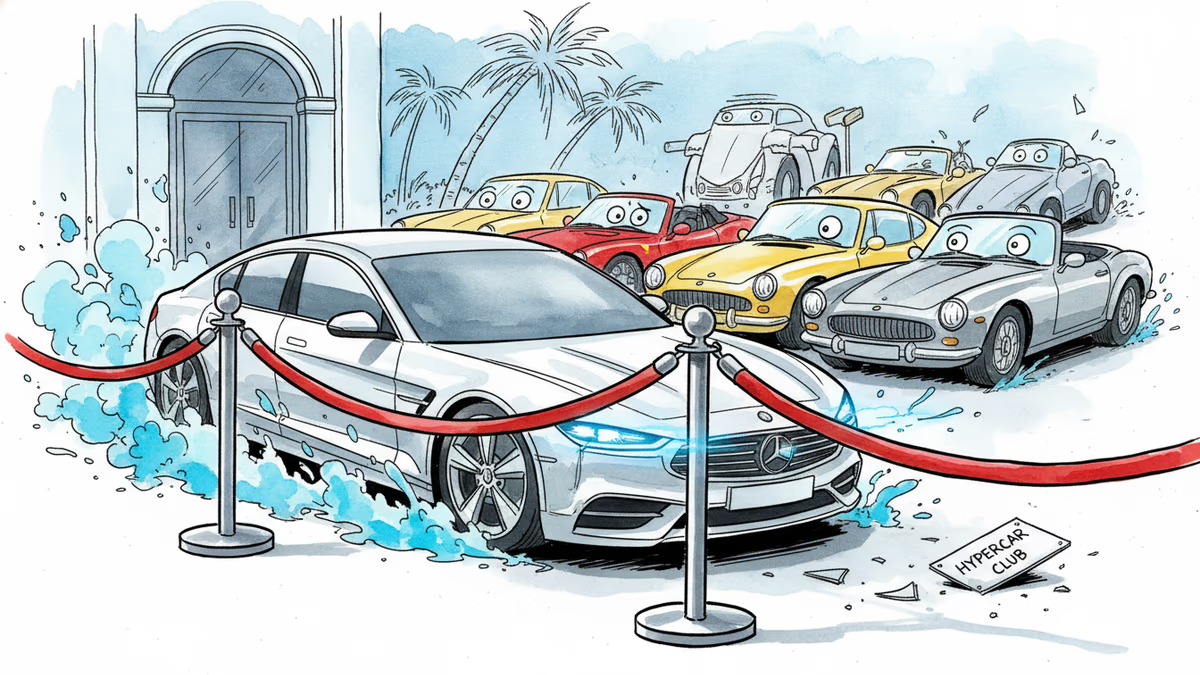
Mercedes-AMG's new GT 4-door coupe packs three YASA axial flux motors producing 1,153 hp and 1,475 lb-ft of torque. Here's what it means for the EV performance race—and who actually wins.
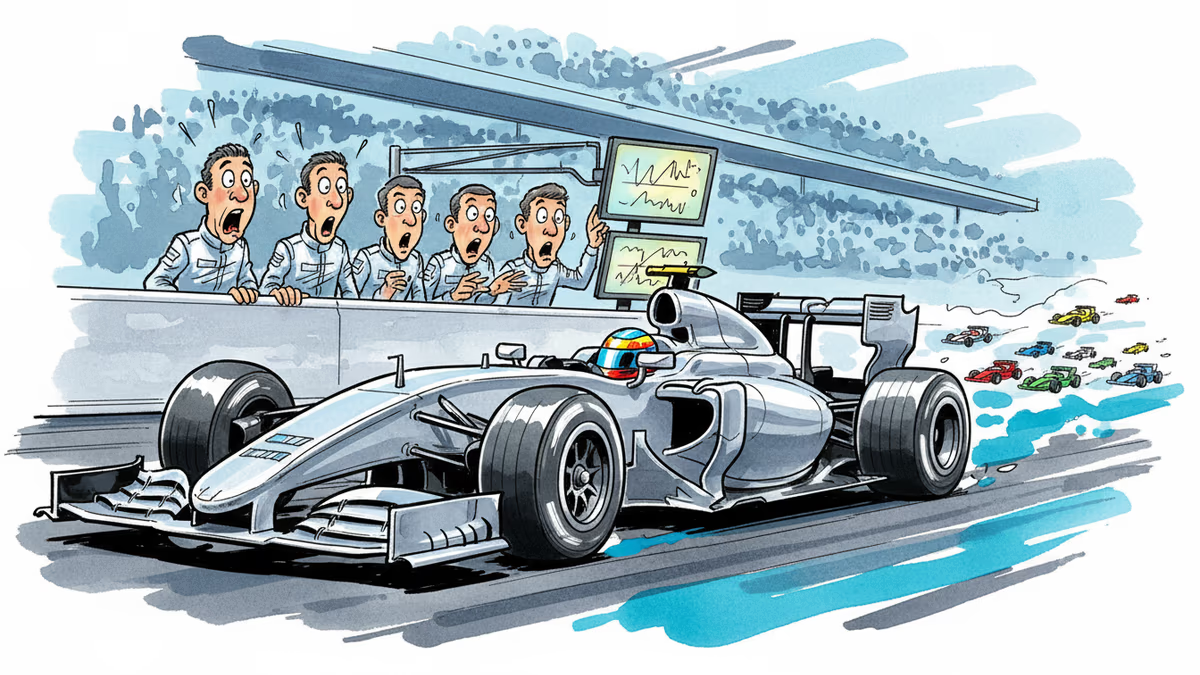
At the 2026 Australian Grand Prix, George Russell lapped 0.6 seconds faster than any other car in practice. The last time Mercedes showed a gap like this, they won eight consecutive championships.

US House subcommittee debates the Repair Act. Explore the conflict between automakers and consumers over vehicle telemetry data and the controversial 'poison pill' clause.

Nissan is the first US carmaker to integrate Qi2 magnetic wireless charging, bringing MagSafe-like stability and speed to the driving experience.
Mercedes-AMG's new GT 4-door coupe packs three YASA axial flux motors producing 1,153 hp and 1,475 lb-ft of torque. Here's what it means for the EV performance race—and who actually wins.
At the 2026 Australian Grand Prix, George Russell lapped 0.6 seconds faster than any other car in practice. The last time Mercedes showed a gap like this, they won eight consecutive championships.
US House subcommittee debates the Repair Act. Explore the conflict between automakers and consumers over vehicle telemetry data and the controversial 'poison pill' clause.
Nissan is the first US carmaker to integrate Qi2 magnetic wireless charging, bringing MagSafe-like stability and speed to the driving experience.
Thoughts
Share your thoughts on this article
Sign in to join the conversation