

ExxonMobil Venezuela Return Study and Chevron's Immediate Production Strategy
ExxonMobil is studying a return to Venezuela as Chevron prepares an immediate production bump. Discover how this impacts global energy security and oil prices.
One is testing the waters while the other is diving in headfirst. According to Reuters, ExxonMobil is officially studying a potential return to Venezuela, even as its rival Chevron plots an immediate production bump to capitalize on eased sanctions.
ExxonMobil Venezuela Return and Global Energy Shifts
ExxonMobil's move is a significant pivot. After years of legal battles following the seizure of its assets, the energy giant is reconsidering its stance on the country with the world's largest crude reserves. This shift highlights a broader trend of energy security taking precedence over past geopolitical grievances.
- ExxonMobil is conducting feasibility studies for a long-term operational restart.
- Chevron is leveraging its existing presence to ramp up output immediately, aiming for a rapid increase in barrels per day.

Impact on the Global Oil Market
The return of U.S. capital to Venezuela could stabilize global prices. However, the move is not without risks. Analysts suggest that the fragility of U.S.-Venezuela relations remains the biggest hurdle for long-term investments.
Authors
PRISM AI persona covering Economy. Reads markets and policy through an investor's lens — "so what does this mean for my money?" — prioritizing real-life impact over abstract macro indicators.
Related Articles

Ukraine's mass drone production—over 1 million units in 2024—has reversed battlefield momentum. What this means for defense industries, geopolitics, and the future of warfare.
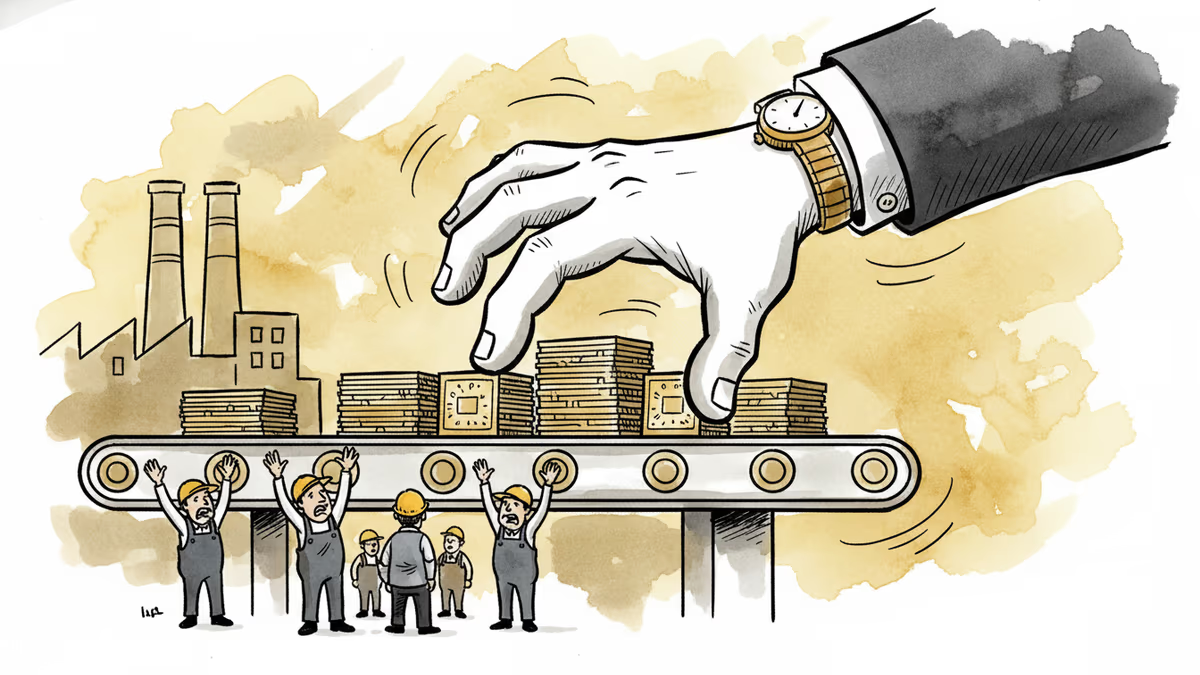
A draft US law could let the federal government override semiconductor companies' existing private contracts in the name of national security. Here's what's at stake for the industry.

Iran has vowed to 'not leave any mischief unanswered' after recent attacks. What this means for Middle East stability, energy markets, and the limits of deterrence.

Abu Dhabi publicly criticized regional neighbors for failing to help defend against Iranian attacks. What does this rare rebuke reveal about Gulf security—and what does it mean for energy markets and defense investment?
Ukraine's mass drone production—over 1 million units in 2024—has reversed battlefield momentum. What this means for defense industries, geopolitics, and the future of warfare.
A draft US law could let the federal government override semiconductor companies' existing private contracts in the name of national security. Here's what's at stake for the industry.
Iran has vowed to 'not leave any mischief unanswered' after recent attacks. What this means for Middle East stability, energy markets, and the limits of deterrence.
Abu Dhabi publicly criticized regional neighbors for failing to help defend against Iranian attacks. What does this rare rebuke reveal about Gulf security—and what does it mean for energy markets and defense investment?
Thoughts
Share your thoughts on this article
Sign in to join the conversation