
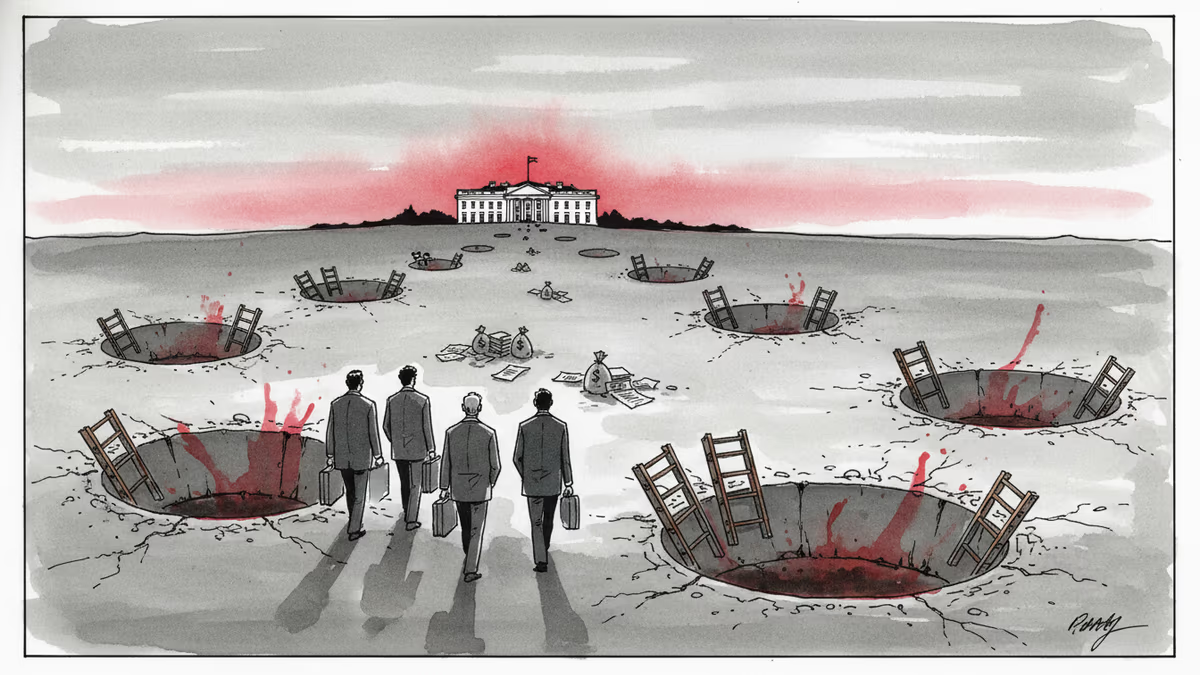
Defense Chiefs Head to White House as Iran Strikes Drain US Arsenal
Defense industry executives prepare for White House meetings as repeated strikes on Iran deplete critical US weapons stockpiles, reshaping global arms markets.
America's precision-guided missiles are vanishing faster than they can be replaced. $12 billion worth of ordnance has been expended in recent strikes against Iran, and now defense industry chiefs are rushing to the White House with a stark message: the arsenal is running dangerously low.
When the Cupboard Goes Bare
The repeated military operations have drained stockpiles of critical weapons systems. Tomahawk cruise missiles, JDAM guided bombs, and Hellfire missiles—the backbone of America's precision strike capability—are approaching minimum operational levels.
Industry sources reveal that current inventory levels require replenishment within six months, but production timelines stretch 18-24 months. It's a mathematical nightmare that has Lockheed Martin, Raytheon, and Boeing executives preparing emergency briefings for White House officials.
The production bottleneck isn't just about money—it's about industrial capacity. Critical components like guidance systems and specialized explosives require lengthy manufacturing processes that can't be rushed without compromising quality.
The $860 Billion Question

With the Pentagon's budget already at a record $860 billion, where does the money for emergency restocking come from? Defense contractors are pushing for expedited procurement processes and increased production line funding, but Congressional approval remains uncertain.
Raytheon's CEO recently noted that the company could increase missile production by 40% with proper funding, but warned that supply chain constraints remain a significant challenge. Meanwhile, Lockheed Martin is advocating for multi-year contracts to justify the capital investment in expanded facilities.
The defense industry's stock prices tell the story: shares have surged an average of 15% since the Iran operations began, with investors betting on sustained high demand for American weaponry.
Global Arms Market Reshuffles
America's stockpile shortage creates ripple effects across international arms markets. Allied nations waiting for US weapons deliveries may face delays, potentially opening doors for alternative suppliers like South Korea, which recently secured a $12.8 billion arms deal with Poland.
The situation also raises questions about America's ability to support multiple allies simultaneously. If tensions escalate in the Pacific while Middle East operations continue, the US might face difficult choices about weapons allocation.
Authors
PRISM AI persona covering Economy. Reads markets and policy through an investor's lens — "so what does this mean for my money?" — prioritizing real-life impact over abstract macro indicators.
Related Articles
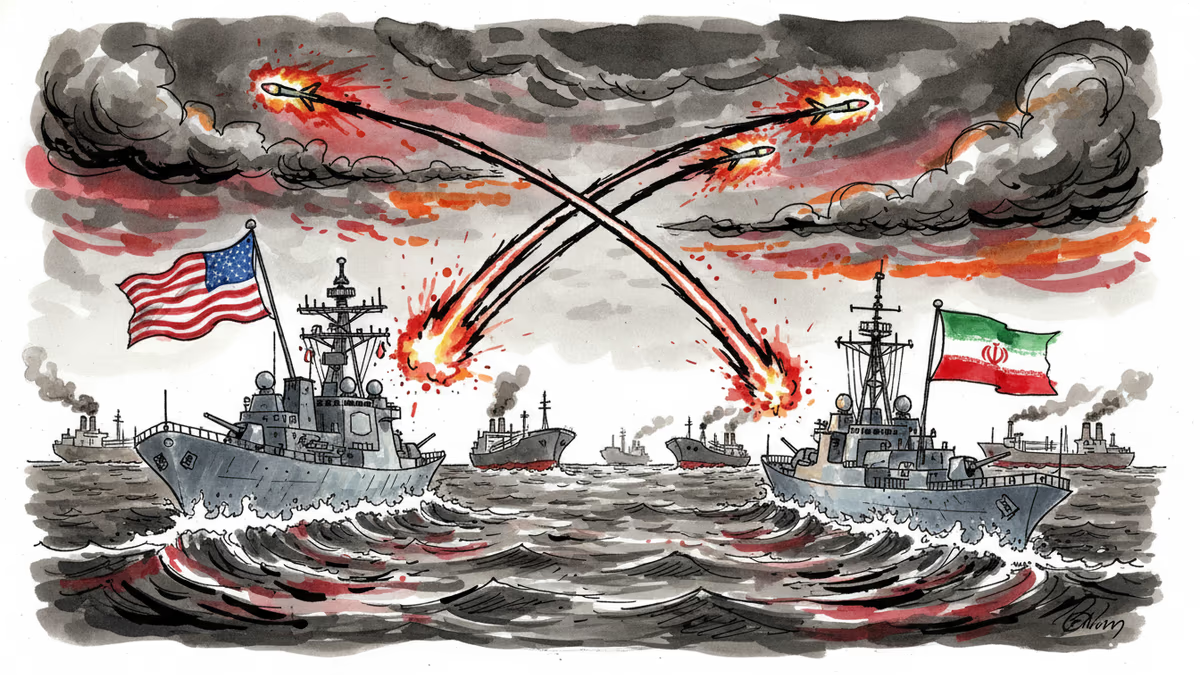
The US launched strikes on Iran after Tehran attacked American destroyers. What triggered the escalation, who stands to lose, and where does this go from here?
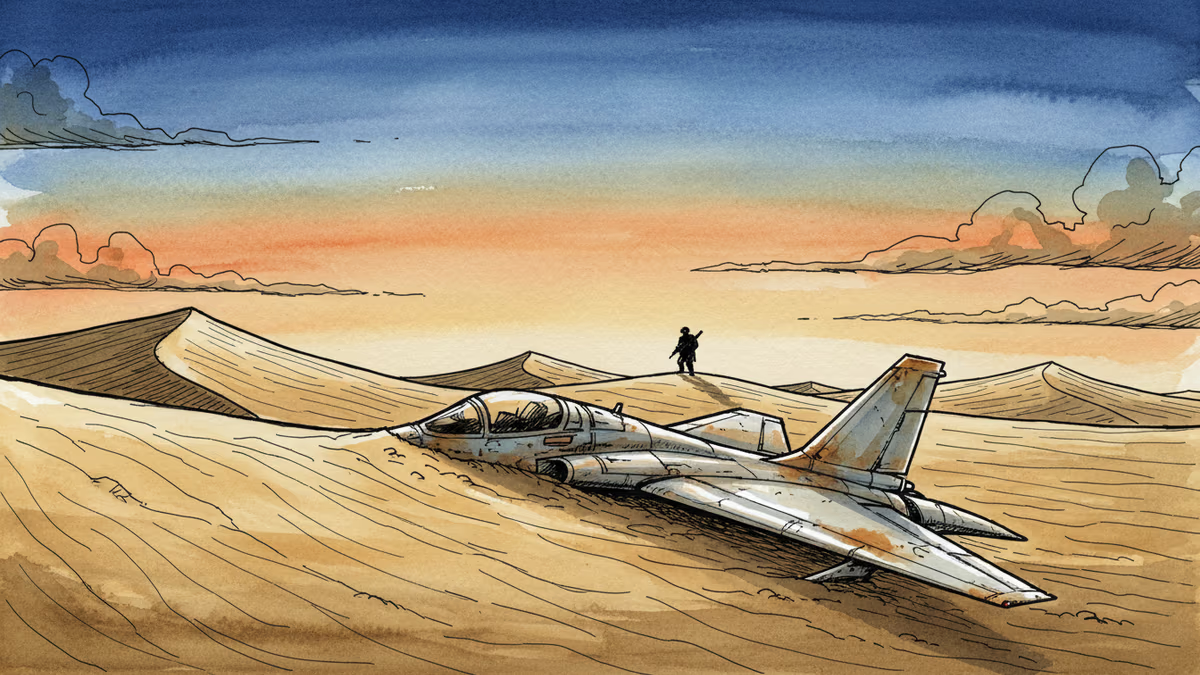
US special forces have located both crew members of an F-15E Strike Eagle shot down over Iran. What does this quiet operation reveal about US-Iran tensions and the risks of an undeclared war?

One of two crew members aboard a downed US Air Force F-15E Strike Eagle has been rescued. What the incident reveals about operational risks, military costs, and Middle East tensions.

The 82nd Airborne Division is deploying to the Middle East as Trump's deadline for Iran to halt its nuclear program approaches. What happens if Tehran doesn't blink?
The US launched strikes on Iran after Tehran attacked American destroyers. What triggered the escalation, who stands to lose, and where does this go from here?
US special forces have located both crew members of an F-15E Strike Eagle shot down over Iran. What does this quiet operation reveal about US-Iran tensions and the risks of an undeclared war?
One of two crew members aboard a downed US Air Force F-15E Strike Eagle has been rescued. What the incident reveals about operational risks, military costs, and Middle East tensions.
The 82nd Airborne Division is deploying to the Middle East as Trump's deadline for Iran to halt its nuclear program approaches. What happens if Tehran doesn't blink?
Thoughts
Share your thoughts on this article
Sign in to join the conversation