
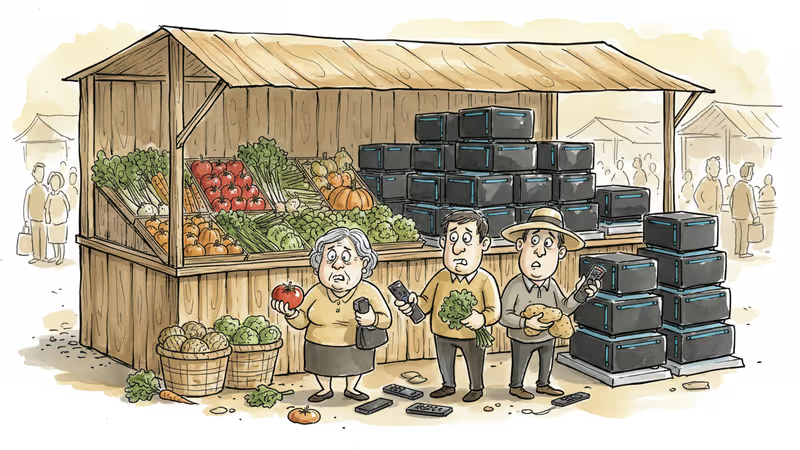
Pirate TV Boxes Find New Home at Farmers Markets
SuperBox streaming devices promising free access to premium content are being sold alongside produce at rural Texas farmers markets, highlighting the growing underground economy of TV piracy.
Between the homemade pickles and fresh okra at a small Texas farmers market, Jason's selling something that would make Netflix executives nervous: streaming boxes that promise unlimited access to NFL games, UFC fights, and premium cable channels for a one-time purchase price.
The SuperBox sits inconspicuously next to his banana bread, looking like any other Android TV device you'd find at Best Buy. But this generic black box represents something much larger—the mainstreaming of TV piracy, moving from shadowy online forums to weekend farmers markets where your grandmother shops for tomatoes.
The Rural Cord-Cutting Revolution
Jason's sales pitch is simple and effective: "People are sick and tired of giving Dish Network$200 a month for trash service." In rural Texas, where broadband options are limited and cable bills keep climbing, his message resonates with customers who see streaming piracy not as theft, but as rebellion against what they view as corporate greed.
The SuperBox and similar devices work by accessing illegal streams of copyrighted content through modified Android software. Users get everything from HBO to ESPN without monthly subscriptions—a compelling proposition when the average American household spends $83 per month on streaming services, according to recent surveys.
What makes Jason's operation particularly striking isn't the technology—these devices have existed for years—but the venue. Farmers markets represent community trust and local commerce. When piracy boxes appear next to fresh produce, it signals that illegal streaming has moved from the digital underground into mainstream rural commerce.
The Economics of Desperation

The farmers market phenomenon reflects deeper economic pressures facing rural Americans. Traditional cable and satellite services often charge premium prices for areas with limited competition, while legal streaming options require reliable broadband that many rural communities still lack.
For Jason's customers, the choice isn't between legal and illegal streaming—it's between paying hundreds monthly for poor service or making a one-time purchase that solves their entertainment needs. The moral calculus shifts when you're choosing between cable bills and grocery money.
This underground economy also reveals the limitations of the streaming revolution. While urban consumers can easily switch between Netflix, Hulu, and Disney+, rural customers face bandwidth constraints that make multiple streaming subscriptions impractical. A single device promising everything becomes attractive when your internet connection can barely handle one HD stream.
Legal Gray Areas and Enforcement Challenges
The legal landscape around these devices operates in murky territory. Selling the hardware isn't illegal—it's the pre-loaded software and instructions for accessing pirated content that cross legal lines. Vendors like Jason often present themselves as selling "media players" while providing wink-and-nudge guidance on accessing free content.
Law enforcement faces practical challenges pursuing farmers market vendors. Unlike large-scale piracy operations, these sellers operate locally, seasonally, and often as side businesses to legitimate activities. Prosecuting someone selling streaming boxes alongside homegrown vegetables presents optics problems for district attorneys.
The streaming industry's response has focused primarily on shutting down the server infrastructure that powers these devices rather than chasing individual sellers. But as content companies crack down on major piracy networks, smaller, more distributed operations like farmers market vendors become harder to track and eliminate.
Authors
Related Articles
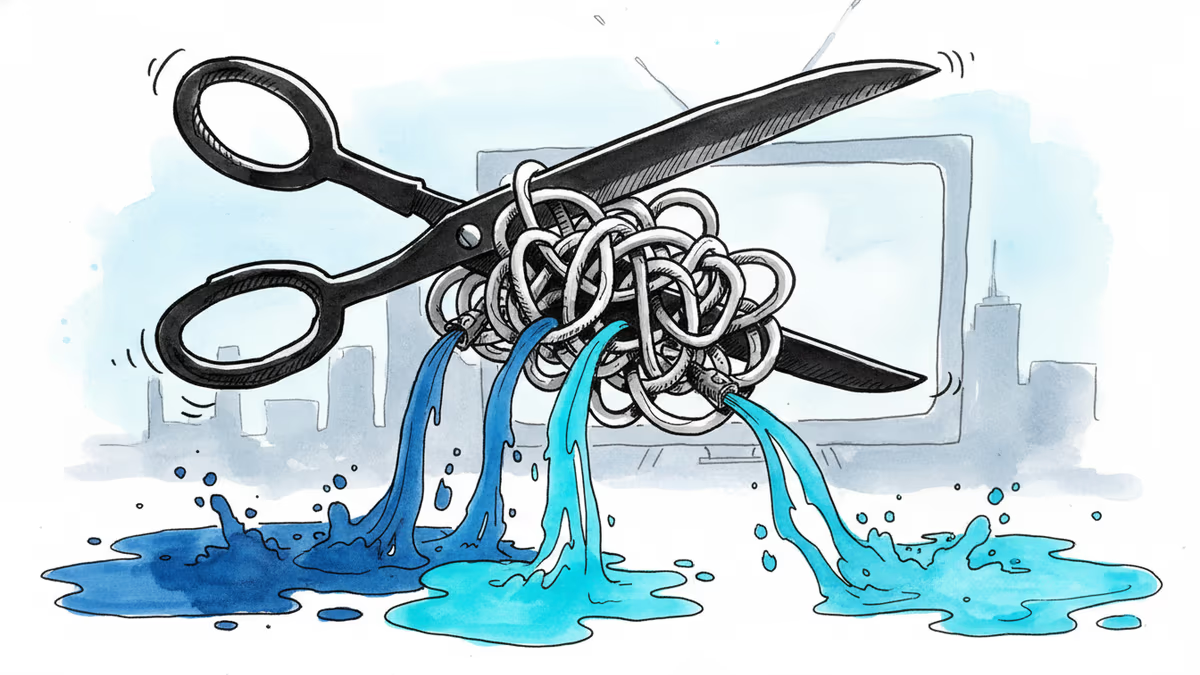
YouTube TV launches 10+ customized plans starting at $54.99, down from $82.99. Sports-only for $64.99, entertainment-only for $54.99. Is this the streaming unbundling we were promised?

Anna's Archive faces a major domain suspension after a 300TB Spotify scrape. Explore the impact on digital rights, AI training, and the future of shadow libraries.
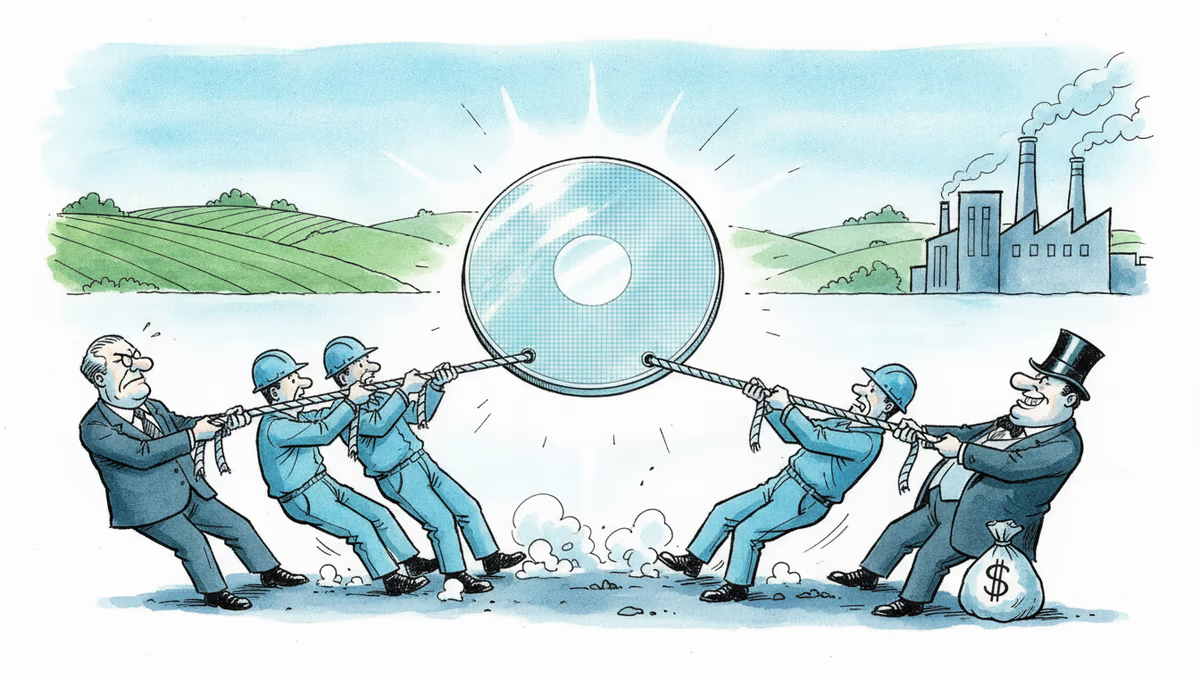
Samsung Electronics' union branch revealed that 84% of survey respondents oppose the government's roughly $290 billion (₩400 trillion) semiconductor megaproject in Gwangju. Government, management, the union and shareholders are all reading the same national project in sharply different ways.
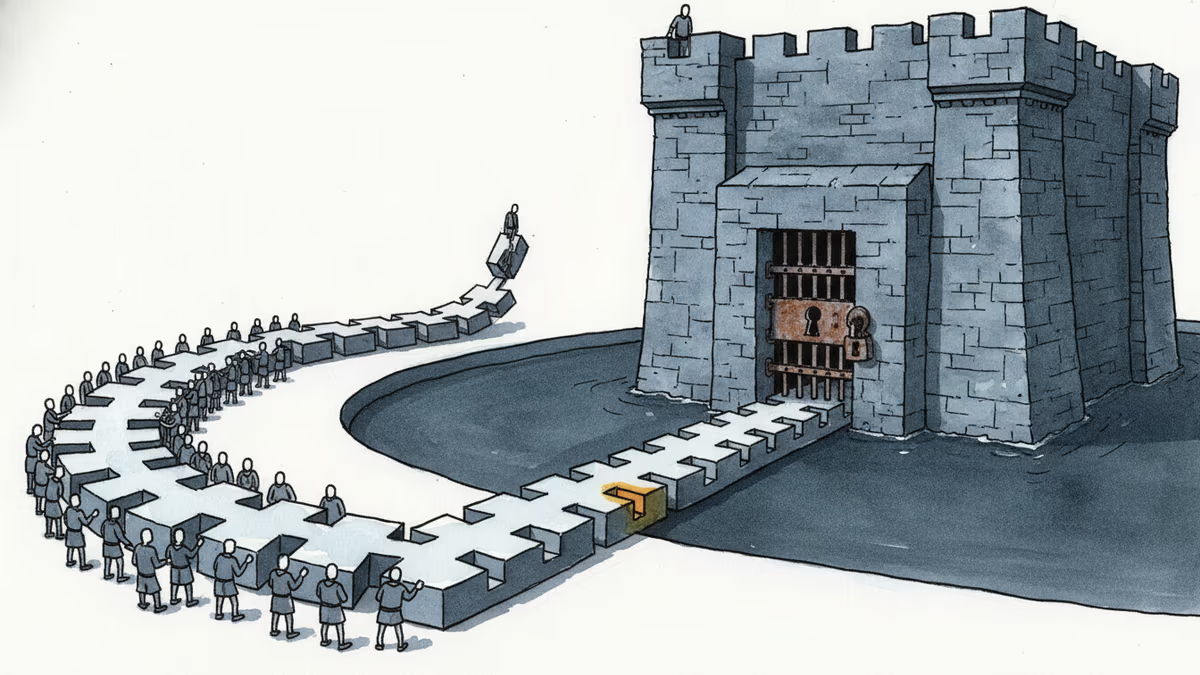
Nvidia shipped roughly a billion RISC-V cores in 2024, then announced it would run CUDA on the open standard. We break down how royalty-free instruction sets and open software stacks are trying to route around CUDA's lock-in. Part 2 of the Semiconductor Sovereignty series.
YouTube TV launches 10+ customized plans starting at $54.99, down from $82.99. Sports-only for $64.99, entertainment-only for $54.99. Is this the streaming unbundling we were promised?
Anna's Archive faces a major domain suspension after a 300TB Spotify scrape. Explore the impact on digital rights, AI training, and the future of shadow libraries.
Samsung Electronics' union branch revealed that 84% of survey respondents oppose the government's roughly $290 billion (₩400 trillion) semiconductor megaproject in Gwangju. Government, management, the union and shareholders are all reading the same national project in sharply different ways.
Nvidia shipped roughly a billion RISC-V cores in 2024, then announced it would run CUDA on the open standard. We break down how royalty-free instruction sets and open software stacks are trying to route around CUDA's lock-in. Part 2 of the Semiconductor Sovereignty series.
Thoughts
Share your thoughts on this article
Sign in to join the conversation