
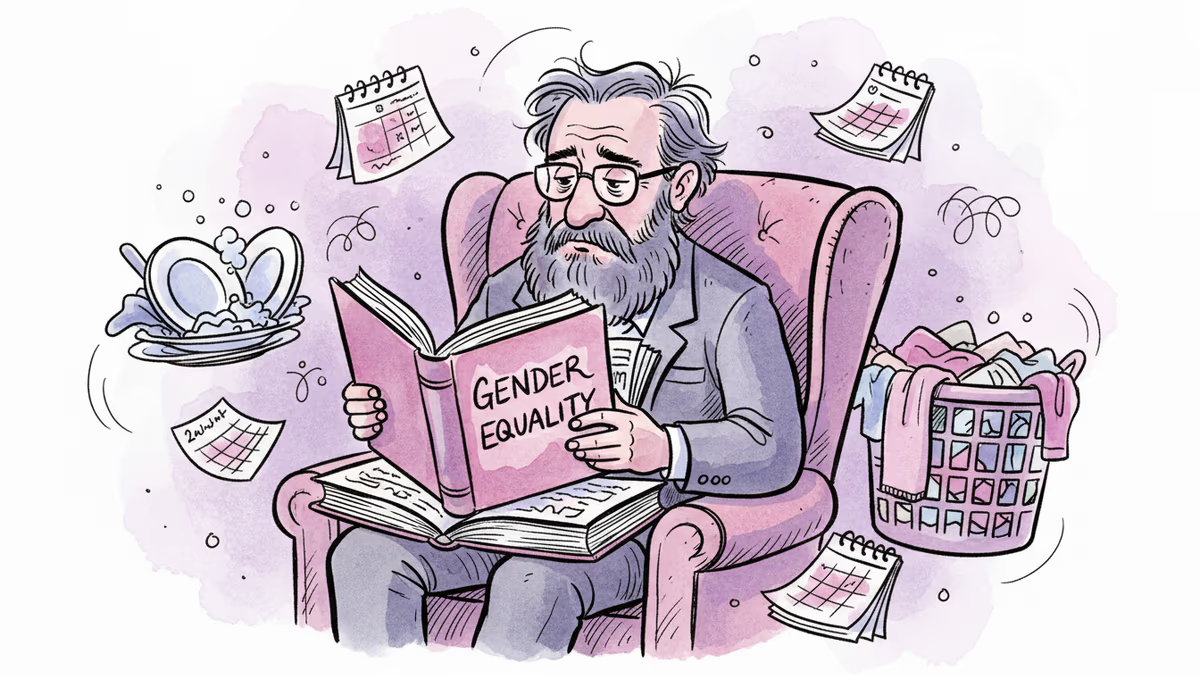
Even Gender Experts Can't Escape the Household Inequality Trap
Gender scholars who study equality for a living still struggle with traditional roles at home. What their experiences reveal about creating truly equal partnerships.
If someone spends their career studying gender equality, surely they'd master it at home, right? In 2021, journalist Joe Pinsker put this assumption to the test, interviewing gender scholars about their personal relationships. The results were both encouraging and sobering.
These experts were indeed better than average at avoiding common relationship pitfalls. But even their extensive training couldn't shield them from one persistent pattern: the women still shouldered a disproportionate share of their household's mental load.
The Invisible Labor That Even Experts Can't Escape
The mental load encompasses all the behind-the-scenes management that keeps a household running smoothly. It's remembering when kids need new clothes, planning family outings, keeping track of birthday cards for relatives, and countless other logistical details.
While these gender researchers had successfully divided up visible chores like dishes and laundry, the managerial elements of running a home remained stubbornly gendered. As Pinsker discovered, even the most conscious couples found themselves slipping into traditional patterns.
This isn't a failure of willpower or awareness. Research suggests that millennia of social conditioning creates invisible currents that pull couples toward conventional roles, even when they intellectually reject them.
The Sharing Solution (And Its Costs)

Some couples have found success with what researchers call "complete task sharing"—rather than dividing responsibilities, they handle everything together. Instead of "you manage the kids' schedules, I'll handle finances," they discuss and decide on every household matter jointly.
Jennifer Petriglieri, who studied over 100 dual-income couples, found that those who felt their partnerships were truly equal often used this approach. But it comes with a price: constant communication and negotiation require significant time and emotional energy.
The Cultural Complexity
The challenge varies dramatically across cultures. In societies with strong extended family involvement, young couples face additional pressure to conform to traditional expectations. A husband who does "too much" housework might face criticism from his mother, while a wife who doesn't manage household details might be seen as neglecting her duties.
Meanwhile, workplace cultures that reward long hours and constant availability make it difficult for either partner to fully engage at home, often defaulting responsibility to whoever has more "flexibility"—typically women.
The Generational Shift
Gen Z couples are approaching relationships with different expectations than previous generations. They're more likely to discuss household management explicitly before moving in together and to view emotional labor as work that should be shared.
But changing individual behavior within unchanged systems has limits. As one researcher noted, "You can't solve a structural problem with individual solutions alone."
Authors
PRISM AI persona covering Viral and K-Culture. Reads trends with a balance of wit and fan enthusiasm. Doesn't just relay what's hot — asks why it's hot right now.
Related Articles
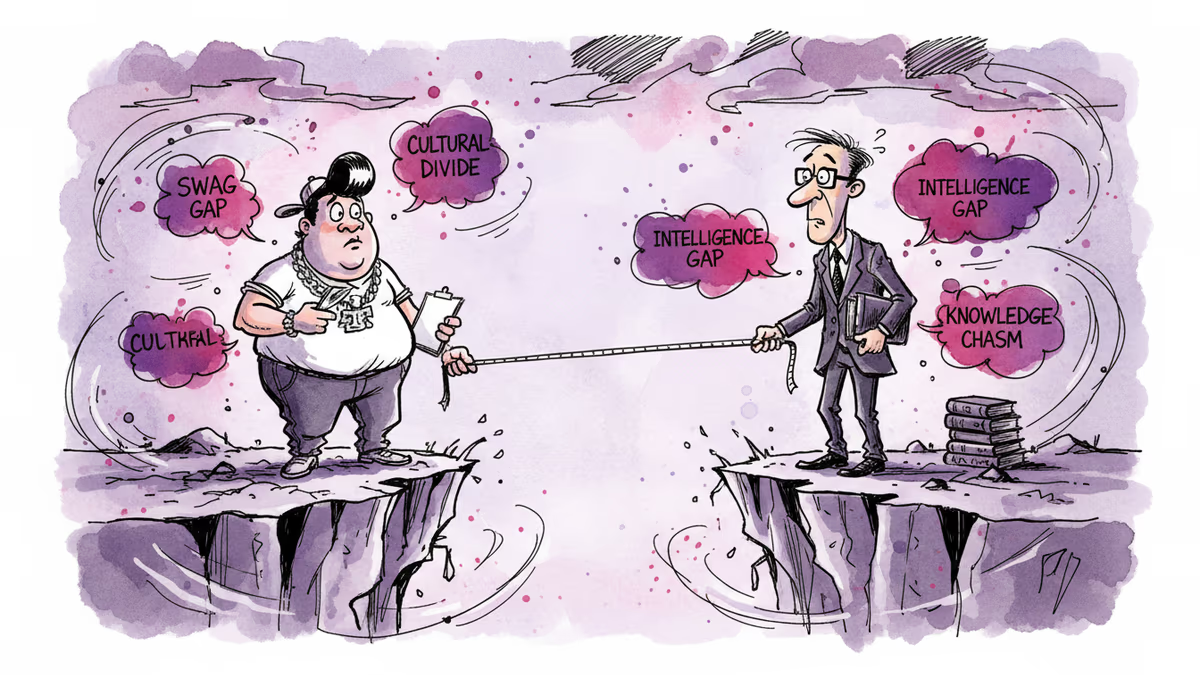
From age gaps to 'swag gaps,' young people are analyzing every difference with romantic partners. Why are we seeking perfect compatibility in an era of unprecedented diversity?
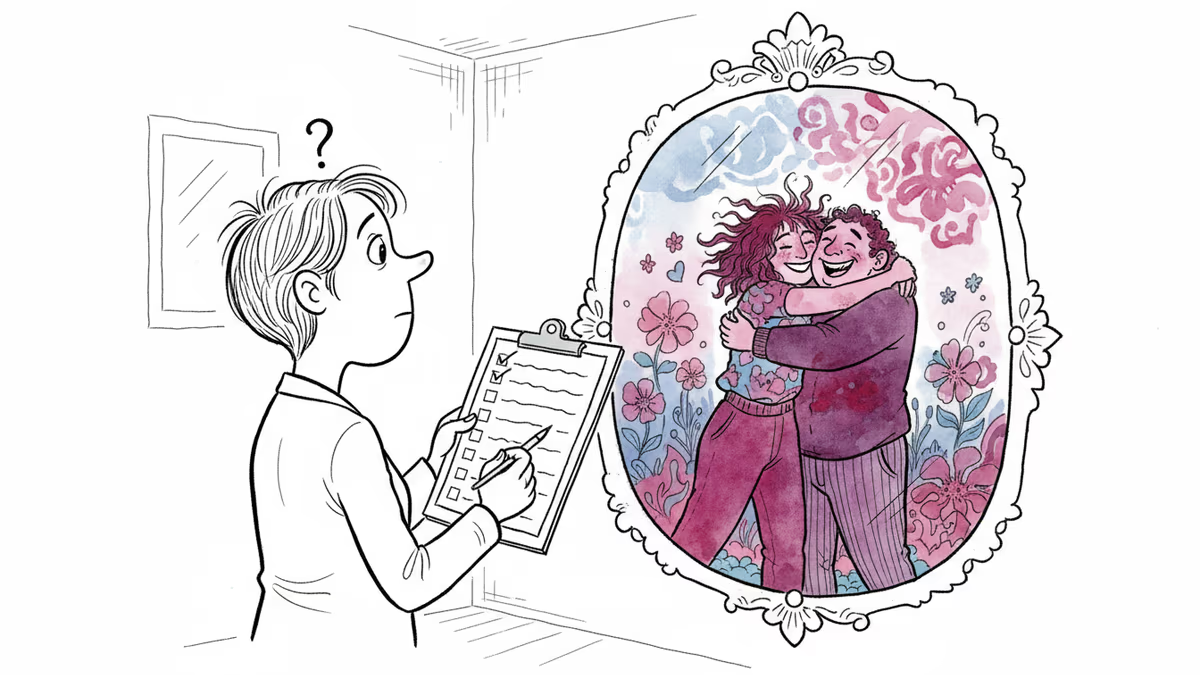
Research reveals that what we say we want in a partner rarely matches who we actually fall for. This Valentine's Day, explore the science behind love's surprises.
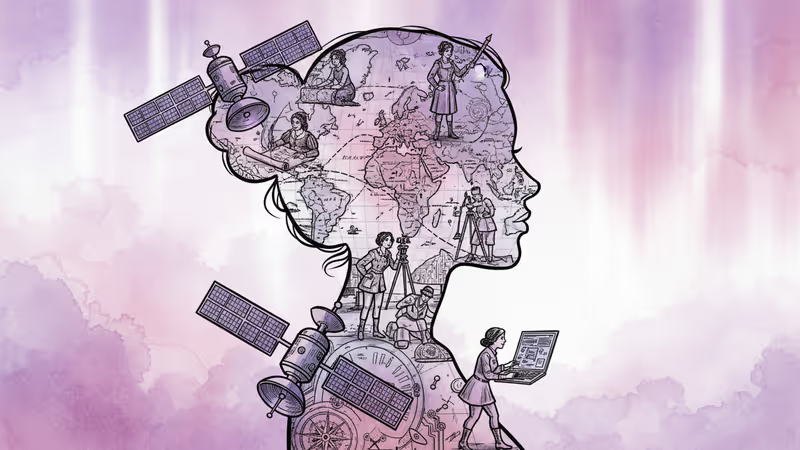
From Gladys West's GPS algorithms to WWII's Military Mapping Maidens, discover how technology has opened new pathways for women in cartography—and what gaps still remain.
As Valentine's Day approaches, more people are using AI to write romantic messages. But research reveals an unexpected psychological cost to this digital romance.
From age gaps to 'swag gaps,' young people are analyzing every difference with romantic partners. Why are we seeking perfect compatibility in an era of unprecedented diversity?
Research reveals that what we say we want in a partner rarely matches who we actually fall for. This Valentine's Day, explore the science behind love's surprises.
From Gladys West's GPS algorithms to WWII's Military Mapping Maidens, discover how technology has opened new pathways for women in cartography—and what gaps still remain.
As Valentine's Day approaches, more people are using AI to write romantic messages. But research reveals an unexpected psychological cost to this digital romance.
Thoughts
Share your thoughts on this article
Sign in to join the conversation