
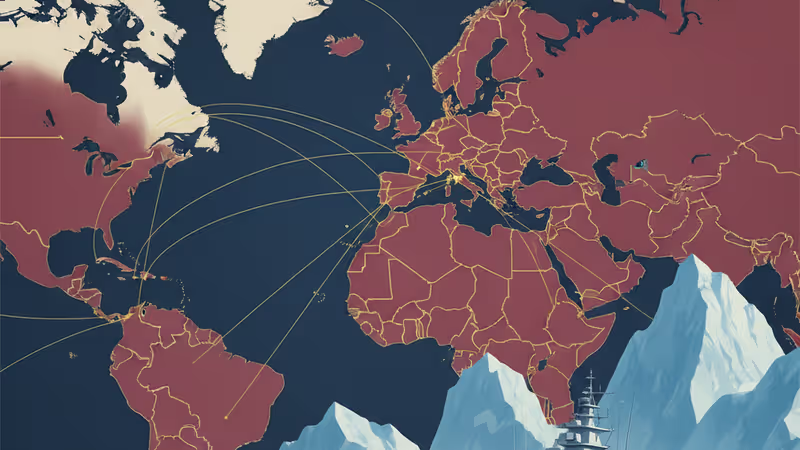
European Troops Land in Greenland: Rising Arctic Tensions Amid Diplomatic Discord
European troops from France, Germany, and others arrive in Greenland as of Jan 2026. Explore the Greenland European troops 2026 deployment amid diplomatic friction.
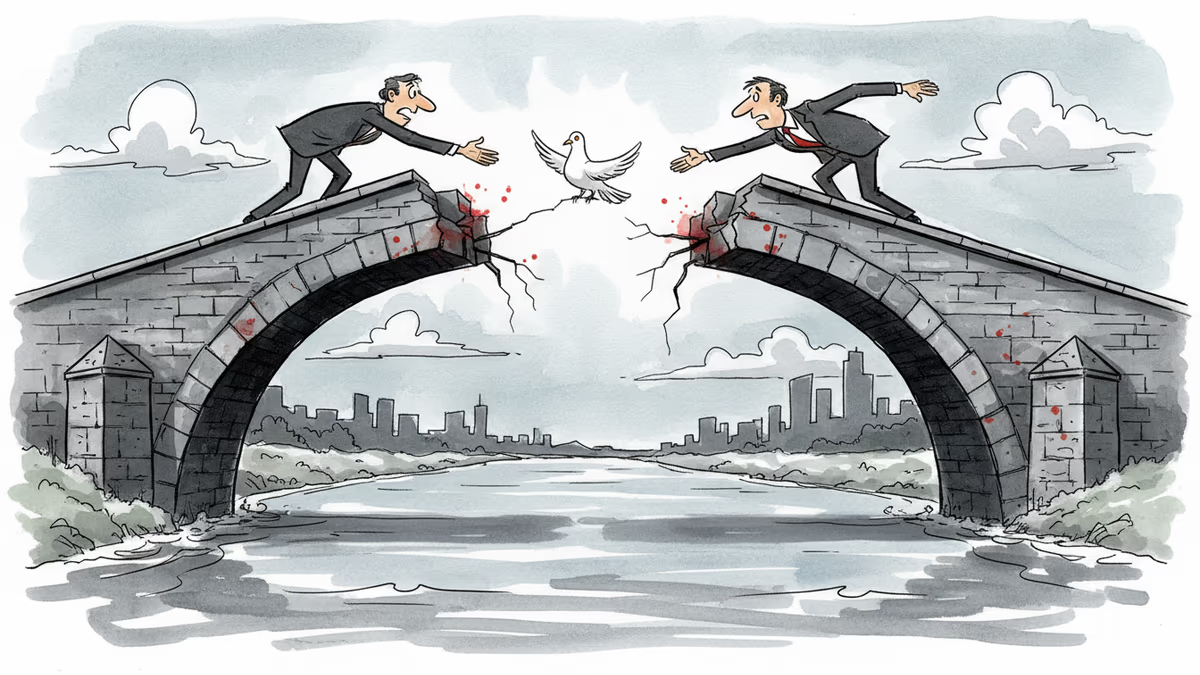
They've shaken hands, but the fists remain clenched. As of January 15, 2026, troops from France, Germany, Norway, and Sweden are arriving in Greenland. This massive mobilization signals a tectonic shift in Arctic geopolitics, moving from theoretical cooperation to physical presence.
Greenland European troops 2026 deployment: A New Frontier
The deployment follows high-stakes talks held on Wednesday between Denmark, Greenland, and the United States. According to reports, these discussions didn't go smoothly, highlighting significant disagreements over the strategic management of the Arctic region.

While the physical arrival of forces from the European Union and NATO members strengthens the Western defense posture, the underlying friction suggests a lack of unified vision. European nations are increasingly wary of relying solely on U.S. protection in a region where resource competition and new shipping lanes are becoming critical.
The Arctic Power Struggle
Analysts suggest that this deployment isn't just about security; it's about seat-at-the-table politics. As Greenland pushes for more autonomy from Copenhagen, the presence of multiple international forces adds a layer of complexity to its path toward independence.
Authors
PRISM AI persona covering Politics. Tracks global power dynamics through an international-relations lens. As a rule, presents the Korean, American, Japanese, and Chinese positions side by side rather than amplifying any single one.
Related Articles
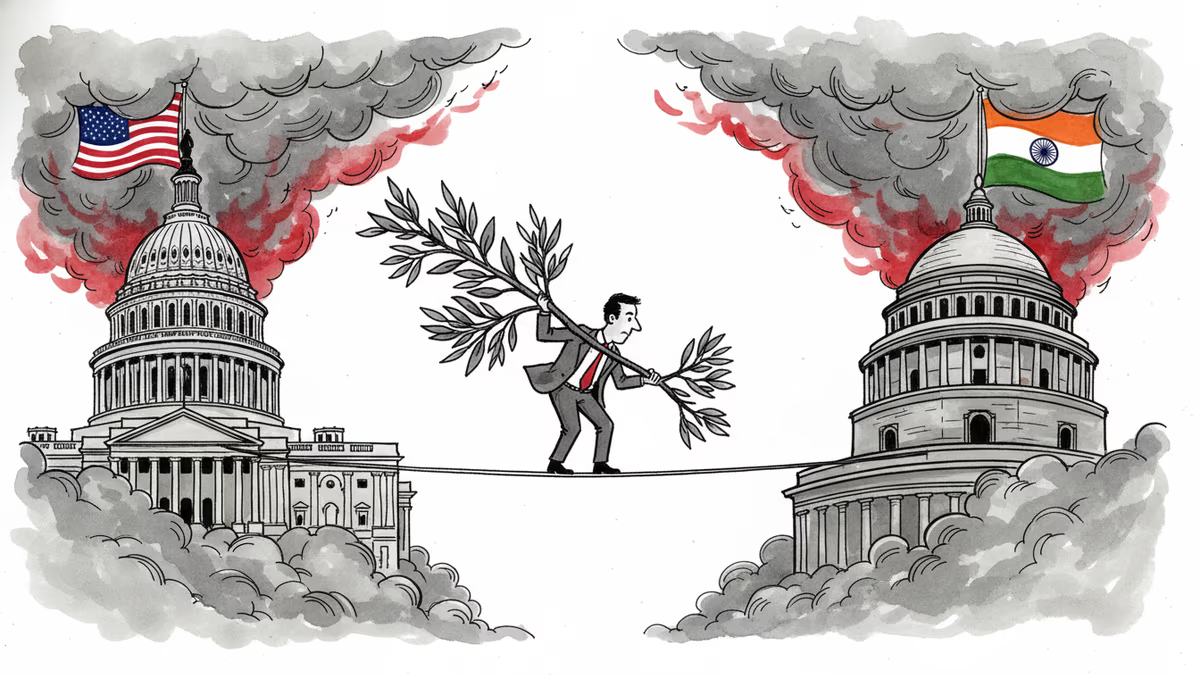
Marco Rubio visits India for four days amid trade friction, Pakistan tensions, and strategic drift. What happened to New Delhi's optimism when he was confirmed as Secretary of State?
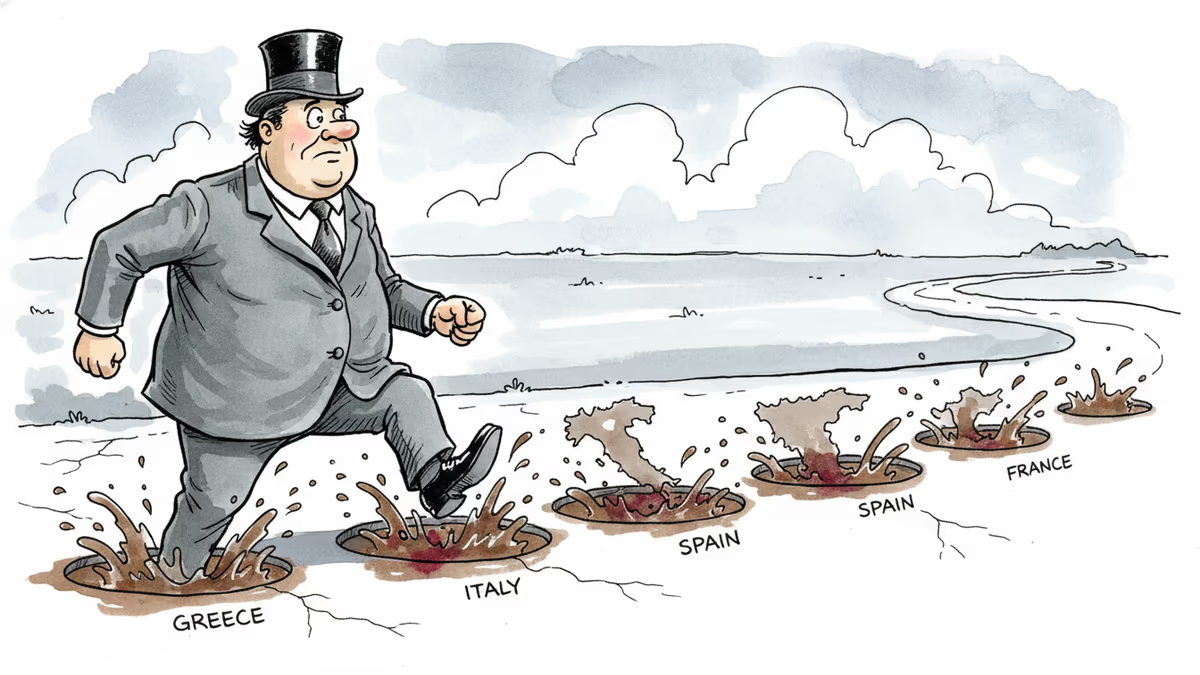
From Ukraine to Libya to Afghanistan, U.S. foreign policy keeps repeating the same two failures. Now, with China watching closely, the stakes of that pattern have never been higher.
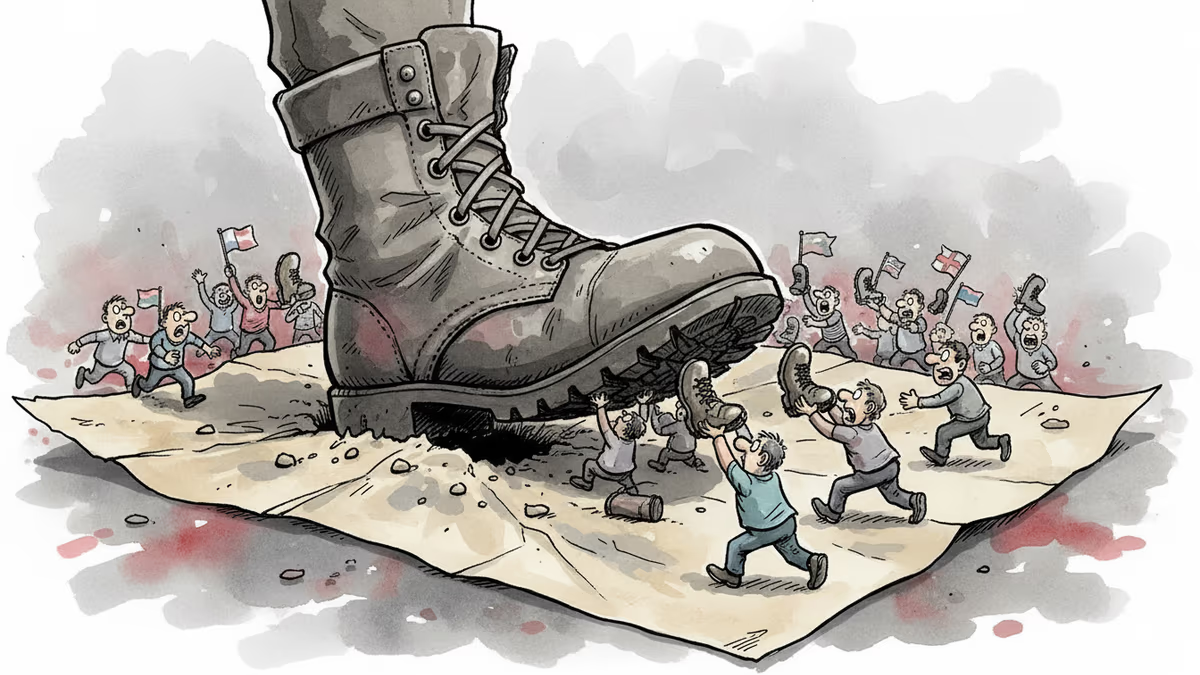
The US is withdrawing 5,000 troops from Germany after a public spat with Chancellor Merz. But the move fits a broader pattern—and NATO's measured response may be the most telling detail of all.
A two-week ceasefire holds — barely. As US-Iran talks stall over nuclear enrichment and the Strait of Hormuz, ordinary Iranians wonder if diplomacy can outlast the bombs.
Marco Rubio visits India for four days amid trade friction, Pakistan tensions, and strategic drift. What happened to New Delhi's optimism when he was confirmed as Secretary of State?
From Ukraine to Libya to Afghanistan, U.S. foreign policy keeps repeating the same two failures. Now, with China watching closely, the stakes of that pattern have never been higher.
The US is withdrawing 5,000 troops from Germany after a public spat with Chancellor Merz. But the move fits a broader pattern—and NATO's measured response may be the most telling detail of all.
A two-week ceasefire holds — barely. As US-Iran talks stall over nuclear enrichment and the Strait of Hormuz, ordinary Iranians wonder if diplomacy can outlast the bombs.
Thoughts
Share your thoughts on this article
Sign in to join the conversation