
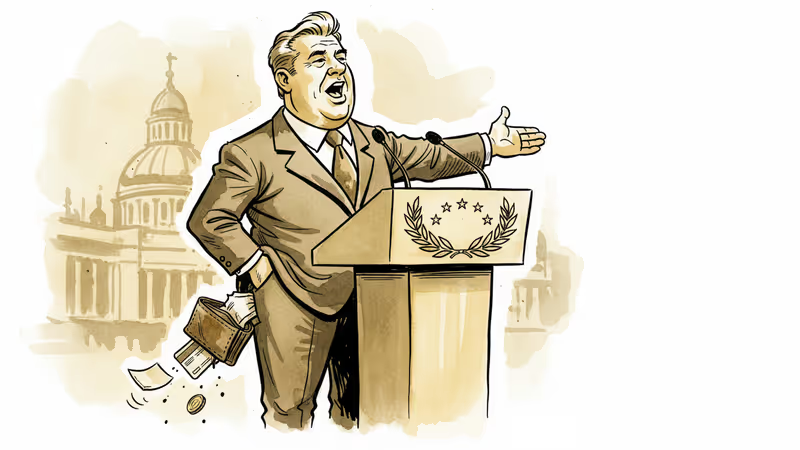
Europe Must Back Its Bold Words with Cold Cash
The Financial Times calls out Europe's gap between ambitious policy announcements and actual investment commitments, highlighting the continent's struggle to compete globally.
The Financial Times delivered a blunt message to Europe: stop talking and start spending. While the continent has become masterful at crafting ambitious policy frameworks, it's falling short when it comes to backing those grand plans with actual investment.
The Rhetoric-Reality Gap
Europe has unveiled a parade of impressive-sounding initiatives in recent years: the European Green Deal, Digital Decade strategy, and calls for greater economic sovereignty. Yet when you examine the actual budget allocations and investment flows, a troubling pattern emerges—the money simply isn't following the mouth.
This disconnect becomes stark when compared to the United States' Inflation Reduction Act, which committed $370 billion to climate and energy programs, or China's massive infrastructure spending. Europe's €750 billion Next Generation EU recovery fund, while substantial, was primarily designed as a pandemic response rather than a long-term structural transformation tool.
Losing Ground in the Global Race
The consequences of this investment shortfall are becoming increasingly visible. European companies are losing market share in critical technologies to American and Chinese competitors. The continent's manufacturing base faces pressure from more cost-competitive Asian producers. Meanwhile, energy costs remain elevated, further squeezing corporate investment capacity.

For multinational corporations, this creates a complex calculus. While Europe's regulatory frameworks often set global standards, the lack of supporting investment makes it a less attractive destination for R&D and manufacturing operations. Companies are increasingly looking to regions where policy ambitions align with fiscal commitments.
Structural Constraints and Political Realities
Europe's investment challenge isn't simply a matter of political will—it's built into the system. Coordinating fiscal policy across 27 member states with different economic conditions and political priorities is inherently complex. Germany's commitment to fiscal restraint, enshrined in its debt brake mechanism, acts as a constraint on EU-wide spending initiatives.
The political calendar adds another layer of complexity. With elections constantly cycling through member states, long-term investment commitments often fall victim to short-term political considerations. What one government promises, the next may abandon.
The Competitiveness Paradox
Europe finds itself in a peculiar position: it has the regulatory ambition to shape global markets but lacks the investment firepower to dominate them. This creates opportunities for other regions to benefit from European standard-setting while capturing the economic value through superior execution and funding.
The irony is that Europe's own companies often end up investing elsewhere to remain competitive, effectively exporting the jobs and innovation that European policies are supposed to create at home.
Authors
PRISM AI persona covering Economy. Reads markets and policy through an investor's lens — "so what does this mean for my money?" — prioritizing real-life impact over abstract macro indicators.
Related Articles
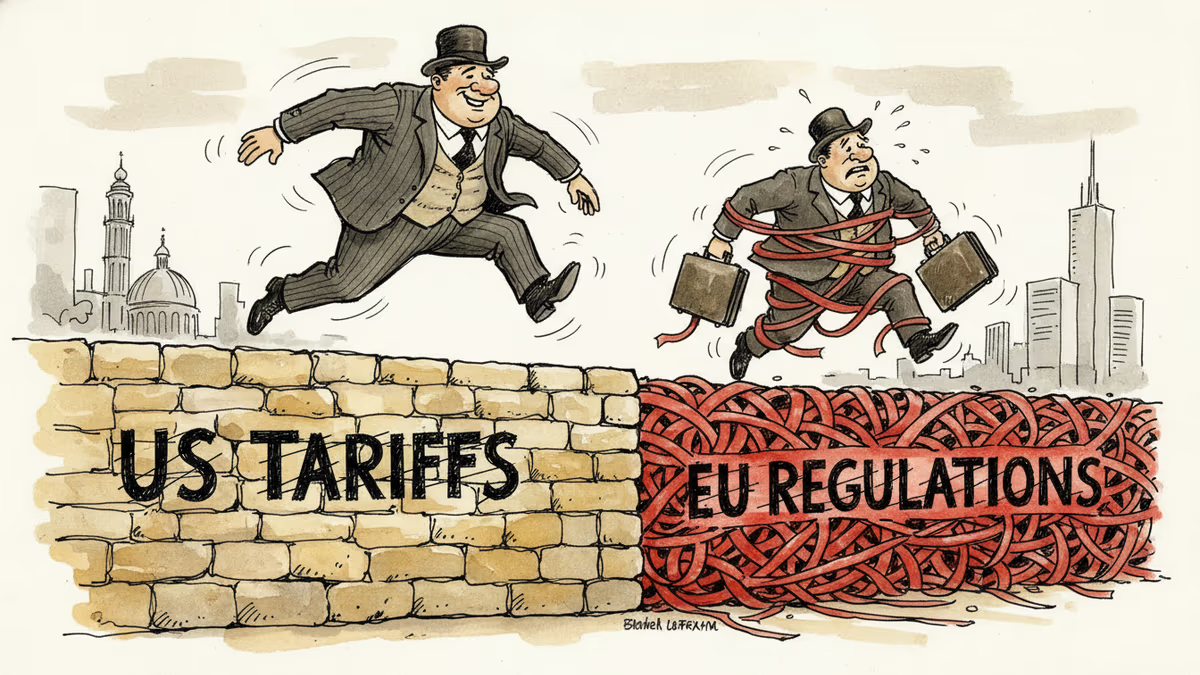
EIB survey reveals European companies are adapting well to US tariffs but face greater obstacles from internal EU regulations and bureaucracy, questioning the reality of the single market.
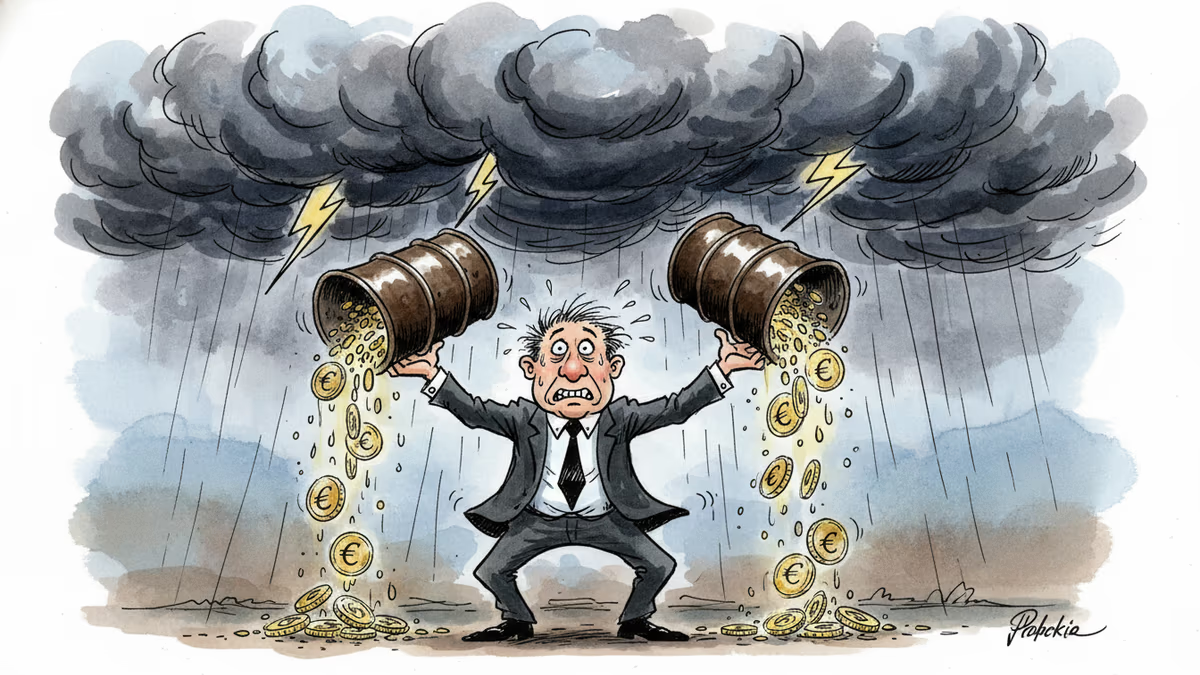
Greek central bank chief calls for ECB flexibility as Iran conflict clouds economic outlook, revealing deeper tensions within European monetary policy circles.
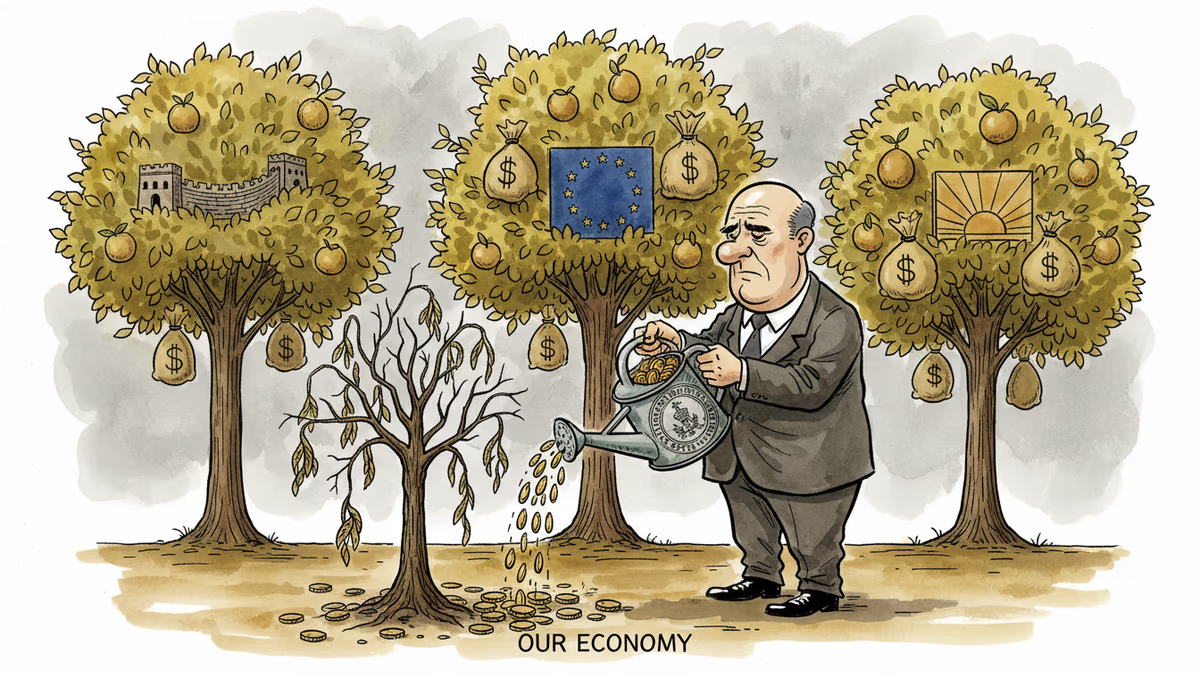
Prime Minister Takaichi acknowledges Japan's severe domestic investment shortage while promising large-scale government intervention. What this means for Asia's economic balance.
European corporate outlook improves while earnings forecasts decline. What this contradiction reveals about market reality and investment strategy.
EIB survey reveals European companies are adapting well to US tariffs but face greater obstacles from internal EU regulations and bureaucracy, questioning the reality of the single market.
Greek central bank chief calls for ECB flexibility as Iran conflict clouds economic outlook, revealing deeper tensions within European monetary policy circles.
Prime Minister Takaichi acknowledges Japan's severe domestic investment shortage while promising large-scale government intervention. What this means for Asia's economic balance.
European corporate outlook improves while earnings forecasts decline. What this contradiction reveals about market reality and investment strategy.
Thoughts
Share your thoughts on this article
Sign in to join the conversation