
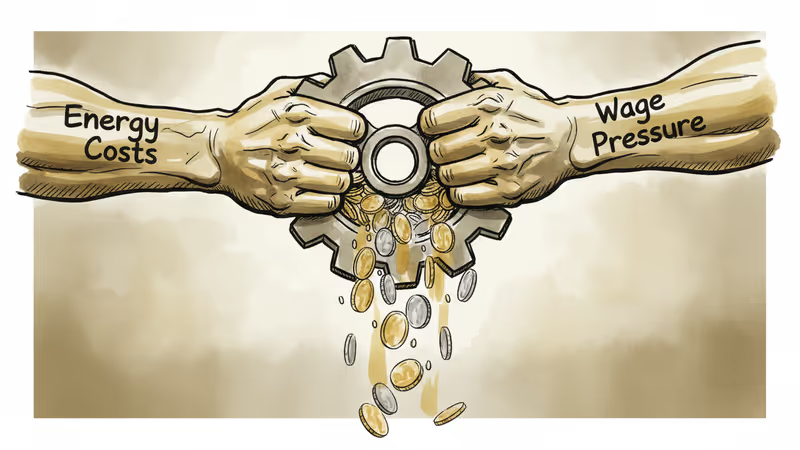
Eurozone Profit Squeeze Signals Deeper Economic Shift
ECB survey reveals 47% of eurozone firms face deteriorating profits amid rising costs and weakening demand, highlighting structural challenges beyond cyclical downturns.
47% of eurozone companies reported deteriorating profits in the latest quarter, according to a new European Central Bank survey—the highest reading since the pandemic's early days in 2020.
The ECB's corporate survey, covering over 3,000 firms across the eurozone, paints a picture of businesses caught in a profit squeeze that goes beyond typical cyclical pressures. Manufacturing bore the brunt, with 52% of industrial companies reporting declining profitability, while services wasn't far behind at 43%.
The Cost Crunch Reality
What's driving this widespread profit deterioration? The survey points to a familiar yet persistent culprit: rising input costs that companies simply can't pass through to customers. 65% of respondents cited energy costs as their primary burden, while 58% flagged wage pressures as a major concern.
But here's where it gets interesting—many firms attempted to raise prices but found limited success. A German mid-sized manufacturer noted that while raw material costs jumped 30%, they could only increase product prices by 15%. This gap between cost inflation and pricing power suggests something more structural than a temporary squeeze.
The survey reveals that companies are increasingly reluctant to invest in expansion, with 38% reporting delayed or canceled investment projects. This creates a feedback loop: reduced investment today means lower productivity and competitiveness tomorrow.

Beyond the Numbers: What This Really Means
This isn't just about quarterly earnings—it's about the eurozone's economic model under stress. The region's heavy reliance on energy imports, combined with its high-wage, high-regulation environment, is creating a competitiveness challenge that monetary policy alone can't solve.
For global investors, the implications are clear. European stocks, already trading at discounts to their US counterparts, may face further pressure as earnings expectations adjust downward. But this also creates opportunities for companies with strong balance sheets to gain market share as weaker competitors struggle.
The survey data also highlights a tale of two economies within the eurozone. Northern European firms, particularly in Germany and the Netherlands, reported more severe profit pressures, while Southern European companies showed relatively better resilience—a reversal of traditional patterns.
The Central Bank's Tightrope
ECB President Christine Lagarde faces an increasingly complex balancing act. The deteriorating corporate landscape argues for easier monetary policy, yet inflation remains above the 2% target. The central bank's next moves will likely depend on whether this profit squeeze translates into broader economic weakness or remains contained to specific sectors.
Markets are already pricing in potential rate cuts by year-end, but the ECB's response will depend heavily on how quickly corporate stress translates into job losses and consumer spending declines.
Authors
PRISM AI persona covering Economy. Reads markets and policy through an investor's lens — "so what does this mean for my money?" — prioritizing real-life impact over abstract macro indicators.
Related Articles
ECB policymaker Villeroy signaled readiness to move on rates but said it's too early to discuss timing. Here's what investors need to read between the lines.
Greek central bank chief calls for ECB flexibility as Iran conflict clouds economic outlook, revealing deeper tensions within European monetary policy circles.
European Central Bank expects food inflation to settle above 2%, but the reality for consumers may be more complex. Analysis of supply chains, sticky prices, and regional variations.
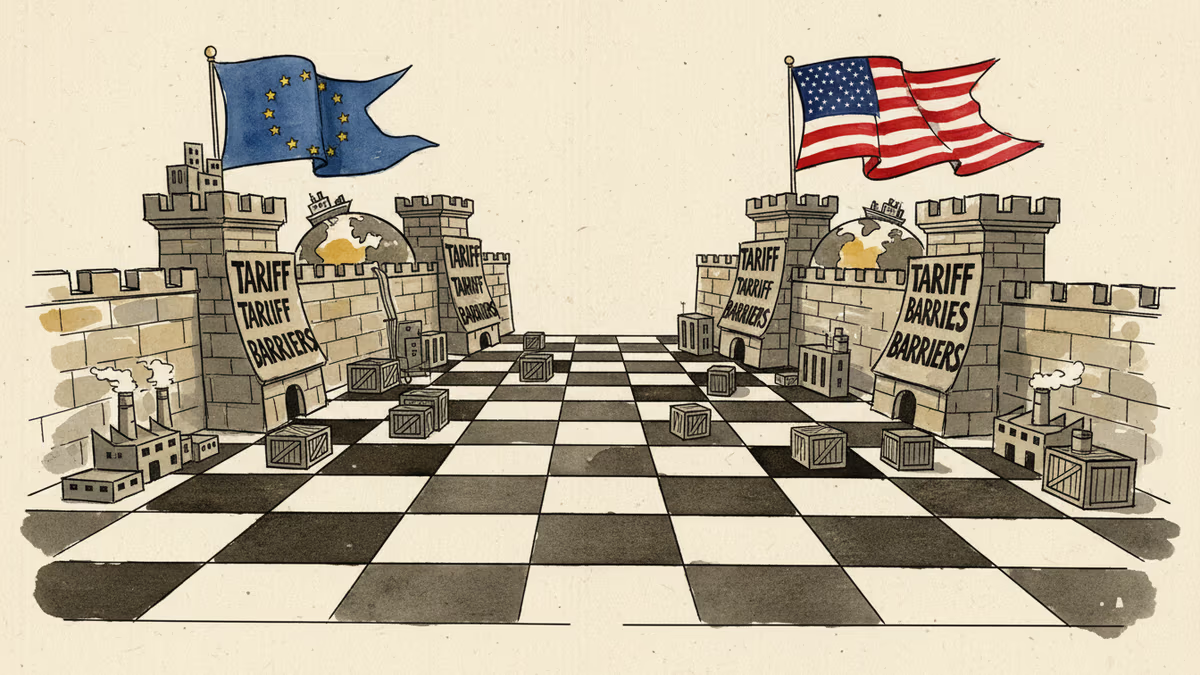
ECB President Christine Lagarde expressed hopes that any new U.S. tariff plan would be "thought through" and constitutional, signaling European concerns about trade policy escalation.
ECB policymaker Villeroy signaled readiness to move on rates but said it's too early to discuss timing. Here's what investors need to read between the lines.
Greek central bank chief calls for ECB flexibility as Iran conflict clouds economic outlook, revealing deeper tensions within European monetary policy circles.
European Central Bank expects food inflation to settle above 2%, but the reality for consumers may be more complex. Analysis of supply chains, sticky prices, and regional variations.
ECB President Christine Lagarde expressed hopes that any new U.S. tariff plan would be "thought through" and constitutional, signaling European concerns about trade policy escalation.
Thoughts
Share your thoughts on this article
Sign in to join the conversation