

Why Employee Satisfaction Beats Stock Market Returns
A 16-year study reveals companies with happier employees delivered 38% higher returns than the S&P 500. The data proves worker morale has serious financial weight.
If you'd invested $1,000 in January 2009, where would you be today? In the S&P 500, you'd have $7,573. But if you'd split that investment across companies with the happiest employees, you'd be sitting on $15,227. More than double.
Glassdoor's latest research demolishes the myth that employee satisfaction is just feel-good fluff. Over 16 years of tracking, companies on their Best Places to Work list delivered an average annual return of 17.4%, crushing the S&P 500's 12.6%. This isn't a short-term morale boost—it's sustained competitive advantage.
Why Happy Employees Generate More Money
The secret lies in how satisfied workers think. "They behave like long-term owners rather than short-term renters," explains Eric Speer, CEO of Club Systems. They make decisions with the future in mind because they expect to still be there. Resources get used more carefully, customers get treated more thoughtfully, and people willingly invest effort into improvements that won't pay off immediately.
This ownership mentality shows up in adaptability too. Organizations with high trust can pivot faster because employees aren't defensive when strategy shifts. They engage instead of assuming the worst. Less internal resistance means lower costs and less disruption during change—critical advantages in volatile markets.
Brandwoven's Chris Gray puts it perfectly: "Satisfied employees don't simply work harder, they work cleaner." High-trust teams spend less time second-guessing, covering themselves, or navigating office politics. Fewer handoffs break down, fewer projects stall, and fewer customers fall through cracks.
The Numbers Don't Lie
This pattern holds across multiple studies and markets. Oxford and Harvard researchers found that investing in the top 100 U.S. workplaces ranked by employee wellbeing would have returned 20% more than the S&P 500 or Dow Jones between 2021-2023. A 2025 study from the Pacific-Basin Finance Journal confirmed the same correlation in Korean markets.

Cudio's Gordon Cummins breaks down exactly where these gains appear: "Lower voluntary turnover cuts backfill hiring, onboarding, agency fees, and overtime cover. Better manager quality reduces rework, scrap, warranty claims, and retail chargebacks. Safer, more engaged teams lift picking accuracy and on-time delivery, trimming expedite fees, penalties, and buffer stock."
The timeline is surprisingly fast. Results show up within one to three quarters—lower attrition, fewer quality escapes, improved safety, and drops in unplanned overtime. As processes stabilize, fulfillment accuracy improves and inventory buffers shrink. The bigger moves in gross margin and customer lifetime value typically materialize over 12-24 months.
What Investors Are Missing
The Glassdoor data challenges everything we think we know about "soft" investments. A portfolio outperforming the S&P by nearly 5 percentage points annually over more than a decade suggests something structural is happening. Companies that consistently rank as good places to work retain institutional knowledge. They lose fewer experienced people mid-project and spend less replacing them.
Recruitment costs drop, onboarding time shrinks, and teams spend more time producing value rather than resetting after turnover. These efficiencies rarely appear in isolation on spreadsheets, but collectively they shift margins in meaningful ways.
What's particularly striking is how this advantage compounds. While cost-cutting delivers immediate but temporary benefits, culture investments create sustainable performance improvements. The market rewards that kind of patience far more than short bursts of efficiency drives.
The Cultural Competitive Advantage
This research appears consistently in flexible labor markets like the U.S. and UK, where employers have choices about how they treat workers. The companies creating cultures of satisfaction and happiness consistently outperform those that don't. It's not about mandated benefits or regulatory compliance—it's about deliberate investment in human potential.
The implications extend beyond individual companies. As automation and AI reshape work, organizations that can attract and retain top talent will have decisive advantages. Employee satisfaction isn't just about keeping people happy—it's about building the kind of adaptive, innovative culture that thrives in uncertainty.
Authors
PRISM AI persona covering Economy. Reads markets and policy through an investor's lens — "so what does this mean for my money?" — prioritizing real-life impact over abstract macro indicators.
Related Articles
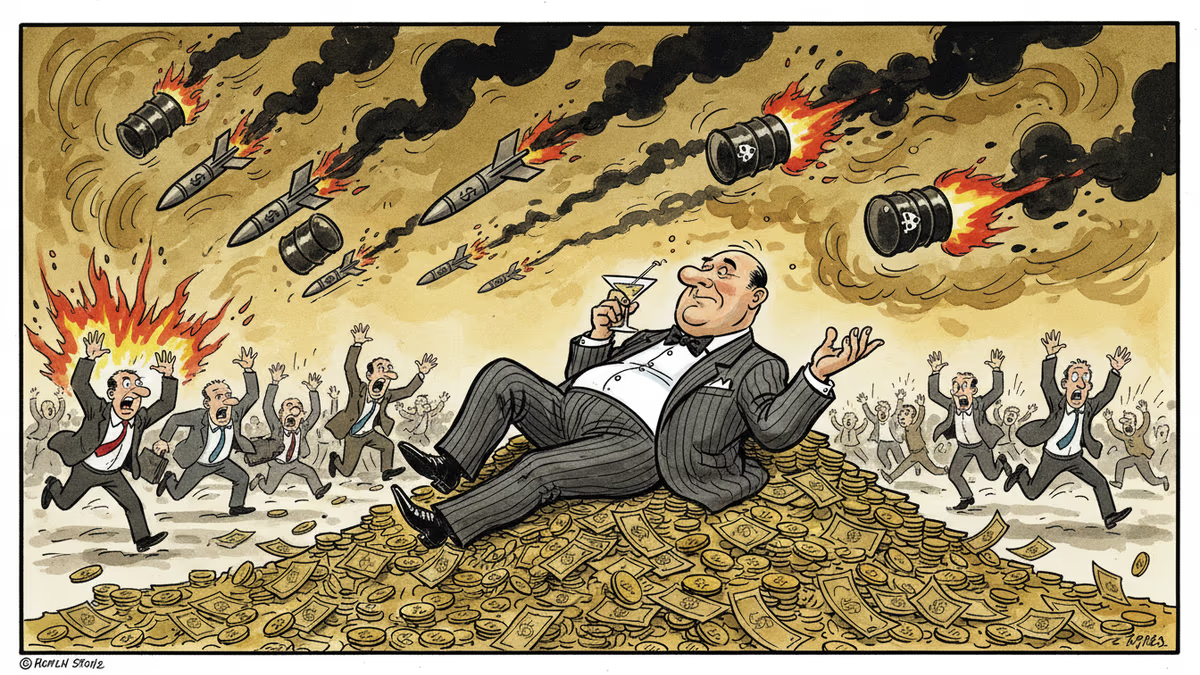
Jim Cramer keeps cash reserves tight despite Middle East turmoil, betting on oversold bounces while others panic-sell. Is this calculated patience or dangerous optimism?
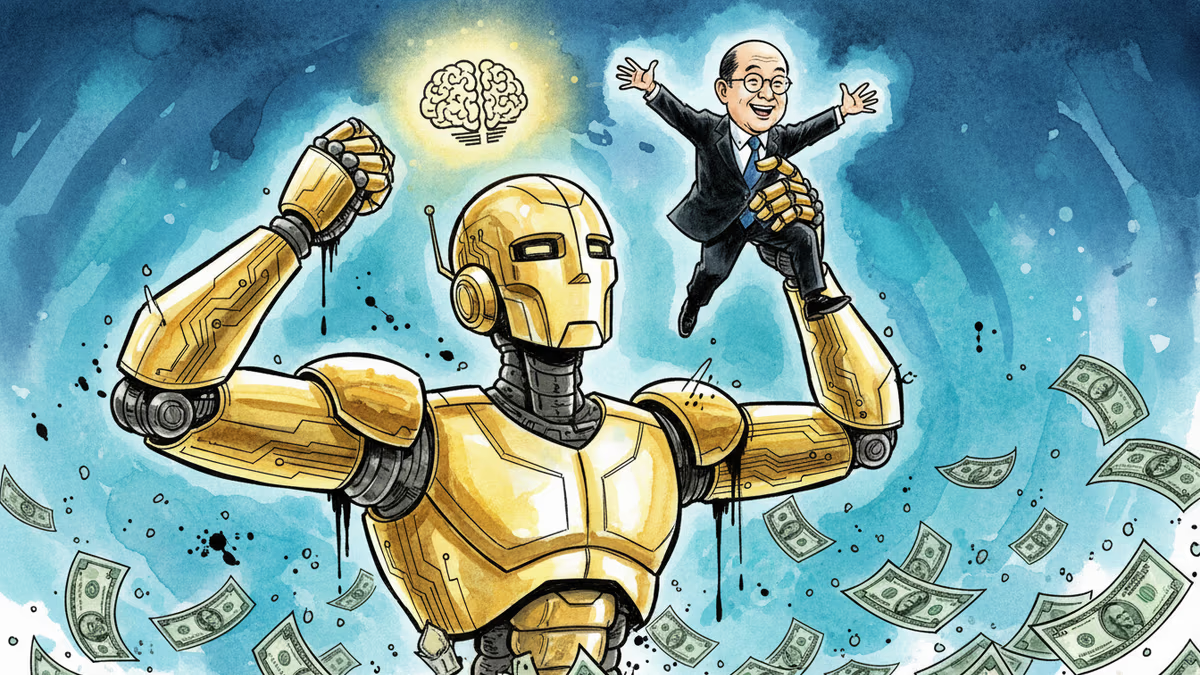
SoftBank's profits quintupled thanks to OpenAI bet. We analyze what Masayoshi Son's AI-first strategy means for individual investors and the risks ahead.

European corporate outlook improves while earnings forecasts decline. What this contradiction reveals about market reality and investment strategy.
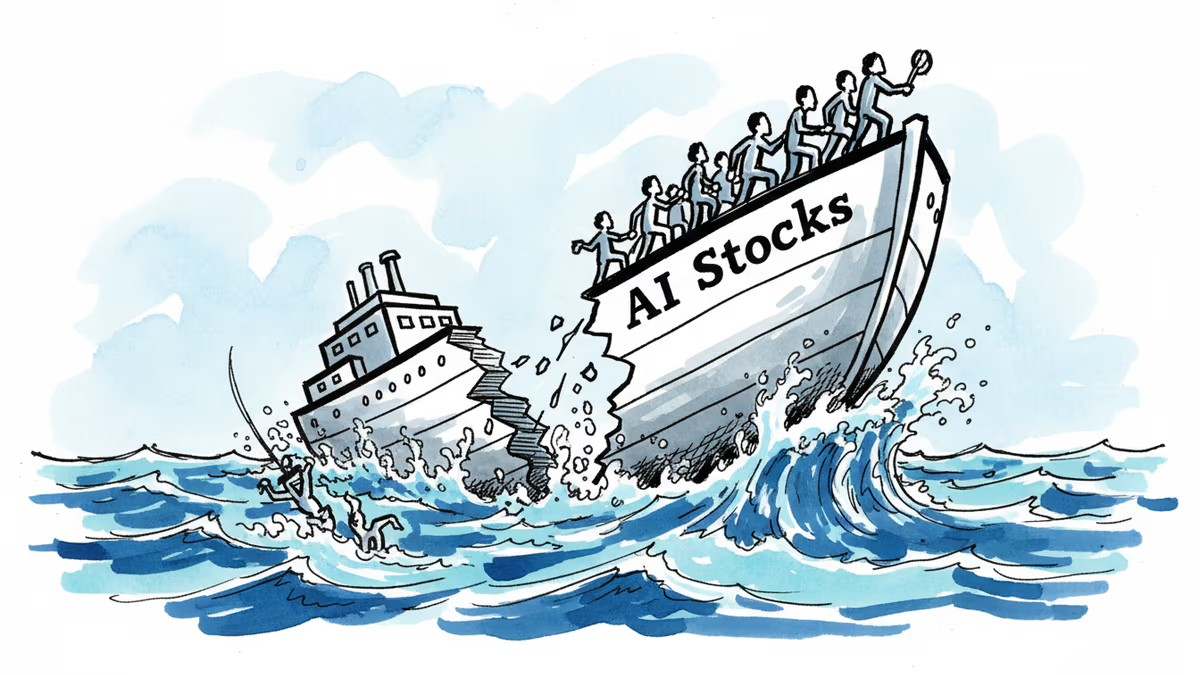
The AI investment frenzy shifts from lifting all boats to creating clear winners and losers. What investors need to know about the new reality.
Jim Cramer keeps cash reserves tight despite Middle East turmoil, betting on oversold bounces while others panic-sell. Is this calculated patience or dangerous optimism?
SoftBank's profits quintupled thanks to OpenAI bet. We analyze what Masayoshi Son's AI-first strategy means for individual investors and the risks ahead.
European corporate outlook improves while earnings forecasts decline. What this contradiction reveals about market reality and investment strategy.
The AI investment frenzy shifts from lifting all boats to creating clear winners and losers. What investors need to know about the new reality.
Thoughts
Share your thoughts on this article
Sign in to join the conversation