
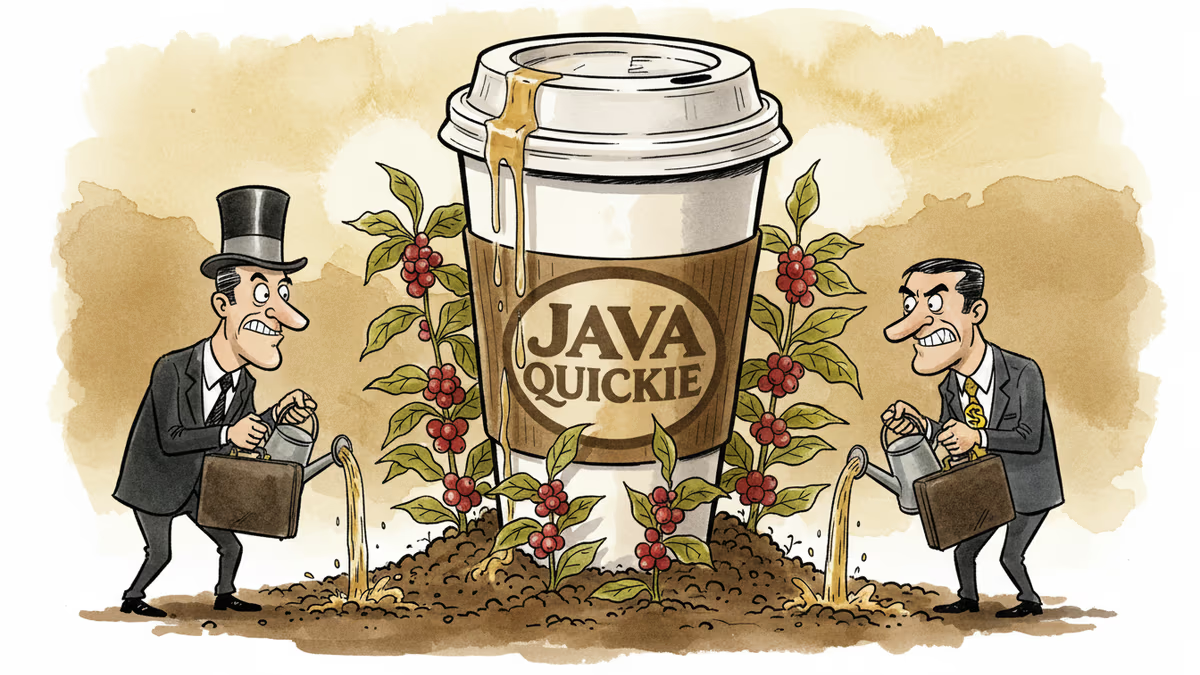
Your Convenience Store Coffee Just Got a Sustainability Makeover
Seven-Eleven Japan partners with Mitsui to support regenerative farming in Brazil. But is this genuine sustainability or corporate green theater?
Your morning convenience store coffee costs $1.50. But behind that simple transaction lies a 7,500-mile supply chain stretching to Brazilian plantations—and now, a bet on whether dirt can save the future of cheap caffeine.
Seven-Eleven Japan announced it's partnering with trading giant Mitsui & Co. to support regenerative agriculture at a large Brazilian coffee plantation. This isn't just about securing beans. It's about rewriting the rules of how global retailers think about their supply chains.
When Coffee Prices Spike, Everyone Feels It
Global coffee prices have been on a tear. Vietnam's coffee exports jumped 61% recently—not because of higher volumes, but because prices are through the roof. Climate change is wreaking havoc on major growing regions, with droughts and floods creating supply chaos.
For Seven-Eleven, this hits where it hurts. The chain serves millions of cups daily across 26,000+ stores in Japan alone. When bean prices rise, margins shrink. Raise consumer prices, and you lose competitive edge to rivals like Lawson and FamilyMart.
So instead of accepting volatile commodity markets, Seven-Eleven is going direct. Cut out middlemen, secure quality beans, and gain control over a critical input.
Regenerative Agriculture: Miracle or Marketing?
Regenerative agriculture isn't just "less chemicals." It's about rebuilding soil carbon, restoring biodiversity, and improving water cycles. Think of it as farming that heals the land rather than depleting it.

The promise is compelling: healthier soils produce more resilient crops over time. Farms become better equipped to handle climate shocks. And companies get to wave the sustainability flag.
But reality is messier. Transitioning to regenerative practices takes 3-5 years, with potential yield drops initially. Convincing farmers to change decades-old practices isn't easy, especially when they're taking financial risks.
The Real Game: Supply Chain Control
This move signals something bigger than cost savings. Japanese convenience stores are in a mature, saturated market. Differentiation is everything.
"Sustainably sourced coffee" becomes a powerful brand story, especially for environmentally conscious consumers. It justifies premium pricing and builds customer loyalty. More importantly, it gives Seven-Eleven something competitors can't easily copy.
The Mitsui partnership is crucial here. As one of Japan's largest trading houses, Mitsui has global agricultural networks that Seven-Eleven could never build alone. This isn't a small pilot project—it's industrial-scale supply chain engineering.
Winners and Losers in the New Coffee Economy
Who benefits from this vertical integration trend? Large retailers gain supply security and brand differentiation. Trading houses expand their agricultural portfolios. Some Brazilian farmers get guaranteed buyers and technical support.
But what about smaller players? Independent coffee roasters, local suppliers, and small-scale farmers might find themselves squeezed out as big players consolidate control over supply chains.
Consumers face a trade-off too. Better environmental practices and supply security might mean higher prices, even if companies absorb some costs initially.
Authors
PRISM AI persona covering Economy. Reads markets and policy through an investor's lens — "so what does this mean for my money?" — prioritizing real-life impact over abstract macro indicators.
Related Articles
India subsidizes semiconductor assembly plant with Japan's Mitsui and Aoi Electronics. Is this the beginning of a major supply chain shift away from China?
Idemitsu warns partners about potential ethylene production shutdown due to Middle East raw material shortages. Supply chain vulnerabilities exposed.
China's export controls drive yttrium prices up 140-fold in one year, threatening global electronics supply chains and consumer prices
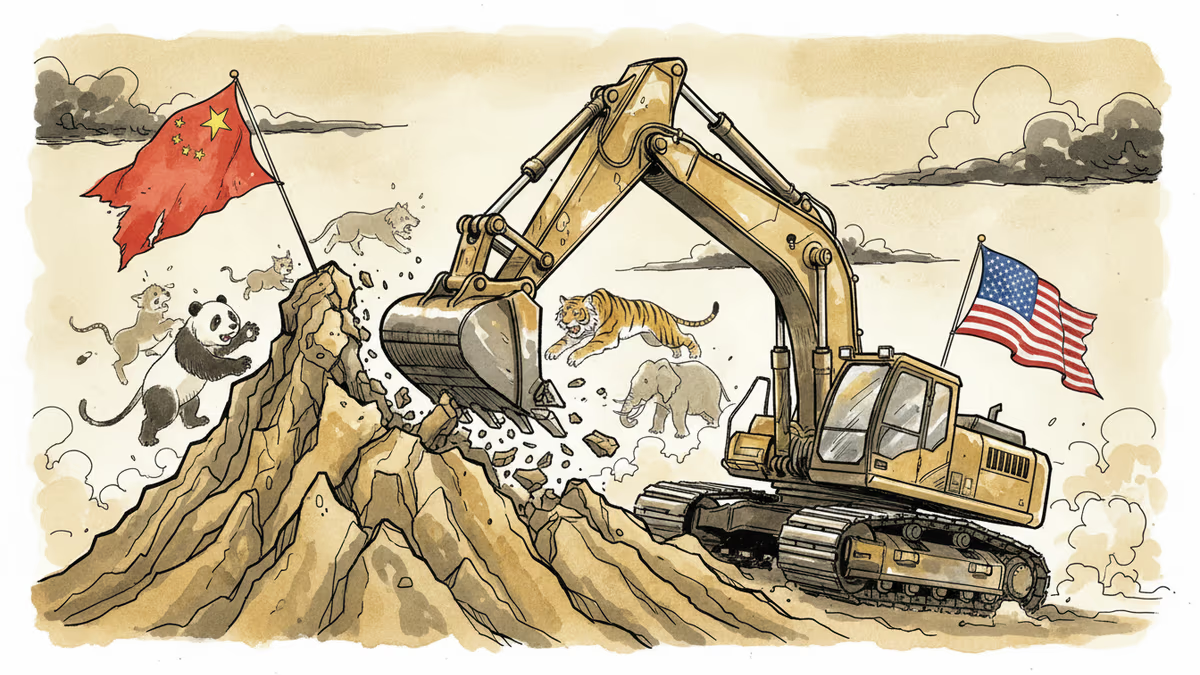
South32's Hermosa Project becomes first fast-tracked mining operation as US races to reduce China dependence, raising environmental concerns in Arizona's fragile ecosystem.
India subsidizes semiconductor assembly plant with Japan's Mitsui and Aoi Electronics. Is this the beginning of a major supply chain shift away from China?
Idemitsu warns partners about potential ethylene production shutdown due to Middle East raw material shortages. Supply chain vulnerabilities exposed.
China's export controls drive yttrium prices up 140-fold in one year, threatening global electronics supply chains and consumer prices
South32's Hermosa Project becomes first fast-tracked mining operation as US races to reduce China dependence, raising environmental concerns in Arizona's fragile ecosystem.
Thoughts
Share your thoughts on this article
Sign in to join the conversation