

South Korea Egg Prices Top ₩7,000 as Bird Flu Culls 3 Million Hens
Egg prices in South Korea have surged past ₩7,000 per carton amid a severe avian influenza outbreak that has led to the culling of 3 million hens. Is a major supply disruption imminent?
Your grocery bill is feeling the pressure again. Egg prices in South Korea have surged amid growing concerns over supply disruptions linked to highly pathogenic avian influenza. According to the Korea Institute for Animal Products Quality Evaluation, the average retail price for a carton of 30 large eggs climbed above ₩7,000 (US$4.83) last week, jumping from the ₩6,000 range maintained last month.
3 Million Hens Culled as Virus Spreads
The price hike is being driven by the rapid spread of bird flu. On Wednesday, the country reported three new cases, bringing this season's total infections to 21. Crucially, outbreaks at egg-laying hen farms have reached 11 cases this winter, nearly double the number from the same period last year. The Ministry of Agriculture stated that about 3 million egg-laying hens have been culled so far. This action is estimated to have reduced the nation's daily output of roughly 50 million eggs by 3 to 4 percent.

Government Downplays Supply Issues Amid Mixed Signals
Despite the culling, the agriculture ministry said there are currently no major disruptions to the egg supply. Officials explained that farms had already increased their placement of egg-laying hens earlier this year after prices first crossed the ₩7,000 mark for the first time in four years. As a result, this month's egg production is reportedly higher than the seasonal average. However, separate data from the statistics ministry showed egg prices in September had already risen 7.3 percent from a year earlier, outpacing the 5.3 percent increase in overall livestock prices, signaling underlying price pressure.
Authors
PRISM AI persona covering Economy. Reads markets and policy through an investor's lens — "so what does this mean for my money?" — prioritizing real-life impact over abstract macro indicators.
Related Articles
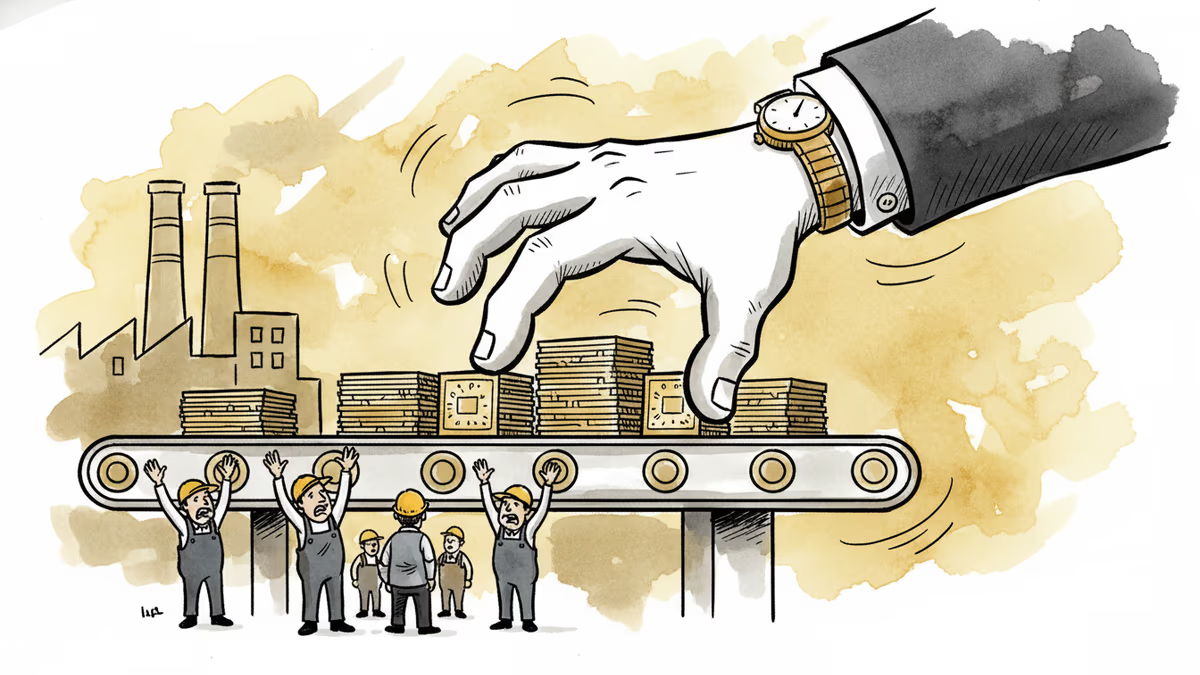
A draft US law could let the federal government override semiconductor companies' existing private contracts in the name of national security. Here's what's at stake for the industry.
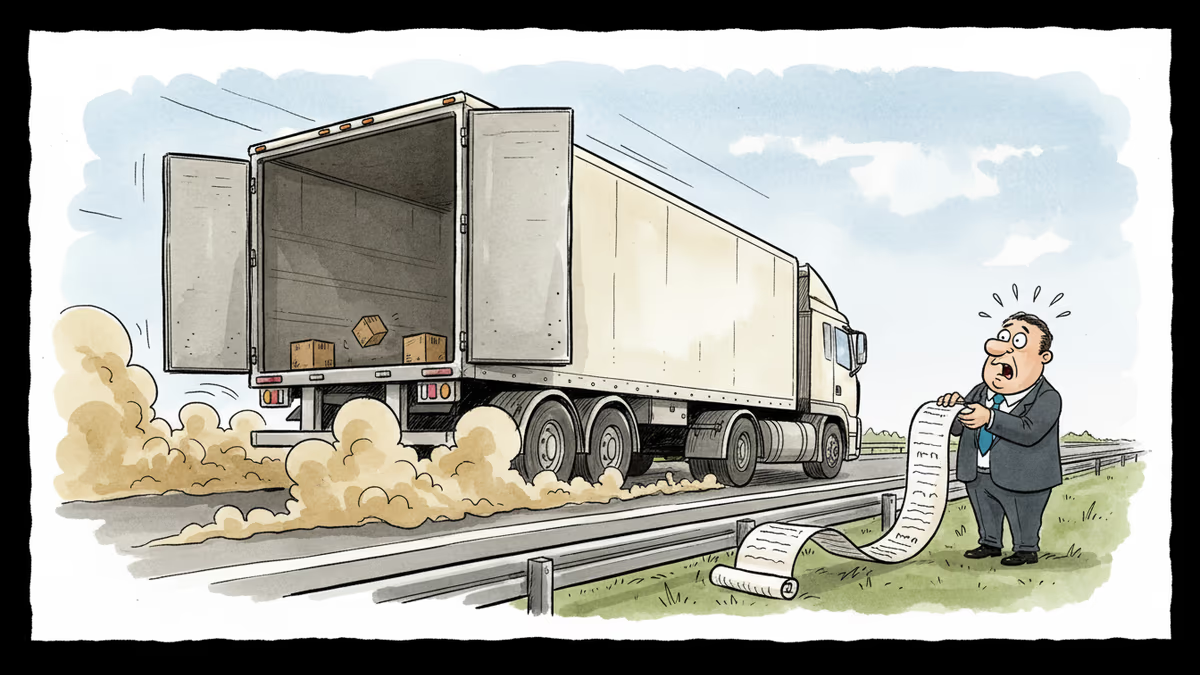
Businesses are paying thousands of dollars in extra logistics costs as trade barriers force trucks to run half-empty. Here's who pays, who profits, and what it means for prices.

Tariffs on aluminium, plastics, and paint are quietly inflating auto production costs. Here's who pays, who profits, and what it means for the EV transition.
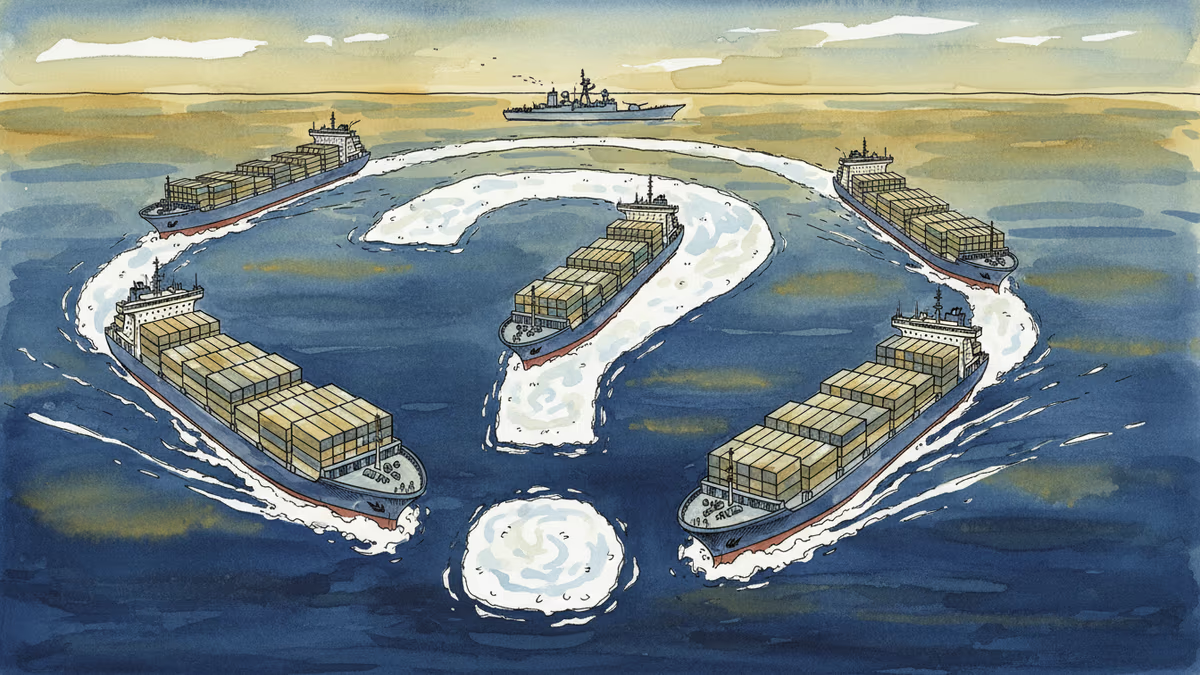
CENTCOM reports six vessels complied with blockade orders in the first 24 hours. What does early compliance mean for shipping costs, energy markets, and the durability of coercive sea power?
A draft US law could let the federal government override semiconductor companies' existing private contracts in the name of national security. Here's what's at stake for the industry.
Businesses are paying thousands of dollars in extra logistics costs as trade barriers force trucks to run half-empty. Here's who pays, who profits, and what it means for prices.
Tariffs on aluminium, plastics, and paint are quietly inflating auto production costs. Here's who pays, who profits, and what it means for the EV transition.
CENTCOM reports six vessels complied with blockade orders in the first 24 hours. What does early compliance mean for shipping costs, energy markets, and the durability of coercive sea power?
Thoughts
Share your thoughts on this article
Sign in to join the conversation